
Venice and Barcelona Move With Global Visitor Hotspots as Overtourism Strategies Redefine Tourism
Venice and Barcelona Move With Global Visitor Hotspots as Overtourism Strategies Redefine Tourism

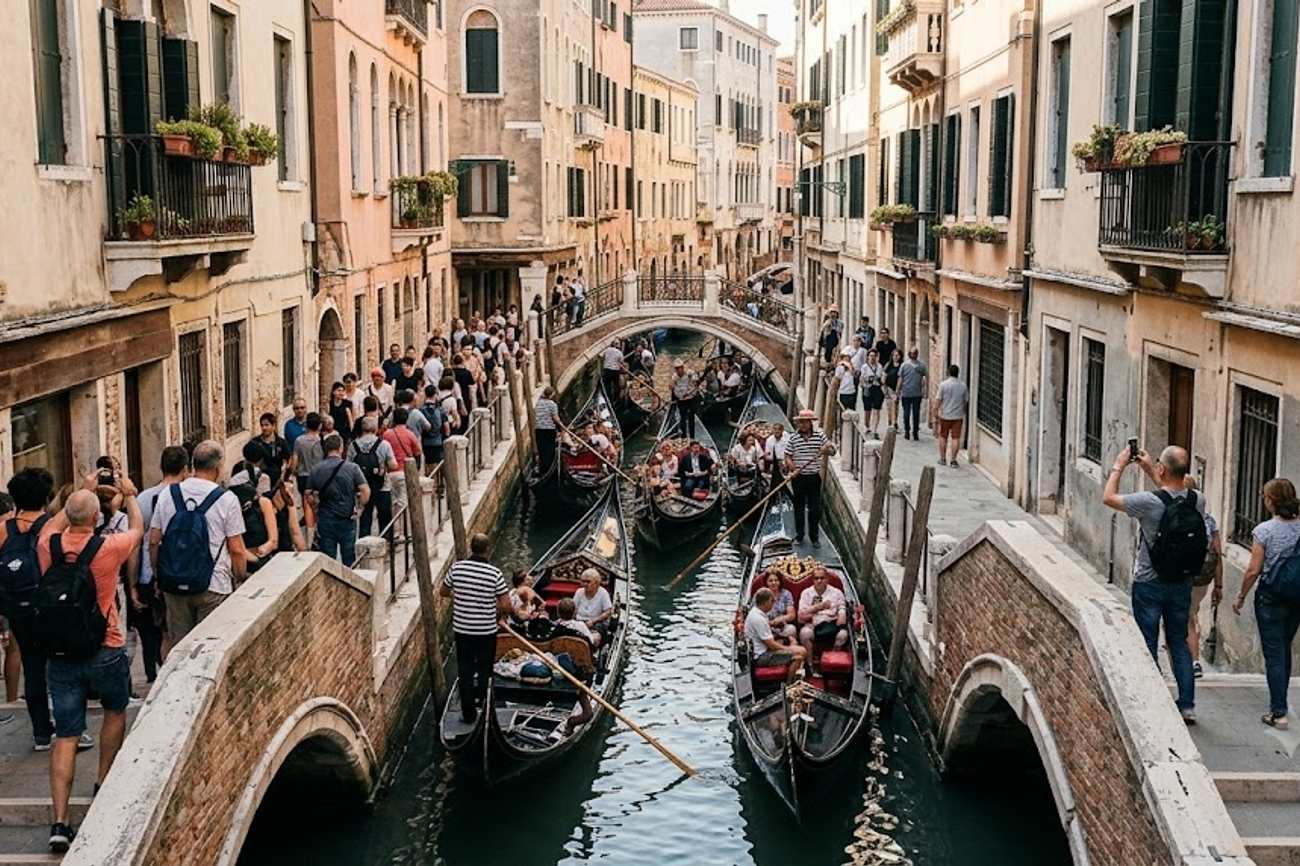
Image generated by AI
[Venice, 2026] — Venice has concluded a wide-scale access-fee experiment, collecting €5.21 million from 679,553 paid vouchers across 60 non-consecutive trial days. The initiative marks a pivot in how global destinations manage "overtourism," shifting from broad visitor limits toward targeted financial and regulatory levers designed to curb peak-day congestion without stifling overall economic growth.
The trial, conducted between 3 April and 26 July, utilized a tiered pricing structure where early bookings cost €5 and last-minute entries cost €10. While the city reported a 32.3% drop in average daily paid vouchers compared to 2024 data, the move has sparked a broader global trend. Cities including Barcelona, Amsterdam, and Kyoto, alongside Bali, are now implementing diverse strategies—ranging from housing license revocations to environmental levies—to protect infrastructure and resident quality of life.
The Catalyst for Access Fees
The immediate trigger for these interventions is the systemic failure of traditional tourism models to handle concentrated arrivals. While tourism remains a vital economic engine, the sheer volume of day-trippers and short-term renters has overwhelmed public transport, housing markets, and fragile ecosystems.
The World Tourism Organization (UN Tourism) has emphasized that no universal solution exists for excessive tourism. Instead, it advocates for a framework of 68 specific measures, including geographical dispersal and peak-period management. Venice’s fee is a direct application of this "pricing for behavior" philosophy, attempting to incentivize travelers to visit on less crowded days or plan their arrivals further in advance.
Global Impact and Targeted Interventions
Different global hubs are targeting different "pressure points" of the tourism cycle. The following table outlines the current state of interventions across five major destinations:
| Destination | Latest Indicator | Primary Intervention | Targeted Pressure |
|---|---|---|---|
| Venice | 679,553 paid vouchers | €5–€10 access fee | Day-visitor peaks |
| Barcelona | 15.6m tourists (2024) | Tourist-home license cuts | Housing/Urban pressure |
| Amsterdam | 23.7m overnight stays (2025) | Neighborhood rental caps | Local resident pressure |
| Kyoto | 79.9% resident dissatisfaction | Dispersal & tax reform | Crowding/Transport |
| Bali | 16.3m visitor trips (2025) | Rp150,000 foreign levy | Environment/Culture |
Barcelona's Housing War
Barcelona is focusing on the "where" of tourism rather than the "who." In 2024, the city saw 15.6 million tourists generate €10.317 billion in direct spending, supporting 155,000 jobs (approximately 14% of the city's GDP). However, the surge in short-term rentals has decimated local housing availability.
To combat this, Barcelona intends to extinguish approximately 10,000 legal tourist-home licenses by 2028 to return properties to permanent residents. This follows a period of aggressive enforcement since 2016, which saw 11,500 sanctions and 11,600 cessation orders, recovering nearly 3,900 homes.
Amsterdam's Granular Control
Amsterdam is employing a "street-by-street" management style. With overnight stays hitting 23.7 million in 2025 and projections suggesting up to 29.4 million by 2028, the city is restricting holiday rentals in specific high-pressure zones.
In the Centrum and De Pijp districts, rental limits have been slashed from 30 nights to just 15 nights per year. As of September 2026, the city proposed extending this 15-night ceiling to Helmersbuurt starting January 2027, after the area breached three specific pressure thresholds regarding resident complaints and tourism intensity.
What This Means for Travelers
The era of spontaneous, unrestricted access to Europe's most famous landmarks is ending. For the modern traveler, these corporate and governmental shifts translate into three immediate practical impacts:
1. Increased Upfront Costs and Planning Visiting cities like Venice now requires a digital paper trail. Travelers must check specific "fee days" and book vouchers in advance to avoid higher last-minute pricing. Entry requirements are becoming as critical as flight and hotel bookings.
2. Shift in Accommodation Availability The "Airbnb effect" is being systematically dismantled in cities like Barcelona. Travelers should expect a decrease in available short-term apartment rentals and a necessary shift toward regulated hotels. This may increase the average cost of stay as the supply of cheap, unregulated rentals vanishes.
3. Geographic Diversification Authorities in Kyoto and Amsterdam are actively pushing visitors away from "hotspots" and toward lesser-known neighborhoods. Travelers may find certain city centers more restricted or expensive, while peripheral districts receive more infrastructure investment to attract visitors.
The Road to 2028
The next two years will determine if these experiments can actually reduce crowds or if they simply shift the burden. UNESCO has already expressed skepticism regarding Venice, noting that the effectiveness of the access fee in reducing total visitor numbers has not been fully proven. UNESCO is calling for more rigorous "carrying-capacity planning" rather than just financial barriers.
In Bali, the Rp150,000 levy serves as a blueprint for "environmental contributions," where the cost of entry is tied directly to the preservation of the destination. As these models evolve, the global travel industry is moving toward a "managed arrival" system where access is treated as a limited resource rather than an open right.
FAQ: Global Tourism Fees & Restrictions 2026
Do I need to pay to enter Venice every day? No. The fee currently applies only to specific "peak days" (60 days during the trial). You must check the official city calendar to see if your visit coincides with a paid date.
Will it be harder to find an Airbnb in Barcelona? Yes. The city is removing 10,000 tourist licenses by 2028. Travelers are advised to book licensed hotels or official guest houses to avoid cancellations resulting from government cessation orders.
How does the Amsterdam rental cap affect me? If you are booking a private rental in Centrum or De Pijp, ensure the host is compliant with the 15-night annual limit. Many illegal rentals are being targeted for sanctions.
Is the Bali tourist levy mandatory? Yes, the Rp150,000 levy is required for international visitors to support environmental and cultural protection efforts on the island.
The era of the open city is closing; the era of the managed destination has arrived.
#VeniceAccessFee2026 #BarcelonaHousingLaw #AmsterdamTourismCaps #BaliTouristLevy #UNESCOOvertourism #KyotoDispersalPlan
Related Travel Guides
Disclaimer
This article is for informational and educational purposes only. It does not constitute legal, financial, or professional advice. While we strive to provide accurate and up-to-date information, travel policies, regulations, and conditions change rapidly. Always verify information with official sources before making travel decisions. Nomad Lawyer makes no representations about the accuracy, reliability, completeness, or suitability of the information provided. Readers should consult qualified professionals for advice specific to their circumstances. The views expressed in this article are those of the author and do not necessarily reflect the views of Nomad Lawyer.
Preeti Gunjan
Contributor & Community Manager
A passionate traveller and community builder. Preeti helps grow the Nomad Lawyer community, fostering engagement and bringing the reader experience to life.
Learn more about our team →