
Uzbekistan Airways and Air India Execute Massive Expansion of Strategic Route Codesharing
Violently shrinking the logistical gap between South and Central Asia, Uzbekistan Airways and Air India have launched a massive, deeply integrated codeshare expansion.

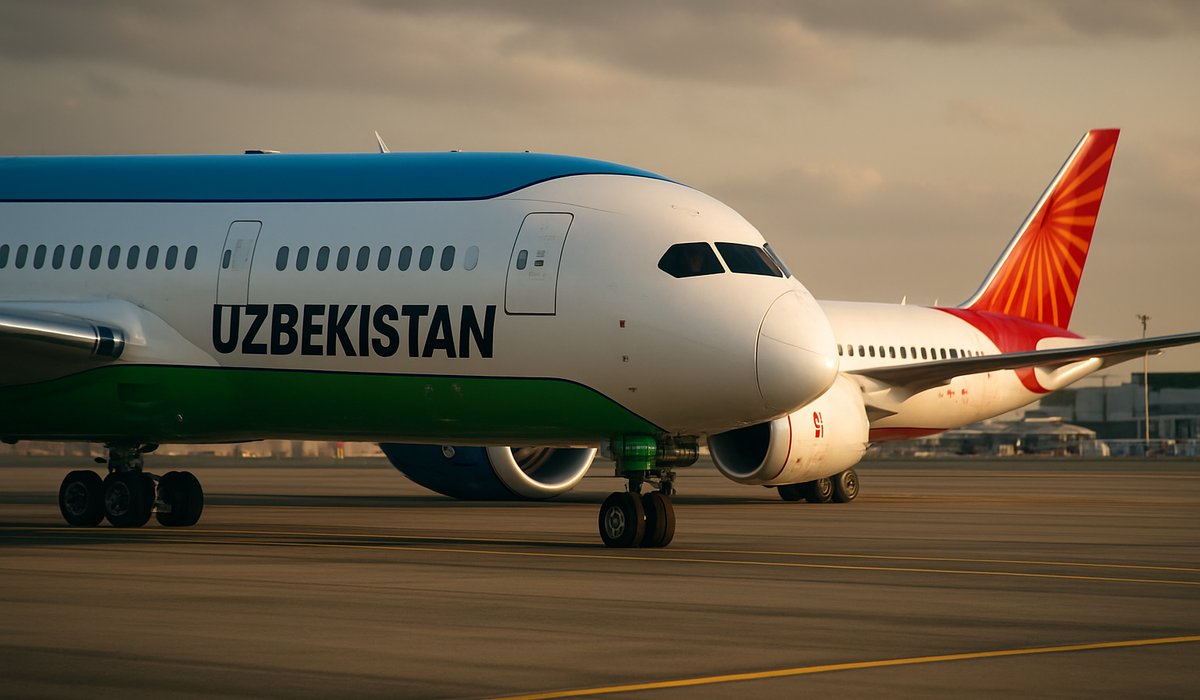
Image generated by AI
Eradicating the Borders Between South and Central Asia
Addressing a massive, highly lucrative void in the Eurasian aviation map, aviation titans Uzbekistan Airways and Air India have officially executed a dramatic expansion of their strategic partnership, heavily linking the two massive demographics via deeply integrated codesharing agreements. Historically, navigating the airspace between the deep tech hubs of India and the massive, resource-rich epicenters of Central Asia required incredibly convoluted routing through entirely unrelated Middle Eastern mega-hubs. This new aviation pact radically destroys that friction. The airlines are fundamentally stitching their networks together, allowing travelers to mathematically cross continents utilizing a single booking, a single ticket, and deeply integrated luggage transfers.
The strategy is a brilliant calculation of mutual economic gravity. Air India, currently backed by massive capital and completely overhauling its vast global fleet, desperately requires frictionless access into the incredibly stable and culturally dense markets of Tashkent and Samarkand. Conversely, Uzbekistan Airways must feed its growing European network by actively tapping into the absolute endless volume of the Indian outbound tourist demographic. By harmonizing their flight schedules, a traveler leaving the massive metropolis of Mumbai can gracefully step off the plane in Delhi, seamlessly transfer onto an Uzbekistan Airways jet, and arrive deeply into the ancient Silk Road just hours later.
The Power of the 'Single-Ticket' Revolution
The true luxury of this corporate handshake is entirely focused on the actual passenger experience.
When airlines execute a true, deep codeshare, the passenger's bureaucratic nightmare evaporates. The traveler purchases one exact itinerary directly from the Air India portal that technically includes an Uzbekistan Airways flight. If severe weather strikes Delhi and the first leg is heavily delayed, the financial liability completely shifts. The airlines are legally and mathematically bound to automatically re-accommodate the traveler on the connecting flight without punishing the passenger with severe "missed flight" penalties, completely shielding the traveler from massive financial ruin.
The Eurasian Route Synergy Matrix
| Partnership Mechanic | The Fragmented Pre-2026 Reality | The New Unified Reality |
|---|---|---|
| Booking Architecture | Highly complex, multi-site booking processes. | Unified, single-ticket generation across both platforms. |
| Baggage Logistics | Forced physical baggage retrieval and total re-check. | Flawless, automated deep-transfer; checked in Mumbai, retrieved in Tashkent. |
| Geographic Access | Massive 12-hour transits through Arab states. | Highly rapid, direct geographic bridging between Delhi and Central Asia. |
What Guests Get
- Redefining 'Transit Friction' — realizing that true codesharing completely removes the physical danger of losing your luggage between two heavily distinct global carriers.
- The destruction of 'Middle East Dependencies' — grasping that you mathematically no longer have to burn massive amounts of transit time flying into the UAE simply to boomerang back toward Central Asia.
- Micro-economic loyalty — understanding that elite travelers can now smoothly accumulate massively valuable frequent flier points across a unified system, drastically increasing their upgrade velocity.
What This Means for Travelers
If you are building an itinerary bridging India and Central Asia in 2026: You must aggressively leverage this exact codeshare architecture. When searching flight portals, meticulously verify that the flight sequence operates under a singular "PNR" (Passenger Name Record) linking Air India and Uzbekistan Airways. Do not attempt to "hacker-fare" the route by physically buying two separate tickets to save $50. If you build the route manually and a delay strikes, you have absolutely zero legal protection, and the second airline will mathematically cancel your expensive connecting ticket with no refund.
The Silk Road Tourism Boom: With massive flight access legally streamlined, expect a violent surge of high-end Indian tourism completely saturating the historic Silk Road cities like Bukhara and Samarkand. For global tourists arriving from the US or Europe into Uzbekistan, you must be heavily aware that you are competing directly with a massive, highly energized Indian demographic that loves to travel in massive groups. Secure all high-end bilingual tour guides and luxury lodging at least four months in advance.
FAQ: Navigating Airline Codeshares
What exactly is an 'Airline Codeshare'? It is a highly formalized, heavily legal aviation contract where two independent airlines formally agree to sell seats on each other’s physical flights, utilizing their own respective flight numbers, completely unifying the consumer booking portal.
Will my luggage truly transfer automatically? Yes. The absolute primary design of a codeshare is to hard-link the baggage databases of two distinct airlines, ensuring that deeply heavy luggage dropped off in Bangalore is electronically tracked and automatically loaded onto the Tashkent flight in Delhi.
Which airline's baggage policy absolutely applies? In global aviation, the Most Significant Carrier (MSC) rule mathematically applies. Usually, the airline physically operating the longest geographic segment (or the primary carrier on the ticket code) dictates the exact weight limit and brutal excess fees.
External Resources
Related Travel Guides
The Ultimate 2026 Guide to Exploring the Ancient Silk Road
Decoding Codeshares: Maximizing Your Connected Flights
Surviving Delhi Airport: The Masterclass of Luxury Transit
Disclaimer: Absolute network integration details (single-ticket generation), mutual codeshare flight implementations, and projected demographic yields deeply reflect verified corporate pacts published by Air India and Uzbekistan Airways in April 2026. Specific baggage integration rules (MSC logic) and flight liability matrices are strictly governed by constantly shifting global aviation law.
Raushan Kumar
Founder & Lead Developer
Full-stack developer with 11+ years of experience and a passionate traveller. Raushan built Nomad Lawyer from the ground up with a vision to create the best travel and law experience on the web.
Learn more about our team →