
Qantas's 2000 Fleet Gamble: How a Strategic Boeing 777 Rejection Shaped Two Decades of Aviation Operations
Breaking airline news and aviation industry updates for 2026.

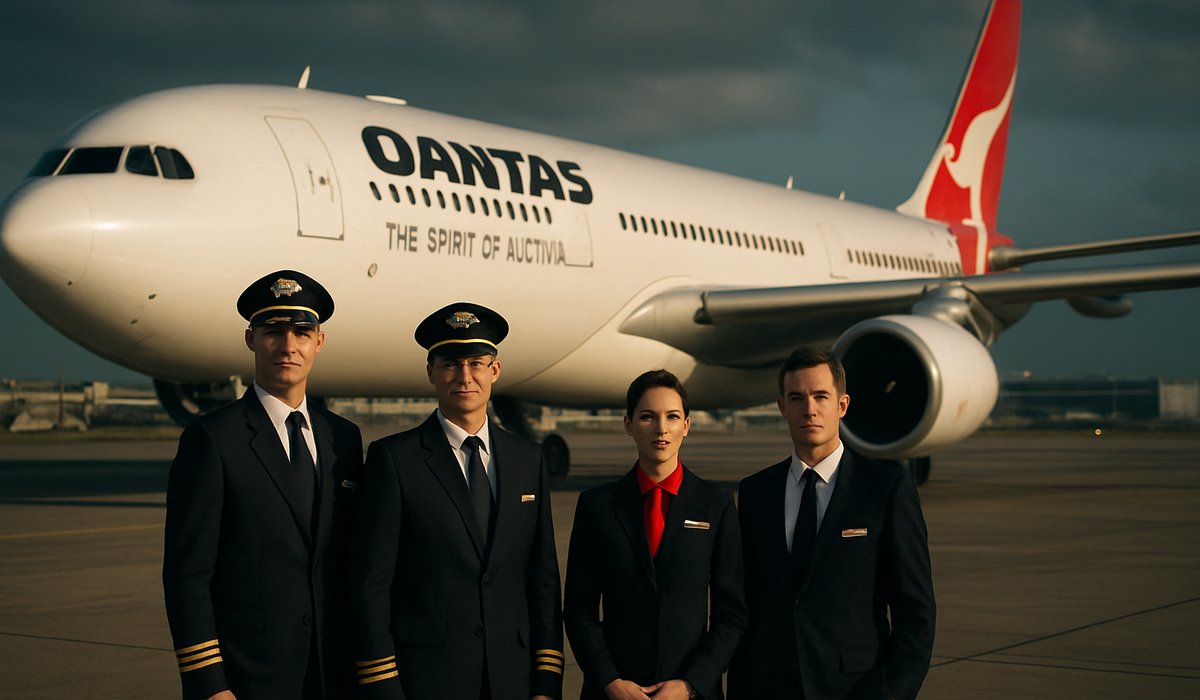
Image generated by AI
Qantas's 2000 Fleet Gamble: How a Strategic Boeing 777 Rejection Shaped Two Decades of Aviation Operations
The Australian carrier's pivotal decision to bypass the world's best-selling widebody aircraft set the course for its long-haul strategy and aircraft portfolio
The Decision That Reshaped Qantas's Fleet Strategy
Qantas made a consequential fleet acquisition decision in 2000 that would define its operational landscape for the next two decades, ultimately sidelining what would become the aviation industry's most dominant widebody aircraft. Under the leadership of then-CEO James Strong, Australia's flagship carrier deliberately rejected the Boeing 777—despite having participated in the aircraft's development consultations throughout the 1990s—in favor of an alternative fleet composition strategy.
The Strategic Rationale Behind the Aircraft Selection
The airline's fleet planning prioritized the Airbus A330 for domestic and regional operations, while committing to the Boeing 747-400ER variant for extended international routes. This decision was later complemented by orders for the revolutionary Airbus A380 superjumbo. According to Qantas's strategic assessment at the time, the Boeing 777 presented operational challenges specific to Australian operations that made it unsuitable for the carrier's needs.
Company leadership cited the aircraft's dimensions as problematic for domestic deployment, arguing that the 777's size exceeded requirements for Australia's regional network demands. More significantly, Australia's stringent Extended Twin Operations (ETOPS) regulations presented a regulatory barrier that prevented twin-engine aircraft from conducting ultra-long-haul flights under the prevailing safety framework of that era.
Long-Term Industry Implications
The decision proved consequential as the Boeing 777 subsequently became the world's best-selling widebody aircraft, capturing unprecedented market share across the global aviation industry. While Qantas's aircraft selection aligned with its operational constraints and regulatory environment at the time, the choice meant the carrier remained absent from what became aviation's most economically efficient and versatile widebody segment.
This strategic fork in the road illustrated how regulatory environments, infrastructure limitations, and fleet planning decisions made in a single year could shape an airline's competitive positioning and aircraft portfolio for decades to come—a principle that continues influencing modern aviation strategy as carriers navigate evolving fuel efficiency standards and changing long-haul route economics.
FAQ: Qantas Fleet Strategy and Boeing 777 Operations
Why didn't Qantas order the Boeing 777 when other major airlines adopted it? Qantas determined the 777 was operationally oversized for its domestic market and faced regulatory restrictions under Australia's ETOPS standards for twin-engine ultra-long-haul operations in 2000, making the aircraft incompatible with its network strategy.
What regulatory restrictions prevented Qantas from using twin-engine aircraft on extended routes? Australia maintained strict Extended Twin Operations (ETOPS) regulations that limited how far twin-engine aircraft could operate from emergency diversion airports, effectively prohibiting ultra-long-haul flights that Qantas required for its international network.
Did Qantas's A330 and 747-400ER selections prove strategically sound? The A330 provided adequate capacity for regional routes while the 747-400ER offered proven long-haul capability, though the carrier later supplemented this strategy with the A380, indicating evolving market demands and regulatory changes.
How has the aviation industry changed regarding ETOPS regulations since 2000? Regulatory frameworks have evolved significantly, permitting modern twin-engine widebodies to conduct extended flights with improved engine reliability and safety protocols—technology that has since made the Boeing 777 viable for previously restricted routes.
What lessons does Qantas's decision offer modern airlines regarding fleet planning? The case demonstrates that aircraft selection decisions must account for regulatory environments, infrastructure capabilities, and route networks specific to each carrier, as these factors can lock airlines into particular fleet strategies for decades.
Related Travel Guides
- UAE-India Flights Resume: A Strategic Bilateral Aviation Expansion
- Shreveport Regional Airport Secures Multi-Million Federal Grants for Modernization and New SkyWest Maintenance Base to Avert Airport Disruptions and Regional Travel Chaos: New Airline News and Aviation Updates
- FlyDubai, Air Arabia, Flynas, and Kuwait Airways Ground Flights Triggering Widespread Middle East Flight Cancellations and Delays Across Dubai, Sharjah, Jeddah, Dammam, and Manama: New Aviation Updates
Disclaimer
This article is for informational and educational purposes only. It does not constitute legal, financial, or professional advice. While we strive to provide accurate and up-to-date information, travel policies, regulations, and conditions change rapidly. Always verify information with official sources before making travel decisions. Nomad Lawyer makes no representations about the accuracy, reliability, completeness, or suitability of the information provided. Readers should consult qualified professionals for advice specific to their circumstances. The views expressed in this article are those of the author and do not necessarily reflect the views of Nomad Lawyer.
Kunal K Choudhary
Co-Founder & Contributor
A passionate traveller and tech enthusiast. Kunal contributes to the vision and growth of Nomad Lawyer, bringing fresh perspectives and driving the community forward.
Learn more about our team →