
USS Gerald R. Ford deployment breaks 11-month Navy record in 2026
The USS Gerald R. Ford deployment reached an unprecedented 11-month milestone in 2026, setting post-Vietnam era records while facing critical operational challenges including equipment failures and ammunition shortages affecting Navy readiness.

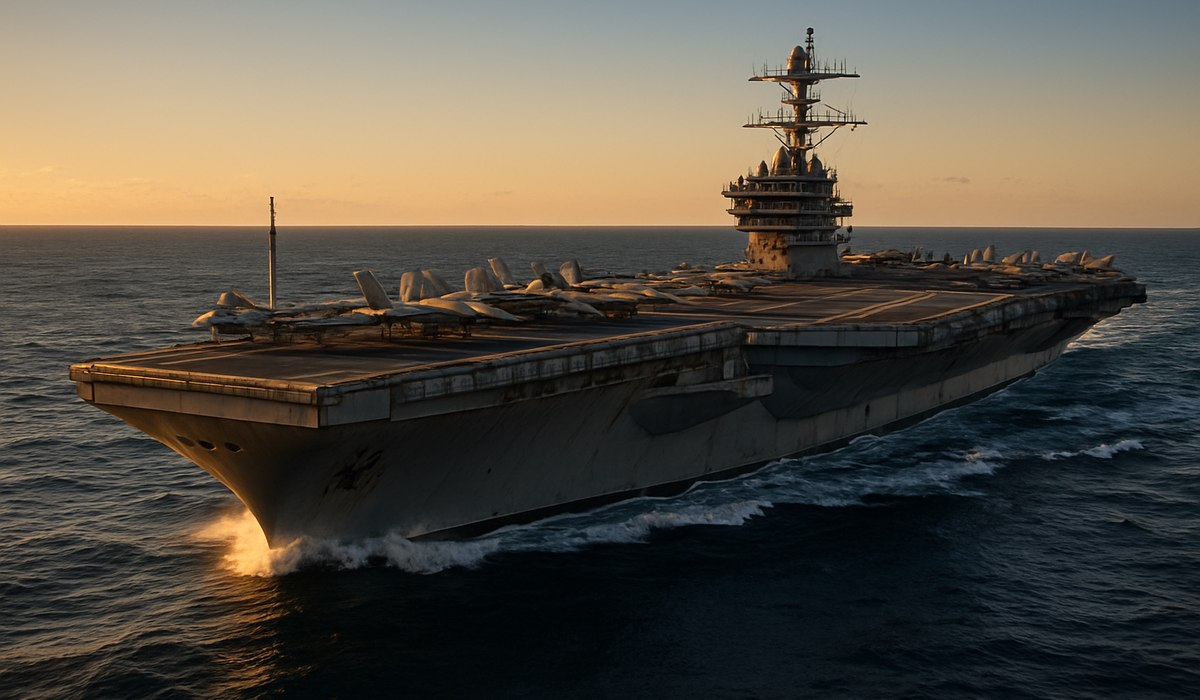
Image generated by AI
Historic USS Gerald R. Ford Deployment Enters Uncharted Territory
The USS Gerald R. Ford (CVN-78) has achieved an extraordinary milestone, approaching an 11-month extended deployment—the longest carrier mission in the post-Vietnam era. Originally deployed in June 2025, the Ford-class flagship extended its operational timeline in February 2026 to support Operation Epic Fury, the joint U.S.-Israeli campaign. Admiral Daryl Caudle, Chief of Naval Operations, acknowledged the historic nature of this USS Gerald R. Ford deployment during remarks at the Center for Strategic and International Studies, noting that such extended missions represent unprecedented demands on modern naval personnel and equipment.
Breaking Deployment Records: What 11 Months at Sea Means
The USS Gerald R. Ford deployment now surpasses recent carrier benchmarks significantly. The USS Abraham Lincoln remained deployed for 294 days in 2019-2020, while the USS Nimitz recorded 341 days at sea. However, the current Ford operation approaches 330+ days with potential extension beyond the standard operational window. For context, extended carrier deployments historically lasted six to nine months during the Cold War era.
This extended operational tempo reflects strategic demands in the Middle East and Indo-Pacific regions. The ship serves as the flagship of the Gerald R. Ford Carrier Strike Group, coordinating aviation operations across multiple allied nations. Crew rotations typically occur every 18-24 months, making 11-month continuous deployments physically and mentally taxing for sailors. The extended timeline raises important questions about sustainable Navy operations and personnel welfare standards moving forward.
Learn more about U.S. Navy carrier operations and fleet readiness.
Operational Challenges: Fire, Broken Equipment, and Munitions Issues
The USS Gerald R. Ford deployment encountered significant technical obstacles during its extended mission. A catastrophic laundry facility fire burned for approximately 30 hours, destroying hundreds of sailors' personal belongings and affecting adjacent living quarters. Despite this major incident, the crew resumed flight operations within 48 hours—a testament to crew resilience but also highlighting the ship's operational pressures.
Sanitation systems adapted from civilian cruise ships proved inadequate for military operations. The water-efficient toilet systems frequently clogged and failed throughout the deployment, affecting crew morale and hygiene standards. These civilian-derived technologies, intended to conserve resources, created unexpected vulnerabilities in extended operations.
Most critically, the USS Gerald R. Ford deployment consumed record quantities of munitions, exposing severe supply chain vulnerabilities. The ship's contribution to Operation Epic Fury resulted in over 850 Tomahawk cruise missile launches at Iranian targets alone. At approximately $3.6 million per missile, this represented a strategic drain on U.S. defense inventory. According to Pentagon budgeting documents, the Navy will receive only 110 Tomahawk missiles in Fiscal Year 2026—insufficient to replenish deployment losses.
The cost disparity between U.S. defensive systems and Iranian one-way attack drones created tactical inefficiencies. Firing $4-6 million SM-6 interceptors against $5,000 enemy UAVs illustrated asymmetric warfare challenges inherent in extended Middle Eastern operations.
Explore current U.S. Navy strategic challenges and readiness reports.
Impact on Navy Personnel and Readiness
Extended deployments fundamentally stress naval personnel beyond conventional operational limits. An 11-month USS Gerald R. Ford deployment represents continuous separation from families, friends, and normal shore-based routines. Psychological studies indicate extended deployments correlate with increased anxiety, depression, and relationship dissolution among service members.
Crew rotation schedules become compressed when deployment timelines exceed planned windows. Standard carrier crews rotate every 18-24 months; extended deployments can delay relief crews by three to six additional months. This compression reduces training opportunities for rotation crews and perpetuates fatigue among deployed personnel.
The sanitation system failures and equipment breakdowns during extended operations highlight maintenance and supply chain vulnerabilities. When repairs require shore-based resources unavailable at sea, operational degradation accelerates. The USS Gerald R. Ford deployment demonstrated that modern Navy vessels, despite advanced technology, depend on robust logistical support for extended missions.
Naval readiness metrics reflect stretched resources across the Atlantic and Pacific fleets. With carriers staying deployed longer, fewer vessels remain available for training, maintenance, and rapid-response missions. This operational tempo creates strategic gaps in global naval presence capabilities.
Comparison to Previous Carrier Deployments
Comparing the USS Gerald R. Ford deployment to historical precedents reveals evolving operational demands. The USS Abraham Lincoln's 2019-2020 deployment lasted 294 days; the USS Nimitz's 2020 deployment reached 341 days. Both missions preceded major geopolitical crises affecting current deployment schedules.
Historical Cold War-era deployments (1960s-1980s) typically lasted six to nine months with regular port visits and crew rotation opportunities. Modern deployments extend these timelines while maintaining higher operational tempo, reducing rest periods and maintenance windows. The USS Gerald R. Ford deployment, now approaching 330+ days, reflects intensified strategic competition and regional instability.
Deployment lengths correlate directly with geopolitical circumstances. The ship previously deployed to the Caribbean in support of operations capturing Venezuelan strongman Nicolás Maduro, demonstrating the carrier's role in diverse operational theaters. The transition to Operation Epic Fury in February 2026 required extended operations without returning to home port.
Crew composition differs markedly across carrier generations. Ford-class carriers employ larger crews than Nimitz-class predecessors, increasing berth demands and sanitation system loads—a factor contributing to the water-efficient toilet failures. Future carrier designs may incorporate enhanced crew facilities designed for extended deployments.
Key Data Table: USS Gerald R. Ford Deployment Metrics
| Metric | Value | Context |
|---|---|---|
| Deployment Start Date | June 2025 | Original operational launch |
| Extension Date | February 2026 | Operation Epic Fury authorization |
| Projected Deployment Length | 11+ months | Post-Vietnam era record |
| Previous Record (USS Nimitz) | 341 days | 2020 deployment duration |
| Tomahawk Missiles Launched | 850+ | Operation Epic Fury contribution |
| Cost Per Tomahawk Missile | $3.6 million | FY2026 acquisition cost |
| FY2026 Tomahawk Acquisition | 110 missiles | Navy budget allocation |
| Estimated Tomahawk Stockpile | 3,000 | Low-end estimate |
| Fire Duration (Laundry Facility) | 30 hours | April 2026 incident |
| Crew Recovery Time | 48 hours | Flight operations resumed |
What This Means for Travelers
While military deployments may seem disconnected from civilian travel, extended carrier operations affect regional accessibility and security infrastructure. Here's what matters for international travelers:
-
Middle East Travel Advisories: Extended carrier deployments maintain heightened security postures in Gulf states and surrounding regions. Monitor U.S. State Department travel advisories for Iran-adjacent countries, as military operations may affect border crossings and airspace.
-
Port Access Limitations: Extended USS Gerald R. Ford deployment schedules affect Mediterranean and Middle Eastern port accessibility. Naval presence may restrict civilian vessel movements and port facility availability in strategic harbors.
-
Flight Route Adjustments: Military operations necessitate temporary airspace restrictions. International flights crossing the Persian Gulf and eastern Mediterranean may experience routing changes or delays during active operations.
-
Security Checkpoint Changes: Enhanced military readiness increases security protocols at civilian airports near naval bases. Allow additional time when traveling near Norfolk Naval Station (Virginia) or other major military ports.
Disclaimer
This article is for informational and educational purposes only. It does not constitute legal, financial, or professional advice. While we strive to provide accurate and up-to-date information, travel policies, regulations, and conditions change rapidly. Always verify information with official sources before making travel decisions. Nomad Lawyer makes no representations about the accuracy, reliability, completeness, or suitability of the information provided. Readers should consult qualified professionals for advice specific to their circumstances. The views expressed in this article are those of the author and do not necessarily reflect the views of Nomad Lawyer.
Preeti Gunjan
Contributor & Community Manager
A passionate traveller and community builder. Preeti helps grow the Nomad Lawyer community, fostering engagement and bringing the reader experience to life.
Learn more about our team →