
USA Freedom 250 Shatters World Record With 850,000 Fireworks on National Mall, Driving Tourism Surge From UK, France, and Japan
The United States launched 850,000 fireworks over Washington D.C.'s National Mall during Freedom 250 celebrations, setting a world record attempt and drawing massive inbound tourism from the UK, France, and Japan.

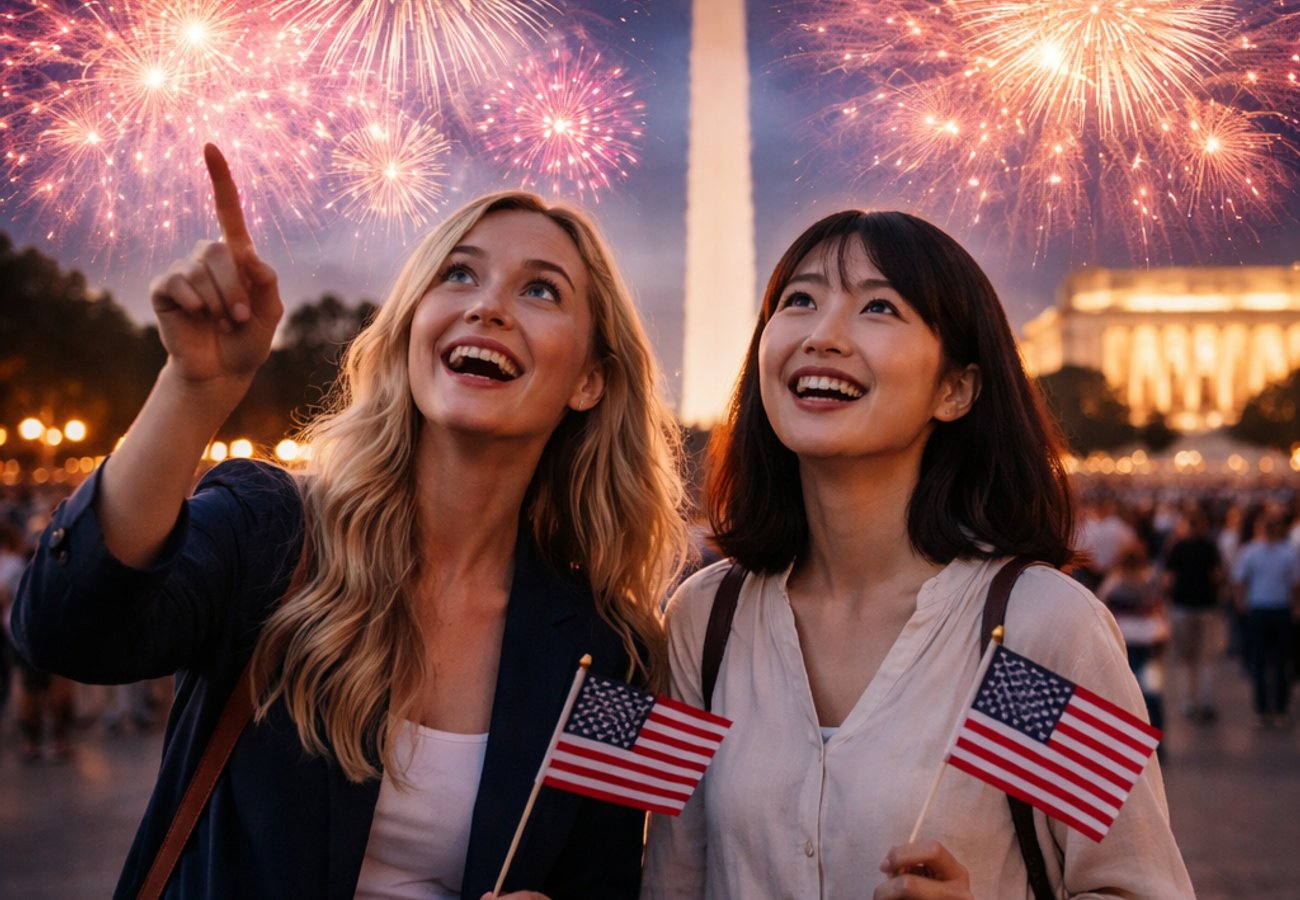
Image generated by AI
[Washington, D.C., July 6, 2026] — The United States launched 850,000 fireworks over Washington, D.C.'s National Mall on July 4, 2026, shattering previous baselines and triggering a massive inbound tourism wave from the UK, France, and Japan during the Freedom 250 semiquincentennial celebrations.
The National Park Service (NPS) executed the monumental "Salute to America" display despite severe weather disruptions, deploying 850,000 individual munitions across a 40-minute window — a staggering escalation from the standard 7,000-firework shows historically staged at the same venue. The Trust for the National Mall, serving as the NPS's official non-profit partner, documented the event as an official attempt to establish a new world record for the largest staged fireworks display in history.
Freedom 250 Rewrites the Rulebook for Global Mega-Event Tourism
The July 4, 2026, commemorations marking America's 250th anniversary fundamentally altered expectations for how national celebrations can function as international tourism drivers. Washington, D.C. served as the epicenter of a coordinated effort that aligned federal agencies, local safety authorities, pyrotechnic engineers, aviation regulators, and international tour operators into a single synchronized ecosystem.
For travel trade professionals, the scale of production signals a shift in how landmark national events can be leveraged. The jump from 7,000 munitions to 850,000 does not merely exceed past benchmarks — it redefines what destinations can promise visitors. The Trust for the National Mall meticulously recorded the attempt, and the resulting data offers a blueprint for tourism boards worldwide considering similar mega-event strategies.
Inbound travel surges from key international source markets required months of advance logistical preparation. Airlines added capacity on transatlantic and transpacific routes. Hotels across the Washington metropolitan region reported near-capacity occupancy throughout the holiday weekend. The economic ripple extended into restaurants, ground transportation, and guided tour services across the capital region.
Decoding the 850,000-Munition Leap on the National Mall
Standard Independence Day displays on the National Mall have historically featured approximately 7,000 fireworks, according to official National Park Service data. The Freedom 250 escalation to 850,000 munitions represents a 121-fold increase over the typical baseline — a figure that demanded unprecedented coordination across multiple disciplines.
| Metric | Standard July 4 Display | Freedom 250 Display |
|---|---|---|
| Total Munitions | ~7,000 | 850,000 |
| Duration | Approximately 20 minutes | 40 minutes |
| World Record Attempt | No | Yes |
| International Tourism Focus | Regional | UK, France, Japan |
| Lead Agency | National Park Service | National Park Service |
| Non-Profit Partner | Trust for the National Mall | Trust for the National Mall |
Pyrotechnic engineers worked alongside aviation authorities to secure temporary flight restrictions over the capital airspace. Ground control teams managed crowd flow across the National Mall's expansive footprint. The 40-minute display duration doubled the typical show length, requiring precise choreography between firing systems, music synchronization, and safety perimeters.
For destination management companies and travel agents, the promise of a world-record attempt functioned as a powerful marketing instrument. International operators secured early allocations for flights and accommodation packages, ensuring their clients could witness what organizers positioned as a once-in-a-lifetime historical spectacle.
Weather Crisis Tests Federal Crowd Management on July 4
The operational execution faced severe real-world disruptions that tested the resilience of every system in place. At 7:15 PM on July 4, the National Park Service issued a severe weather evacuation alert, directing all visitors on the National Mall to seek immediate shelter. Lightning activity and high winds forced a full ground evacuation.
Freedom 250 organizers announced the reopening of the National Mall gates at 9:45 PM, a swift recovery that allowed the revised schedule to proceed. The originally planned 10:30 PM fireworks start time shifted to accommodate both the weather delay and the President's subsequent remarks to the gathered crowd.
| Timeline | Event |
|---|---|
| 7:15 PM | NPS issues severe weather evacuation alert |
| 9:45 PM | Freedom 250 organizers reopen National Mall gates |
| 10:30 PM (Revised) | Fireworks display begins after weather delay and official addresses |
The NPS managed the safe evacuation and return of hundreds of thousands of domestic and international visitors without reported injuries. Tour operators who had built contingency plans into their high-value packages were able to adjust pickups, hotel returns, and viewing location logistics in real time. The federal safety response demonstrated a level of crowd control that industry observers say bolsters international confidence in US-based mega-events.
UK, France, and Japan Drive International Inbound Tourism to Washington
The economic impact of the Freedom 250 fireworks record extended well beyond American borders. Travel data indicates that tourism flows from the UK, France, and Japan heavily shaped the ground-level visitor demographics in Washington, D.C. throughout the celebration period.
Tour operators in the United Kingdom packaged "Semiquincentennial" historical tours that linked the shared political heritage between the two nations. British travel agencies reported strong demand for heritage-based itineraries that combined Washington, D.C. viewing access with visits to colonial-era sites along the East Coast.
Luxury travel agencies in France capitalized on the Franco-American historical alliance, offering premium viewing experiences with exclusive access packages. French operators focused their marketing on shared political history and the cultural significance of the American Revolution, positioning the fireworks display as the centerpiece of high-end East Coast itineraries.
Japan, a market highly responsive to world-record events and major cultural spectacles, saw significant booking surges for group travel to the United States. Japanese operators structured East Coast itineraries around the record-breaking display, bundling Washington, D.C. visits with stops in New York and Philadelphia.
| Source Market | Travel Package Focus | Booking Trend |
|---|---|---|
| United Kingdom | Historical and heritage-based tours linking shared UK-US history | High demand for Semiquincentennial packages |
| France | Luxury bookings with premium access and shared political history emphasis | Strong premium segment performance |
| Japan | Group travel oriented around exclusive, record-breaking global events | Significant booking surges for East Coast itineraries |
For B2B stakeholders, aligning product offerings with specific cultural interests across these three international markets proved a proven strategy for revenue maximization. The United States successfully leveraged its national milestone to stimulate international aviation and hospitality sectors across multiple continents.
Trust for the National Mall Balances Spectacle With Preservation
Behind the 850,000 munitions launched into the night sky, the Trust for the National Mall carried out extensive ecological and structural safeguarding across the National Mall grounds. As the official non-profit partner of the NPS, the Trust's role in preparing the venue for an event of this magnitude involved months of planning.
Preparing the grounds to safely host such a massive pyrotechnic display required structural assessments of monuments, environmental impact studies, and post-event restoration protocols. The Trust ensured that the historical grounds beneath the record-breaking display remained protected throughout the staging and execution phases.
Travel trade professionals recognize that sustainable tourism practices remain deeply intertwined with mega-event staging. Destinations promising world-record spectacles must account for the environmental footprint of such productions. The Trust's work demonstrates that large-scale tourism events can coexist with preservation mandates when planning begins early and ecological safeguards are embedded into the operational framework.
Why This Matters: A New Blueprint for Mega-Event Tourism Economics
The Freedom 250 fireworks record delivers several lessons that extend far beyond a single night in Washington, D.C. First, the 121-fold increase in munitions scale proves that destination marketing can be built around quantifiable, verifiable superlatives — world records, record-breaking attendance figures, and historically unprecedented spectacles — that resonate with international source markets in ways that standard celebrations cannot.
Second, the three-nation inbound tourism pattern from the UK, France, and Japan reveals that mega-events succeed when destinations tailor their marketing narratives to the specific cultural and historical connections of each source market. British operators sold shared heritage. French agencies sold political alliance. Japanese firms sold record-breaking spectacle. The same event generated three distinct tourism products.
Third, the weather crisis on July 4 validated the importance of federal-level crowd management infrastructure. The NPS evacuation at 7:15 PM and reopening at 9:45 PM demonstrated that large-scale events require institutional capacity — not just private-sector logistics — to manage safety risks. Tour operators who had built contingency protocols into their packages adapted in real time, while those without flexible arrangements faced disruptions.
Finally, the Trust for the National Mall's ecological safeguarding work establishes a sustainability standard that future mega-event organizers will need to match. As destinations worldwide study the Freedom 250 model, the balance between tourism appeal and historical preservation will define which events succeed long-term and which leave damaging legacies.
The United States has set a new benchmark — 850,000 munitions, 40 minutes, three major international source markets, and a world record attempt — that tourism boards and travel trade professionals will reference for years to come.
The Freedom 250 display proves that when a nation stages history at this scale, the world travels to watch it happen.
Related Travel Guides
Disclaimer
This article is for informational and educational purposes only. It does not constitute legal, financial, or professional advice. While we strive to provide accurate and up-to-date information, travel policies, regulations, and conditions change rapidly. Always verify information with official sources before making travel decisions. Nomad Lawyer makes no representations about the accuracy, reliability, completeness, or suitability of the information provided. Readers should consult qualified professionals for advice specific to their circumstances. The views expressed in this article are those of the author and do not necessarily reflect the views of Nomad Lawyer.
Raushan Kumar
Founder & Lead Developer
Full-stack developer with 11+ years of experience and a passionate traveller. Raushan built Nomad Lawyer from the ground up with a vision to create the best travel and law experience on the web.
Learn more about our team →