
Over Three Thousand Flights Delayed and Eighty Cancelled Across the United States Following Severe Texas Storms and Ground Stops
Over 3,636 flight delays and 83 cancellations hit the United States due to severe Texas storms and ground stops. Read the full airport breakdown and traveler guide.

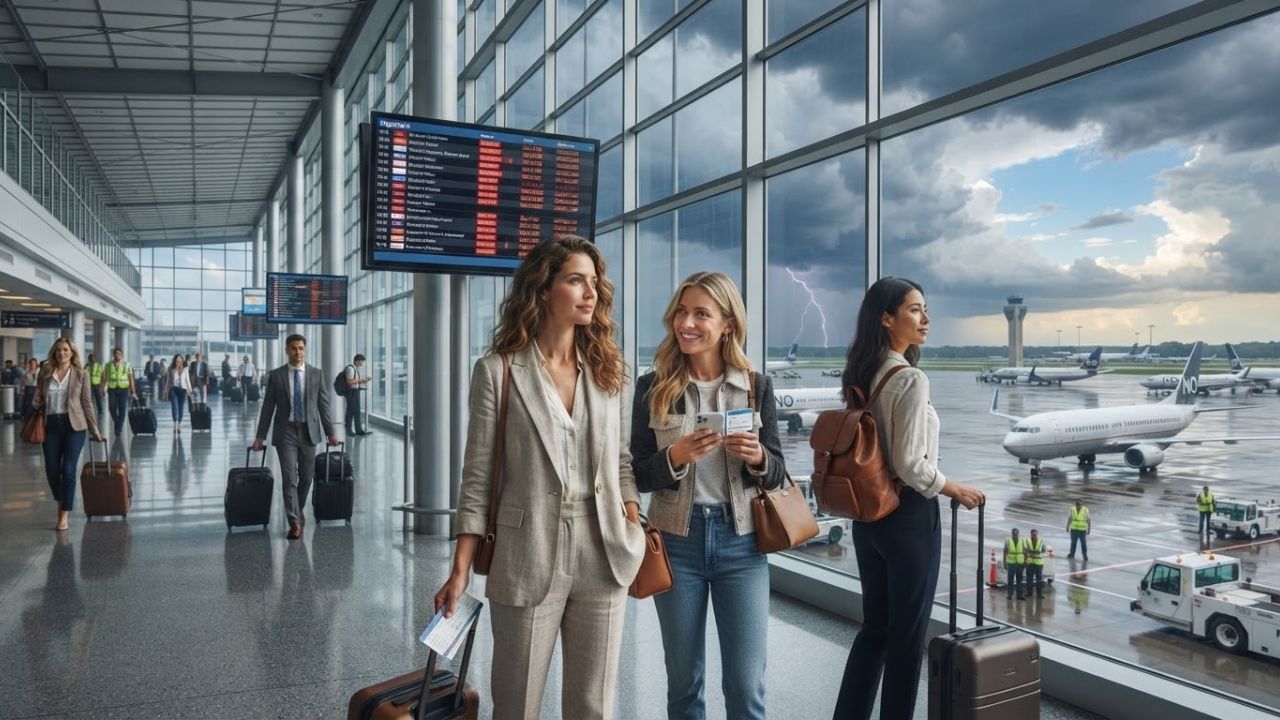
Image generated by AI
A severe weather system bringing torrential rain, flash flooding, and tornadoes to Texas triggered widespread aviation disruptions on July 15, 2026, causing 3,636 flight delays and 83 cancellations across the United States. Major hubs including Dallas-Fort Worth, Chicago O'Hare, and Reagan National experienced significant operational backlogs.
The Disruption Details
[Dallas, Texas – July 16, 2026] — According to flight tracking systems, a massive convective storm front swept across the Southern Plains and Midwest on July 15, 2026, forcing the Federal Aviation Administration (FAA) to issue temporary ground stops for Dallas-Fort Worth International Airport (DFW) and Dallas Love Field (DAL). Although the ground stops were later lifted, the resulting congestion created a backlog of delayed departures and arrivals that spread throughout the national airspace.
Our analysis of the flight data indicates that Dallas-Fort Worth emerged as the country’s most delayed airport, recording 693 flight disruptions. The severe weather system produced flash flood warnings west of San Antonio, where the Texas Hill Country recorded more than 12 inches of localized rainfall. Additionally, the National Weather Service confirmed a tornado touchdown in northwestern San Antonio near Interstate 10, highlighting the extreme atmospheric instability that disrupted regional operations.
As these storms progressed, the delays cascaded through major connecting hubs. In addition to the regional disruptions in Texas, airports in Illinois, Minnesota, Ohio, and Washington experienced secondary delays as carriers worked to reposition aircraft and crews that had fallen behind schedule.
Flight & Airport Impact Breakdown
The operational impact of the weather systems was concentrated across several key airline hubs and regional carriers:
- Dallas-Fort Worth International Airport (DFW): Recorded 693 delayed flights, the highest total in the nation, with departures delayed by an average of 45 minutes due to terminal weather holds.
- Reagan National Airport (DCA): Registered 173 delays and 19 cancellations, representing the highest number of cancellations among the affected airports.
- Chicago O'Hare International Airport (ORD): Logged 260 delays and 9 cancellations, causing scheduling challenges for connecting transcontinental traffic.
- Seattle-Tacoma International Airport (SEA): Handled 115 delays and 3 cancellations, disrupting Pacific Northwest schedules.
- Minneapolis-Saint Paul International Airport (MSP): Experienced 87 delays and 4 cancellations, impacting regional traffic across the Upper Midwest.
- American Airlines: Led all domestic carriers with 577 delayed flights and 7 cancellations, primarily due to its high concentration of operations at its Dallas-Fort Worth hub.
- United Airlines: Logged 311 delays and 13 cancellations across its domestic network.
- SkyWest Airlines: Reported 292 delayed flights and 4 cancellations, affecting codeshare connections for major carriers.
- Delta Air Lines: Experienced 273 delays and 3 cancellations on domestic routes.
- PSA Airlines: Registered 179 delays and 19 cancellations, representing the highest cancellation rate among regional operators.
Passenger Rights & Advisory (Information Gain)
Travelers affected by these nationwide flight delays and cancellations should be aware of their rights and options under current regulatory frameworks:
- U.S. Department of Transportation (DOT) Guidelines: For domestic flights within the United States, if an airline cancels a flight or makes a significant schedule change and the passenger chooses not to travel, they are entitled to a full refund to the original form of payment. This rule applies regardless of whether the disruption was caused by weather or airline maintenance.
- Weather-Related Delays and Compensation: Because this disruption was triggered by weather and FAA ground stops—events classified as safety-related and outside the direct control of the airlines—carriers are not legally mandated to provide financial compensation or hotel vouchers. However, major carriers (including American, United, and Delta) have committed in their customer service plans to rebook passengers on the next available flight at no additional cost.
- Meal and Lodging Vouchers: Passengers experiencing overnight delays should ask gate agents if their carrier can provide discounted hotel rates or meal vouchers. While not legally required for weather events, airlines often provide these as a gesture of goodwill. Travelers should keep all receipts for meals, transport, and lodging to submit to their travel insurance providers.
- Actionable Transit Tips: Travelers should download their airline's mobile application to monitor real-time flight status, track baggage, and self-rebook if flights are canceled. When hubs like DFW or Chicago O'Hare experience ground stops, self-connecting passengers should allow at least 3 hours between flights to account for scheduling adjustments.
Industry Analyst View
From an operational standpoint, convective summer weather presents a complex recovery challenge for commercial carriers. Because airlines operate with high aircraft utilization rates during the peak summer season, there are very few spare aircraft available to absorb delays. A ground stop at a primary connecting hub like Dallas-Fort Worth immediately disrupts subsequent flight legs across the country, creating crew duty limitations.
Under FAA Part 117 regulations, flight crews have strict daily limits on their duty hours to prevent fatigue. When an aircraft is held on the tarmac or delayed at a gate for multiple hours, the pilots and flight attendants risk exceeding their legal duty times. Consequently, airlines are often forced to cancel later flights even if the weather has cleared, simply because they lack legally qualified crews to operate the aircraft. To recover from such events, carriers must prioritize repositioning aircraft to key hubs, often leading to proactive cancellations on low-yield regional routes to preserve mainline schedules.
Related Travel Guides
Disclaimer
This article is for informational and educational purposes only. It does not constitute legal, financial, or professional advice. While we strive to provide accurate and up-to-date information, travel policies, regulations, and conditions change rapidly. Always verify information with official sources before making travel decisions. Nomad Lawyer makes no representations about the accuracy, reliability, completeness, or suitability of the information provided. Readers should consult qualified professionals for advice specific to their circumstances. The views expressed in this article are those of the author and do not necessarily reflect the views of Nomad Lawyer.
Kunal K Choudhary
Co-Founder & Contributor
A passionate traveller and tech enthusiast. Kunal contributes to the vision and growth of Nomad Lawyer, bringing fresh perspectives and driving the community forward.
Learn more about our team →