
Major Global Hubs Including Chicago O'Hare and London Heathrow Brace for Unprecedented Passenger Backlogs and Summer Flight Delays
Chicago O'Hare, London Heathrow, Dubai, Shanghai Pudong, and Orlando brace for passenger backlogs and delays due to summer storms and staff shortages.

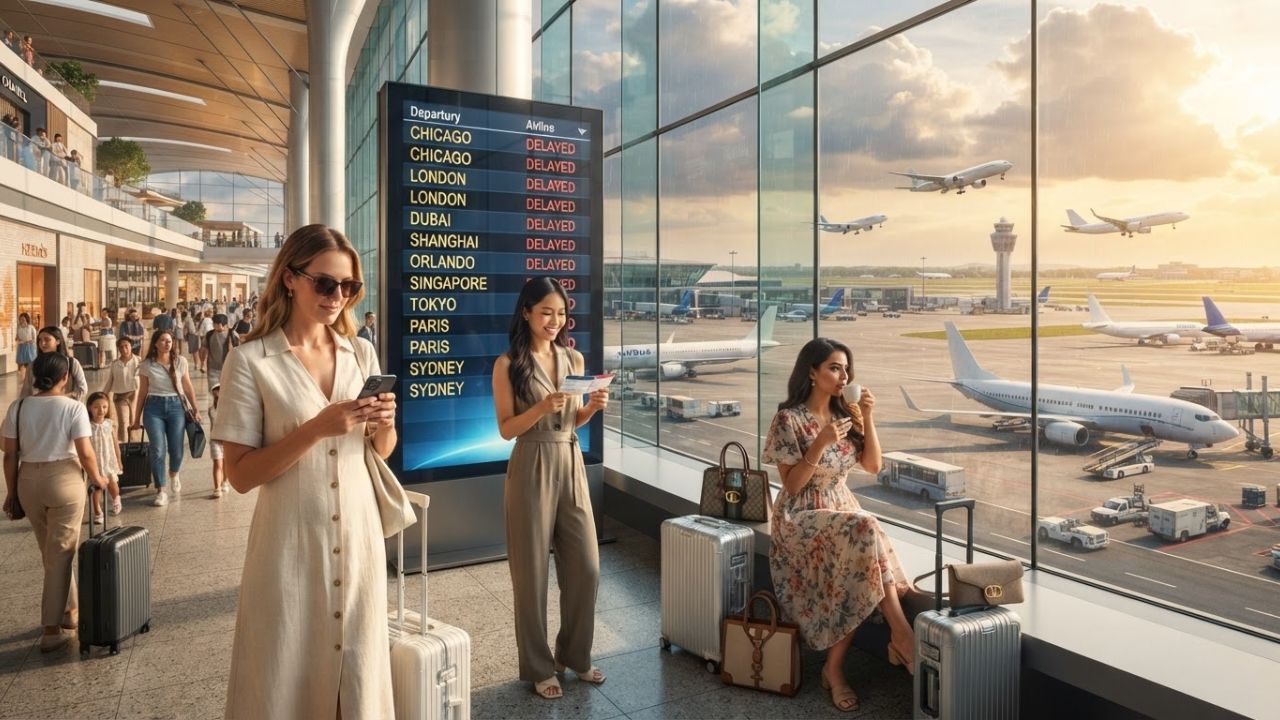
Image generated by AI
Five major global airports experience passenger backlogs and severe delays this summer as historic travel demand collides with tight staffing and adverse weather conditions. Facilities including Chicago O’Hare, London Heathrow, Dubai International, Shanghai Pudong, and Orlando International are implementing contingency plans to manage terminal congestion and runway gridlock. Industry reports indicate that a lack of reserve personnel, paired with restricted air traffic corridors, has left airport operators with almost no room to recover from scheduling disruptions.
Global Aviation Hubs Face Extreme Capacity Pressures
Commercial air traffic is reaching record levels, straining terminal check-in desks, security checkpoints, and baggage processing systems worldwide. The current congestion is fueled by a rapid recovery in international leisure demand, combined with localized summer storms and regional airspace restrictions. Flight dispatchers report that high aircraft utilization rates have left carriers without the spare capacity needed to absorb minor delays, causing scheduling bottlenecks to cascade across international networks.
Chicago O'Hare Manages Surge in Daily Flight Departures
Chicago O'Hare International Airport (ORD) has reclaimed its position as a primary global hub by aircraft movements, leading to a highly congested operational environment. The significant volume of daily arrivals and departures makes the Midwestern airspace highly sensitive to weather disruptions. When summer thunderstorms affect Illinois, the airport's high flight density triggers immediate ground stops and runway holds.
Airlines operating at Chicago O’Hare have scheduled high numbers of seasonal departures to capture passenger demand. Consequently, even short-lived convective weather fronts can cause flight delays that persist for multiple days. These local delays quickly spread to other major airports across the United States, forcing scheduling coordinators to adjust crew duty rotations and aircraft positioning.
Shanghai Pudong Experiences Influx of International Widebody Flights
Shanghai Pudong International Airport (PVG) has logged a significant post-pandemic traffic rebound, entering the ranks of the five busiest airports worldwide. Relaxed international visa entry policies have stimulated a major influx of foreign tourists and business travelers. The volume of international arrivals has created long processing queues at the airport’s customs and immigration checkpoints.
Although the facility features modern processing infrastructure, the concentration of arriving international widebody aircraft during peak morning and evening hours challenges terminal capacity. Ground service operators are experiencing baggage handling delays as the rate of arriving passenger luggage exceeds standard processing speeds. Airport authorities are shifting personnel to peak arrival areas to expedite customs clearance and mitigate terminal queues.
Dubai International Processes High Passenger Volumes at Security Gates
Dubai International Airport (DXB) is operating at near-maximum capacity as it manages transit passengers connecting between Europe, the Asia-Pacific region, and the Americas. Despite extreme summer temperatures in the Gulf region, millions of travelers pass through the airport's terminals daily. The concentrated waves of arriving and departing widebody flights during the middle of the night place heavy stress on security transit screening points.
Because the majority of flights at Dubai International are operated using high-capacity aircraft, a single delayed arrival can disrupt travel plans for hundreds of connecting passengers. This creates overcrowded conditions in terminal concourses, duty-free areas, and airline lounges. Ground handling teams must coordinate closely with air traffic control to manage gate allocations and prevent inbound aircraft from waiting on taxiways.
Orlando International Resolves Family Travel Bottlenecks
Orlando International Airport (MCO) is experiencing severe seasonal congestion as family leisure travel peaks. The Florida gateway routinely records some of the highest delay and cancellation rates in North America. The high proportion of leisure travelers, who often travel in large groups with young children and multiple checked bags, results in slower processing speeds at security checkpoints and boarding gates.
Additionally, Central Florida's frequent afternoon lightning storms regularly halt airport ground operations to protect ramp workers. When ramp activities are suspended, aircraft cannot be loaded, fueled, or pushed back from gates, leading to immediate terminal gridlock. These weather-related ground delays leave thousands of passengers waiting inside the terminal for extended periods.
London Heathrow Navigates Congested European Airspace Holding Patterns
London Heathrow Airport (LHR) is operating at approximately ninety-eight percent of its total runway capacity, leaving the United Kingdom's primary gateway with no operational buffer. Ongoing airspace closures and routing restrictions over Eastern Europe and the Mediterranean have concentrated traffic into narrower flight paths. This airspace compression forces aircraft into longer routings and creates scheduling delays before flights even depart.
When arriving flights miss their scheduled landing slots at London Heathrow, air traffic controllers must place aircraft into extended holding patterns over the capital. These airborne delays compound, leading to concentrated arrivals that overwhelm immigration halls and automated passport gates. Airport staff are working to manage passenger flow within the terminals to prevent safety hazards in congested corridors.
Global Airport Performance & Bottleneck Comparison
The following table summarizes the key operational statistics, primary drivers of congestion, and main bottlenecks at the five affected global aviation hubs:
| Airport Hub (IATA Code) | Primary Driver of Summer Surge | Key Traffic Statistic | Main Operational Bottleneck |
|---|---|---|---|
| Chicago O'Hare (ORD) | Domestic flight expansion and competitive route additions. | ~750 daily departures by primary carrier United Airlines. | Taxiway congestion and severe Midwestern thunderstorms. |
| Shanghai Pudong (PVG) | Relaxed visa entry policies and rising international arrivals. | Over 4.8 million scheduled seats handled during peak July. | Customs clearance delays and baggage system capacity limits. |
| Dubai International (DXB) | Transatlantic and transpacific connecting transit traffic. | Over 4.3 million international seats managed in summer peak. | Security transit queues during concentrated midnight and morning banks. |
| Orlando International (MCO) | High-volume family travel to regional amusement parks. | Highest percentage of delayed summer flights (~34.7%) in North America. | Slower security checkpoint screening and afternoon lightning delays. |
| London Heathrow (LHR) | Transatlantic passenger demand and European route networks. | Over 4.4 million scheduled seats handled at peak capacity. | Airborne holding patterns caused by restricted European airspace. |
Analyzing the Cascade of Global Flight Disrupted Networks
Aviation analysts indicate that the global travel network operates with highly integrated schedules, meaning that a disruption at one hub has immediate international consequences. For domestic networks, weather delays in Chicago or Orlando disrupt the rotation of aircraft scheduled to fly subsequent routes. On international routes, an airspace delay over Europe can cause a widebody jet to arrive late in Dubai, causing passengers to miss their onward connections to Asia or Australia.
This interconnectedness requires carriers to coordinate crew schedules and maintenance rotations carefully. When delays accumulate, flight crews risk exceeding their legally mandated duty limits, forcing airlines to cancel flights even when aircraft are available. Airport ground operations are adjusting schedules, but clearing passenger backlogs remains slow due to high seasonal passenger loads, leaving very few empty seats available for rebooking.
Why This Matters (Information Gain)
The passenger backlogs at these five major aviation hubs highlight a systemic mismatch between current airport infrastructure and global travel demand. While airlines have expanded schedules and purchased new aircraft, airport processing capacity remains limited by physical space and staffing constraints. This imbalance is particularly visible at international gateways, where passport control, customs, and security checkpoints act as physical bottlenecks.
For the aviation industry, this summer surge serves as an indication that digital modernization is required to maintain operational efficiency. Implementing biometric security screening, automated baggage routing systems, and advanced air traffic management tools will be necessary to process rising passenger volumes. Until these long-term infrastructure upgrades are completed, travelers must prepare for ongoing delays during peak travel seasons, relying on early arrivals and digital tools to manage their journeys.
Meta Description: Chicago O'Hare, London Heathrow, Dubai, Shanghai Pudong, and Orlando face passenger backlogs and flight delays due to summer storms and high travel volumes.
Disclaimer
This article is for informational and educational purposes only. It does not constitute legal, financial, or professional advice. While we strive to provide accurate and up-to-date information, travel policies, regulations, and conditions change rapidly. Always verify information with official sources before making travel decisions. Nomad Lawyer makes no representations about the accuracy, reliability, completeness, or suitability of the information provided. Readers should consult qualified professionals for advice specific to their circumstances. The views expressed in this article are those of the author and do not necessarily reflect the views of Nomad Lawyer.
Preeti Gunjan
Contributor & Community Manager
A passionate traveller and community builder. Preeti helps grow the Nomad Lawyer community, fostering engagement and bringing the reader experience to life.
Learn more about our team →