
US Visa Fee Expansion Imposes Higher Cost on Corporate Employers
The United States expands H-1B and L-1 visa fees, adding up to $4,500 in new compliance costs for employers sponsoring foreign skilled workers.
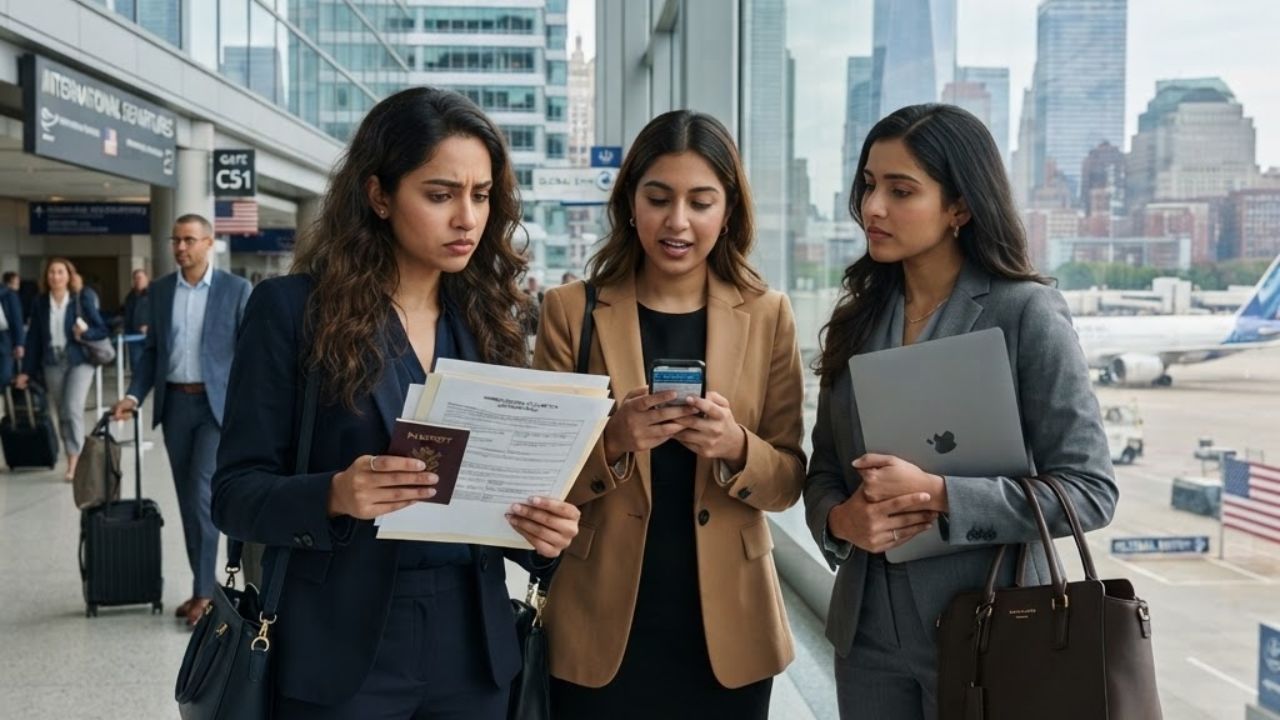
Image generated by AI
Imposing substantial financial charges on companies that rely on foreign skilled workers, the United States government has expanded its H-1B and L-1 visa fee rules to include specific extension-of-stay applications.
The updated regulations, directed by the U.S. Department of State and the U.S. Citizenship and Immigration Services (USCIS), require eligible employers to pay an additional $4,000 for H-1B extensions and $4,500 for L-1 extensions. This change expands the scope of the existing 9-11 Response and Biometric Entry-Exit Fee, raising compliance and staffing expenses for technology, engineering, and consulting firms. While these fees are not paid directly by individual visa holders, the expansion alters corporate immigration budgets and global workforce planning.
The Local Trend Revealed: Strategic Cost Shifting in Immigration Policy
The expansion of the H-1B and L-1 fee framework represents a policy shift designed to fund biometric security programs while encouraging companies to reduce their reliance on international contract professionals. Previously, these additional fees were primarily applied to initial visa petitions and petitions involving a change of employer. By extending the charges to renewal and extension-of-stay filings, the government has created a recurring cost structure for businesses that maintain long-term international staff within the country.
The additional fees apply to employers that meet specific workforce parameters. Under the guidelines, a sponsoring firm must have at least 50 employees in the United States, and more than 50% of its domestic workforce must hold H-1B, L-1A, or L-1B status. This target structure ensures that small businesses and firms with a low concentration of foreign professionals are exempt, focusing the financial burden on larger consulting and staffing operations.
The following table provides a comparison of the additional fees and targeted workforce conditions:
| Visa Program Category | Additional Employer Cost | Sponsoring Firm Workforce Size | Sponsoring Firm Visa Concentration | Primary Program Funding Focus |
|---|---|---|---|---|
| H-1B Visa Extension | $4,000 per petition | At least 50 US-based employees | More than 50% of workforce on H-1B/L-1 | Biometric entry-exit programs (USCIS) |
| L-1A/L-1B Extension | $4,500 per petition | At least 50 US-based employees | More than 50% of workforce on H-1B/L-1 | Biometric entry-exit programs (USCIS) |
| Amended Filings (No Extension) | Exempt (no additional cost) | Any size or concentration | Not applicable | Standard processing fees only |
| Exempt Sponsoring Firms | Exempt (no additional cost) | Under 50 employees | Under 50% of workforce on H-1B/L-1 | Standard processing fees only |
Macroeconomic Compliance and Corporate Hiring Adjustments
For large multinational companies and technology staffing firms, the long-term cost implications of these fee increases are significant. Sponsoring organizations must review their immigration budgets to absorb these expenses. For example, a consulting firm executing 100 H-1B extension petitions faces an additional $400,000 in visa expenses, while 100 L-1 extensions add $450,000 in direct compliance costs.
According to reports from the U.S. Bureau of Consular Affairs, the biometric entry-exit program supported by these fees is scheduled to remain active through September 30, 2027. Sponsoring firms are adjusting their international human resource plans to manage these costs, which could lead to shifts in where technology and consulting roles are located. Some companies may evaluate whether certain development positions should be relocated to global delivery centers in Canada, Europe, or Asia rather than maintained in the United States.
The expansion of H-1B and L-1 fees highlights a broader trend in the US immigration system, where more operational costs are shifted to employers through compliance and sponsorship channels. Sponsoring organizations must allocate more capital for international talent acquisition, which could lead to shifts in where technology and consulting roles are located. Some companies may evaluate whether certain development positions should be relocated to global delivery hubs in Canada, Europe, or India rather than maintained in the United States. Sponsoring organizations must also manage the timeline of filing extensions, since late filings or requests for evidence (RFEs) can lead to additional administrative and legal costs, further inflating their overall immigration expenditures.
Cultural and Environmental Stewardship: Professional Community Preservation
For the visitor, the real impact is the preservation of diverse professional communities and the support of local economies surrounding major technology hubs. International professionals contribute to the cultural diversity and economic activity of cities like San Jose, Seattle, and Austin. By maintaining these diverse workforces, companies support the multicultural character of regional business districts.
Traveling professionals and relocating families can support their host cities by participating in community-based economies. Choosing to live in transit-accessible neighborhoods, using public transportation networks (such as the BART in San Francisco or the Link Light Rail in Seattle), and dining at independent local restaurants helps distribute economic benefits directly to local residents. This sustainable stewardship ensures that professional migration supports community development and environmental preservation.
Visitor Insider Tips: Navigating US Professional Transit and Relocation
Relocating to the United States under the updated H-1B and L-1 immigration framework requires careful planning:
- Managing Port of Entry Documentation: Sponsoring employers must cover all petition fees. When entering the United States, carry physical copies of your I-797 approval notice, labor condition applications, and a current employment verification letter. Sponsoring firms are legally prohibited from passing H-1B fee costs to the employee.
- Understanding Business Etiquette: Professional communication in the United States is direct and structured around timelines. Meetings start promptly. Tipping is standard social practice, with 15% to 20% of the bill expected at restaurants, for taxi rides, and for other personal services.
- Exploring Regional Tech Hubs: Tech professionals can explore options in growing regional hubs outside Silicon Valley, such as the Research Triangle Park in North Carolina or the Silicon Hills of Austin, Texas, which offer strong professional networks and lower living costs.
- Under-the-Radar Spot: Visit local historic districts like Pioneer Square in Seattle or the historic center of Austin, which feature local markets, independent craft breweries, and cultural heritage exhibits that support the regional economy.
Tourism and Professional Relocation Outlook: Policy and Integration
The long-term outlook for professional travel and relocation is shaped by balancing immigration costs with access to global talent. While the expanded visa fees increase the cost of maintaining foreign professionals in the United States, the demand for specialized skills remains high. As companies adapt to these financial requirements by optimizing their hiring practices, the integration of international talent will continue to drive innovation, cultural exchange, and sustainable regional development across major technology cities.
Key Takeaways
- Fee Expansion: Sponsoring employers must pay an additional $4,000 for H-1B extensions and $4,500 for L-1 extensions under the updated rules.
- Workforce Thresholds: The fee applies to companies with at least 50 employees in the US where over 50% of the workforce holds H-1B or L-1 status.
- Biometric Funding: The fees support the biometric entry-exit tracking program, which is scheduled to remain in place through September 30, 2027.
- Indirect Impact: Sponsoring companies may review their long-term hiring strategies and global talent relocation plans due to rising visa costs.
FAQ
Does the visa holder have to pay the new extension fees?
No, the legal and financial responsibility for these additional fees rests solely with the sponsoring employer.
Which filings are exempt from the biometric entry-exit fee expansion?
Amended petitions that do not request an extension of stay, and petitions filed by employers who do not meet the size and visa concentration thresholds, are exempt.
How long will this biometric fee remain in effect?
Under current congressional authorization, the biometric entry-exit fee program is scheduled to continue through September 30, 2027.
Related Travel Guides
- Lamphun Holds The Golden Key To Unlocking An Unforgettable Travel Route In Northern Thailand, All You Need To Know
- Shanghai Pudong International Airport Flight Cancellations Strand Hundreds
- Mount St. Helens Johnston Ridge Observatory Reopening in 2027: State Route 504 Road Repairs Restore Access After 3-Year Closure
Disclaimer
This article is for informational and educational purposes only. It does not constitute legal, financial, or professional advice. While we strive to provide accurate and up-to-date information, travel policies, regulations, and conditions change rapidly. Always verify information with official sources before making travel decisions. Nomad Lawyer makes no representations about the accuracy, reliability, completeness, or suitability of the information provided. Readers should consult qualified professionals for advice specific to their circumstances. The views expressed in this article are those of the author and do not necessarily reflect the views of Nomad Lawyer.