
Severe US Thunderstorms Trigger Catastrophic Global Travel Chaos, Sparking Massive Flight Cancellations Across Europe, Asia, and Canada: Latest Airline News
As devastating thunderstorms paralyze massive American transit hubs, a terrifying wave of international flight cancellations and airport disruptions is actively crippling the global aviation network.

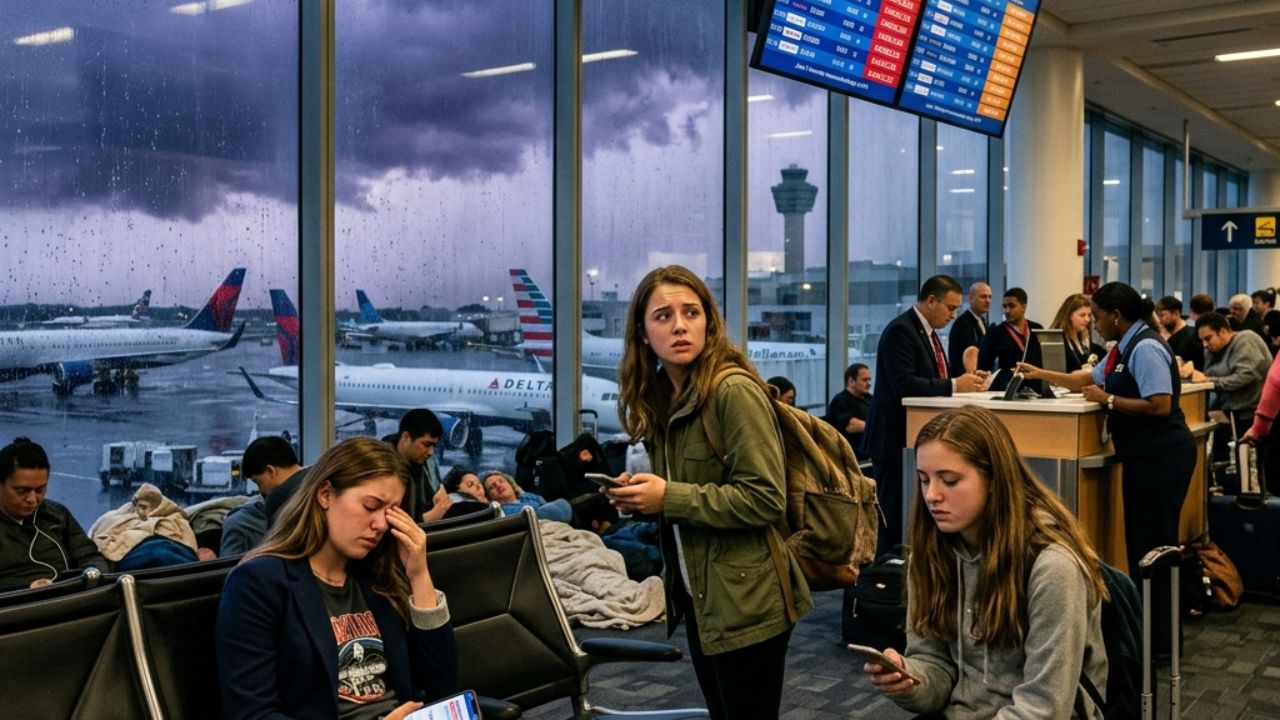
Image generated by AI
A Devastating Collapse of the Global Aviation Grid
While millions of passengers anticipated a flawless early summer getaway, the extreme fragility of the international aviation network is currently being exposed by a catastrophic wave of sudden flight cancellations, paralyzing terminal gridlock, and systemic travel chaos. Delivering highly critical, urgent airline news, industry data confirms that what initially began as localized American thunderstorms has violently escalated into a massive, worldwide operational crisis. While desperate passengers attempt to dodge massive airport disruptions and severely delayed connections, these exclusive aviation updates reveal that extreme high winds and low visibility have forced severe FAA flow control constraints across America's most pivotal transit hubs. With absolute gridlock infecting Atlanta, Dallas-Fort Worth, Newark, Denver, San Francisco, and New York, the resulting logistical nightmare has instantly transmitted across continents, heavily crippling international flight schedules throughout North America, Europe, Asia, and the Caribbean.
Expanded Overview: The Systemic Fragility of Aviation
The massive collapse of global scheduling integrity serves as undeniable proof that the modern aviation grid functions as a highly vulnerable, deeply integrated mechanism. When systemic aviation breakdowns occur—triggered by a brutal combination of severe storms, air traffic congestion, massive FAA ground delays, and terrifying personnel deficits—the resulting bottleneck completely destroys the stability of the entire global network.
Because international carriers operate on incredibly compressed turnaround times with tightly scheduled flight crews and aircraft, there is absolutely zero elasticity left in the system. As an unprecedented surge in early summer passenger volume violently collides with restricted runway capacities across the United States, a single delay initiated in Dallas or San Francisco instantly triggers a devastating domino effect. Within mere hours, these domestic American disruptions violently cascade across the oceans, causing massive international flight cancellations and stranding tens of thousands of global travelers in heavily congested foreign transit hubs.
Section-Wise Breakdown of the International Crisis
The Canadian and Transatlantic Collapse
Because of its extreme geographical proximity, Canada is enduring the most devastating immediate fallout. The high-density corridor linking Toronto, Vancouver, and Montreal to major US hubs is entirely gridlocked, forcing carriers like Air Canada, United, Delta, and American Airlines to execute massive cancellations as aircraft fail to cross the border. Simultaneously, the highly lucrative transatlantic corridor is buckling. Flights linking London Heathrow, Frankfurt, and Munich to New York, Boston, and Atlanta are severely delayed. When these American departures fail to launch, massive European arrival windows are completely shattered, immediately disrupting outbound European connections to the Middle East and Asia.
Asian Gateways Paralyzed
The logistical terror has deeply infected the transpacific corridor, heavily paralyzing major Asian gateways. Tokyo and Seoul rely heavily on precise arrivals from San Francisco, Los Angeles, and Seattle. Currently, San Francisco International Airport is a massive, highly dangerous bottleneck; severe winds and active runway construction have forced regulators to dramatically slash hourly arrival rates. Consequently, Japan Airlines and All Nippon Airways passengers are suffering massive delays, frequently arriving in the US only to discover their domestic connections have already departed. Furthermore, Indian travelers originating from Delhi, Mumbai, and Bangalore are heavily experiencing this chaos, suffering massive displaced baggage and overnight strandings when connecting through crippled hubs like Newark and Chicago.
The Mexican and Caribbean Blockade
The highly lucrative leisure travel corridors leading into Mexico and the Caribbean have also been completely paralyzed by this American weather crisis. Massive holiday hubs, including Cancun, Punta Cana, Nassau, and San Juan, rely entirely on a continuous, uninterrupted flow of incoming aircraft from Miami, Orlando, Houston, and Charlotte. As persistent thunderstorms violently track across Texas and Florida, thousands of tourists are currently stranded in transit, their peak summer vacations completely ruined by severe FAA air traffic volume restrictions and compounding, systemic delay cascades.
Global Aviation Disruption and Hub Impact Metrics Table
To fully comprehend the highly calibrated operational parameters that dictate this massive industry collapse, the following table explicitly details the core international regions and the specific American bottleneck airports triggering the crisis:
| Global Region | Affected International Hubs | American Bottleneck Airports |
|---|---|---|
| Canada Corridor | Toronto, Vancouver, Montreal, Calgary, Ottawa | Chicago, Atlanta, New York, Dallas, Denver |
| United Kingdom | London Heathrow | New York, Atlanta, Chicago, Boston, Los Angeles |
| Continental Europe | Frankfurt, Munich | Newark, Chicago, Dallas, Washington |
| East Asia (Japan/Korea) | Tokyo, Seoul | San Francisco, Los Angeles, Seattle |
| Indian Subcontinent | Delhi, Mumbai, Bangalore, Chennai | Newark, Chicago, Dallas, San Francisco |
| Mexico & Caribbean | Cancun, Punta Cana, Nassau, Montego Bay | Miami, Orlando, Houston, Charlotte |
Passenger Impact: Insulating the Traveler from Exhaustion
For the modern international commuter and tourist, the passenger impact of this massive, weather-induced logistical failure is financially and emotionally devastating. The modern demographic is increasingly demanding absolute logistical reliability, actively turning away from travel itineraries crippled by heavily delayed flights arriving into overwhelmed mega-hubs.
When massive airport disruptions trigger nationwide flight cancellations across the United States, foreign passengers are frequently stranded in chaotic terminal lobbies for hours, watching their vacation time and business schedules violently evaporate. Indian students traveling for critical university interviews, British tourists headed to the Caribbean, and Japanese corporate executives are all currently suffering through missed domestic connections, utterly displaced baggage, and completely unexpected, highly expensive overnight airport stays as customer service resources collapse under the sheer volume of displaced travelers.
Industry Analysis: A System Devoid of Buffer Zones
From a macroeconomic and industry operations perspective, this massive international meltdown highlights a highly strategic, terrifying vulnerability within the United States aviation infrastructure. The contemporary airspace over America is completely packed, and essential primary airports are functioning at absolute maximum capacity limits.
Travel analysts fiercely argue that the complete lack of operational buffer zones is the true culprit. Critical, long-term staffing shortages within the air traffic control system, combined with massive runway construction projects at major hubs like San Francisco and persistent telecommunications failures at Newark, mean airlines have zero margin for error. The sheer scale and geographic exposure of mega-hubs like Atlanta and Dallas guarantee that the moment severe thunderstorms develop, the entire global grid will violently violently collapse, instantly transmitting delays to Toronto, London, and Tokyo within a single operating cycle.
Conclusion: A Highly Volatile Horizon for Global Travel
The massive disruption of the international aviation grid driven by American thunderstorms is exponentially more than a routine weather delay—it represents a massive, highly terrifying failure of global scheduling elasticity. By violently transmitting localized delays across the oceans, the United States aviation infrastructure has proven that its internal vulnerabilities directly jeopardize the stability of the entire world's travel network. As legacy hubs continue to drown in devastating delays and massive flight cancellations, global passengers are left to navigate a terrifyingly unreliable travel landscape, desperately hoping for a stabilization in American airspace before the peak summer travel season is entirely destroyed.
Key Takeaways
- Global Flight Cancellations: Severe American thunderstorms have triggered a massive wave of international flight cancellations, devastating global schedules.
- Widespread Airport Disruptions: Mega-hubs including Atlanta, Dallas, Newark, and San Francisco have suffered absolute gridlock due to severe FAA flow control constraints.
- Transatlantic & Canadian Chaos: Toronto, London Heathrow, and Frankfurt are experiencing massive secondary disruptions as delayed American flights shatter global arrival windows.
- Transpacific Paralyzation: Passengers flying Japan Airlines and ANA from Tokyo are suffering massive missed connections due to severe runway restrictions at San Francisco.
- No Operational Buffer: The crisis proves the US aviation system lacks any elasticity, deeply burdened by ATC shortages, congested airspace, and massive runway construction.
Disclaimer: The flight cancellation metrics, international hub impacts, and FAA advisory data presented in this report are based on official aviation industry assessments and real-time operational reports. Network capacity adjustments, severe weather patterns, and specific airport runway restrictions are extremely volatile and subject to continuous change. International travelers routing through the United States are urgently advised to monitor their booking status directly with their airline and prepare for potential overnight transit delays.
Disclaimer
This article is for informational and educational purposes only. It does not constitute legal, financial, or professional advice. While we strive to provide accurate and up-to-date information, travel policies, regulations, and conditions change rapidly. Always verify information with official sources before making travel decisions. Nomad Lawyer makes no representations about the accuracy, reliability, completeness, or suitability of the information provided. Readers should consult qualified professionals for advice specific to their circumstances. The views expressed in this article are those of the author and do not necessarily reflect the views of Nomad Lawyer.
Kunal K Choudhary
Co-Founder & Contributor
A passionate traveller and tech enthusiast. Kunal contributes to the vision and growth of Nomad Lawyer, bringing fresh perspectives and driving the community forward.
Learn more about our team →