
Aviation Updates: Delta, Emirates, and Air India Execute Massive Corporate Overhauls to Combat Global Travel Chaos
As intense airport disruptions cripple the industry, Delta Air Lines, Emirates, and Air India launch historic multi-billion-dollar restructuring plans to shield passengers from systemic flight cancellations.

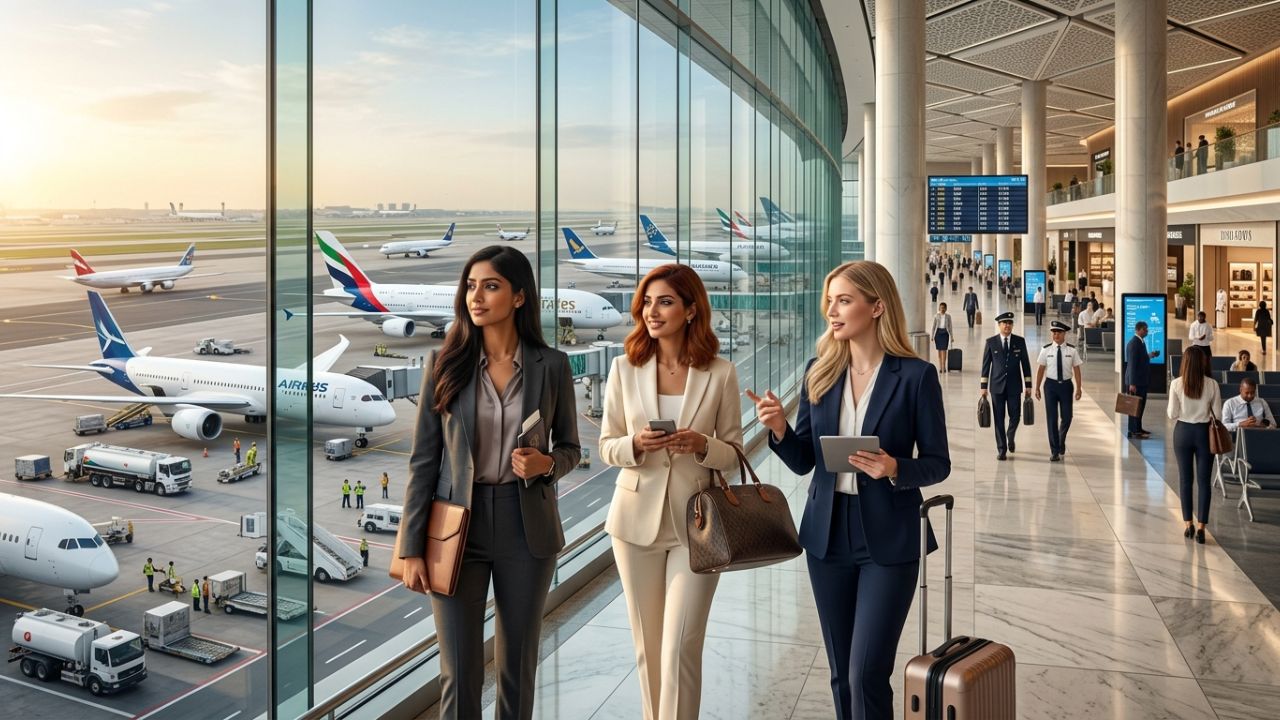
Image generated by AI
Aviation Updates: Delta, Emirates, and Air India Execute Massive Corporate Overhauls to Combat Global Travel Chaos
While the traveling public completely suffocates under a brutal summer of systemic operational failures, the world's most elite legacy carriers are aggressively restructuring their C-suites and pouring billions into massive infrastructure to absolutely bulletproof their global networks.
While the incredibly volatile daily airline news cycle is heavily and painfully dominated by agonizing stories of massive flight cancellations and severe, rolling airport disruptions, a massive, silent revolution is aggressively reshaping the absolute top tier of the commercial aviation sector. The United States’ Delta Air Lines has officially joined India’s Air India, the United Arab Emirates’ Emirates, Saudi Arabia’s Riyadh Air, and Qatar’s Qatar Airways in a historic, unprecedented wave of global airline executive restructuring. These incredibly powerful aviation giants are aggressively applying identical, highly calculated operational remedies to manage extreme market expansion and completely shield their massive networks from the brutal travel chaos currently crippling legacy infrastructure.
According to meticulous civil aviation authority updates and official corporate registries, these massive legacy carriers are heavily altering their C-suites and pouring billions of dollars into highly advanced physical infrastructure to survive in a deeply volatile global marketplace. At the absolute center of this massive international shift is a synchronized, ruthless wave of executive modernization designed specifically to future-proof their operations against sudden macroeconomic shocks and the agonizing threat of systemic transit gridlock.
Aviation Updates: The Strategic Architecture of Survival
To successfully bypass the horrific realities of modern travel chaos, incredibly strong, highly centralized corporate governance is absolutely critical.
Qatar Airways Group Establishes New Accountabilities
Qatar Airways Group recently initiated a massive, highly targeted corporate push to design incredibly specialized executive roles reporting directly to Group CEO Hamad Al-Khater. The massive organization aggressively created separate, highly empowered roles for a Chief Operating Officer (COO) and a Chief Customer Officer (CCO). This brutal internal alignment completely optimizes operational efficiency, successfully allowing the carrier to highly effectively manage its network recovery, which has officially reached 85% of pre-crisis levels.
Delta Air Lines Overhauls Corporate Command
As the United States aggressively joins this global movement, Delta Air Lines CEO Ed Bastian mandated a complete, ruthless reorganization of the carrier’s top leadership structure. The massive airline officially promoted Peter Carter to President, directly charging him with enterprise strategy. Concurrently, Dan Janki was aggressively appointed as Chief Operating Officer to completely unite all fragmented operational branches. To further reinforce absolute financial and marketing dominance, Erik Snell assumed the role of CFO, while Ranjan Goswami became the Chief Marketing and Product Officer.
Air India Solidifies Executive Succession
In India, the massive Tata Group-owned flag carrier, Air India, is systematically refining its top-tier succession plans following its incredibly complex, massive transformation program and the highly successful integration of Vistara. Corporate leadership has heavily narrowed its focus onto key operational veterans, specifically pairing Chief Commercial Officer Nipun Aggarwal and former Vistara CEO Vinod Kannan to aggressively guide the unified international carrier’s massive long-term trajectory.
Section-Wise Breakdown: Multi-Billion Dollar Infrastructure
A massive, vital component of this executive restructuring trend is the unprecedented deployment of massive capital into physical infrastructure to actively prevent future flight cancellations.
Emirates Deploys $5.1 Billion in Dubai
In the United Arab Emirates, Emirates has officially broken ground on a monumental, absolutely massive $5.1 billion engineering complex situated heavily at Dubai South. The facility aggressively targets a strict LEED Platinum sustainability rating and will absolutely house the world’s largest free-span hangar. By actively bringing component manufacturing and MRO capabilities entirely under its own strict control, Emirates significantly minimizes aircraft grounding periods and completely insulates its massive fleet from ongoing aerospace shipping delays. Furthermore, Emirates is rapidly accelerating wide-body fleet retrofits, deeply integrating Starlink satellite internet to deliver high-speed inflight connectivity.
Delta Integrates Aerodynamic Finlet Technology
Simultaneously, Delta Air Lines finalized a massive, highly strategic agreement to rapidly install Vortex Control Technologies’ advanced “Finlets” across 240 of its massive Boeing 737 aircraft. These highly specialized aerodynamic modifications drastically optimize airflow and massively reduce drag, directly lowering operational expenditures and heavily shielding corporate travel buyers from sudden ticket price spikes.
Securing the Secondary Gateways
To heavily combat primary hub congestion, Air India Express recently launched international operations out of Maharashtra’s newest aviation hub—Navi Mumbai International Airport—establishing direct flights to Abu Dhabi. Concurrently, Emirates aggressively increased its high-frequency flight density to Accra, Ghana, to seamlessly funnel African travelers directly into Dubai. In Saudi Arabia, Riyadh Air officially joined IATA and the CO2 Connect program, while deeply securing critical domestic trunk lines between Riyadh and Jeddah, massively supporting Saudi Vision 2030’s goal of over 100 international destinations.
Infrastructure and Executive Governance Matrix
To fully understand the massive scale of these corporate overhauls, the following matrix explicitly details the localized strategic upgrades across the highly strained global aviation network.
Confirmed Global Restructuring & Disruption Shield Matrix
| Nation / Region | Primary Carrier | Core Executive & Operational Objective |
|---|---|---|
| United States | Delta Air Lines | Massive C-suite overhaul & Boeing 737 aerodynamic fleet efficiency |
| India | Air India / Air India Express | Post-merger Vistara transition & Navi Mumbai hub deployment |
| United Arab Emirates | Emirates | $5.1 Billion MRO integration, Starlink upgrades & Accra densification |
| Saudi Arabia | Riyadh Air | Immediate IATA framework integration & Riyadh-Jeddah trunk routes |
| Qatar | Qatar Airways Group | 85% network recovery & specialized COO/CCO accountability |
Data definitively reflects the highly coordinated, massive multi-billion-dollar investments and structural realignments explicitly designed to completely insulate these premier carriers from localized airport failures.
Passenger Impact: Insulating the Corporate Traveler
For the highly exhausted global traveling public currently enduring a horrific summer of highly publicized flight cancellations, this massive executive restructuring provides an incredibly reliable, highly insulated escape.
By blending incredibly disciplined executive control with massive fuel-saving technologies, sovereign maintenance hubs, and fresh regional gateways, these elite carriers are successfully insulating their passengers from massive macroeconomic shocks. Corporate travel managers and highly lucrative B2B operators can now formulate massive long-term growth plans with absolute confidence, heavily relying on the incredibly stable, highly predictable operational environments deliberately engineered by these top-tier airlines.
Industry Analysis: The Next Decade of Dominance
Tourism economists and global aviation analysts universally agree that this massive trend completely signals a permanent, highly structured shift toward lean, highly specialized corporate leadership. The massive engineering independence demonstrated by Emirates’ $5.1 billion facility and Delta’s aggressive aerodynamic retrofitting ensures that these specific airlines will absolutely dictate international travel trade patterns for the next decade. By completely taking control of their massive supply chains and operational infrastructure, these carriers effectively immune themselves against the rolling delays that currently plague standard legacy systems.
Conclusion: Engineering an Unbreakable Network
The incredible events unfolding across the C-suites of Delta, Air India, Emirates, Riyadh Air, and Qatar Airways completely prove that true global dominance requires massive structural intervention. While standard legacy carriers frantically attempt to manage terrifying airport disruptions on a deeply reactive, day-to-day basis, these powerful aviation giants are pouring billions into completely rewriting the operational rulebook. For the international travel trade, these massive corporate upgrades rapidly deliver a highly welcome, incredibly stable era of absolute operational predictability, ensuring that the global aviation sector is structurally anchored for its next historic, deeply profitable chapter of expansion.
Key Takeaways
- Executive Overhauls: Delta, Qatar Airways, and Air India have launched massive, highly centralized C-suite reorganizations to combat global volatility.
- Emirates' $5.1B Investment: Emirates is aggressively building the world's largest free-span hangar at Dubai South to deeply control its own supply chain.
- Delta's Fleet Upgrades: Delta is rapidly retrofitting 240 Boeing 737s with advanced aerodynamic Finlets to massively cut fuel expenditures.
- Secondary Hub Expansion: Air India Express is successfully utilizing Navi Mumbai to completely bypass primary airport congestion.
- Riyadh Air Integration: Saudi Arabia’s newest carrier has officially joined IATA and secured vital domestic trunk routes ahead of its massive global launch.
- Bypassing the Chaos: These highly engineered, massive structural upgrades completely insulate these premier carriers from the severe flight cancellations currently paralyzing the industry.
Related Travel Guides
Canada Tightens Marine Tourism Regulations as Travelers Flee Global Airport Disruptions
Grenada and Nigeria Forge Historic Alliance to Bypass Global Travel Chaos
Disclaimer
This article is for informational and educational purposes only. It does not constitute legal, financial, or professional advice. While we strive to provide accurate and up-to-date information, travel policies, regulations, and conditions change rapidly. Always verify information with official sources before making travel decisions. Nomad Lawyer makes no representations about the accuracy, reliability, completeness, or suitability of the information provided. Readers should consult qualified professionals for advice specific to their circumstances. The views expressed in this article are those of the author and do not necessarily reflect the views of Nomad Lawyer.
Preeti Gunjan
Contributor & Community Manager
A passionate traveller and community builder. Preeti helps grow the Nomad Lawyer community, fostering engagement and bringing the reader experience to life.
Learn more about our team →