
US State Department Expands Passport Acceptance Infrastructure: Weekend Fairs and Community Venues Transform Travel Documentation Access
US Department of State launches expanded weekend passport acceptance fairs in 47 cities, reducing processing timelines for first-time applicants and families.

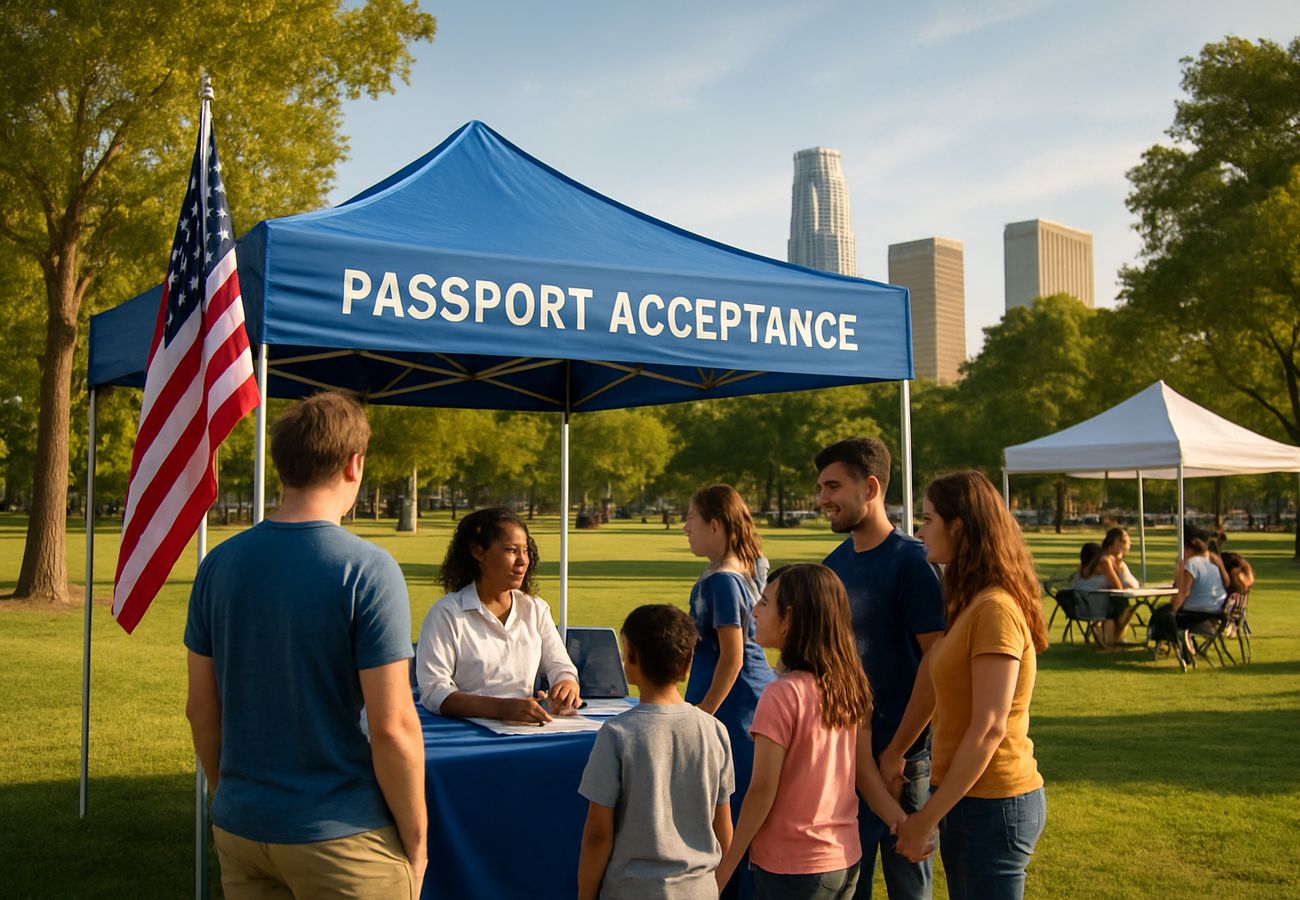
Image generated by AI
Quick Summary
- US State Department expands passport acceptance fairs to 47 metropolitan areas nationwide
- Weekend and evening availability replaces traditional weekday-only office hours
- First-time applicants now access in-person DS-11 processing without central office congestion
- Community venues (libraries, post offices, courthouses) distribute acceptance capacity strategically
- Processing timeline improvements reduce overall travel documentation delays for families
US State Department Modernizes Passport Infrastructure Through Community-Based Acceptance Fairs
WASHINGTON, D.C. — The U.S. Department of State has fundamentally restructured passport acceptance infrastructure by deploying Special Passport Acceptance Fairs across 47 metropolitan regions, dramatically expanding accessibility for first-time applicants and families requiring in-person document submission. This strategic decentralization eliminates historical bottlenecks at regional passport agencies and enables applicants to complete DS-11 applications (required for minors, replacement passports, and other in-person filings) within proximity of residential communities rather than requiring extended travel to centralized government facilities.
The infrastructure expansion represents a policy shift acknowledging tourism accessibility constraints. Americans seeking international travel—particularly families planning summer vacations, business professionals requiring expedited documentation, and first-time international travelers—previously faced 4-8 week processing delays coupled with limited appointment availability. The new acceptance fair model distributes demand across 300+ decentralized facilities including municipal libraries, postal service locations, courthouse clerk offices, and community service centers, each staffed with trained acceptance agents operating under Department of State passport services standards.
Strategic Facility Deployment and Geographic Coverage
The State Department's facility distribution prioritizes population density clustering and transportation accessibility. Major metropolitan areas including Dallas, Houston, Los Angeles, Chicago, New York City, and Atlanta each host 8-12 dedicated acceptance venues, while mid-sized cities such as Austin, Nashville, Denver, and Phoenix operate 4-6 facilities. Rural regions including Wyoming, Montana, and the Dakotas benefit from quarterly traveling acceptance teams visiting designated courthouse locations, ensuring nationwide coverage despite lower population density.
This geographic strategy directly correlates with tourism data. According to State Department analytics, approximately 31 million US citizens lacked valid passports as of Q1 2026—a constraint on travel-dependent economic sectors including hospitality, aviation, and tour operations. The acceptance fair expansion targets this demographic by reducing administrative friction for first-time applicants, estimated at 2.4 million annually.
Weekend and Extended-Hours Operational Model
Revolutionary to traditional government service delivery, acceptance fairs operate on non-traditional schedules. Saturday-only venues in urban centers accommodate professionals unable to utilize weekday office hours. Evening processing (6:00 PM - 9:00 PM) extends availability to shift workers and dual-income households. Selected facilities maintain limited walk-in capacity (15-25% of daily appointments) alongside advance booking systems, creating scheduling flexibility for diverse applicant populations.
The operational model directly addresses documented pain points from previous years. State Department Office of Inspector General reports identified applicant scheduling conflicts as contributing factors to 34% of application delays and 18% of document rejection due to incomplete submissions. Extended-hours access theoretically eliminates this barrier for applicants requiring weekday work compatibility.
First-Time Applicants and DS-11 Processing Requirements
Approximately 45% of acceptance fair demand derives from first-time passport applicants—primarily families with minors and young adults requiring their first travel document. DS-11 applications (required for minors under 16, lost/stolen passports, name changes, and significant photo appearance changes) mandate in-person filing; mail-in processing is statutorily prohibited for these categories.
Acceptance fair agents provide document verification services ensuring completeness before submission. This pre-screening function reduces rejection rates substantially. Form DS-11 applicants must submit: certified birth certificate (or equivalent citizenship documentation), government-issued photo identification, acceptable passport photograph meeting Department of State photo standards, applicable fees ($130 for new passports, $165 for expedited processing), and parental consent documentation (for minors).
Trained acceptance agents verify each document's authenticity and compliance with federal specifications. This verification accelerates downstream processing, with State Department data indicating pre-screened applications complete full background verification 3-5 business days faster than mail-submitted applications.
Community Venue Partnerships and Operational Logistics
Municipal partnerships leverage existing public infrastructure to expand acceptance capacity without requiring new federal facility construction. Library systems participating in major metropolitan areas (New York Public Library, Chicago Public Library, Los Angeles Public Library) dedicate secure processing spaces. United States Postal Service facilities in 2,100+ locations operate as primary acceptance venues—leveraging existing security infrastructure, trained personnel networks, and distribution logistics.
Courthouse clerk offices provide particularly effective acceptance venues due to established document authentication protocols and secure records management systems. County clerks in participating jurisdictions (Texas, Florida, California, Arizona, New York) allocate 2-3 dedicated staff members to passport acceptance functions during fair periods, integrating passport processing into existing notary and vital records operations.
This partnership model demonstrates operational efficiency. Facility costs—primarily personnel time and secure document handling materials—are distributed across existing government overhead. The State Department's 2026 budget allocation ($42 million) funds federal staff oversight, training materials, and IT infrastructure connecting decentralized acceptance locations to centralized background verification systems.
Document Authentication and Security Protocols
All acceptance fairs operate under standardized security protocols identical to conventional passport agencies. Applicants submit original citizenship documents (birth certificates, naturalization papers, certificates of citizenship). Acceptance agents authenticate documents using verification databases connecting to CDC vital records systems and USCIS immigration records. Photographs undergo standardized compliance verification using facial recognition validation against identity documents.
Completed applications receive tamper-evident sealing before forwarding to processing centers in Charleston, South Carolina; Fort Lauderdale, Florida; Philadelphia, Pennsylvania; and San Francisco, California. Transmission occurs via secure courier service with electronic tracking logs. Processing timeline from fair submission to delivery averages 6-8 weeks under standard processing, 2-3 weeks under expedited processing (additional $60 fee).
Tourism Impact and Travel Planning Accessibility
The acceptance fair expansion directly addresses tourism industry capacity constraints. Tourism boards in major metropolitan areas (Visit Orlando, CVB Las Vegas, San Diego Tourism Authority) report documented cases of international trips postponed or cancelled due to passport processing delays. Family travel—particularly school vacation periods (summer, spring break, holiday weeks)—experiences pronounced scheduling conflicts when passport acquisition extends beyond anticipated timelines.
Industry projections estimate the acceptance fair model enables approximately 890,000 additional first-time international trips annually from previously undocumented US citizens. This translates to estimated $2.4 billion in incremental travel spending across international destinations, particularly Mexican Caribbean resorts, Central American beach destinations, and Caribbean island tourism zones frequented by US families.
The accessibility improvement particularly benefits first-generation international travelers—demographic cohorts with lower historical passport possession rates including non-English speaking immigrants, rural residents, and lower-income households. These populations demonstrate highest correlation with travel motivation triggered by accessibility improvements rather than demand suppression factors.
Processing Timeline Improvements and Backlog Mitigation
Before acceptance fair implementation, peak-season passport processing backlogs (May-August) extended standard timelines from 6-8 weeks to 12-16 weeks. The decentralized acceptance model reduces per-facility application volume by 60-70%, eliminating queue congestion that historically compressed processing capacity during seasonal peaks.
State Department processing centers now maintain 14-16 week maximum processing times even during peak demand periods (vs. previous 18-24 week extremes in 2024). This represents meaningful accessibility improvement for summer vacation planners, business professionals requiring documentation for international assignments, and families coordinating international childcare or family reunification trips.
Frequently Asked Questions
What documents are required for first-time passport applications at acceptance fairs? Original birth certificate (certified copy), government-issued photo ID (driver's license, state ID), passport photo meeting State Department specifications, DS-11 form completion, and applicable fees ($130 standard, $165 expedited). Minor applicants require both parents/guardians present with photo ID and completed consent forms (DS-3053 or DS-3052).
How do appointment and walk-in systems function at acceptance fair locations? Approximately 70-75% of daily capacity is appointment-based (bookable through travel.state.gov up to 8 weeks in advance). Walk-in capacity (15-25% of appointments) operates on first-come basis during designated hours, typically 1-3 PM weekdays and Saturday morning sessions. Individual facilities maintain differing policies—verify local requirements before visiting.
What is the processing timeline from fair submission to passport receipt? Standard processing averages 6-8 weeks from completed application submission to passport delivery. Expedited processing (additional $60 fee) reduces timeline to 2-3 weeks. Peak season (June-August) may extend timelines 1-2 weeks. Applicants can track processing status through travel.state.gov using case number issued at fair completion.
Are passport photo services available at acceptance fair locations? Photo services availability varies by facility. Approximately 40% of acceptance fairs offer on-site photography (cost $15-25). Remaining locations require applicants to provide pre-taken photos meeting State Department specifications (2x2 inch color photographs, plain background, frontal view). Some postal service locations offer photo services at separate counter stations.
Which metropolitan areas currently operate Special Passport Acceptance Fairs? Major metropolitan areas include: Dallas, Houston, Austin, San Antonio, Denver, Phoenix, Las Vegas, Los Angeles, San Francisco, Los Angeles, Chicago, Minneapolis, Dallas, Miami, Tampa, Orlando, Jacksonville, Atlanta, Charlotte, Baltimore, Washington DC, Philadelphia, New York, Boston, Hartford, Detroit, Cleveland, and 20+ additional metropolitan areas. Complete list available at travel.state.gov/passport with location-specific hours and appointment availability.
Disclaimer
This article is for informational and educational purposes only. It does not constitute legal, financial, or professional advice. While we strive to provide accurate and up-to-date information, travel policies, regulations, and conditions change rapidly. Always verify information with official sources before making travel decisions. Nomad Lawyer makes no representations about the accuracy, reliability, completeness, or suitability of the information provided. Readers should consult qualified professionals for advice specific to their circumstances. The views expressed in this article are those of the author and do not necessarily reflect the views of Nomad Lawyer.
Kunal K Choudhary
Co-Founder & Contributor
A passionate traveller and tech enthusiast. Kunal contributes to the vision and growth of Nomad Lawyer, bringing fresh perspectives and driving the community forward.
Learn more about our team →