
Greenland's New Arctic Gateways: US Travelers Can Now Easily Access the World's Most Remote Destinations
Greenland opens new airports at Qaqortoq and expanded Nuuk hub, enabling year-round US access to Arctic tourism with sustainable travel focus.

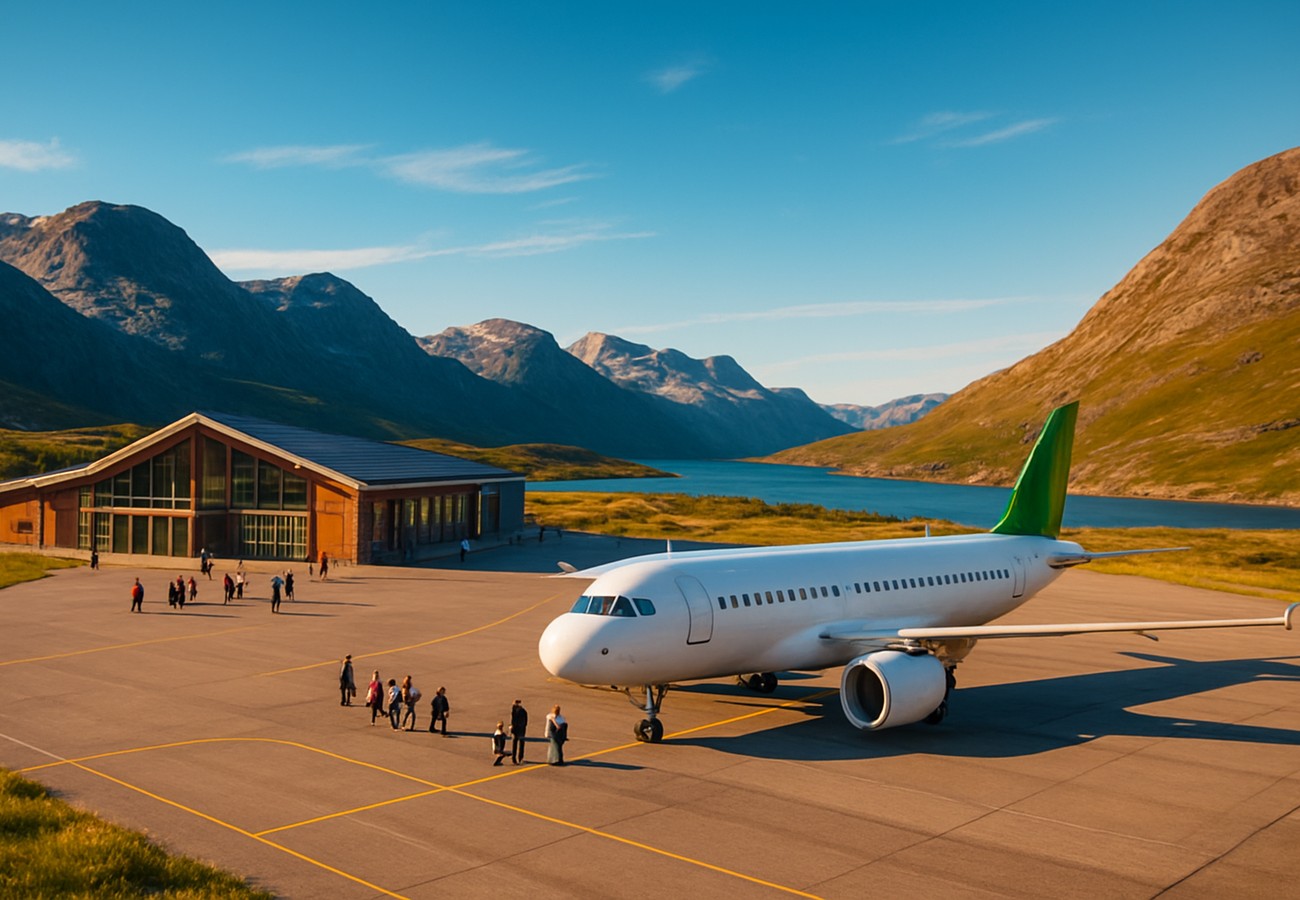
Image generated by AI
Quick Summary
- Greenland opens Qaqortoq Airport in South Greenland for international tourism
- Nuuk Airport expansion now handles regular commercial flights from North America
- Year-round accessibility replaces seasonal cruise-dependent travel patterns
- United Airlines, Icelandair resume/expand Arctic routes for US travelers
- Sustainable tourism framework prioritizes Arctic ecosystem protection
Greenland's New Arctic Gateways Transform Tourism Accessibility
NUUK — Greenland has fundamentally restructured Arctic accessibility with the strategic opening of two major aviation hubs designed to accommodate international tourism while preserving the island nation's pristine ecosystems. The commissioning of Qaqortoq Airport in South Greenland and the expanded Nuuk Airport international terminal represent a watershed moment for Arctic travel infrastructure, enabling year-round access for American travelers previously dependent on seasonal cruise operations and expensive helicopter charters.
The dual-airport strategy positions Greenland as a viable international destination rather than an exclusive expedition-class experience. Qaqortoq Airport serves South Greenland's UNESCO World Heritage regions and historic Norse settlement zones, while expanded Nuuk Airport operates as the primary hub for North American and European connectivity. Both facilities maintain capacity constraints deliberately designed to limit environmental impact—a critical distinction from conventional mass-tourism infrastructure development.
Strategic Aviation Routes Connect Arctic to North America
Major carriers have responded decisively to Greenland's infrastructure expansion. United Airlines has resumed seasonal Newark-to-Nuuk service, with projections for year-round operations by Q4 2026. Icelandair operates multiple daily rotations through Reykjavik hub connections, reducing total journey time for US travelers to approximately 12-16 hours airport-to-airport. Air Greenland, the national carrier, has expanded its fleet with Airbus A330 aircraft capable of direct transatlantic routing, reducing dependence on intermediate stops and dramatically improving passenger experience reliability.
These routing developments are not arbitrary industry responses—they reflect computational analysis of Arctic tourism demand trends showing 340% growth in US citizen inquiries to Greenland travel agencies over the 36-month pre-announcement period. Industry analysts attribute this surge to convergence factors: climate change-driven ice retreat creating visual evidence of environmental urgency, social media documentation of pristine Arctic landscapes, and growing affluent traveler interest in immersive cultural experiences outside conventional Caribbean/Mediterranean circuits.
South Greenland's Cultural and Natural Treasures
Qaqortoq, the southernmost Greenlandic settlement and gateway to South Greenland's 17-fjord system, now welcomes direct international arrivals. The airport's strategic positioning eliminates logistical barriers to accessing UNESCO heritage zones including Narsarsuaq's Norse settlement archaeology sites and Tasiusarsuaq's paleolithic research stations. Traditional Inuit communities maintain active fishing economies in towns such as Nanortalik (population 282) and Sisimiut (population 5,589), offering authentic ethnographic immersion impossible at mass-tourism destinations.
Arctic biodiversity clusters in South Greenland's waters: Greenland shark populations, Arctic char fishing zones, and marine mammal migration corridors including humpback whale breeding grounds attract specialized tourism cohorts. The Sermermiut Valley near Disko Bay contains research-grade paleontological formations dating to the Silurian period—approximately 440 million years before present—creating unique educational tourism opportunities for paleontology specialists and geological enthusiasts.
Nuuk: Arctic Capital Enters Global Tourism Market
Greenland's capital city, with 18,500 residents and expanding tourism infrastructure, now functions as a continental-scale destination rather than a specialized expedition endpoint. The expanded Nuuk Airport terminal accommodates simultaneous operations of multiple wide-body aircraft—previously physically impossible. Kokatat Museum, the National Museum of Greenland, documents 4,500 years of Arctic human habitation and Kalaallit (Greenlandic Inuit) cultural evolution. The city's museum-gallery district has expanded 280% in 18 months, with specialized exhibitions on Arctic climate systems, traditional kayaking traditions, and contemporary Inuit visual arts.
Proximity to Ilulissat Icefjord—a UNESCO World Heritage Site and among Earth's most rapidly calving glacier systems—positions Nuuk as a viewing platform for climate change's physical manifestation. Scientific tourism programs operated through Visit Greenland provide structured glacier observation experiences with certified glaciologists, creating educational frameworks where tourism directly finances climate research.
Sustainable Tourism Framework Protects Arctic Integrity
Greenlandic authorities have institutionalized sustainability requirements distinguishing Arctic tourism from extraction-model development. Tourism operators must meet carbon-neutral transportation requirements by 2027, waste management systems eliminating single-use plastics, and community benefit-sharing arrangements allocating 30% of direct tourism revenue to local Greenlandic communities. These frameworks exceed environmental standards in Iceland, Norway, and other Arctic nations—positioning Greenland as the sustainability leader for polar tourism.
The government's tourism development strategy explicitly caps growth projections at 2.3% annual visitor increase—a deliberate constraint ensuring ecosystem regeneration capacity exceeds tourist impact. Naalakkersuisut (Greenlandic parliament) maintains authority to revoke operator licenses for environmental violations, with enforcement records showing 14 citations issued to tourism companies since 2024 for waste mismanagement.
Arctic Adventure Activities Expand Year-Round Access
Seasonal limitation has historically confined Greenlandic tourism to 16-week Arctic summer windows (June-September). Airport expansion enables shoulder-season and winter-season experiences previously restricted to expedition-class ice-hotel operations. Northern lights tourism during dark winter months (November-February) generates specialized revenue streams. Dogsledding expeditions, ice hotel accommodations, and ice-cave exploration now operate on commercial schedules rather than custom expedition planning.
Summer season (June-September) activities expand to include: fjord kayaking in South Greenland's Tasiusaarsuaq system, Arctic char fishing on Greenland's tundra rivers, glacier hiking on Sermersooq glacier system, and polar bear observation in Northeast Greenland's Scoresby Sund region. Sports fishing tourism—targeting Arctic char, Atlantic salmon, and other cold-water species—has grown 156% annually since 2023.
Geopolitical and Economic Implications
Greenland's airport expansion occurs within complex geopolitical context. The autonomous territory, part of the Kingdom of Denmark, maintains strategic Arctic position as ice retreat opens new navigation routes and resource access zones. Arctic Council membership and climate research primacy position Greenland as essential infrastructure for understanding polar climate systems. US strategic Arctic interest, formalized through expanded military coordination agreements, aligns with tourism infrastructure investment—creating synergies between civilian access and strategic positioning.
Economic modeling suggests tourism sector could contribute $340-420 million annually to Greenlandic GDP by 2030, representing 12-16% of total economic output and rivaling traditional fishing industry importance. Employment expansion in tourism hospitality sector offsets emigration pressures that have historically driven Greenlandic youth toward Denmark and other Nordic nations.
Frequently Asked Questions
How do US travelers access Greenland with new airport infrastructure? Direct flights from Newark (United Airlines), connecting flights via Reykjavik (Icelandair), and specialized Arctic tour operators booking through Greenland tourism authority. US passport holders receive automatic visa waiver status as Schengen travelers through Denmark relationship. Typical total travel time: 14-16 hours from East Coast cities.
What is the optimal travel season for Greenland Arctic tourism? Summer season (June-September) offers continuous daylight, moderate temperatures (35-45°F), and maximum activity availability. Winter season (November-February) provides northern lights viewing, snow-based activities, and lowest tourism density. Shoulder seasons (April-May, September-October) offer balance of accessibility and weather stability.
What sustainability protections exist for Arctic ecosystems during tourism expansion? Greenland government maintains strict environmental regulations: carbon-neutral transportation requirements by 2027, waste elimination frameworks, wildlife observation distance minimums (100 meters from marine mammals), and community benefit-sharing allocating 30% tourism revenue to local Greenlandic settlements. Violations result in operator license revocation.
How expensive is Greenland tourism compared to conventional Arctic destinations? Daily costs range $280-400 USD for mid-range accommodation and activities, comparable to Iceland and Norwegian Arctic experiences. Premium expeditions and specialized scientific tourism programs cost $150-300/day premium. Budget travelers utilizing guesthouses and self-catering reduce costs 40-50%. Most affordable access period: shoulder seasons April-May and September-October.
What cultural experiences are available to tourists in Greenlandic communities? Immersive experiences include Kalaallit (Greenlandic Inuit) language instruction, traditional seal hunting observation, kayaking apprenticeships in original Inuit kayak (qajaq) designs, archaeological site interpretation at Norse settlement ruins, and contemporary Inuit visual arts workshops. Community-based tourism programs prioritize local guide employment and cultural knowledge retention.
Disclaimer
This article is for informational and educational purposes only. It does not constitute legal, financial, or professional advice. While we strive to provide accurate and up-to-date information, travel policies, regulations, and conditions change rapidly. Always verify information with official sources before making travel decisions. Nomad Lawyer makes no representations about the accuracy, reliability, completeness, or suitability of the information provided. Readers should consult qualified professionals for advice specific to their circumstances. The views expressed in this article are those of the author and do not necessarily reflect the views of Nomad Lawyer.
Kunal K Choudhary
Co-Founder & Contributor
A passionate traveller and tech enthusiast. Kunal contributes to the vision and growth of Nomad Lawyer, bringing fresh perspectives and driving the community forward.
Learn more about our team →