
US Introduces $100 Non-Resident Fee Across 11 Top National Parks: What International Travellers Must Know for 2026

Beginning in 2026, international travellers aged 16 and older face a new $100 non-resident fee across 11 of America's most visited national parks, added on top of standard entrance charges. For overseas road-trippers, the introduction of the $250 America the Beautiful Non-Resident Annual Pass offers an economical solution to manage multi-park travel budgets while directly backing historic wilderness conservation and infrastructure upgrades.
The policy change, announced by the National Park Service in coordination with the US Department of the Interior, represents a major structural shift in funding America’s premier public lands. For decades, international visitors paid the exact same entry tariffs as domestic taxpayers. Starting in 2026, foreign visitors exploring marquee wilderness corridors must account for this specialized tier, making detailed advance planning essential for long-haul vacationers.
The 11 Crown-Jewel Parks Included in the 2026 Fee Update
The newly established $100 surcharge applies exclusively to non-US residents aged 16 and above at 11 world-renowned national parks that bear the heaviest annual visitor volumes:
- Acadia National Park (Maine) – Famed for granite coastal headlands and historic carriage roads.
- Bryce Canyon National Park (Utah) – Renowned for its amphitheaters of red-rock hoodoos.
- Everglades National Park (Florida) – A subtropical wetland sanctuary sheltering endangered manatees and panthers.
- Glacier National Park (Montana) – Characterized by carved alpine peaks and glacial lakes.
- Grand Canyon National Park (Arizona) – The mile-deep geological chasm drawing millions of global sightseers.
- Grand Teton National Park (Wyoming) – Celebrated for jagged mountain peaks and valley wildlife habitats.
- Rocky Mountain National Park (Colorado) – Featuring high-altitude tundra and Continental Divide trails.
- Sequoia and Kings Canyon National Parks (California) – Home to ancient giant sequoia groves and deep canyons.
- Yellowstone National Park (Wyoming, Montana, Idaho) – America's first national park, celebrated for Old Faithful, hydrothermal basins, bison herds, grizzly bears, and gray wolves.
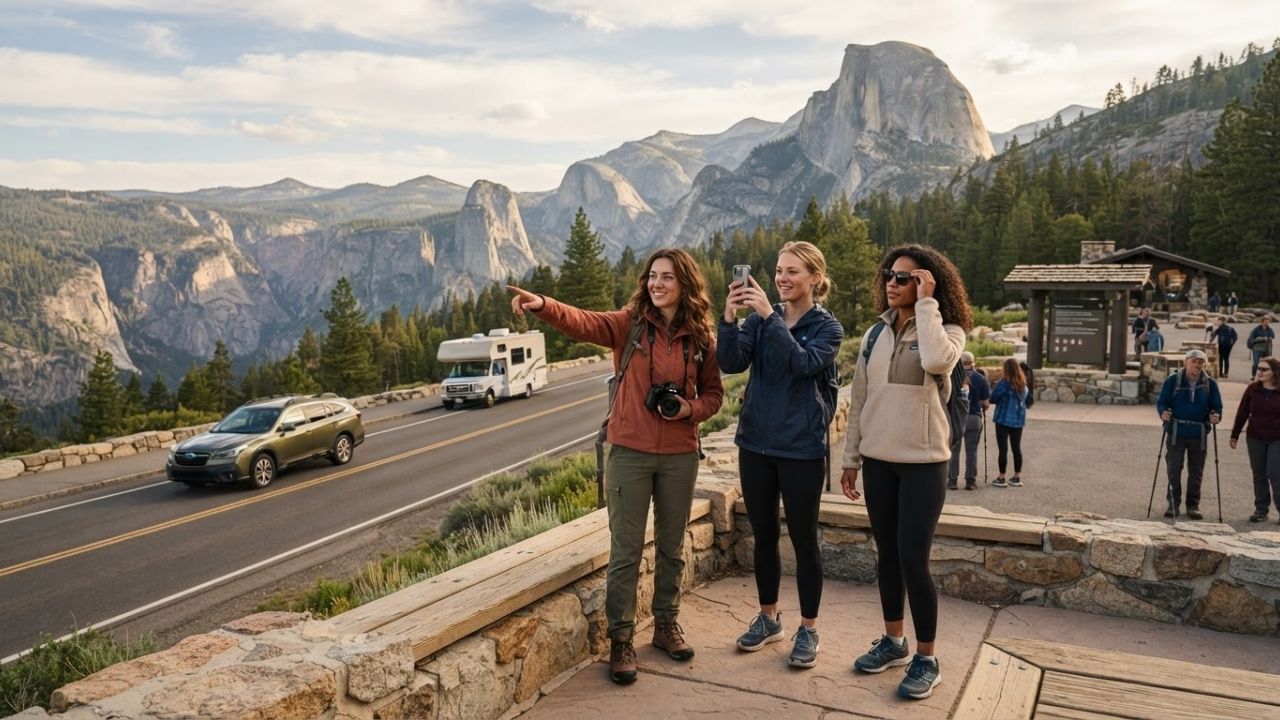
- Yosemite National Park (California) – Distinctive for towering granite monoliths like El Capitan, thundering waterfalls, and dense alpine forests.
- Zion National Park (Utah) – Renowned for sheer sandstone cliffs, the Virgin River Narrows, and Angels Landing.
Federal park authorities emphasize that these 11 locations require substantial financial resources to maintain backcountry trails, modern visitor facilities, paved roads, wastewater management networks, and rapid-response emergency rescue services.
Pass Strategy: Making Sense of the $250 Non-Resident Annual Pass
For international visitors designing multi-state road trips across the American West, paying $100 individually at each park entrance can quickly inflate family or group travel expenses. To keep extended touring accessible, the National Park Service has launched the America the Beautiful Non-Resident Annual Pass, priced at $250.
The mathematics behind this pass provide immediate clarity for overseas travelers:
- Single or Dual Park Visits: If an international traveler visits only one or two parks (for instance, flying into Las Vegas solely to see Grand Canyon and Zion), paying standard entry fees alongside the individual $100 non-resident charge per park ($200 total surcharge) remains marginally below the pass price.
- Three or More Parks: Road-trippers journeying through classic regional circuits—such as a Grand Circle route combining Zion, Bryce Canyon, and Grand Canyon, or a northern itinerary uniting Glacier, Yellowstone, and Grand Teton—break even at the third park. The $250 pass covers the foreign visitor fee across participating federal units.
- Group and Vehicle Rules: The National Park Service notes that the annual pass covers the pass holder and accompanying adult passengers in a single private non-commercial vehicle at sites charging per-vehicle entrance, or up to four adults at per-person entry locations.
Gateway Economies, Cultural Heritage, and Eco-Stewardship
For the visitor, the real impact extends well past the park entrance booth. America's national parks do not exist in isolation; they anchor regional economies and sustain surrounding gateway communities. Towns such as Springdale outside Zion, Tusayan at the Grand Canyon South Rim, Gardiner and West Yellowstone surrounding Yellowstone, Jackson Hole near Grand Teton, and Bar Harbor beside Acadia depend heavily on sustainable tourist footfall.
Revenue generated from the new pricing model is earmarked to address deferred maintenance backlogs, rehabilitate weathered trail systems, and protect sensitive wildlife habitats from overtourism pressures. In partnership with organizations like the Leave No Trace Center for Outdoor Ethics and regional tribal tourism enterprises—such as Navajo Nation guided experiences near the Grand Canyon and Blackfeet cultural initiatives bordering Glacier—these funds reinforce environmental preservation while honoring Indigenous cultural heritage across ancestral territories.
Local Visitor Insider Tips: Maximizing Value and Solitude
Experiencing America’s premier parks smoothly under the new regulations requires tactical preparation:
- Target the Shoulder Windows: June through August brings intense traffic and crowded overlooks. Opt instead for late May or mid-September through mid-October. Autumn offers vibrant golden aspens in the Rocky Mountains and Grand Teton, crisp desert hiking temperatures in Utah, and significantly shorter entrance lines.
- Escape the Mid-Day Congestion: At Yellowstone, wildlife watching in the Lamar and Hayden Valleys is best at sunrise, well before tour buses arrive. At Yosemite, explore the quieter high-elevation trails around Tuolumne Meadows along Tioga Pass rather than lingering exclusively on the valley floor.
- Regional Gateway Dining: Step away from park concessions to support independent gateway culinary staples. Taste wild huckleberry pancakes in Montana's gateway bakeries, savor traditional Dutch oven chuckwagon dinners in southern Utah, and sample fresh dockside Maine lobster rolls in Bar Harbor.
- Reservation Coordination: Remember that entry fees do not replace seasonal timed-entry vehicle permits. Peaks like Rocky Mountain, Glacier's Going-to-the-Sun Road, and Yosemite frequently require advance online vehicle reservations on Recreation.gov. Have your digital passes, valid foreign passport, and reservation QR codes downloaded offline before entering rural canyons with spotty mobile reception.
Tourism Outlook: Aligning Global Conservation Standards
The implementation of a dedicated non-resident fee aligns the United States with international conservation funding models seen across Africa, Latin America, and Oceania, where overseas visitors contribute directly to preserving natural heritage treasures they travel across continents to witness.
While international travelers must adjust their budgeting strategies, America's dramatic canyons, thermal geysers, and ancient forests remain unmatched global attractions. By pairing the $250 non-resident annual pass with thoughtful shoulder-season itineraries, overseas explorers can navigate the new fee structure efficiently while supporting the long-term stewardship of these historic public sanctuaries.
Related Travel Guides
Disclaimer
This article is for informational and educational purposes only. It does not constitute legal, financial, or professional advice. While we strive to provide accurate and up-to-date information, travel policies, regulations, and conditions change rapidly. Always verify information with official sources before making travel decisions. Nomad Lawyer makes no representations about the accuracy, reliability, completeness, or suitability of the information provided. Readers should consult qualified professionals for advice specific to their circumstances. The views expressed in this article are those of the author and do not necessarily reflect the views of Nomad Lawyer.
Raushan Kumar
Founder & Lead Developer
Full-stack developer with 11+ years of experience and a passionate traveller. Raushan built Nomad Lawyer from the ground up with a vision to create the best travel and law experience on the web.
Learn more about our team →