
Orlando, Los Angeles, and Philadelphia Halloween Tourism 2026: Theme Parks and Historic Haunts Battle for Autumn Travel Spending
An editorial analysis of the 2026 Halloween travel market across Orlando, Southern California, and Philadelphia, examining admission pricing, lodging yields, and visitor economics.

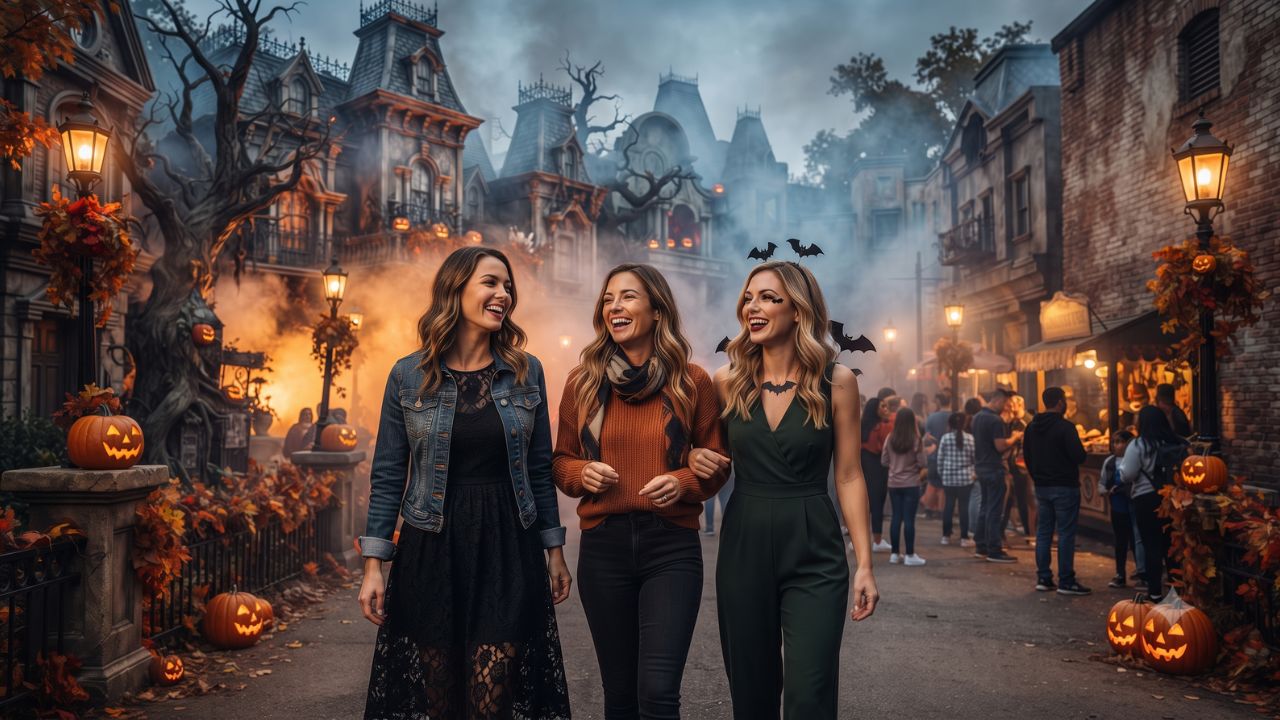
Universal Orlando's 49 operating nights for Halloween Horror Nights and a 100% sell-out across all 2026 dates for Disney's Mickey's Not-So-Scary Halloween Party demonstrate how autumn event schedules have expanded into multi-month commercial operations. What once functioned as a localized late-October celebration now drives regional hospitality yields from early August through early November. As destinations compete for seasonal visitor spending, Florida, California, and Pennsylvania represent three diverging business models: massive multi-gate resort destinations, multi-attraction metropolitan clusters, and heritage-grounded urban revivals.
Behind the headline ticket prices sits a complex web of visitor logistics, dynamic accommodation costs, and distinct customer demographics. California registered $158.9 billion in total visitor spending during 2025, while Pennsylvania recorded $49.9 billion in visitor expenditure across 2024. Although these statewide economic indicators cover all travel segments throughout the year rather than isolated haunted attraction receipts, they establish the immense baseline capacity required to support seasonal influxes during shoulder months.
Autumn Seasonal Expansion: Commercial Strategies Behind the Extended Calendar
The modern Halloween calendar no longer waits for October. In Central Florida, Disney launched Mickey's Not-So-Scary Halloween Party on August 7, running through October 31, with entry prices set between $119 and $229 per ticket plus tax. With all 2026 dates completely sold out on official channels, the resort proven that demand for family-focused, after-hours entertainment remains immune to broader consumer price sensitivity. Guests receiving entry from 4:00 PM for an event running from 7:00 PM to midnight pay a steep premium for access to parades, character encounters, and trick-or-treat stations.
Universal Orlando Resort adopted an equally aggressive calendar for the 35th year of Halloween Horror Nights, staging 10 elaborate haunted houses, multiple scare zones, and live entertainment across 49 select nights between August 28 and November 1. Unlike family-oriented offerings, Universal explicitly advises that its programming may prove too intense for children under the age of 13. The business model depends entirely on separate-ticket evening admissions, requiring travelers to budget for nocturnal entry independent of daytime park tickets.
In Southern California, regional density shapes a very different commercial layout. Rather than relying on a single dominant resort footprint, the greater Los Angeles and Orange County market allows travelers to assemble multi-attraction itineraries. Universal Studios Hollywood runs its Halloween Horror Nights on select dates from September 3 to November 1, 2026, spotlighting eight haunted mazes, themed scare zones, and the franchise-backed Terror Tram. Minutes away in Buena Park, Knott's Scary Farm provides direct competition, pricing single-night admission from $69 plus applicable taxes. Knott's also markets an all-inclusive package beginning at $229, integrating general parking, food, gate admission, and Fright & Fast Lane front-of-line access.
Philadelphia delivers an alternative urban format centered on authentic historic preservation. Halloween Nights at Eastern State Penitentiary marks its 35th season in 2026, running across selected evenings from October 2 through November 7. Operating within an 11-acre former prison complex, the venue deploys five haunted attractions alongside educational museum exhibits, historic cellblock tours, live performances, and food vendors. By keeping gates open past October 31, the facility captures post-holiday travel demand while embedding visitors directly into Philadelphia's walk-able urban core.
Comparative Admissions and Operational Models
Analyzing seasonal travel requires evaluating how ticket structures, operating dates, and product tiers influence the aggregate trip ledger. Headline gate fees represent only the base entry barrier, as express passes, parking, and date-specific surcharges substantially inflate final checkout totals.
| Attraction and Destination | 2026 Operating Window | Published Price Range & Ticketing Structure | Core Attractions and Scale | Target Audience Profile |
|---|---|---|---|---|
| Universal Orlando Halloween Horror Nights (Orlando, FL) | August 28 – November 1 (49 select nights) | Separately ticketed; date-dependent pricing with premium Express add-ons | 10 haunted houses, scare zones, live shows | Teenagers, young adults, dedicated horror enthusiasts (advisory: 13+) |
| Mickey's Not-So-Scary Halloween Party (Orlando, FL) | August 7 – October 31 (select nights) | $119–$229 plus tax; 100% of 2026 dates sold out | Parades, fireworks, character greetings, trick-or-treating | Families with young children, multi-generational groups |
| Universal Studios Hollywood HHN (Los Angeles, CA) | September 3 – November 1 (select nights) | Separately ticketed; multi-night passes, Express, and R.I.P. Tours | 8 haunted houses, scare zones, iconic Terror Tram | Film enthusiasts, horror fans, Southern California tourists |
| Knott's Scary Farm (Buena Park, CA) | Select dates through autumn calendar | Single-night from $69; all-inclusive packages from $229 plus tax | Mazes, interactive scare zones, live stage revues | Regional drive-in visitors, budget-conscious horror fans |
| Halloween Nights at Eastern State Penitentiary (Philadelphia, PA) | October 2 – November 7 (select nights) | Date-variable admission tiers; VIP access upgrades available | 5 haunted houses, historic prison tours, museum displays | Cultural tourists, heritage preservationists, adult travelers |
The financial divergence becomes pronounced when calculating party sizes. A family of four attending Disney's after-hours event in Orlando commits between $476 and $916 before sales taxes and meals, strictly for evening access. Conversely, two adults purchasing Knott's Scary Farm entry at starting rates incur an admission baseline of $138, though opting for all-inclusive convenience elevates that commitment to $458.
Macroeconomic data highlights the scale of the hospitality sectors hosting these spectacles. According to official tourism data tracked by Visit California, the state recorded $158.9 billion in travel-related spending in 2025, marking a 1.7% increase year over year while supporting 1.17 million jobs and generating $13.6 billion in combined state and local tax receipts. In Pennsylvania, the Commonwealth's 2024 tourism report tabulated 201.6 million visitors, yielding $49.9 billion in direct visitor spending—a 4.2% annual gain. Total economic impact reached $83.9 billion, underwriting 514,261 jobs and contributing $5 billion in tax revenues. While these state figures cannot isolate haunt-specific gross revenue, they illustrate the broader commercial foundations supporting autumn leisure traffic.
Expert Analysis: The Unit Economics of Fall Seasonal Travel and Urban Hospitality Yields
For travelers booking these autumn routes, the direct consequence is that shoulder-season price discounts have largely vanished from primary tourism corridors. Historic trends where September and early October offered low hotel rates and empty queues have been completely overwritten by event-driven capacity controls. Theme park operators have turned what was once an operational lull between summer family vacations and winter holidays into one of the highest-yielding revenue quarters of the fiscal calendar.
The pricing pressure this creates means that total trip costs hinge far more on accommodation and local transit logistics than on attraction tickets. In Southern California, the proximity of Universal Studios Hollywood and Knott's Scary Farm tempts travelers to build double-header horror weekends. However, cross-county transit through metropolitan Los Angeles introduces severe rideshare premiums, parking fees, and transit fatigue. A visitor staying near Universal City faces substantial financial friction when traveling to Buena Park during evening rush hours. The multi-attraction model offers creative variety, but unless travelers strategically shift hotel bases mid-trip, transit overhead quickly erodes the savings of Knott's $69 entry fee.
In contrast, Orlando benefits from self-contained resort transport, yet isolates consumers within premium pricing enclosures. Because Disney's party tickets are completely sold out and Universal operates on strict date-based yield models, secondary expenses rise. Travelers unable to secure party tickets find regular daytime park hours truncated on event nights, forcing them to purchase park-hopper upgrades or accept early park exits at 6:00 PM.
Philadelphia's model demonstrates an entirely different economic flow. Because Eastern State Penitentiary sits on an 11-acre site in the Fairmount neighborhood, it does not lock guests inside a captive resort ecosystem. Visitors patronize neighborhood restaurants, stay in center-city hotels, and patronize civic institutions during daylight hours before attending evening tours. By extending programming through November 7, Philadelphia also captures shoulder-season travelers avoiding peak late-October hotel premiums. Foreign travelers entering the United States must also monitor passport validities and entry visa clearances via the U.S. Department of State, ensuring travel authorizations are secured weeks ahead of high-demand October arrival dates.
Key Takeaways
- Early Season Launches: Halloween event calendars now stretch across three full months, opening as early as August 7 at Disney and August 28 at Universal Orlando.
- Universal Sell-Outs vs. Gate Elasticity: Disney's complete sell-out of its 2026 Mickey's Not-So-Scary Halloween Party proves that consumer demand for family-friendly autumn events remains resilient across $119 to $229 ticket bands.
- Distinct Regional Value Structures: Knott's Scary Farm offers entry starting at $69 alongside $229 all-inclusive bundles, providing a price alternative to Universal Studios Hollywood's premium Express and R.I.P. Tour passes.
- Urban Heritage Integration: Philadelphia's Eastern State Penitentiary integrates 35 years of haunted attraction production into an 11-acre historic landmark, running through November 7 to capture late-season urban tourists.
- Broad Macro Footprints: State visitor spending totals—$158.9 billion in California for 2025 and $49.9 billion in Pennsylvania for 2024—underline the broader economic health underpinning these seasonal leisure economies.
FAQ: Halloween Travel Economics 2026
Are Halloween party tickets included with general daytime theme park admission?
No. Universal Orlando's Halloween Horror Nights, Disney's Mickey's Not-So-Scary Halloween Party, and Knott's Scary Farm require separate, dedicated event tickets. Standard daytime theme park passes do not provide evening admission.
Can travelers buy Disney Mickey's Not-So-Scary tickets at the gate in 2026?
No. Disney announced that all dates for the 2026 Mickey's Not-So-Scary Halloween Party are completely sold out. Travelers without confirmed reservations cannot access the Magic Kingdom after regular operating hours.
Which destination offers the most cost-effective multi-attraction Halloween trip?
Southern California provides the greatest attraction density with Knott's Scary Farm tickets starting from $69 and Universal Hollywood nearby. However, travelers must budget for regional transit, parking fees, and lodging across Los Angeles and Orange County.
When does Halloween Nights at Eastern State Penitentiary conclude its 2026 season?
The historic Philadelphia attraction operates on select dates from October 2 through November 7, 2026, giving travelers access to haunted houses and historic tours after Halloween night has concluded.
[The commercialization of autumn tourism proves that October travel has evolved from an off-peak escape into an intensely competitive, high-yield entertainment season where forward planning dictates the entire travel budget.]
Related Travel Guides
Disclaimer
This article is for informational and educational purposes only. It does not constitute legal, financial, or professional advice. While we strive to provide accurate and up-to-date information, travel policies, regulations, and conditions change rapidly. Always verify information with official sources before making travel decisions. Nomad Lawyer makes no representations about the accuracy, reliability, completeness, or suitability of the information provided. Readers should consult qualified professionals for advice specific to their circumstances. The views expressed in this article are those of the author and do not necessarily reflect the views of Nomad Lawyer.
Kunal K Choudhary
Co-Founder & Contributor
A passionate traveller and tech enthusiast. Kunal contributes to the vision and growth of Nomad Lawyer, bringing fresh perspectives and driving the community forward.
Learn more about our team →