
US Jet Fuel Prices Surge 6%: Impact on Holiday Airfares
Jet fuel prices hit $4.28 per gallon following Gulf energy disruptions, driving US holiday airfares higher as airlines cut capacity to offset costs.

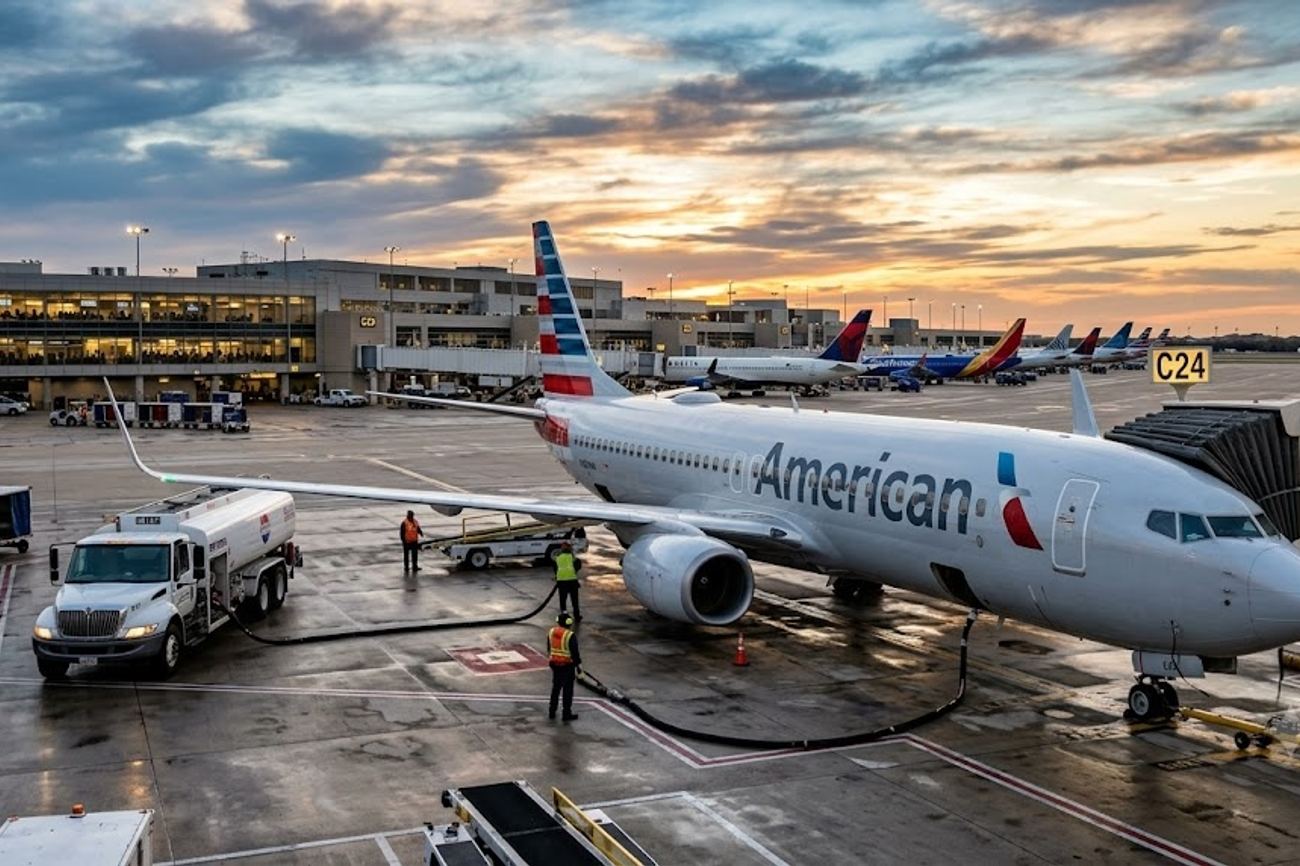
Image generated by AI
Jet Fuel Spike Threatens Holiday Travel Affordability
Jet fuel prices jumped 6% overnight, reaching $4.28 per gallon on Wednesday. This spike is driven by renewed conflict involving Iran and systemic disruptions across critical Gulf energy shipping routes. Since the onset of the conflict, jet fuel costs have climbed by 71%.
The timing creates a compounding effect for consumers. Average US domestic autumn fares are already 39% higher than last year, according to Hopper Technology Solutions. Federal inflation data confirms that US airline fares rose 25.5% year-on-year in July.
The Refined Fuel Gap
Airlines do not pay the raw crude oil price; they purchase refined aviation fuel. The "crack spread"—the price difference between crude and refined fuel—has widened significantly due to geopolitical tensions.
US Energy Information Administration (EIA) data shows Gulf Coast kerosene-type jet fuel surpassed $4 per gallon in early September. Prices rose from $4.017 per gallon (week ending September 4) to daily peaks of $4.12 and $4.34 the following week.
Operational Impact and Capacity Cuts
Airlines are facing a margin squeeze. In July 2026, US scheduled-service airlines spent $5.89 billion on fuel—a 43% increase over July 2025—despite a 1.6% decrease in actual fuel consumption.
JetBlue provides a primary example of this volatility. The carrier revised its third-quarter fuel cost forecast upward to $3.96 per gallon, up from $3.49. Consequently, JetBlue lowered its capacity-growth forecast for available seat miles to 1.5%–3.5%, down from the previous 3%–6% projection.
Key Facts Breakdown
- Current Spot Price: Jet fuel hit $4.28 per gallon on Wednesday.
- Conflict Impact: 71% increase in fuel prices since the start of the conflict.
- Fare Inflation: July 2026 airline fares rose 25.5% year-on-year, vastly outpacing the 3.4% headline CPI.
- Autumn Pricing: Domestic autumn airfares are 39% higher than the previous year.
- Spending Surge: July 2026 fuel expenditure reached $5.89 billion.
Data Tables
US Airline Fuel Indicators (2026)
| Indicator | Latest Figure | Comparison |
|---|---|---|
| July 2026 Fuel Expenditure | $5.89 billion | 43% higher year-on-year |
| July 2026 Fuel Consumption | 1.732 billion gallons | 1.6% lower year-on-year |
| July 2026 Avg Fuel Cost | $3.40 per gallon | 45.4% higher year-on-year |
| June 2026 Avg Fuel Cost | $3.59 per gallon | 12.2% lower than May |
| May 2026 Avg Fuel Cost | $4.09 per gallon | 85% higher year-on-year |
| September Gulf Coast Fuel | Above $4 per gallon | Upward pressure |
Inflation and Fare Divergence (July 2026)
| Indicator | Latest Available Change |
|---|---|
| US Headline CPI | +3.4% |
| US Airline Fares | +25.5% |
| Monthly Airline Fare Change | +2.2% |
| Avg Domestic Autumn Airfare | +39% year-on-year |
| US Airline July Fuel Cost | +45.4% year-on-year |
Why This Matters
From a logistical perspective, this is not a standard price fluctuation; it is a structural cost crisis. Because holiday travel is "inelastic"—meaning passengers have fixed dates for Christmas and New Year and cannot easily switch flights—airlines have immense pricing power.
Our analysis of the data suggests a dangerous "cumulative effect" for travelers. Passengers are not starting from a baseline; they are entering the peak booking season after a 39% year-on-year increase in autumn fares. When airlines like JetBlue cut capacity (available seat miles) while fuel costs rise, the cheapest fare buckets vanish first. This means the "budget" options for holiday travel may effectively disappear, leaving only premium-priced seats.
Industry Outlook
Expect a volatile Q4. Airlines will likely lean heavily on capacity discipline—intentionally limiting the number of seats available—to keep fares high enough to offset the $4.28+ per gallon fuel cost.
Travelers should not expect the traditional "shoulder season" price drop this autumn. Given that airline fares are currently rising at seven times the rate of headline inflation, the industry is effectively shifting the geopolitical risk of the Gulf energy market directly onto the consumer.
Internal Link Suggestions:
- Analysis: How fuel hedging strategies protect major carriers during geopolitical crises.
- Guide: Best strategies for booking holiday airfares during high-inflation cycles.
- Report: The impact of Gulf energy disruptions on global aviation logistics.
Related Travel Guides
Disclaimer
This article is for informational and educational purposes only. It does not constitute legal, financial, or professional advice. While we strive to provide accurate and up-to-date information, travel policies, regulations, and conditions change rapidly. Always verify information with official sources before making travel decisions. Nomad Lawyer makes no representations about the accuracy, reliability, completeness, or suitability of the information provided. Readers should consult qualified professionals for advice specific to their circumstances. The views expressed in this article are those of the author and do not necessarily reflect the views of Nomad Lawyer.
Preeti Gunjan
Contributor & Community Manager
A passionate traveller and community builder. Preeti helps grow the Nomad Lawyer community, fostering engagement and bringing the reader experience to life.
Learn more about our team →