
US Government Activates Emergency Middle East Evacuation Protocols and 24/7 Helplines
As geopolitical instability violently escalates, the US State Department has launched extreme evacuation protocols and Level 4 travel advisories to extract American citizens trapped across the Middle East.

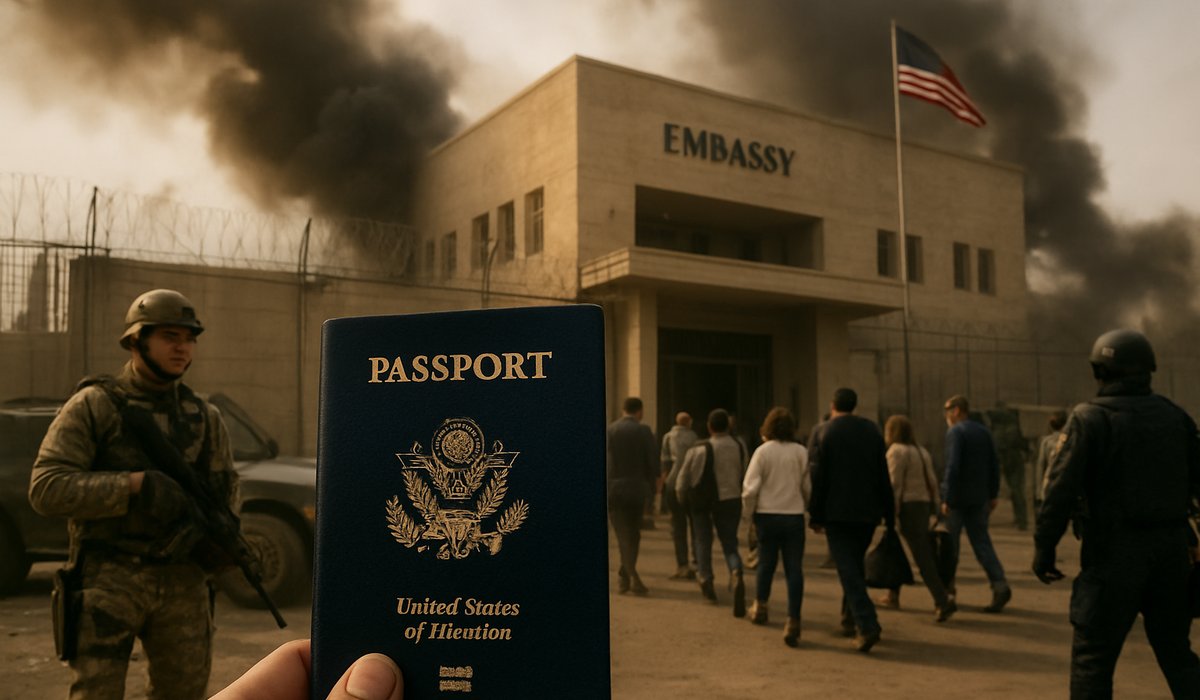
Image generated by AI
Unprecedented Repatriation Efforts as Airspace Collapses Rapidly
Reacting instantly to the intensifying, multi-front military conflict engulfing the Persian Gulf, the U.S. Department of State has dramatically escalated its diplomatic posture, triggering emergency evacuation logistics and establishing 24/7 crisis helplines to immediately support American citizens stranded across the Middle East. As commercial airspace collapses under the threat of regional missile deployments, the US government has forcefully bumped travel advisories for Qatar, the UAE, Egypt, Saudi Arabia, Kuwait, and Oman to stringent Level 3 ("Reconsider Travel") and Level 4 ("Do Not Travel") classifications.
Historically, the US government relies heavily on its citizens purchasing their own commercial airline tickets to flee brewing conflict zones. However, because titans of aviation like British Airways, United, and Lufthansa have aggressively canceled thousands of intercontinental flights routing through the Gulf, commercial escape is rapidly becoming mathematically impossible. Consequently, the US State Department is actively coordinating enhanced security protocols—and in severe cases, government-chartered repatriation flights—to extract vulnerable American business travelers and expatriates before the borders seal completely.
The Importance of the STEP Program
The cornerstone of the US government's crisis response relies entirely on the Smart Traveler Enrollment Program (STEP). If a traveler is not registered in this database, the local US embassy physically does not know they exist within the conflict zone.
American citizens currently locked down in high-risk centers like Doha or Dubai are receiving direct SMS and email coordinates via STEP detailing highly secure muster points, updated border crossing legality, and real-time alerts regarding imminent ballistic threats in their immediate geographical grid.
Breakdown of the US Evacuation Strategy
| Response Vector | Diplomatic Function | Action Required by Traveler |
|---|---|---|
| Level 4 Travel Advisory | Legally voids standard travel insurance | DO NOT enter the country under any circumstances |
| 24/7 Repatriation Helpline | Connects citizens directly to crisis managers | Register location and passport data immediately |
| Charter Flight Protocols | Government-backed physical extraction | Must sign a promissory note to repay the US government later |
What Guests Get
- Understanding government limitations — realizing that the US Embassy is not a hotel; if commercial flights vanish, the government's ability to extract 100,000 expatriates overnight is physically impossible.
- Insurance awareness — recognizing that when the State Department declares a Level 4 Do Not Travel warning, nearly all civilian medical evacuation insurance policies instantly self-terminate.
- The importance of digital tracking — seeing exactly how vital registering with STEP is when internet blackouts and cell tower destruction occur during active wars.
What This Means for Travelers
If you are an American currently located in the UAE, Qatar, Egypt, or Saudi Arabia: You must immediately determine if you physically possess your passport. If it is held by an employer, demand it back immediately under emergency consulate protocols. You must register your exact GPS location in the STEP program today.
If the government organizes a charter flight out of the conflict zone, you will likely only be permitted a single, small carry-on bag. Furthermore, you must understand that US government evacuation flights are not free. Federal law requires citizens to sign a promissory loan note agreeing to reimburse the State Department for the commercial cost of the flight at a later date.
FAQ: State Department Evacuations
Does the US government rescue anyone for free during a war? No. While the military or State Department will provide the physical aircraft during a catastrophic emergency, U.S. law strictly dictates that evacuated citizens must repay the government for the equivalent cost of a full-fare commercial economy ticket once they reach safety.
Will the military come to my hotel to get me? Absolutely not. You are fundamentally responsible for navigating your own way through the city to the designated airport, embassy, or port of extraction. The US military does not conduct door-to-door civilian extractions in foreign, sovereign nations.
What happens if I stay behind? If you choose to ignore a Level 4 evacuation warning, the US government officially states that its ability to provide emergency consular services, medical help, or legal protection is severely limited, if not entirely nonexistent.
Related Travel Guides
- Flight Disruptions Atlanta: 129 Delays Cripple World's Busiest Hub in April 2026
- UK Weather Emergency: Met Office Issues Red Warning as Historic Heatwave Shatters Records
- Civil Aviation Committee of Kazakhstan Plans New Direct Astana Flights to Russian Cities with Over Five Hundred Thousand Residents: Kazakhstan Cross-Border Travel Development 2026: New Travel Alert
Disclaimer
This article is for informational and educational purposes only. It does not constitute legal, financial, or professional advice. While we strive to provide accurate and up-to-date information, travel policies, regulations, and conditions change rapidly. Always verify information with official sources before making travel decisions. Nomad Lawyer makes no representations about the accuracy, reliability, completeness, or suitability of the information provided. Readers should consult qualified professionals for advice specific to their circumstances. The views expressed in this article are those of the author and do not necessarily reflect the views of Nomad Lawyer.
Raushan Kumar
Founder & Lead Developer
Full-stack developer with 11+ years of experience and a passionate traveller. Raushan built Nomad Lawyer from the ground up with a vision to create the best travel and law experience on the web.
Learn more about our team →