
28 Flights Cancelled, 100+ Delays Hit US Hubs as SkyWest, United, American Airlines Disrupt Major Routes June 2026
A major operational meltdown across six US airports cancels 28 flights and delays over 100 services, stranding thousands of passengers across Phoenix, Portland, D.C., San Francisco, Seattle, and Teterboro.

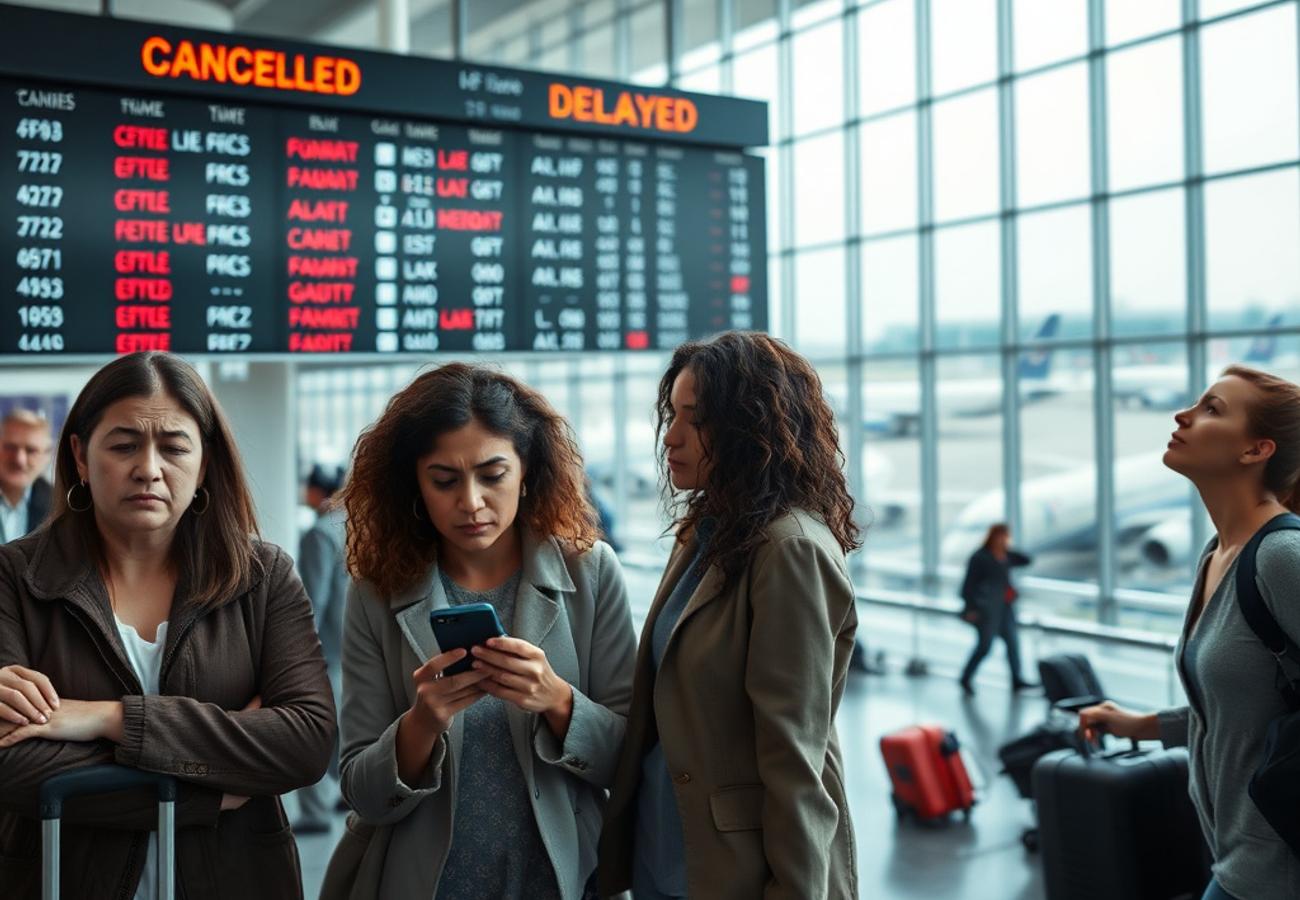
Image generated by AI
A Perfect Storm: 28 Cancellations, 100+ Delays Paralyze Six Major US Airports
The nightmare scenario playing out across America's busiest aviation hubs tells a familiar story: one operational hiccup cascades into thousands of frustrated passengers, missed connections, and economic losses. On June 30, 2026, the disruption hit hard and hit wide. SkyWest, Jazz (Air Canada Express), United Airlines, American Airlines, PSA Airlines, Alaska Airlines, Southwest, Hawaiian Airlines, and Tradewind collectively cancelled 28 flights while stranding passengers across over 100 delayed services. The geographic spread—spanning Phoenix Sky Harbor International Airport, Portland International Airport, Reagan National Airport (Washington, D.C.), San Francisco International Airport, Seattle–Tacoma International Airport, and Teterboro Airport—made this not a localized glitch but a systemic operational collapse affecting the entire US aviation network.
Reddit: "Three hour delays at SFO and my connecting flight in Seattle just got cancelled. Spent $150 on a hotel I shouldn't have needed. Airlines need to figure this out." — r/travel
The Airports Under Siege: Where the Chaos Unfolded
Seattle–Tacoma International Airport bore the brunt of cancellations, with Alaska Airlines alone cancelling seven flights and delaying 30 others. This West Coast hub, serving the greater Seattle metropolitan area and connecting passengers to Asia-Pacific routes, became a bottleneck for the entire Pacific Northwest corridor.
Phoenix Sky Harbor International Airport recorded four cancellations by SkyWest, with 11 additional delays disrupting Arizona's primary aviation hub. The Phoenix facility serves as a crucial connection point for both leisure travelers heading to Arizona's resort destinations and business passengers routing through the Southwest.
Reagan National Airport in Arlington, Virginia, posted four total cancellations across American Airlines (3 flights) and PSA Airlines (1 flight), while managing a staggering 61 delays (35 American, 26 PSA). The nation's capital's primary commercial airport handles diplomatic travel, government officials, and East Coast business corridors—making delays here ripple across political and corporate America.
San Francisco International Airport recorded six cancellations spread across Alaska Airlines (2), Southwest (2), United (1), and Hawaiian Airlines (1), with United alone managing 74 delays. The Bay Area's international gateway faced operational paralysis that affected transcontinental and transpacific connectivity.
Teterboro Airport in New Jersey, serving the New York City metropolitan area's business aviation traffic, reported four Tradewind aircraft cancellations. Though smaller than major commercial hubs, Teterboro's role in regional connectivity meant business travelers faced immediate itinerary chaos.
Portland International Airport experienced three cancellations: two by Jazz (Air Canada Express) and one by United, with United managing four additional delays.
Breaking Down the Numbers: A Data Deep Dive
| Airport | Airline | Cancelled | Delayed |
|---|---|---|---|
| Phoenix Sky Harbor | SkyWest | 4 | 11 |
| Portland International | Jazz (ACA) | 2 | 0 |
| Portland International | United | 1 | 4 |
| Reagan National | American Airlines | 3 | 35 |
| Reagan National | PSA Airlines | 1 | 26 |
| San Francisco International | Alaska Airlines | 2 | 4 |
| San Francisco International | Southwest | 2 | 27 |
| San Francisco International | United | 1 | 74 |
| San Francisco International | Hawaiian Airlines | 1 | 1 |
| Seattle–Tacoma International | Alaska Airlines | 7 | 30 |
| Teterboro Airport | Tradewind | 4 | 0 |
The data reveals United Airlines faced the worst operational damage with 76 total service disruptions (cancellations plus delays) across just two airports. American Airlines and SkyWest each managed significant operational failures. Most alarming: 101 delayed flights created a cascading effect where passengers missed connections, booked expensive last-minute hotels, and faced the compounding stress of rebooking nightmares.
What Your Rights Actually Are When Flights Get Cancelled
Knowing your legal standing matters. Under US Department of Transportation regulations, airlines must rebook you on the next available flight at no additional cost if the cancellation is within their control. The DOT maintains clear guidelines on passenger compensation and rebooking obligations that every traveler should understand.
International travelers have even stronger protections. If you're flying within or departing the EU, EC Regulation 261/2004 guarantees compensation up to €600 depending on flight distance and delay length—regardless of the airline's nationality. EU air passenger rights are among the world's most stringent.
Here's what to do immediately if you're caught in a cancellation:
Step One: Don't Panic—Gather Information Fast
The moment you receive notification (via text, email, or airline app), pull up real-time data from FlightAware or the airline's website. Screenshot everything. Document the cancellation notice timestamp, original flight number, and rebooking options offered. This creates your paper trail.
Step Two: Contact the Airline Strategically
If you're at the airport, head directly to the airline's service desk. If you're not traveling yet, use the airline's mobile app or online chat to avoid phone hold times that can stretch 45+ minutes during operational chaos. Phone calls are slower but create a recorded interaction.
Step Three: Demand Your Rebooking Options in Writing
Airlines are required to rebook you on:
- The next available flight on their own airline to your destination
- The next available flight on a partner airline to your destination
- A refund of your ticket price
Always request it in writing via email. This creates documentation for potential compensation claims later.
Step Four: Know What You're Owed Beyond Rebooking
If the airline caused the cancellation (mechanical issues within their control, crew scheduling failures, etc.), you may be entitled to:
- Hotel accommodation if you're stranded overnight
- Meal vouchers during the delay
- Ground transportation to your accommodation
- Potentially compensation under DOT regulations ($400–$600 depending on circumstances)
If weather or "act of God" caused the cancellation, airlines have fewer obligations—but they still must rebook you.
Step Five: Document Everything for Future Claims
Save all receipts: hotel charges, meal purchases, transportation costs, missed connection penalties. Airlines often deny claims without documentation. Services like AirHelp and Compensation.com can help you file claims against airlines for violations of passenger rights regulations, often recovering compensation on a contingency basis.
The Broader Pattern: Is This the New Normal?
This June 30 disruption reflects a troubling trend in 2026 US aviation. Understaffing, aging infrastructure, and compressed scheduling leave little margin for operational recovery. When one airline experiences disruption at a major hub, cascading delays ripple across partner networks and competing carriers sharing the same airport.
Travelers should build extra buffer time into itineraries—especially on routes through Phoenix, Portland, Washington D.C., San Francisco, and Seattle. Booking evening flights instead of morning flights gives the day to absorb delays. Carrying luggage with essentials instead of checking bags gives you flexibility if you're rebooked on a different airline.
The Bottom Line: Stay Informed, Stay Protected
The 101 delayed flights affecting thousands of passengers on June 30 demonstrate how quickly operational disruptions can spread across interconnected aviation networks. Passengers should monitor flight status regularly, understand their legal rights under DOT and international regulations, and maintain detailed documentation of all costs incurred during disruptions.
Airlines are required to manage operations reliably, and when they fail to do so, passengers deserve compensation—not apologies.
Your flight delay isn't just an inconvenience; it's a potential legal claim waiting to be filed.
Related Travel Guides
Disclaimer
This article is for informational and educational purposes only. It does not constitute legal, financial, or professional advice. While we strive to provide accurate and up-to-date information, travel policies, regulations, and conditions change rapidly. Always verify information with official sources before making travel decisions. Nomad Lawyer makes no representations about the accuracy, reliability, completeness, or suitability of the information provided. Readers should consult qualified professionals for advice specific to their circumstances. The views expressed in this article are those of the author and do not necessarily reflect the views of Nomad Lawyer.
Raushan Kumar
Founder & Lead Developer
Full-stack developer with 11+ years of experience and a passionate traveller. Raushan built Nomad Lawyer from the ground up with a vision to create the best travel and law experience on the web.
Learn more about our team →