
US Flight Delays Warning: World Cup and July 4 Travel Overlap
A major US flight delays warning is issued as World Cup match movements and the July 4 holiday rush converge, creating severe airport congestion.

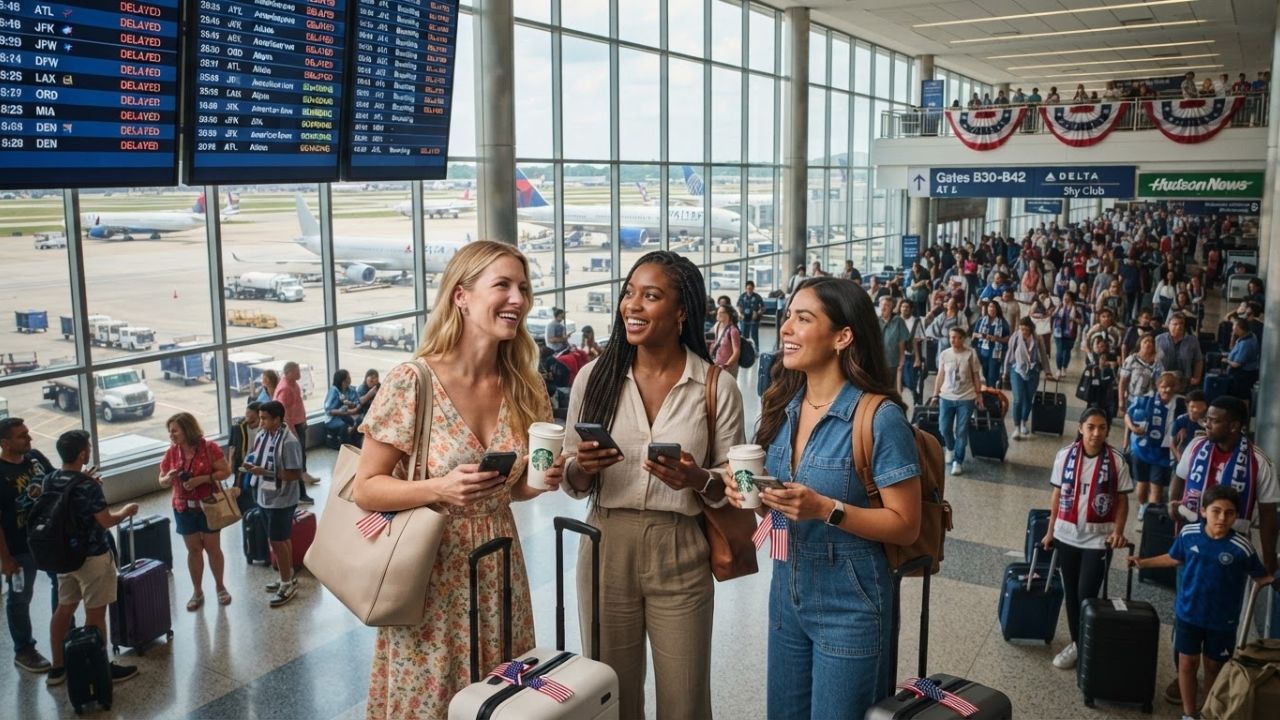
Image generated by AI
[Washington D.C., USA – July 2, 2026] — A major United States flight delays warning has been issued as the July 4 Independence Day holiday rush overlaps with regional FIFA World Cup fixtures. Over 72 million Americans are preparing to travel, with almost six million expected to fly between June 27 and July 5, straining primary hub airports. Aviation planners indicate that the overlapping event demands create a structural overload scenario for domestic airlines.
Dual Travel Demands Overload US Aviation Infrastructure
According to seasonal travel projections released by AAA Travel, road networks will absorb the majority of passenger volumes, but the air transit grid faces unprecedented demand. The integration of international soccer fan groups with domestic holidaymakers is reducing gate efficiency at major airport terminals. Industry observers note that primary international gateways are experiencing high congestion levels during peak departure banks.
This volume surge impacts large-scale connection points, including Atlanta Hartsfield-Jackson (ATL), Dallas/Fort Worth (DFW), Los Angeles (LAX), New York (JFK), and Chicago O'Hare (ORD). Because airlines already operate at maximum capacity during the holiday week, they lack backup aircraft to deploy when delays occur. Consequently, schedule disruptions are expected to extend past July 5 and persist into the following week.
Structural Bottlenecks Restrict Gate and Slot Recovery
The combination of outbound vacationers and inbound sports fans creates a dual-direction passenger flow at ticket counters and security checkpoints. Ground handling crews are struggling to complete aircraft turnaround procedures within standard slot allocations. Our analysis of the travel data indicates that airport slot saturation is reducing the operational flexibility of terminal managers.
Airlines face additional challenges in managing cockpit and cabin crew schedules under these congested conditions. Federal crew duty hour limits restrict how long crew members can remain on duty during flight disruptions. When flights are redirected or delayed by slot limits, crew members frequently reach their work limits, forcing flight cancellations. This constraint slows recovery timelines across the domestic hub-and-spoke network.
Network Ripple Effects and Weather Risk Factors
Flight schedules are highly interconnected, meaning a delay on an early-morning flight can impact downstream flights later in the day. This compounding effect is particularly noticeable on routes connecting World Cup host cities. Passengers are adjusting their itineraries to match tournament fixtures, creating sudden demand spikes on regional corridors.
Summer weather patterns are also expected to increase travel disruptions across the Eastern Seaboard. Afternoon thunderstorms regularly force the Federal Aviation Administration (FAA) to implement ground delay programs. When these weather disruptions occur during periods of historic passenger volume, airline recovery times extend significantly. Travelers should check flight statuses and read policies from the U.S. Department of Transportation (DOT) regarding consumer rights during long delays.
US Peak Summer Travel Projections (June 27 – July 5)
| Travel Segment Category | Projected Traveler Volume | Primary Infrastructure Impact | Key Risk Variable |
|---|---|---|---|
| Total Road Travelers | Over 66 million passengers | Highway and city road congestion | Traffic accidents and fuel station lines |
| Total Air Travelers | Almost 6 million passengers | Airport terminal slot saturation | Cascading flight delays and crew limits |
| Total Combined Travelers | Nearly 72 million passengers | Intermodal connection delays | Multi-day system recovery cycles |
Aviation Infrastructure Pressure Points
| Airport Gateway | Primary Hub Operations | World Cup Host Status | Scheduled Capacity Status |
|---|---|---|---|
| Atlanta (ATL) | Major domestic connecting hub | Active tournament host city | Slot-restricted during holiday waves |
| Dallas/Fort Worth (DFW) | Central connection gateway | Active tournament host city | High volume domestic feeder integration |
| Los Angeles (LAX) | West Coast international gate | Active tournament host city | Long taxi and international terminal times |
| New York (JFK) | East Coast international gate | Active tournament host city | Airspace sequencing bottlenecks |
| Chicago (ORD) | Midwest transit connection | Active tournament host city | Runway capacity limits during weather |
Key Takeaways
- Massive Congestion: Over 72 million total travelers are projected, with nearly 6 million flying during the July 4 week.
- Double Demand: The convergence of the Independence Day holiday and the FIFA World Cup strains terminal gate operations.
- Cascading Delays: Flight disruptions are expected to extend past July 5, affecting downstream flight rotations.
- Resource Limits: Crew duty hour restrictions and slot limits reduce airline recovery efficiency.
- Weather Risks: Summer thunderstorms on the East Coast will likely compound flight delay recovery times.
Why This Matters
Our analysis of the travel data indicates that simultaneous domestic and international event demands test the limits of hub-and-spoke models. Because U.S. airports operate near maximum capacity during July 4, the addition of World Cup fan traffic removes all operational buffers. Consequently, minor weather delays will trigger system-wide disruptions, highlighting the need for increased airport slot flexibility.
In addition, the concentration of delays at major host cities indicates that regional networks are vulnerable to sudden demand spikes. When fans book flights at the last minute based on match outcomes, airlines cannot easily adjust fleet distributions. This lack of flexibility leads to overbooking and passenger displacement, demonstrating the challenges of managing global events alongside domestic holidays.
Industry Outlook
Expect commercial carriers to implement proactive flight cancellations to prevent crew schedules from collapsing during peak travel waves. Airport terminal operators will deploy additional staff to assist with ground traffic and passenger rebooking processes. Additionally, aviation planners will evaluate slot allocations at host cities to prepare for the final rounds of the tournament in late July.
FAQ
1. Why are flights delayed more than usual this summer?
The delay risk is elevated because the July 4 Independence Day holiday rush is overlapping with FIFA World Cup matches across North America. This convergence creates historically high passenger volumes that exceed terminal capacity.
2. Which airports are expected to experience the most congestion?
Major congestion will likely concentrate around primary international gateways and host cities, including Atlanta (ATL), Dallas/Fort Worth (DFW), Los Angeles (LAX), New York (JFK), and Chicago (ORD).
3. How can travelers reduce their exposure to flight delays?
Travelers should book early morning flights, avoid tight layover windows, and monitor weather forecasts. Aviation analysts recommend adding a buffer of four to five days post-holiday to avoid the peak disruption periods.
4. What are my rights if my flight is significantly delayed or cancelled?
According to U.S. Department of Transportation regulations, travelers are entitled to a full refund if their flight is cancelled or significantly delayed and they choose not to accept rebooking options.
5. Will cargo operations be impacted by passenger flight delays?
Yes. Because many passenger aircraft transport commercial cargo, flight delays will likely disrupt regional logistics schedules, causing shipping delays for businesses.
Related Travel Guides
- Breeze Airways Commences Salisbury to Fort Lauderdale Direct Flights
- Delta Airlines LAX Delta One Lounge Travel Chaos 2026
- Air India Boeing 777 Melbourne Flights Travel Chaos 2026
Disclaimer: This article is strictly for informational purposes. Travel projections, airport slot conditions, flight schedules, and weather patterns are based on AAA and industry disclosures available at the time of publication. Aviation rules, passenger numbers, and carrier operations are highly dynamic and subject to change. Travelers should check directly with airlines for real-time schedule updates.
Disclaimer
This article is for informational and educational purposes only. It does not constitute legal, financial, or professional advice. While we strive to provide accurate and up-to-date information, travel policies, regulations, and conditions change rapidly. Always verify information with official sources before making travel decisions. Nomad Lawyer makes no representations about the accuracy, reliability, completeness, or suitability of the information provided. Readers should consult qualified professionals for advice specific to their circumstances. The views expressed in this article are those of the author and do not necessarily reflect the views of Nomad Lawyer.
Raushan Kumar
Founder & Lead Developer
Full-stack developer with 11+ years of experience and a passionate traveller. Raushan built Nomad Lawyer from the ground up with a vision to create the best travel and law experience on the web.
Learn more about our team →