
US DOT Flight Delay Rule Excludes 10 Disruptions, Narrowing Compensation Options for Travellers From October 19
The DOT flight delay rule takes effect on October 19, changing how US airlines report ten types of cancellations and delays.

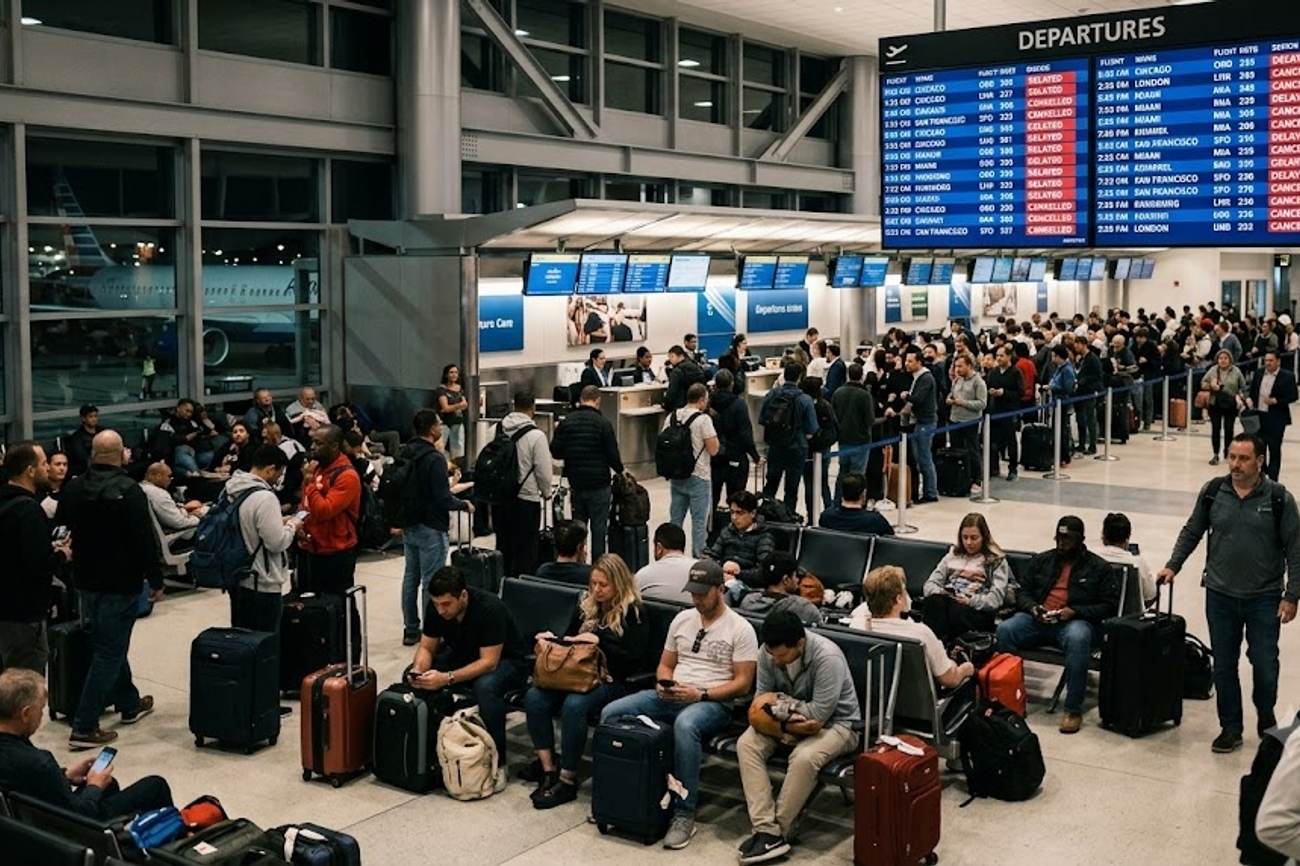
Image generated by AI
The DOT flight delay rule takes effect on October 19, changing how US airlines report ten types of cancellations and delays. The new framework removes these events from the federal Air Carrier category, which covers disruptions within an airline’s control. Instead, carriers will report them under a new Section 511(b) category created under the 2024 FAA Reauthorization Act. The change could affect the meals, hotels, vouchers and other amenities passengers receive after lengthy disruptions. However, it does not eliminate passengers’ separate right to refunds after a cancellation or significant flight change. The distinction matters for travellers comparing airline reliability, disruption policies and the practical costs of being stranded.
Ten Disruptions Leave Carrier Category
From October 19, ten specified events will no longer count as Air Carrier causes in the Department of Transportation’s reporting framework. The federal rule says the change implements Section 511(b) of the FAA Reauthorization Act of 2024.
The new category will cover events that Congress specifically identified as outside the Air Carrier reporting code. That distinction changes the statistical treatment of disruptions without making every affected incident automatically harmless for passengers.
Disruption New treatment from October 19 What it means operationally Cleaning after a passenger death Section 511(b) Post-incident cleaning will no longer be reported as an Air Carrier cause Aircraft damage from extreme weather, foreign object debris or sabotage Section 511(b) Certain damage-related disruptions move outside the carrier category Baggage or cargo loading delay from an external bag-system outage Section 511(b) Applies where the system is not controlled by the carrier or contractor Cybersecurity attacks Section 511(b) Applies when the airline complies with relevant cybersecurity regulations Unexpected government-system shutdown or failure Section 511(b) Covers qualifying failures affecting safe flight operations Overheated brakes after a safety incident Section 511(b) Applies when emergency procedures are required Certain unscheduled maintenance Section 511(b) Covers qualifying maintenance outside scheduled programmes Medical emergency through no fault of carrier Section 511(b) Applies when medical attention creates the disruption Removal of an unruly passenger Section 511(b) The resulting disruption moves outside the carrier category
The US Department of Transportation (DOT) has introduced a new flight delay rule, which excludes 10 disruptions from compensation, effective October 19. According to the US Department of Transportation website, the rule aims to clarify the circumstances under which airlines are required to provide compensation to passengers. This move is expected to have significant implications for passenger rights and airline operations. Airport closure caused by volcanic ash, wind or wind shear Section 511(b) Qualifying closures receive separate reporting treatment
The wording matters. The regulation does not broadly excuse airlines from every delay involving maintenance, weather or passengers. Instead, each exclusion contains specific conditions that must be satisfied.
For example, unscheduled maintenance qualifies only when it manifests outside a scheduled maintenance programme and cannot be deferred or must be addressed before departure. Similarly, cybersecurity incidents qualify when the carrier complies with applicable cybersecurity regulations.
Why The Reporting Change Matters
The immediate change concerns how delay and cancellation causes enter federal aviation statistics. Yet those statistics influence how travellers, analysts and industry researchers understand airline reliability.
Under the existing system, DOT reporting divides delays into Air Carrier, Extreme Weather, National Aviation System, Security and Late Arriving Aircraft categories. A flight generally enters the delayed category when it arrives at least 15 minutes behind schedule.
The new framework adds Section 511(b) to the causal reporting structure. Therefore, disruption statistics after October 19 will contain a category that did not previously exist in the same form.
Current framework New framework from October 19 Air Carrier Air Carrier Extreme Weather Extreme Weather National Aviation System National Aviation System Security Security Late Arriving Aircraft Late Arriving Aircraft No dedicated Section 511(b) category Section 511(b)
That creates an important issue for year-on-year comparisons. A disruption that might previously have appeared under Air Carrier could move into the new category after the rule takes effect.
Consequently, travellers should be cautious when comparing future carrier performance with historical data. A lower Air Carrier delay share after October 19 will not necessarily mean fewer overall disruptions.
Compensation And Amenities Face Change
The most immediate passenger concern involves airline commitments for meals, hotels, rebooking and other amenities.
DOT’s Airline Cancellation and Delay Dashboard currently records promises made by major US airlines when disruptions fall within their control. The dashboard covers commitments involving significant delays and cancellations.
Passengers affected by flight delays or cancellations can visit the Federal Aviation Administration website for information on their rights and options for seeking compensation. The FAA website provides guidance on the rules and regulations governing airline operations, including those related to flight delays and cancellations. Additionally, passengers can check with their airline for specific policies and procedures regarding flight disruptions.
The department states that airlines must honour commitments in their customer service plans when the relevant disruption is controllable. Those commitments vary between carriers and can include meals, overnight accommodation, ground transport, rebooking and travel credits.
The new classification could therefore change whether a particular incident activates those commitments.
Importantly, the federal rule itself does not create a universal cash-compensation scheme. In fact, DOT’s current dashboard shows that the listed major carriers do not commit to cash compensation for a three-hour controllable delay.
Passenger benefit Current DOT dashboard position Potential effect of new classification Meal or meal voucher Many major carriers commit for qualifying controllable delays May not apply where an event enters Section 511(b) Overnight hotel Commitments vary by airline May not apply to qualifying excluded events Ground transport Commitments vary by airline Depends on the carrier’s customer service commitment Same-airline rebooking Common commitment for qualifying disruptions Depends on whether the disruption remains controllable Partner-airline rebooking Offered by some major carriers Depends on the airline and qualifying circumstances Travel voucher or credit Offered by some carriers May become unavailable for excluded disruptions
The new rule may impact tourism in the US, particularly for international visitors who may be unfamiliar with the country's airline regulations. The US Travel Association website offers insights and resources for travelers, including information on airline policies and passenger rights. By understanding the new rule and their rights as passengers, travelers can better navigate the complexities of air travel and plan their trips accordingly. Cash compensation Major carriers generally do not commit Remains separate from the new classification
The DOT itself acknowledges the financial consequence. Its final rule states that the number of delays and cancellations for which airlines provide amenities and compensation is expected to decline.
The department says it cannot reliably estimate the total reduction because it does not have visibility into the frequency of the ten excluded causes. It characterises the potential reduction in amenities and compensation as a transfer of value from consumers to airlines.
Refund Rights Remain Separate
The most important distinction for travellers is between refund rights and disruption amenities.
The new reporting framework does not remove the federal refund entitlement that applies when an airline cancels a flight or makes a significant change. Passengers who reject the alternative transportation or other compensation offered can remain entitled to a refund under DOT rules.
That protection applies regardless of whether the disruption falls into the new Section 511(b) category.
For example, a passenger whose flight is cancelled because of a qualifying event may still have a refund right. The classification primarily affects the treatment of the disruption as controllable and the related airline commitments.
Situation Refund position under current DOT rules Airline cancels the flight Refund available if passenger does not accept alternative travel Significant domestic schedule change Refund may apply if passenger rejects the changed i
FAQ: US DOT Flight Delay Rule Excludes 10 Dis 2026
What is the new US DOT flight delay rule? Answer 1: Excludes 10 disruptions from compensation eligibility.
Which disruptions are excluded from compensation? Answer 2: Weather, air traffic, and security issues are excluded.
How will the rule affect traveler compensation? Answer 3: Narrows options for compensation starting October 19.
What should travelers do if their flight is delayed? Answer 4: Check with airlines for specific compensation policies.
Related Travel Guides
Disclaimer
This article is for informational and educational purposes only. It does not constitute legal, financial, or professional advice. While we strive to provide accurate and up-to-date information, travel policies, regulations, and conditions change rapidly. Always verify information with official sources before making travel decisions. Nomad Lawyer makes no representations about the accuracy, reliability, completeness, or suitability of the information provided. Readers should consult qualified professionals for advice specific to their circumstances. The views expressed in this article are those of the author and do not necessarily reflect the views of Nomad Lawyer.
Naina Thakur
Contributor & Travel Specialist
Travel enthusiast and legal writer covering visa regulations, responsible tourism, and cultural journeys across global destinations.
Learn more about our team →