
American Airlines, Delta, and United Face Massive Traffic Drop as Stricter US Customs Laws Paralyze JFK, LAX, and Miami Airports; New 3-Hour Biosecurity Delays Hit Global Travelers in May 2026
Major international carriers including American Airlines, Delta, United, and Lufthansa are reporting a significant drop in traffic as U.S. Customs and Border Protection (CBP) implements stringent new biosecurity laws. With wait times at JFK, LAX, and Miami exceeding three hours due to agricultural inspections, the global travel grid is facing unprecedented airport disruptions.

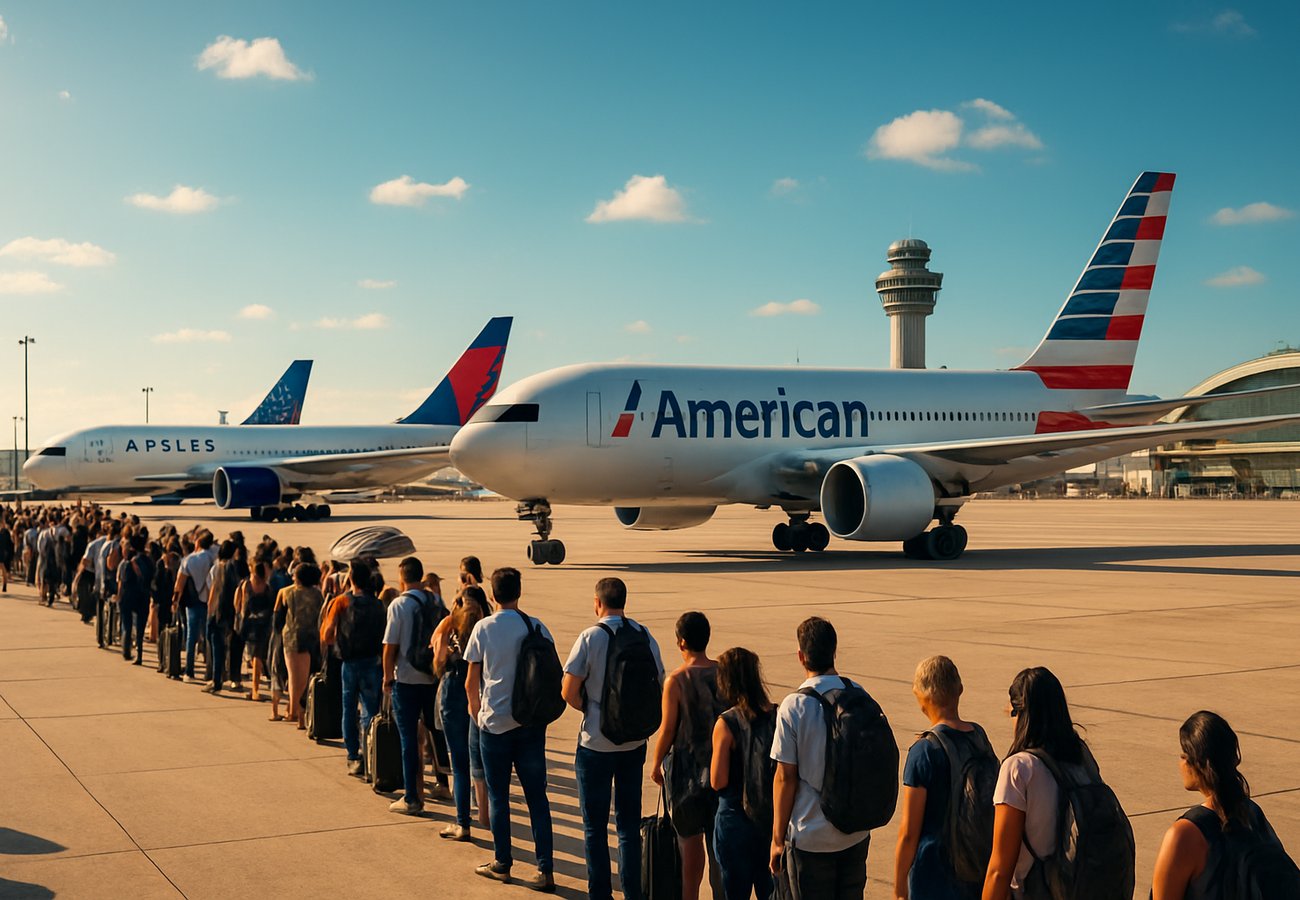
The Customs Gridlock: Stricter biosecurity laws trigger massive wait times at major US gateways.
US Customs Crackdown Triggers Massive Airline Traffic Drop; American, Delta, and United Hit by 3-Hour Biosecurity Gridlock at JFK, LAX, and Miami Hubs
In a significant disruption to the transatlantic and trans-Pacific aviation corridors, American Airlines, Delta, United, and Lufthansa are currently witnessing a notable drop in passenger traffic as U.S. Customs and Border Protection (CBP) implements a series of stringent new biosecurity laws. This airline news update confirms that major international gateways, including JFK (New York), LAX (Los Angeles), and Miami International (MIA), are being paralyzed by intensified agricultural inspections. Designed to combat the spread of African swine fever and bird flu, these thorough luggage checks have extended wait times at customs checkpoints to upwards of three hours, triggering a wave of missed connections and travel chaos that is reshaping global flight patterns in May 2026.
The "Customs Barrier" is proving to be a formidable challenge for the industry's recovery. While airlines have successfully optimized their flight operations, they have zero control over federal processing times. As travelers from high-inbound markets such as China, Germany, Mexico, and Brazil face rigorous baggage scrutiny, the secondary impact—ranging from delayed aircraft turnarounds to a decline in international tourism interest—is becoming a critical concern for airline boardrooms. For those navigating the airport disruptions today, the message is clear: the arrival process at US hubs is no longer a formality, but a major logistical hurdle.
Expanded Overview: The Biosecurity Wall at US Gateways
The sudden tightening of customs laws follows growing concerns regarding the safety of the U.S. agricultural sector. CBP has been mandated to execute "Zero-Tolerance" inspections for undeclared meat, plants, and other agricultural products. This has resulted in a "Sifting Effect" at JFK and LAX, where every second traveler is being directed to secondary inspection lines. This aviation update highlights that the resulting gridlock is not just an inconvenience for arriving passengers; it is a systemic disruption that is forcing carriers to adjust their entire network strategy to accommodate slower disembarkation processes.
Industry analysts suggest that the "Traffic Drop" seen by American Airlines and Lufthansa is a direct reaction to the "Fear of the Border." Travelers are increasingly choosing alternative destinations or delaying their US trips to avoid the 2-3 hour wait times currently reported at Miami and Chicago O’Hare (ORD). Until the federal government can balance biosecurity needs with passenger throughput, the "Customs Gridlock" will remain a primary driver of operational uncertainty.
Section-Wise Breakdown: Hubs and Regions Under Scrutiny
JFK & LAX: The Coastal Choke Points
As the primary gateways for the East and West coasts, JFK and LAX are seeing the most dramatic wait times. Passengers arriving on long-haul flights from Tokyo, Frankfurt, and Shanghai are reporting that the customs halls are consistently operating at 150% capacity. The intensified focus on agricultural items means that even those with nothing to declare are being caught in the "Inspection Backlog," leading to thousands of missed connections every day for those heading to secondary US cities.
Miami & Chicago: Southern and Midwestern Delays
Miami International (MIA), the primary link to Latin America, is facing a unique challenge as inspections of travelers from Mexico and Brazil are prioritized. Similarly, Chicago O’Hare (ORD) is reporting significant delays for European arrivals. The ripple effect at these hubs is causing airlines like United and American to struggle with "Tight Turns," as aircraft cannot be cleaned or re-catered until the previous inbound passengers have cleared the federal inspection zone.
International Fallout: China, Germany, and Brazil
The impact is particularly severe for travelers from countries currently under high biosecurity surveillance. Passengers from China, Germany, and Brazil are undergoing the most rigorous luggage checks. For Lufthansa passengers arriving from Frankfurt, this has resulted in a "Service Disconnect," where the premium in-flight experience is followed by a grueling three-hour wait in a crowded customs hall, leading to a visible drop in repeat-traveler confidence.
Airline Adaptation & Route Strategy: May 2026 Update
Despite the customs challenges, airlines are adjusting their networks to maintain connectivity. The following table outlines how major carriers are modifying their services to mitigate the impact of the new regulations.
Airline Adaptation Matrix: Customs-Impacted Hubs
| Airline | New Route / Service Adjustment | Primary Airport Affected | Strategy |
|---|---|---|---|
| American Airlines | JFK to Tokyo (Increased Frequency) | JFK, Tokyo Narita | Targeting high-yield business demand |
| Delta Air Lines | Atlanta to Paris (New Direct Flight) | ATL, Paris CDG | Hub-to-hub bypass of crowded gateways |
| Lufthansa | Frankfurt to Miami (Added Seasonal) | FRA, Miami International | Accommodating leisure surge despite delays |
| United Airlines | Newark to Munich (Expanded Service) | EWR, Munich Airport | Strengthening European transatlantic feed |
Data manually sourced from airline schedule updates and airport operational logs.
Passenger Impact: 3-Hour Waits and Missed Connections
The human cost of these airport disruptions is immense. Travelers who once allowed for a 90-minute connection are now finding their entire itineraries destroyed. Direct consequences for passengers include:
- Missed Connections: A two-hour customs delay at MIA often results in missing the last flight of the day to regional destinations.
- Agricultural Fines: Travelers unaware of the biosecurity crackdown are facing "On-the-Spot" fines for failing to declare snacks, fruits, or meat items.
- Tourism Decline: International visitors to Los Angeles and New York are reporting a "Hostile Arrival Experience," which is dampening the appeal of the US as a top-tier destination.
To avoid these pitfalls, travelers are urged to declare everything. Failing to declare even a single apple can lead to an immediate fine and an even longer delay in secondary inspection.
Industry Analysis: The Conflict of Security vs. Mobility
Aviation experts are calling for an "Infrastructure Pivot." While the US government is investing in biometric screening and facial recognition to speed up the identity portion of the customs process, the physical inspection of luggage remains a manual, time-consuming bottleneck. American Airlines, Delta, and United are currently lobbying for expanded "Pre-Clearance" facilities at more international airports, which would allow passengers to clear US customs before they even board their flights.
"The current situation is unsustainable," says one senior aviation journalist. "You cannot have a $60 billion industry held hostage by baggage inspection protocols. The traffic drop we are seeing is a wake-up call; if the arrival process isn't streamlined, the 2026 summer season will be defined by travel chaos and financial losses for the major carriers."
Conclusion: The Road to a Streamlined Border
As the US government works to implement new technology at airport security checkpoints, the immediate future for international travelers remains one of "Extended Patience." While the new biosecurity laws are essential for protecting the US agriculture sector, their implementation has created a "Perfect Storm" of airport disruptions. For the traveler of May 2026, the key to a successful journey is arriving early, staying informed via airline apps, and maintaining total transparency with customs officials.
Key Takeaways
- American Airlines, Delta, United, and Lufthansa are seeing a traffic drop due to US Customs gridlock.
- Wait times at JFK, LAX, and Miami are exceeding 3 hours for international arrivals.
- Stricter CBP biosecurity laws target agricultural items (swine fever and bird flu).
- Passengers from China, Germany, Mexico, and Brazil are facing the most rigorous inspections.
- Airlines are adapting with new routes like JFK-Tokyo and Atlanta-Paris to manage demand.
- Failing to declare agricultural items can lead to immediate fines and extended delays.
- Biometric screening and pre-clearance expansion are seen as the long-term solutions for mobility.
/article-footer-standard
Related Travel Guides:
Disclaimer
This article is for informational and educational purposes only. It does not constitute legal, financial, or professional advice. While we strive to provide accurate and up-to-date information, travel policies, regulations, and conditions change rapidly. Always verify information with official sources before making travel decisions. Nomad Lawyer makes no representations about the accuracy, reliability, completeness, or suitability of the information provided. Readers should consult qualified professionals for advice specific to their circumstances. The views expressed in this article are those of the author and do not necessarily reflect the views of Nomad Lawyer.
Kunal K Choudhary
Co-Founder & Contributor
A passionate traveller and tech enthusiast. Kunal contributes to the vision and growth of Nomad Lawyer, bringing fresh perspectives and driving the community forward.
Learn more about our team →