
USA Flight Cancellations Skyrocket Today: Texas, New York, Los Angeles, and Orlando Hit by Massive Travel Chaos as American and Southwest Lead 2,300+ Delays; Major Airport Disruptions Reported in May 2026
A wave of nationwide flight cancellations and delays has paralyzed the US aviation grid today, with over 2,300 flights impacted across major hubs like Dallas/Fort Worth, JFK, and LAX. American Airlines and Southwest are at the center of the travel chaos, leaving thousands of passengers stranded as airlines struggle with operational strain.

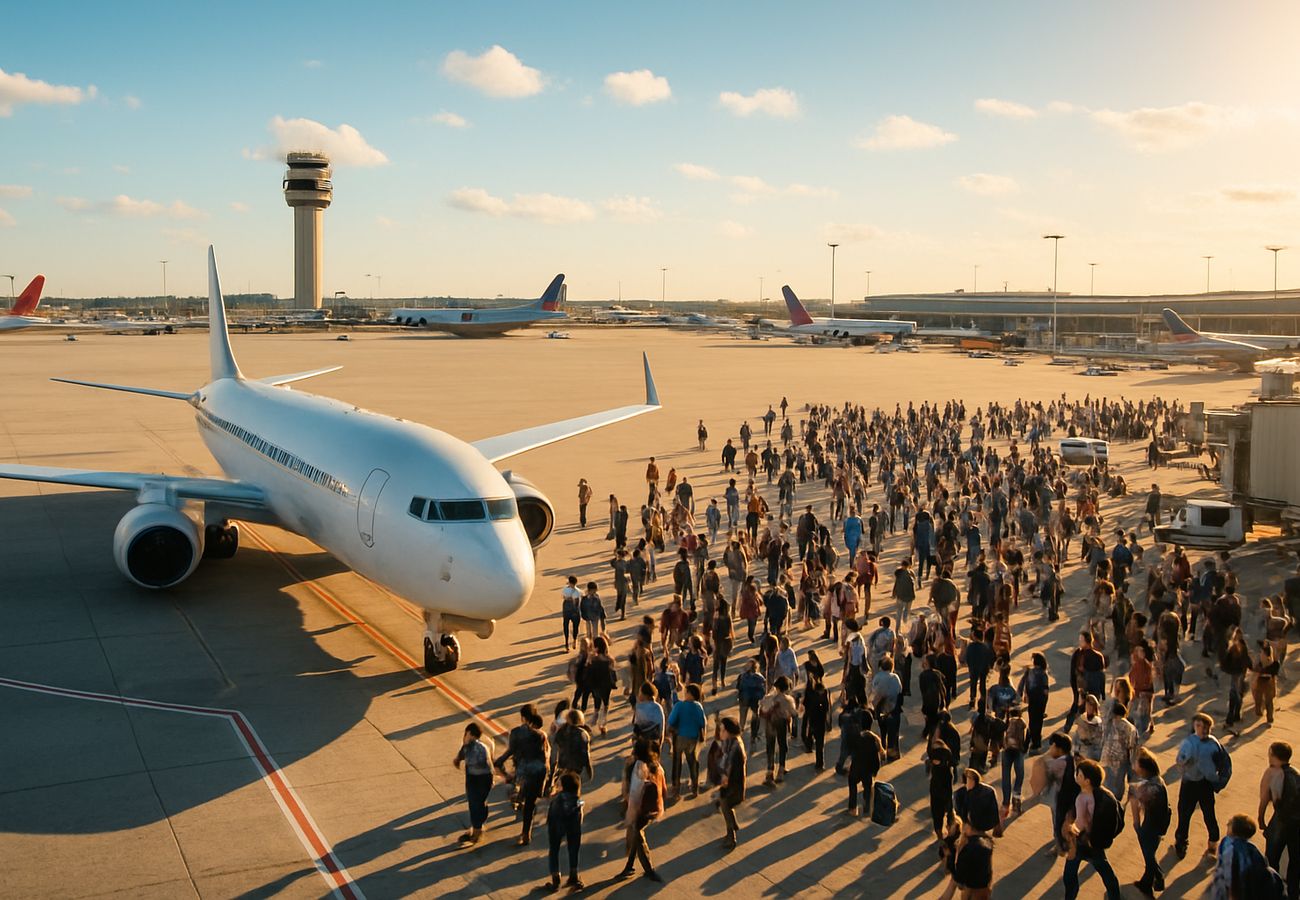
National Gridlock: Over 2,300 flight disruptions have grounded the US travel sector today.
National Aviation Emergency: USA Flight Cancellations Surge as Texas, New York, and Los Angeles Gripped by Massive Travel Chaos; Over 2,300 Disruptions Hit American, Southwest, and Delta Hubs
In what has become one of the most significant operational failures of the 2026 spring season, the United States aviation sector is currently battling a tidal wave of flight cancellations and airport disruptions. This airline news update confirms that as of May 11, 2026, a staggering 113 flights have been cancelled and 2,325 flights delayed across the nation’s domestic and international networks. The "Continental Gridlock" has primarily centered on the Texas aviation corridor, with Dallas/Fort Worth (DFW) and Dallas Love Field (DAL) recording the highest volumes of stranded passengers. However, the ripple effect has rapidly expanded to include major gateways in New York, Los Angeles, Orlando, Philadelphia, Denver, and Las Vegas, creating a logistical nightmare for thousands of travelers.
The scale of the travel chaos is particularly evident among the nation’s largest carriers. American Airlines and Southwest Airlines are currently leading the disruption count, accounting for nearly half of the total delays reported nationwide. As the "Systemic Fragility" of the US flight grid is exposed, passengers are facing hours-long wait times at gates, missed international connections, and a frantic scramble for rebooking options in a market where capacity is already stretched to its absolute limit.
Expanded Overview: The Dallas Nexus and Nationwide Paralysis
The primary driver of today’s national travel chaos appears to be a massive operational bottleneck in the North Texas region. Dallas/Fort Worth International (DFW), the fortress hub for American Airlines, reported a staggering 617 delays and 20 cancellations today. Simultaneously, Dallas Love Field (DAL), the home base for Southwest Airlines, recorded the highest cancellation count among listed airports with 39 flights grounded. When these two massive hubs falter, the entire US network feels the impact, as aircraft and crews are unable to reach their subsequent destinations in New York, Florida, or the West Coast.
This aviation update highlights that the disruption is not confined to the South. John F. Kennedy International (JFK) in New York and Los Angeles International (LAX) are also reporting significant failures, with JFK seeing 80 delays and LAX reporting 91. The "Domino Effect" is in full swing: a late departure from DFW means a late arrival at MCO or PHL, eventually resulting in the widespread airport disruptions that have defined this 24-hour period.
Section-Wise Breakdown: Hubs and Regions Under Fire
The Texas Eye of the Storm: DFW and Love Field
Texas has become the "Ground Zero" for today's aviation crisis. The combined 714 delays and 59 cancellations between DFW and Love Field have effectively frozen regional transit. For Southwest, the 39 cancellations at Love Field represent a significant portion of their daily schedule, leading to massive rebooking queues. At DFW, the 617 delays have turned the world’s third-busiest airport into a sea of stranded travelers, with American Airlines crews timing out after hours of waiting for operational clearances.
East Coast Disruptions: JFK and Philadelphia
The Northeast corridor is struggling to maintain fluidity as delays from the South migrate northward. JFK Airport in New York recorded 80 delays and 9 cancellations, impacting heavyweights like Delta and American. Philadelphia International (PHL) is also feeling the strain with 55 delays and 6 cancellations, affecting critical East Coast business connections. Passengers at these airports are reporting gate changes and rolling delays that have pushed many departures into the late evening hours.
West Coast and Mountain Hubs: LAX and Denver
On the West Coast, Los Angeles International (LAX) has recorded 91 delays, contributing to a broader slowdown of transcontinental routes. Denver International (DEN), a primary transit point for United and Southwest, saw 87 delays and 4 cancellations. The high altitude and high demand at DEN mean that even a small number of cancellations can lead to massive backlogs for those traveling to the Pacific Northwest or the Midwest.
Leisure Corridors: Orlando and Las Vegas
The leisure travel sector has not been spared. Orlando International (MCO), the primary gateway for Florida tourism, reported 76 delays and 4 cancellations. Meanwhile, Harry Reid International (LAS) in Las Vegas saw 75 delays and 8 cancellations. For families on vacation or travelers heading to conventions, these airport disruptions mean missed reservations and additional costs for meals and overnight stays.
National Disruption Matrix: May 11, 2026
The following tables provide the exact data on cancellations and delays as manually obtained from official aviation monitoring sources.
USA Airport Disruption Profile (Top 9)
| Airport | Delays (No.) | Cancellations (No.) |
|---|---|---|
| Dallas/Fort Worth (DFW) | 617 | 20 |
| Dallas Love Field (DAL) | 97 | 39 |
| Los Angeles (LAX) | 91 | 4 |
| Denver (DEN) | 87 | 4 |
| New York (JFK) | 80 | 9 |
| Orlando (MCO) | 76 | 4 |
| Las Vegas (LAS) | 75 | 8 |
| Austin (AUS) | 60 | 1 |
| Philadelphia (PHL) | 55 | 6 |
Airline Disruption Profile (Top 7)
| Airline | Delays (No.) | Cancellations (No.) |
|---|---|---|
| American Airlines | 614 | 24 |
| Southwest Airlines | 368 | 46 |
| SkyWest Airlines | 195 | 3 |
| Delta Air Lines | 164 | 10 |
| United Airlines | 144 | 9 |
| Endeavor Air | 89 | 3 |
| Alaska Airlines | 41 | 2 |
Source: Airport Authorities & FlightAware. Data manually collected and subject to live operational updates.
Passenger Impact: The Human Cost of Gridlock
For the millions of passengers moving through the US today, the travel chaos is more than just numbers on a screen. The 113 flight cancellations mean that thousands of people will not reach their destinations today, leading to missed business meetings, family gatherings, and significant emotional distress. Rebooking struggles are being reported across all major airlines, with customer service phone lines reaching wait times of several hours.
Travelers are advised to:
- Use Mobile Apps: Rebooking through an airline app is often faster than waiting at a service desk.
- Check Hotel Availability: If your flight is cancelled at a major hub like DFW or JFK, local hotels will fill up rapidly.
- Keep Essentials Ready: Medications, chargers, and documents should always be in your carry-on in case of sudden airport disruptions.
Industry Analysis: High Demand Meets Operational Fragility
Aviation analysts suggest that the current wave of flight cancellations is a symptom of an industry operating at the edge of its capacity. As the 2026 travel season accelerates, airlines are struggling to balance record-high passenger volumes with the need for technical maintenance and crew rest. The heavy concentration of delays in Dallas highlights the danger of "Hub Dependency," where a single weather event or technical glitch in one region can paralyze the entire national network.
Furthermore, the significant delays seen at regional carriers like SkyWest and Endeavor Air indicate that the disruption is deep-seated, affecting the feeder flights that provide critical volume to major international hubs. Until more operational "slack" is built back into the system, these periods of travel chaos are likely to remain a recurring feature of the US aviation landscape.
Conclusion: Outlook for Recovery
As the day progresses, airlines are working to "flush" the system and return to normal operations. However, with over 2,300 delays already in the books, the recovery process will likely take another 24 to 48 hours. Passengers traveling on Tuesday should still anticipate rolling delays as crews and aircraft are repositioned. The message for today is one of patience and vigilance; the US skies have rarely been more crowded, or more fragile.
Key Takeaways
- 113 flights have been cancelled and 2,325 flights delayed across the USA today, May 11, 2026.
- Texas hubs (DFW and DAL) are the worst hit, with a combined total of over 700 disruptions.
- American Airlines (614 delays) and Southwest (46 cancellations) are the most impacted carriers.
- Major travel chaos reported in New York (JFK), Los Angeles (LAX), Orlando (MCO), and Denver (DEN).
- Southwest Airlines recorded the highest cancellation total among major carriers today.
- SkyWest and United also faced elevated delay levels as the disruption spread nationwide.
- Passengers are urged to monitor real-time updates and check rebooking options immediately via mobile apps.
/article-footer-standard
Related Travel Guides:
Disclaimer
This article is for informational and educational purposes only. It does not constitute legal, financial, or professional advice. While we strive to provide accurate and up-to-date information, travel policies, regulations, and conditions change rapidly. Always verify information with official sources before making travel decisions. Nomad Lawyer makes no representations about the accuracy, reliability, completeness, or suitability of the information provided. Readers should consult qualified professionals for advice specific to their circumstances. The views expressed in this article are those of the author and do not necessarily reflect the views of Nomad Lawyer.
Kunal K Choudhary
Co-Founder & Contributor
A passionate traveller and tech enthusiast. Kunal contributes to the vision and growth of Nomad Lawyer, bringing fresh perspectives and driving the community forward.
Learn more about our team →