
United States Federal Authorities Release Updated Visa Waiver Restrictions Immediately Affecting International Travelers and Digital Border Security Protocols
Federal authorities have released updated United States border entry rules immediately impacting Visa Waiver Program travelers and ESTA requirements.

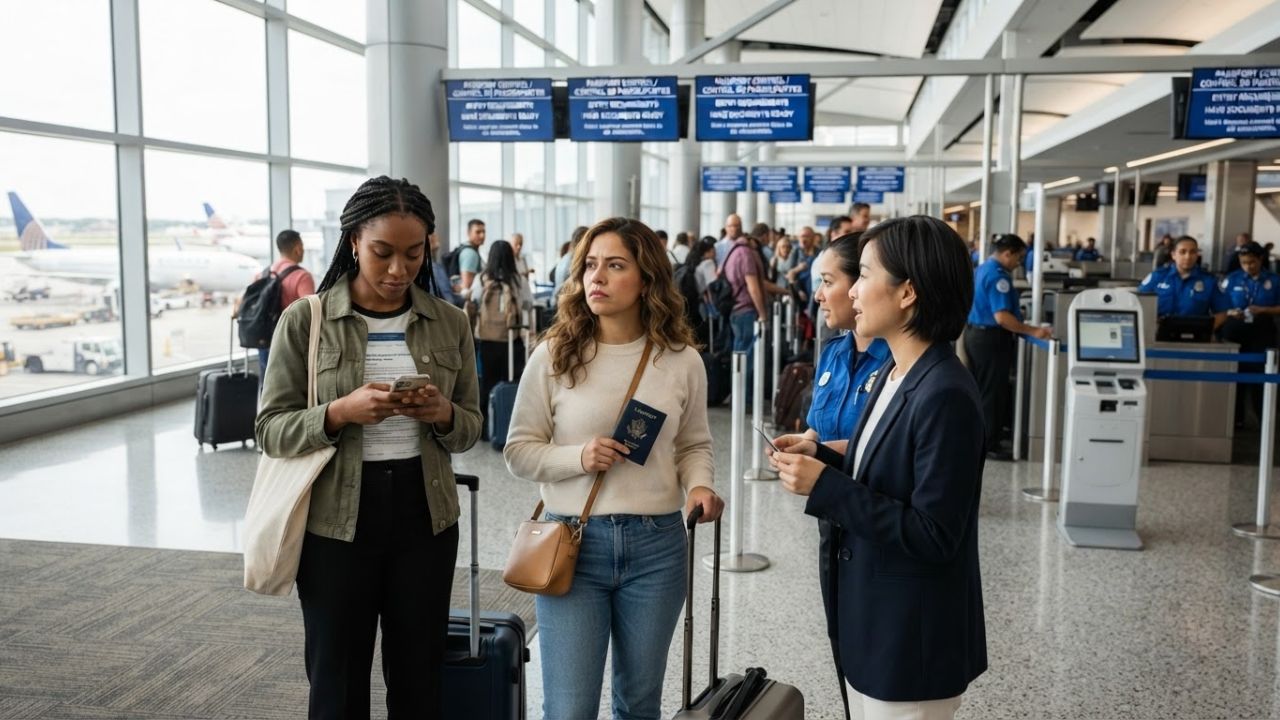
Image generated by AI
United States Federal Authorities Release Updated Visa Waiver Restrictions Immediately Affecting International Travelers and Digital Border Security Protocols
SEO Title: US Border Entry Rules Visa Waiver Program ESTA 2026 Meta Description: Federal authorities have released updated United States border entry rules immediately impacting Visa Waiver Program travelers and ESTA requirements. Slug: /us-border-entry-rules-visa-waiver-program-esta-2026 Standfirst: Federal authorities are releasing updated United States border entry rules that immediately impact international adventurers traveling under the Visa Waiver Program. Under the new statutory guidelines, travelers from 42 designated countries who have specific dual citizenship or past travel history to blacklisted regions must now obtain a traditional consular visa. This security overhaul is prompting airlines and airport ground crews to issue pre-booking alerts to prevent boarding denials at international gates.
Article
[Washington D.C., July 10, 2026] — Federal authorities are releasing updated United States border entry rules that immediately impact international adventurers traveling under the Visa Waiver Program. Under the new statutory guidelines, travelers from 42 designated countries who have specific dual citizenship or past travel history to blacklisted regions must now obtain a traditional consular visa. This security overhaul is prompting airlines and airport ground crews to issue pre-booking alerts to prevent boarding denials at international gates.
The legislative framework governing electronic travel authorization is shifting to prioritize advanced background screening. Jointly managed by the Department of Homeland Security and the Department of State, the Visa Waiver Program has historically permitted eligible foreign citizens to travel to the United States for business or leisure stays of up to 90 days. However, under the Visa Waiver Program Improvement and Terrorist Travel Prevention Act, federal agencies maintain strict exclusion criteria that bypass standard approvals based on individual historical footprints.
Federal Departments Update Visa Waiver Program Entry Requirements
Federal security agencies are updating the administrative rules that govern electronic travel approvals, making the entry process more rigid for international arrivals. The automated Electronic System for Travel Authorization (ESTA) now screens applicant backgrounds against a dynamic database of restricted regions. The policy is designed to identify and filter out high-risk profiles long before they board transatlantic flights.
According to reports, the program updates apply to all travelers originating from the 42 countries participating in the visa waiver agreement. Travelers who fail to meet the new security requirements must secure a standard visitor visa. Consular officials advise applicants to initiate these requests weeks in advance due to rising wait times at local embassies.
Restricted List and Dual Nationality Exclusions Immediately Invalidate ESTA
Under the updated guidelines, individuals who hold dual citizenship with specific countries are immediately ineligible for electronic travel authorization. This zero-tolerance exclusion applies to citizens of visa-waiver nations who also hold nationality in Cuba, Iran, Iraq, North Korea, Sudan, or Syria. For these travelers, the automated approval process is permanently blocked, requiring them to schedule an in-person visa interview.
Additionally, past travel history plays a significant role in determining eligibility. Any traveler who has physically visited North Korea, Iran, Iraq, Libya, Somalia, Sudan, Syria, or Yemen on or after March 1, 2011, is barred from using the automated program. The travel ban also applies to anyone who has visited Cuba on or after January 12, 2021, transforming spontaneous travel plans into a multi-week consular application process.
Customs and Border Protection Launches Specialized Smartphone App Vetting
U.S. Customs and Border Protection is deploying advanced digital vetting technologies to strengthen border security at international ports of entry. The agency is phasing out web-based ESTA portals in favor of a specialized smartphone-based application. Under this new digital framework, travelers must submit dynamic facial photographs to verify their identities against biometric passport data.
The specialized application also utilizes smartphone geolocation features to verify passenger movements and confirm voluntary departure records. Security analysts indicate that the vetting system requests a detailed five-year history of personal social media accounts and contact records. This extensive data collection helps federal security agents identify potential inconsistencies before passenger check-in begins.
Mandatory Documents and Key Timeline Thresholds for US Entry
To ensure compliance with the updated border protocols, international travelers must verify their documentation against strict federal requirements. Every passenger traveling under the waiver program must possess an individual biometric e-passport containing an embedded chip. The maximum duration of stay remains capped at 90 days, with federal rules strictly prohibiting any extensions or adjustments of status.
Industry sources indicate that airline check-in software is being updated to automatically flag passengers who do not possess the required biometric documents. Travelers are advised to consult official government databases, such as the U.S. Customs and Border Protection portal, to review their status. Those who do not meet the criteria must obtain a B-1 business visa or B-2 tourist visa before purchasing air tickets.
Managing Transition From Electronic Approvals to Embassy Consular Interviews
For travelers excluded from the automated system, the process of securing entry requires navigating standard consular channels. The Department of State's Bureau of Consular Affairs is providing updated localized guides to assist passengers in scheduling in-person interviews. The consular review process involves submitting detailed personal records, background documentation, and travel itineraries.
Aviation officials warn that the requirement for in-person interviews will likely lead to backlogs at major embassies in Europe and Asia. Passengers who previously relied on rapid online approvals must now plan their trips months in advance. Travel agents are adjusting their booking procedures to ensure clients have secured valid visas before finalizing non-refundable travel packages.
Digital Technology rescales Security Screening Processes at Border Gates
The integration of biometric verification and smartphone tracking represents a new phase of digital border management. Federal authorities are leveraging advanced data analytics to cross-reference traveler profiles with international security databases. This technology-first approach aims to minimize security gaps while accelerating processing times for pre-screened low-risk passengers.
While the updated rules increase the administrative burden for some travelers, border security officials argue they are necessary to counter evolving security threats. As digital tracking technologies become standard at global border crossings, the era of friction-free travel is transitioning toward a highly monitored and verified entry system.
Data Tables
United States Visa Waiver Program Exclusions
| Exclusion Category | Countries Involved | Restriction Details |
|---|---|---|
| Dual Nationality Exclusions | Cuba, Iran, Iraq, North Korea, Sudan, Syria | Immediate invalidation of automated ESTA eligibility |
| Historical Travel Exclusions (Since March 1, 2011) | North Korea, Iran, Iraq, Libya, Somalia, Sudan, Syria, Yemen | Automated ESTA barred; B-1/B-2 consular visa required |
| Historical Travel Exclusions (Since Jan 12, 2021) | Cuba | Automated ESTA barred; B-1/B-2 consular visa required |
United States Border Entry Parameters
| Parameter | Policy Requirement | Operational Details |
|---|---|---|
| Maximum Electronic Stay | 90 Days | Strictly non-extendable under VWP |
| Mandatory Document Type | Biometric e-passport | Must contain embedded digital security chip |
| Primary Application Format | Mobile-only smartphone app | Phasing out traditional desktop web portals |
| Vetting Data Collected | Live facial photo, 5-year social media history, contact records, geolocation | Verified against federal security databases |
Consular Visa Alternatives
| Visa Category | Target Audience | Application Process |
|---|---|---|
| B-1 Visa | Business travelers ineligible for VWP | In-person consular interview, company support letter |
| B-2 Visa | Leisure travelers ineligible for VWP | In-person consular interview, financial verification |
Why This Matters
These updated border entry rules highlight the growing militarization of digital identity at international frontiers. By phasing out web-based portals and requiring smartphone-based applications with biometric verification, the United States is setting a new global standard for pre-departure surveillance. The requirement for geolocation checks, five-year social media logs, and contact lists shows that the concept of border screening has expanded far beyond the physical port of entry, transforming personal smartphones into remote screening devices.
Our analysis of international travel flows indicates that these regulations will disproportionately affect multinational families, humanitarian workers, and business travelers from allied nations. For example, a European citizen who visited Cuba for a vacation after 2021 or traveled to Iraq for humanitarian work after 2011 is now grouped with high-risk travelers. The loss of spontaneous travel privileges will likely reduce transatlantic leisure bookings and increase operational pressure on U.S. consular offices worldwide, which must now handle millions of additional visa applications.
Additionally, this shift reflects a broader geopolitical trend where travel access is used as a tool of foreign policy. The inclusion of Cuba and North Korea on the restricted travel lists demonstrates how national security laws directly dictate commercial airline operations. Airlines must now invest in more sophisticated document verification systems at foreign departure gates to avoid carrying passengers without valid entry credentials, transferring the cost of border enforcement onto private aviation companies.
Industry Outlook
Market trends suggest that global aviation hubs will face continued slot constraints and airspace congestion through the decade. As Air India integrates more widebody aircraft like the Airbus A350-1000 into its network, maintaining high punctuality will depend on the pace of airport infrastructure upgrades in India, particularly runway expansions and air traffic control modernization.
Additionally, we expect that travelers will increasingly demand clearer privacy protections regarding how their biometric and social media data is stored. As digital border gates become the norm, the balance between national security and passenger privacy will remain a key point of debate among international aviation organizations and civil liberties groups.
Related Aviation News Guides
- European Union Delays ETIAS Launch to 2027 Amid Schengen Entry-Exit System Border Infrastructure Challenges
- US CBP Mobile Passport Control App Expands to More Airports Streamlining Arrivals for International Travelers
- United Kingdom ETA Scheme Expands Globally Outlining New Requirements for Gulf Citizens and Visa Waiver Nations
Disclaimer
This article is for informational and educational purposes only. It does not constitute legal, financial, or professional advice. While we strive to provide accurate and up-to-date information, travel policies, regulations, and conditions change rapidly. Always verify information with official sources before making travel decisions. Nomad Lawyer makes no representations about the accuracy, reliability, completeness, or suitability of the information provided. Readers should consult qualified professionals for advice specific to their circumstances. The views expressed in this article are those of the author and do not necessarily reflect the views of Nomad Lawyer.
Preeti Gunjan
Contributor & Community Manager
A passionate traveller and community builder. Preeti helps grow the Nomad Lawyer community, fostering engagement and bringing the reader experience to life.
Learn more about our team →