
US Travel in Crisis: 2,791 Flight Delays and 159 Cancellations Cripple Major Airports
A devastating wave of operational disruptions and extreme weather sweeps across the United States, affecting 2,950 flights at major airports including LaGuardia, Chicago O'Hare, and Fort Lauderdale. Republic, Southwest, and United Airlines bear the brunt of the chaos.

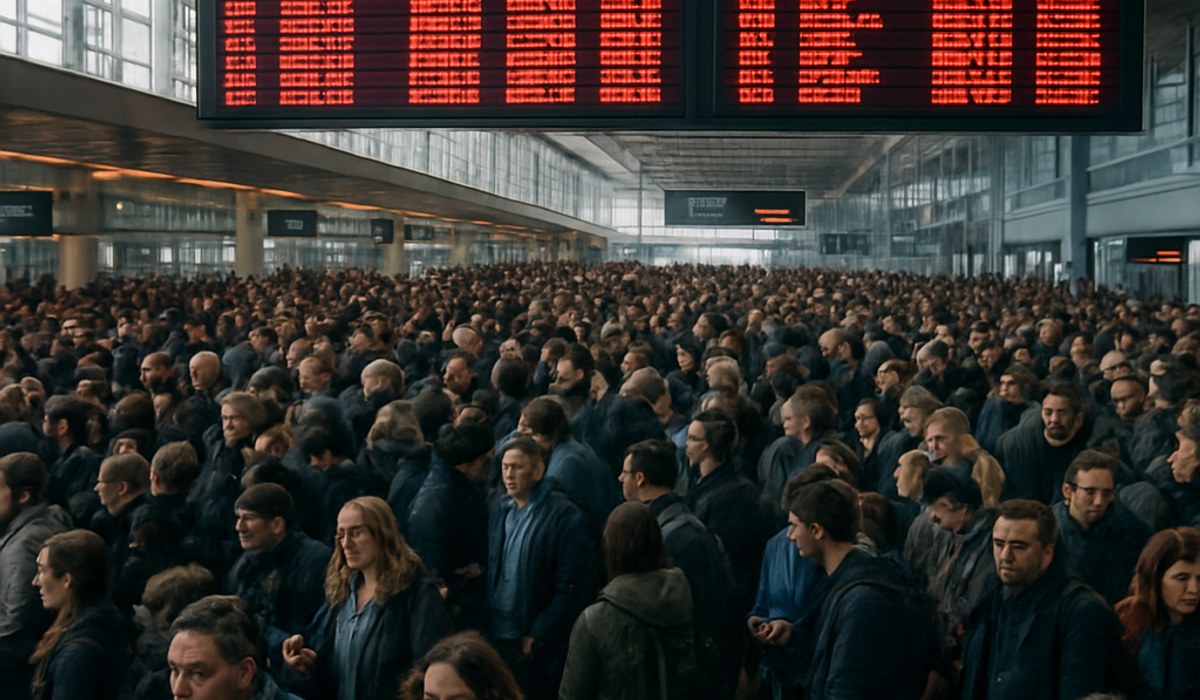
Image generated by AI
Nation's Airports in Turmoil: 2,950 Flight Disruptions Paralyze US Air Travel Network
Quick Summary:
- 2,791 flight delays and 159 cancellations recorded across US airports
- LaGuardia Airport bears heaviest burden (101 cancellations, 277 delays)
- Republic Airlines (48 cancellations), Southwest (500 delays), and United (188 delays) most significantly affected
- Extreme weather warnings combined with record passenger volumes triggering nationwide operational crisis
The United States air travel system faces its most severe disruption in recent months as nearly 3,000 flights experience delays or outright cancellations across the nation's busiest airports. From New York to Los Angeles, from Chicago to Miami, the combination of extreme weather patterns and unprecedented passenger volumes has created a perfect operational storm. Here's what travelers need to know as air chaos spreads nationwide.
The Full Scope of Today's Travel Disaster
Today's disruption numbers are staggering: 2,791 flight delays and 159 cancellations, representing one of the most severe single-day operational failures across the US commercial aviation network. These aren't isolated incidents at a single airport or affecting one airline—instead, this crisis penetrates major hubs, secondary airports, and every significant carrier simultaneously.
The scale is difficult to comprehend. Nearly 3,000 flights either departed late or didn't depart at all, affecting hundreds of thousands of passengers trying to reach destinations across the continent and internationally. The ripple effects will extend for days as aircraft repositioning and passenger rebooking backlogs create secondary disruptions.
Major Airports Reeling from Cascading Cancellations and Delays
LaGuardia Airport (LGA) in New York emerges as the epicenter of disruption, recording 101 cancellations and 277 delays—by far the highest count of any US airport. Ground delays at LaGuardia averaged 189 minutes, stranding passengers for over three hours before aircraft could even depart.
Chicago O'Hare International (ORD), America's second-busiest airport, reported 8 cancellations and 242 delays, creating massive bottlenecks across transcontinental routing and connections to smaller regional airports. Fort Lauderdale International (FLL) recorded 5 cancellations and 256 delays, making it the third-most disrupted facility despite being smaller than major East Coast hubs.
Beyond these three crisis zones:
- Los Angeles International (LAX): 6 cancellations, 134 delays
- Hartsfield-Jackson Atlanta (ATL): 4 cancellations, 142 delays
- Boston Logan (BOS): 12 cancellations, 103 delays
- John F. Kennedy (JFK): 6 cancellations, 100 delays
- Reagan National Washington DC (DCA): 11 cancellations, 81 delays
- San Francisco International (SFO): 5 cancellations, 83 delays
- Houston Bush Intercontinental (IAH): 5 cancellations, 72 delays
- Dallas-Fort Worth (DFW): 3 cancellations, 70 delays
Twenty-six airports in total recorded measurable cancellations and delays, indicating how widespread this operational fracture has become.
Which Airlines Are Hitting Passengers Hardest
The disruption burden distributes unevenly across the airline industry, with some carriers absorbing far greater operational strain than others.
Republic Airlines leads the cancellation count at 48 outright cancellations, completely removing 48 flights from operation. Endeavor Air (Delta's regional subsidiary) recorded 29 cancellations, while Spirit Airlines reported 13 cancellations and 176 delays—a pattern suggesting severe operational challenges across their network.
Southwest Airlines, despite having fewer cancellations (7), faces an extraordinary 500 delayed flights—the single highest delay count of any carrier. This explosion of delays reflects Southwest's position as one of America's highest-capacity carriers and its significant presence at disrupted hubs.
United Airlines reported 11 cancellations and 188 delays, while American Airlines recorded only 2 cancellations but a staggering 417 delays. Delta Air Lines documented 5 cancellations and 224 delays. JetBlue, Frontier, and SkyWest all experienced measurable disruptions, underscoring how thoroughly this crisis penetrates the entire US airline ecosystem.
Extreme Weather Warnings Compound Operational Chaos
While high passenger volume contributed to delays, the extreme weather component dramatically escalates the crisis. The National Weather Service has issued red flag warnings across 13 states due to unseasonably warm temperatures combined with gusty wind conditions.
Affected regions include Southwest Wyoming, Colorado, North Carolina, South Carolina, and Texas, with temperatures reaching mid-60s to low-70s and wind gusts reaching 45 miles per hour. This combination of heat, low humidity, and powerful winds creates elevated fire risk across vast geographic areas.
This heatwave represents the most intense weather event of this magnitude in over a decade, with temperatures breaking numerous regional records. When extreme weather warnings activate at major airports or along critical air corridors, ground stops and departure delays cascade rapidly through the system.
How Airport Operations Are Actually Affected
Specific airport constraints driving delays provide insight into operational breakdown mechanics:
LaGuardia (LGA): Ground delays averaging 189 minutes due to weather and operational constraints—severe enough to create massive passenger backups and gate conflicts.
Fort Lauderdale (FLL) and Miami (MIA): Departure delays averaging 30 minutes and increasing due to compounded weather and passenger volume—typical for afternoon storms but amplified by current conditions.
Phoenix Sky Harbor (PHX) and Raleigh-Durham (RDU): Departure delays averaging 45 minutes due to compacted passenger demand—airports reaching absolute capacity constraints.
Houston (HOU): Full ground stop—no departures authorized—indicating complete operational shutdown at this major hub.
Los Angeles (LAX) and Chicago O'Hare (ORD): Operating near maximum capacity with cascading delays as late-arriving aircraft miss departure slots.
What Affected Passengers Must Do Right Now
If your ticket includes any US airport today, take these immediate steps:
1. Check Your Flight Status Constantly Don't rely on email notifications or single website checks. Visit your airline's website and app every 30 minutes. Airlines continuously update departure times as operational situations change. Gate changes and departure time adjustments happen frequently during major disruptions.
2. Contact Your Airline Directly Phone lines overflow during major disruptions, but calling remains faster than waiting at airport customer service desks. Secure rebooking confirmation via phone before arriving at the airport.
3. Consider Alternative Flight Options If your original flight is cancelled, ask about:
- Rebooking on competitor airlines under your airline's agreement
- Earlier flights on the same airline if available
- Different departure times that might face fewer delays
- Alternative nearby airports if feasible
4. Prepare for Extended Wait Times Bring snacks, water, entertainment, phone chargers, and essential medications. Budget 3-4 hours of airport time regardless of scheduled departure time. Airports are overwhelmed, and queues move slowly.
5. Document Everything for Compensation Claims Keep all communications with airlines, receipts for meals and accommodations, boarding passes, and flight confirmation emails. You may qualify for compensation under airline policies or DOT regulations depending on disruption cause and duration.
6. Request Available Benefits Ask explicitly for:
- Meal vouchers if delays exceed 2-3 hours
- Hotel accommodations if overnight rebooking occurs
- Ground transportation between hotel and airport
- Travel credits for future bookings
What's Driving This Perfect Storm
The convergence of three major factors creates today's operational catastrophe:
Peak Travel Season: Spring break and Easter travel combine to create maximum passenger volumes across the entire network.
Extreme Weather: Red flag warnings, record temperatures, and 45 mph winds create operational constraints at multiple simultaneous hubs.
Cascading System Effects: Delays at major hubs like LaGuardia and Chicago automatically cascade to connecting flights, secondary airports, and international routing, amplifying initial disruptions exponentially.
FAQ: US Flight Disruptions Crisis
Q: Will more airports experience disruptions tomorrow? A: Weather forecasts and passenger volume projections suggest disruptions may continue or worsen tomorrow. Monitor your airline's operational status and weather forecasts constantly.
Q: Can I get compensation for today's disruptions? A: Compensation eligibility depends on disruption cause (weather vs. airline operational failure) and duration. File claims with your airline and check DOT guidelines for potential compensation.
Q: Should I postpone my trip? A: If you have flexibility, postponing to a non-peak travel day reduces disruption exposure. However, if your trip is essential, book the earliest available departure and build extra connection time.
Q: Are some airlines handling this better than others? A: Airlines with more robust backup crew scheduling and flexible aircraft positioning are processing rebooking faster than carriers with tighter operational margins. Call your airline directly rather than relying on online systems.
Q: How long until operations normalize? A: Most disruptions resolve within 24-48 hours once weather clears and operational constraints ease. Check your airline's recovery timeline for specific routes.
Last updated: March 30, 2026. Disruption data sourced from FlightAware, National Weather Service, and individual airport/airline operational reports. For real-time updates, consult official airport and airline websites.
Disclaimer
This article is for informational and educational purposes only. It does not constitute legal, financial, or professional advice. While we strive to provide accurate and up-to-date information, travel policies, regulations, and conditions change rapidly. Always verify information with official sources before making travel decisions. Nomad Lawyer makes no representations about the accuracy, reliability, completeness, or suitability of the information provided. Readers should consult qualified professionals for advice specific to their circumstances. The views expressed in this article are those of the author and do not necessarily reflect the views of Nomad Lawyer.
Raushan Kumar
Founder & Lead Developer
Full-stack developer with 11+ years of experience and a passionate traveller. Raushan built Nomad Lawyer from the ground up with a vision to create the best travel and law experience on the web.
Learn more about our team →