
US Airports Hike Operating Fees Ahead of Autumn 2026 Travel Rush
Minneapolis–Saint Paul, Washington Dulles, and major US hubs raise airline landing and facility fees ahead of autumn 2026 to finance infrastructure upgrades.

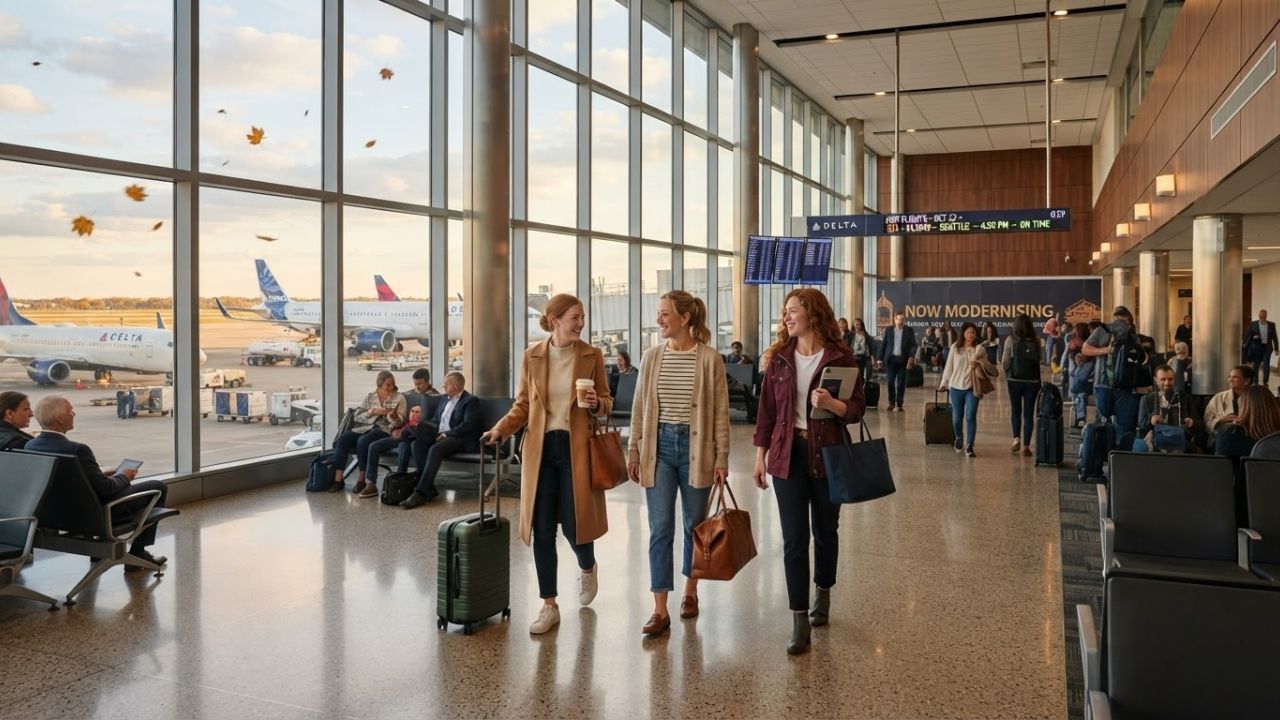
Image generated by AI
Major US aviation hubs—including Minneapolis–Saint Paul and Washington Dulles—are raising landing fees and airline facility charges ahead of the autumn 2026 travel season to underwrite multi-billion-dollar terminal expansions.
MINNEAPOLIS — As the North American commercial aviation sector gears up for the high-volume autumn 2026 travel corridor, a wave of fiscal adjustments is taking effect across major United States airports. Led by municipal airport commissions in Minneapolis–Saint Paul, the Washington metropolitan area, Nashville, and New England, airport authorities have enacted updated landing fees, terminal rental rates, and aeronautical operating charges for the 2026 and 2027 fiscal cycles.
While these cost revisions do not appear as line-item surcharges on passenger booking screens, they represent fundamental airline-facing operational expenses. As carriers absorb higher terminal gate rentals and landing tolls per thousand pounds of aircraft maximum takeoff weight, the financial pressure is influencing carrier route profitability, seat capacity allocation, and peak-period holiday airfares heading into Thanksgiving and year-end travel periods.
The Local Trend Revealed: Capital Redevelopment Drives Revised Aeronautical Rates
The timing of these fee increases reflects compounding cost pressures on airport infrastructure across the United States. Unlike municipal road networks, commercial airports are largely self-funding entities that must support airfield maintenance, security compliance, baggage handling technology, and runway repaving through aeronautical charges levied directly on tenant airlines, supplemented by federal grants and parking revenues.
Federal Aviation Administration (FAA) regulations establish that eligible airports may collect Passenger Facility Charges (PFCs) capped at up to $4.50 per eligible passenger enplanement to fund approved safety and terminal capacity projects. However, with the statutory PFC cap frozen since 2000 despite decades of inflation, airport authorities are increasingly relying on airline cost-recovery formulas to finance ambitious multi-billion-dollar modernizations.
Key US Airports Increasing Operating Charges Ahead of Autumn 2026
The following table details the specific aeronautical fee categories, timeline adjustments, and operational drivers across major US airports:
| Airport | Location | Fee Category Increasing | 2026 Change / Increase Details | Effective Period | Main Reason for Increase | Impact on Travellers |
|---|---|---|---|---|---|---|
| Minneapolis–Saint Paul Int'l (MSP) | Minnesota | Landing fees and airline facility charges | Landing fee projected to rise from $4.92 per 1,000 lbs in 2025 to $5.62 in 2026 | 2026 fiscal year, affecting fall operations | Airport operating costs, runway and airfield infrastructure funding | Airlines may adjust fares slightly to cover higher operating costs |
| Washington Dulles Int'l (IAD) | Virginia / DC region | Passenger boarding charges and terminal-related fees | Major redevelopment program approved with future increases in airline facility costs | Long-term program beginning after 2026 | $19.9 billion airport modernization plan including tunnels, transit systems, and terminal upgrades | Higher airport costs could influence future ticket pricing from Dulles |
| Baltimore/Washington Int'l Thurgood Marshall (BWI) | Maryland | Landing fees and terminal rental rates | FY2027 airline rates show revised airport charges, including landing fee structures | Mid-2026 rate period | Infrastructure maintenance and airport financial planning | Potential indirect fare impact on regional routes |
| Nashville Int'l (BNA) | Tennessee | Landing fees and terminal charges | FY2027 rate schedule introduced revised airline charges | July 2026 onward | Continued airport expansion and passenger growth | Possible small increases in airline operating costs |
| Bradley Int'l (BDL) | Connecticut | Landing fees and terminal rental charges | FY2027 rates published with updated aviation charges | July 2026 | Airport financial requirements and facility management | Airlines may incorporate costs into ticket pricing |
| Ted Stevens Anchorage Int'l (ANC) | Alaska | Landing fees and terminal rental rates | The 2026 rate book shows updated airline charges | July 2026 | Airport operations and cargo/passenger infrastructure costs | Cargo and passenger operators face higher operating overhead |
Summary of State-Level Airport Drivers
| Airport | State | Increased Fee Type | 2026 Impact | Main Driver |
|---|---|---|---|---|
| Minneapolis–Saint Paul Int'l (MSP) | Minnesota | Landing fees and airline charges | Higher aviation operating costs | Infrastructure investment and airport operations |
| Washington Dulles Int'l (IAD) | Virginia | Airline facility costs and future development charges | Rising long-term airport expenses | Large-scale $19.9 billion modernization programme |
| Baltimore/Washington Int'l (BWI) | Maryland | Landing fees and terminal-related charges | Updated airline rate structure | Maintenance and expansion requirements |
| Nashville Int'l (BNA) | Tennessee | Landing fees and terminal charges | Higher operational costs | Rapid passenger growth and terminal expansion |
| Bradley Int'l (BDL) | Connecticut | Aviation charges | Revised 2026 rates | Facility management and financial planning |
Cultural & Environmental Value: Next-Generation Facilities and Environmental Stewardship
Although rising airport operational fees present financial hurdles for carriers, the capital investments they support yield tangible improvements in passenger comfort, accessibility, and environmental sustainability.
At Washington Dulles (IAD), the Metropolitan Washington Airports Authority (MWAA) is utilizing fee revenues to advance a comprehensive $19.9 billion long-term capital improvement program. The initiative will replace aging mid-century concourses with state-of-the-art, energy-efficient terminal buildings, eliminate diesel mobile lounge passenger transfers in favor of expanded subterranean automated transit tunnels, and integrate solar energy arrays across terminal roofs.
Similarly, at Minneapolis–Saint Paul (MSP), revenue generated from the landing fee increase—rising from $4.92 to $5.62 per 1,000 pounds—funds critical runway rehabilitation, airfield LED lighting conversions, and advanced glycol deicing fluid recovery facilities that prevent seasonal chemical runoff into the Minnesota and Mississippi River watersheds.
Local Visitor Insider Tips: Smart Hub Selection, Alternative Gateways, and Regional Feasts
Travelers can strategically navigate changing airport fee structures and fare adjustments by leveraging regional airport pairings and local amenities:
- Twin Cities Terminal Strategy (MSP): When flying in or out of Minneapolis–Saint Paul, compare departures between Terminal 1 (Lindbergh) and Terminal 2 (Humphrey). While Delta dominates Terminal 1, hometown ultra-low-cost carrier Sun Country operates out of Terminal 2, often offering lower base fares that offset regional fee adjustments. While waiting, sample a signature cheese-stuffed "Juicy Lucy" burger at Blue Door Pub in Terminal 1.
- Mid-Atlantic Hub Optimization (BWI vs. IAD vs. DCA): Travelers in the Washington-Baltimore area should balance airport choices based on route type. Choose BWI for competitive point-to-point domestic fares on low-cost carriers like Southwest, and indulge in hot Maryland lump crab cakes at Obrycki’s in Concourse B. Use Dulles (IAD) primarily for international long-haul flights where airline wide-body competition keeps international fares competitive despite rising terminal costs.
- New England Secondary Gateway Advantage (BDL): If traveling to Connecticut or Western Massachusetts, choose Bradley International (BDL) over Boston Logan (BOS). Bradley’s streamlined security lanes, on-site parking rates ($9–$15 per day compared to $40+ at Logan), and lower terminal congestion deliver significant overall savings on trip budgets.
- Nashville Layover Delights (BNA): If connecting through Nashville International during peak autumn business travel, take advantage of the newly renovated concessions in Concourse C to savor authentic fiery Nashville hot chicken from 400 Degrees or Prince’s.
Tourism Outlook: Sustainable Infrastructure Balances Long-Term Growth
The ongoing adjustment of airport fee structures underscores a mature phase in American commercial aviation. Municipal airport commissions can no longer postpone vital capital improvements if they wish to accommodate projected domestic travel demand heading into 2030.
While airlines will continue to evaluate route frequencies and ticket pricing based on local cost per enplanement (CPE), healthy competition among network carriers ensures that well-managed hubs remain competitive. By investing today in resilient runways, modernized terminals, and sustainable passenger processing systems, US airports are building an aviation foundation capable of delivering safer, faster, and more dependable travel experiences for generations of global visitors.
Related Travel Guides
Disclaimer
This article is for informational and educational purposes only. It does not constitute legal, financial, or professional advice. While we strive to provide accurate and up-to-date information, travel policies, regulations, and conditions change rapidly. Always verify information with official sources before making travel decisions. Nomad Lawyer makes no representations about the accuracy, reliability, completeness, or suitability of the information provided. Readers should consult qualified professionals for advice specific to their circumstances. The views expressed in this article are those of the author and do not necessarily reflect the views of Nomad Lawyer.
Raushan Kumar
Founder & Lead Developer
Full-stack developer with 11+ years of experience and a passionate traveller. Raushan built Nomad Lawyer from the ground up with a vision to create the best travel and law experience on the web.
Learn more about our team →