
American Airlines and Delta Warn Trump Administration Policies Will Trigger Massive Travel Chaos, Widespread Flight Cancellations, and Airport Disruptions Across the US: Latest Airline News
As the threat of devastating flight cancellations looms, major US carriers warn that proposed federal policy shifts will violently fracture international gateways and completely paralyze the aviation industry.

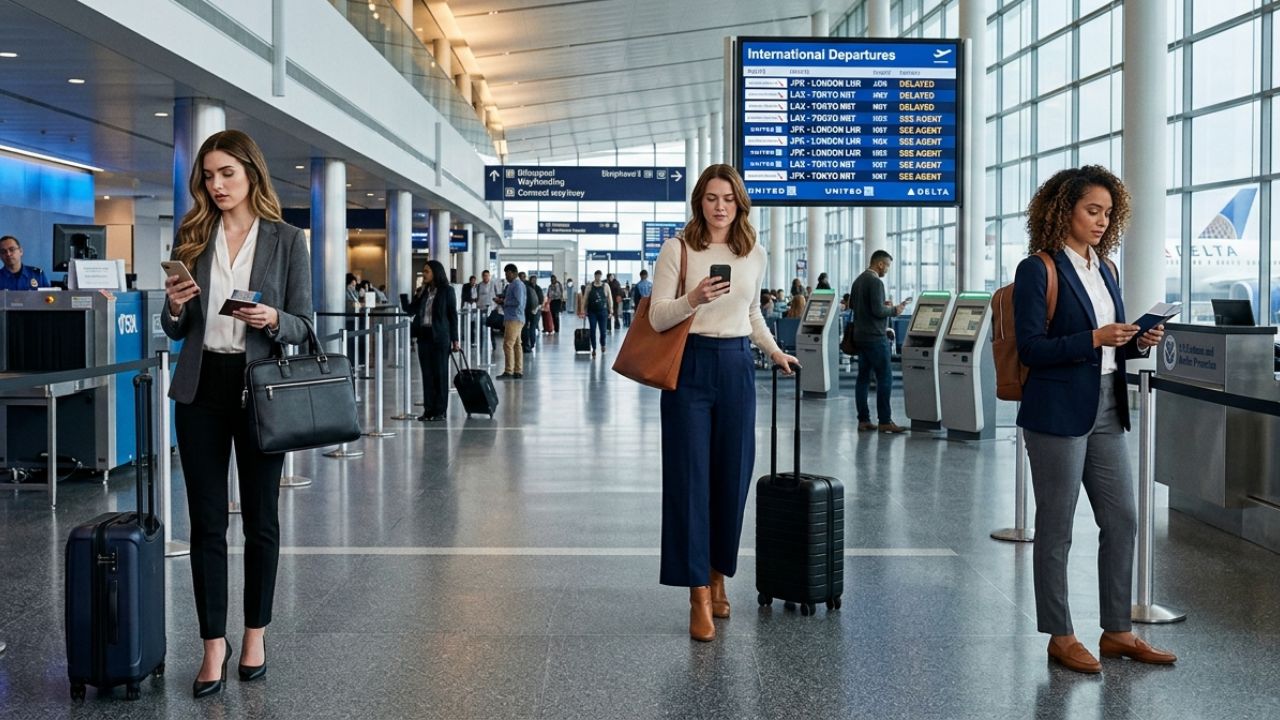
Image generated by AI
A Devastating Threat to American Aviation Stability
A terrifying, highly destructive wave of impending flight cancellations and severe schedule delays is currently threatening to tear through the absolute heart of the American aviation system, threatening to plunge millions of unsuspecting domestic and international passengers into a severe state of travel chaos. Delivering highly alarming, critical airline news, the United States airline industry—led by massive legacy carriers including American Airlines, Delta, and United—is officially warning of catastrophic disruptions to tourism and global connectivity. These highly volatile aviation updates confirm that aggressive new policy discussions linked to the Trump administration are poised to radically reshape federal travel programs and aggressively alter how crucial agencies like the TSA and CBP operate. Industry stakeholders are urgently warning that these unprecedented structural changes will violently sever critical air corridors in New York, Los Angeles, and Miami, ultimately generating massive airport disruptions that will paralyze the nation's fragile hub-and-spoke network.
Expanded Overview: Measuring the Scale of the Political Threat
The sheer geographic scale and rapid acceleration of this systemic political threat mark a highly concerning period of operational instability for the North American aviation sector. These proposed federal changes are not isolated to a single, localized administrative tweak; rather, they signify a massive, interconnected structural overhaul of the entire US border and aviation security apparatus.
Because the American aviation network operates on incredibly tight, high-frequency turnaround schedules, the absolute paralysis of a massive international gateway immediately triggers a devastating domino effect across the globe. Airlines heavily depend on incredibly predictable federal systems—specifically customs processing, security screening, and air traffic coordination—to maintain their economic rhythm. Industry groups urgently argue that any reduction in federal staffing or aggressive restructuring of jurisdictional authority will violently destroy terminal flow, heavily overwhelming station managers and mathematically ensuring a devastating surge in nationwide flight delays.
Section-Wise Breakdown of Network Vulnerabilities
Federal Agency Restructuring: The Core of the Crisis
At the absolute center of this looming catastrophe is the heavy reliance of the aviation industry on federal infrastructure, specifically Customs and Border Protection (CBP), the Transportation Security Administration (TSA), and the Federal Aviation Administration (FAA). Airlines are warning that the proposed policy shifts involve significantly tighter federal control over immigration-related airport processes and potential staffing reallocations. Any sudden reduction or relocation of CBP officers processing immigration checks at major arrival terminals will immediately trigger massive clearance bottlenecks, temporarily halting or aggressively rerouting international operations.
High-Risk International Gateways: New York, LA, and Miami
The operational rot will rapidly infect the nation's premier international gateways. Cities that rely heavily on massive inbound international arrivals, such as New York (JFK), Los Angeles (LAX), Miami (MIA), Chicago (ORD), and San Francisco (SFO), are at extreme risk. If federal policy changes lead to drastically slower processing times or reduced airport capacity, these massive mega-hubs will instantly choke on stranded passengers. Tourism boards are panicking, warning that inbound tourism could severely decline as international travelers actively choose to avoid the brutal wait times and paralyzing congestion associated with US ports of entry.
The Cargo and Supply Chain Threat
The crisis rapidly bleeds into the broader macroeconomic landscape, threatening to shatter international logistics. Airports serve as massive, critical gateways for global commerce. Airlines for America and other industry coalitions have heavily emphasized that altering CBP staffing at major airports will inevitably generate devastating cargo clearance bottlenecks, severely delaying high-value, time-sensitive imports and exports across the globe.
Projected Impact Details and Policy Risk Tables
To fully comprehend the sheer scale and precise distribution of this massive operational threat, the following table explicitly documents the exact risk factors and projected impact zones associated with the proposed federal policy shifts:
| Category | Projected Policy Impact Areas |
|---|---|
| Federal Agencies Affected | Customs and Border Protection (CBP), TSA, FAA |
| Primary Operational Threats | Massive customs bottlenecks, severe security screening delays |
| Airlines Issuing Warnings | Major US Carriers acting via 'Airlines for America' |
| Highest-Risk Gateway Cities | New York, Los Angeles, Miami, Chicago, San Francisco |
| Financial Repercussions | Aggressive ticket price hikes due to massive fuel burn and taxi delays |
| Broader Economic Risks | Devastating tourism decline, global supply chain disruption |
Passenger Impact: Systemic Logistical Nightmare
The massive scale of these projected disruptions will directly inflict catastrophic financial and logistical damage on tens of thousands of passengers navigating the United States. Travelers abruptly facing federal staffing bottlenecks at Los Angeles or Miami will be violently subjected to missed international connections, heavily reduced flight availability, and the terrifying prospect of losing prepaid hotel bookings.
Furthermore, airline pricing will be significantly affected. When airports experience massive delays and reduced federal throughput, airlines are forced to absorb higher fuel costs due to extensive tarmac taxi times and aggressive aircraft repositioning. These massive additional expenses will be violently passed directly onto the consumer, triggering exorbitant ticket prices on international routes where operational margins are already terrifyingly thin.
Industry Analysis: Exposing Systemic Vulnerability
Aviation analysts evaluating this massive political threat point to severe, synchronized operational challenges stemming from the industry's absolute reliance on federal infrastructure. The fact that political or administrative restructuring in Washington D.C. can mathematically trigger a nationwide collapse in airline scheduling proves that the US system operates with dangerously thin buffer zones. Organizations like Airlines for America are furiously lobbying for operational stability, warning policymakers that sudden changes will severely damage passenger confidence. If international travelers view the US border as a highly unstable, chaotic environment, they will rapidly shift their massive tourism spending toward competing destinations in Europe, Asia, or the Middle East.
Conclusion: A Precarious Future for US Aviation
The unprecedented warnings issued by the US airline industry brutally highlight how terrifyingly interconnected and fragile the American aviation system truly is. With vital domestic and international routes heavily dependent on stable federal policies at hubs from San Francisco to New York, this situation reflects a massive, looming strain on the operational capacity of the nation's most critical air corridors. As airlines desperately attempt to forecast these political risks and protect their scheduling integrity, travelers navigating the US airspace must mentally and financially prepare for a highly volatile environment where ticket prices surge and schedule reliability remains under extreme political pressure.
Key Takeaways
- Massive Industry Alarm: US airlines are officially warning that new federal policy discussions linked to the Trump administration could trigger massive flight cancellations and delays.
- Agencies at Risk: Proposed changes to staffing and operations at critical federal agencies like CBP and TSA threaten to severely paralyze international customs processing.
- High-Risk Hubs: Major gateways including New York, Los Angeles, Miami, Chicago, and San Francisco face the highest risk of devastating terminal gridlock.
- Financial Fallout: The massive operational inefficiencies caused by federal bottlenecks will aggressively drive up airline fuel costs, resulting in significantly higher passenger ticket prices.
- Tourism Collapse: Tourism boards warn that the perception of severe instability at US borders will heavily deter lucrative international travelers, damaging the broader US economy.
Disclaimer: The policy impact projections and operational warnings presented in this report are based on official statements and lobbying efforts from major US airline industry groups, including Airlines for America. At this stage, no final federal policies have been fully implemented, and the projected disruptions reflect industry risk assessments. Travelers are advised to consult their specific airline and monitor federal travel advisories for the absolute latest processing times and route status updates.
Disclaimer
This article is for informational and educational purposes only. It does not constitute legal, financial, or professional advice. While we strive to provide accurate and up-to-date information, travel policies, regulations, and conditions change rapidly. Always verify information with official sources before making travel decisions. Nomad Lawyer makes no representations about the accuracy, reliability, completeness, or suitability of the information provided. Readers should consult qualified professionals for advice specific to their circumstances. The views expressed in this article are those of the author and do not necessarily reflect the views of Nomad Lawyer.
Kunal K Choudhary
Co-Founder & Contributor
A passionate traveller and tech enthusiast. Kunal contributes to the vision and growth of Nomad Lawyer, bringing fresh perspectives and driving the community forward.
Learn more about our team →