
US Airlines Navigate Saudi Airspace Risks: FAA Warning and Riyadh Strike Halt Delta Route Across 10 State Hubs

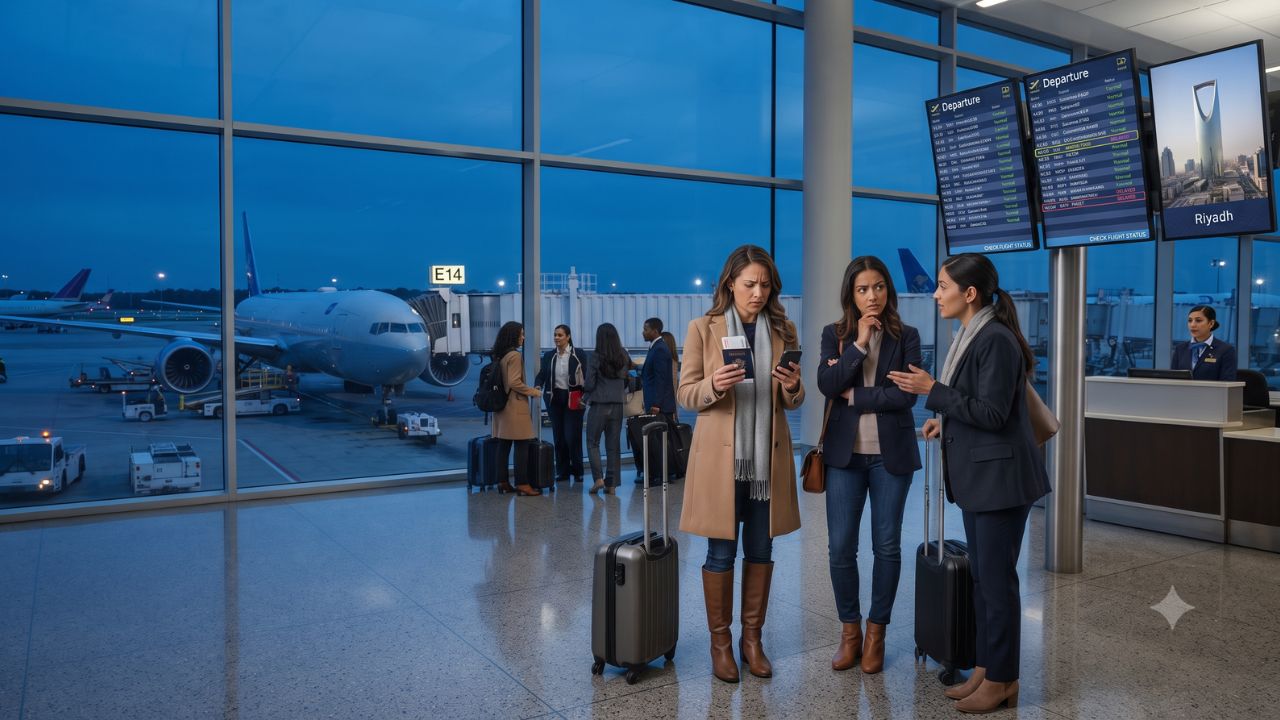
With nearly 500 daily flight cancellations recorded by FlightAware and a Federal Aviation Administration safety advisory active through 10 December 2026, a fatal projectile strike on Riyadh’s King Khalid International Airport killing at least 12 people and injuring more than 300 has disrupted long-haul air connections across ten US states. The sudden suspension of operations at Saudi Arabia's primary international aviation gateway—extended by civil aviation authorities through at least 17 October 2026—prompted Delta Air Lines to postpone its scheduled 23 October 2026 nonstop service between Atlanta and Riyadh until March 2027, exposing the vulnerability of transatlantic and Middle Eastern commercial corridors to regional ballistic threats.
The crisis stems from an escalating series of attacks claimed by Yemen's Iran-backed Houthi movement, targeting civilian aviation infrastructure in the Saudi capital. In response, the Federal Aviation Administration (FAA) issued an emergency flight advisory warning American commercial carriers and pilots against "safety-of-flight risks associated with ongoing military activities" within or through Saudi Arabian airspace. While domestic flights across the United States operate without interruption, the ripple effects on international connecting banks have forced business executives, government personnel, defense consultants, and families to reconstruct multi-leg travel plans across North America.
Terminal Escalation and the Regulatory Mandate
The crisis reached a tipping point on Saturday, 10 October 2026, when a projectile directly struck an active passenger terminal at King Khalid International Airport in Riyadh. The detonation claimed at least 12 lives and wounded upwards of 300 passengers and terminal workers, prompting an emergency evacuation and immediate flight diversions. According to reportage verified by CNBC and Reuters, Saudi authorities closed the capital airport to commercial traffic through 17 October to allow security forces, bomb disposal squads, and structural engineers to inspect airfield integrity.
The resulting operational shockwave cascaded through global scheduling systems. Aviation intelligence platform FlightAware documented nearly 500 daily flight cancellations by the morning of Monday, 12 October 2026, as international carriers pulled back capacity. Concurrently, the U.S. Department of State and the US Embassy in Saudi Arabia issued urgent security directives urging American citizens to avoid King Khalid International Airport entirely, while updating the national travel advisory to recommend that travelers reconsider travel to Saudi Arabia due to ongoing armed conflict risks.
The FAA warning does not legally ban American aircraft from the entire Arabian Peninsula, but it triggers stringent risk mitigation protocols. Commercial operators are required to reassess flight paths, secure supplementary war risk insurance underwriting, and maintain emergency diversion options outside conflict-adjacent airspace, rendering new route launches commercially and operationally prohibitive.
State-by-State Exposure Across the American Network
The disruption affects American travelers along distinct geographical lines, determined by whether their home gateway hosts direct nonstop flights to Saudi Arabia or serves as an international feeder hub connecting through Europe or the Gulf:
| US State | Main Hub Airport | Direct vs. Connecting Status | Risk & Exposure Level | Operational Impact & Research Assessment |
|---|---|---|---|---|
| Georgia | Atlanta Hartsfield-Jackson (ATL) | Direct (Planned) | Very High | Confirmed postponement of Delta's inaugural nonstop route to Riyadh until March 2027 |
| New York | New York John F. Kennedy (JFK) | Direct (Active) | High | Established Saudia nonstop flights disrupted; heavy rebooking across European airline partners |
| Virginia | Washington Dulles (IAD) | Direct (Active) | High | Direct Saudia flights serving the Washington capital region, diplomatic, and defense sectors suspended |
| California | Los Angeles International (LAX) | Direct to Jeddah | Moderate | Direct Saudia flights to Jeddah operate, but domestic connections into Riyadh face severe disruption |
| Texas | Dallas–Fort Worth (DFW) / Houston (IAH) | International Hub Connections | Moderate | Corporate energy, engineering, and technology travelers face canceled multi-leg connecting itineraries |
| Illinois | Chicago O'Hare (ORD) | International Hub Connections | Moderate | Star Alliance and oneworld transatlantic passengers encounter severed onward legs into the Gulf |
| Florida | Miami (MIA) / Orlando (MCO) | International Hub Connections | Moderate | Leisure vacationers, family reunions, and pilgrimage travelers require extensive rebooking |
| Massachusetts | Boston Logan (BOS) | International Hub Connections | Moderate | Academic, medical, and consulting travelers forced onto alternative European transit hubs |
| New Jersey | Newark Liberty (EWR) | Indirect Connections | Lower, Indirect | Absorbs secondary overflow from disrupted New York JFK flights via European codeshare flights |
| Michigan | Detroit Metropolitan (DTW) | Feeder Network | Lower, Indirect | Delta feeder passenger traffic affected by the cancellation of planned Atlanta connecting departures |
In Georgia, the operational setback was direct and immediate. Delta Air Lines had finalized ground handling, aircraft positioning, and ticket sales to inaugurate its first nonstop passenger service between Hartsfield-Jackson Atlanta International Airport and Riyadh on 23 October 2026. Prior to the incident, Delta Chief Executive Officer Ed Bastian underscored that operational safety remains the absolute prerequisite for international route expansion. In light of the terminal attack, Delta leadership postponed the route until March 2027, temporarily eliminating what would have been a direct commercial conduit linking the southeastern United States to the kingdom's commercial center.
For New York and Virginia, the disruption severed active air bridges. Saudia operates established nonstop services out of New York JFK and Washington Dulles into Riyadh. With King Khalid International Airport closed, these services faced abrupt cancellations, grounding international delegations, multinational business executives, and transit passengers. In California, Los Angeles International maintains direct flights to Jeddah; however, travelers holding onward connections into Riyadh found domestic transfers suspended, leaving journeys incomplete.
Expert Analysis: Airspace Risk Models, War Risk Premiums, and Route Viability
The decision by Delta Air Lines to postpone its route launch reflects the complex economics of airline risk management when military operations breach civilian airspace. When commercial airports become active ballistic targets, the legal, financial, and operational liabilities escalate exponentially.
For travelers booking this route, the direct consequence is an immediate elimination of convenient one-stop and nonstop options, requiring passengers to navigate complex multi-carrier rebookings through secondary Middle Eastern gateways like Doha or European transfer points like London and Frankfurt, often with extended layovers. Furthermore, ticket holders face uncertainty over whether domestic connections within Saudi Arabia will operate once they arrive at alternative coastal entry points like Jeddah or Dammam.
The pricing pressure this creates means airfares across remaining open commercial routes between North America and the Gulf will increase sharply through the fourth quarter of 2026. Commercial underwriters are levying substantial war risk insurance surcharges on flights operating near active conflict zones, expenses that airlines pass directly to consumers through elevated base fares and security fees.
Additionally, regional route diversions compound operational costs. Avoiding central Saudi airspace requires international carriers flying between North America, Europe, and South Asia to alter standard flight paths, burning thousands of additional gallons of jet fuel and extending flight times by up to 90 minutes. For Saudi Arabia's Vision 2030 tourism and economic diversification agenda, which relies heavily on attracting international corporate headquarters and leisure visitors to Riyadh, the prolonged airport closure and route postponements represent a tangible commercial setback.
Key Takeaways
- Active FAA Airspace Warning: The FAA safety advisory warns US operators of ongoing military conflict risks in Saudi airspace through 10 December 2026.
- Riyadh Terminal Attack: A fatal projectile strike on 10 October 2026 killed 12 and injured over 300 at King Khalid International Airport, extending airport closure through 17 October.
- Delta Postpones Inaugural Route: Delta Air Lines delayed its scheduled 23 October 2026 Atlanta–Riyadh route to March 2027 following safety reviews by CEO Ed Bastian.
- Ten US States Impacted: Georgia, New York, Virginia, and California face direct flight disruptions, while feeder hubs in Texas, Illinois, Florida, Massachusetts, New Jersey, and Michigan encounter connecting delays.
- Flight Cancellations Mount: FlightAware recorded nearly 500 daily flight cancellations across international networks connecting with Saudi Arabia.
FAQ: FAA Saudi Airspace Warning and US Flight Chaos 2026
What did the FAA advise regarding flights to Saudi Arabia?
The FAA issued a safety advisory alerting American aircraft operators to exercise heightened caution in Saudi Arabian airspace through 10 December 2026 due to military and projectile risks.
Why did Delta Air Lines postpone its Atlanta to Riyadh flight?
Delta postponed its planned 23 October 2026 route launch until March 2027 following a fatal missile strike on Riyadh Airport, prioritizing crew and passenger safety.
Are domestic flights within the United States canceled because of this warning?
No. Domestic flights across the United States operate normally. The disruption is strictly confined to international flights and itineraries connecting with Saudi Arabia.
What should passengers with upcoming bookings to Riyadh do?
Passengers should contact their airline immediately to explore rebooking waivers, secure refunds, or arrange rerouting through operational airports such as Jeddah or European hubs.
[When regional conflict threatens civil aviation corridors, airline schedules yield to passenger safety, proving that global connectivity depends on secure skies.]
Related Travel Guides
- Mauritius Lifts Overnight Curfew as US, UK, and Canada Issue Fresh Travel Warnings Over Civil Unrest
- Iowa and Minnesota Autumn Travel Warning: Rain, 38 MPH Gusts, and 31°F Frost Threaten Upper Midwest Roads
- Chicago's Haunted Halsted Turns 30: All-Day Street Fest, Night Parade, and $4,000 Costume Contest
Disclaimer
This article is for informational and educational purposes only. It does not constitute legal, financial, or professional advice. While we strive to provide accurate and up-to-date information, travel policies, regulations, and conditions change rapidly. Always verify information with official sources before making travel decisions. Nomad Lawyer makes no representations about the accuracy, reliability, completeness, or suitability of the information provided. Readers should consult qualified professionals for advice specific to their circumstances. The views expressed in this article are those of the author and do not necessarily reflect the views of Nomad Lawyer.
Naina Thakur
Contributor & Travel Specialist
Travel enthusiast and legal writer covering visa regulations, responsible tourism, and cultural journeys across global destinations.
Learn more about our team →