
Major US Airlines Restructure Premium Airport Lounge Access Policies and Launch Multi-Million Dollar Hospitality Expansion Programs
US airlines revise premium lounge entrance policies and build new mega-clubs at major hubs to manage terminal overcrowding.

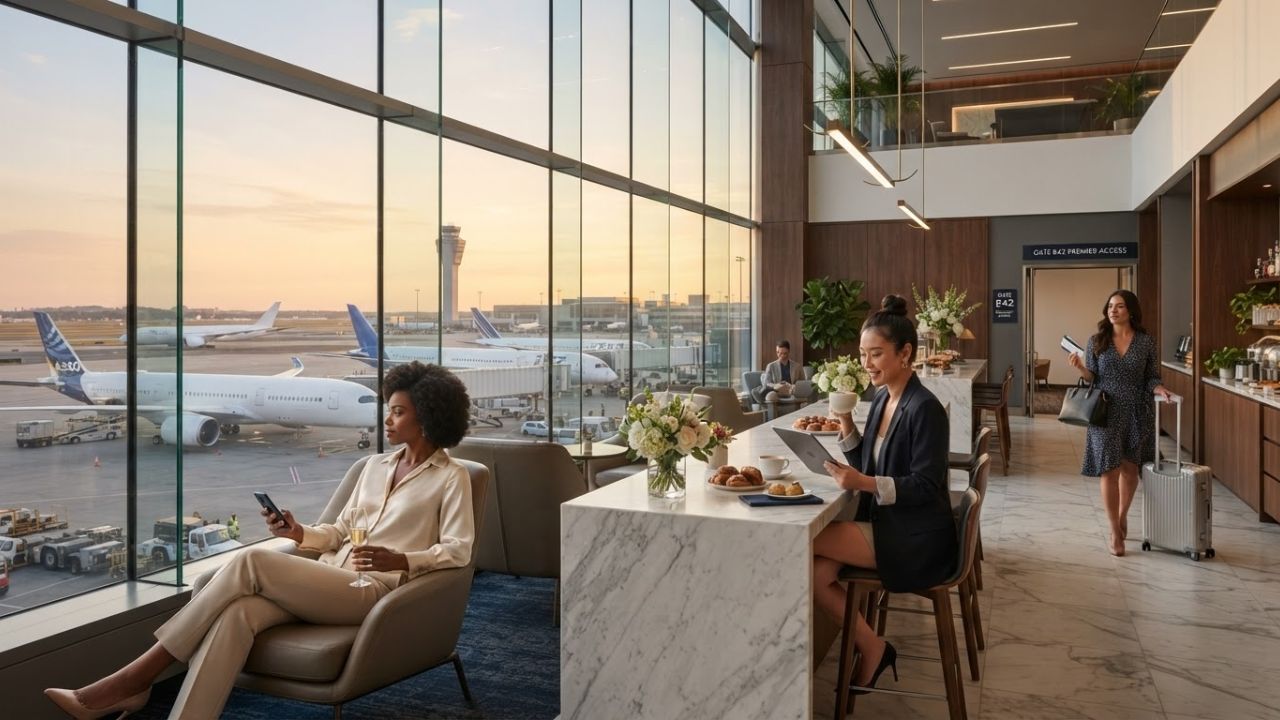
Image generated by AI
Major US Airlines Restructure Premium Airport Lounge Access Policies and Launch Multi-Million Dollar Hospitality Expansion Programs
US carriers are revising their premium airport lounge entry rules to manage terminal overcrowding. The policy shifts are accompanied by major hospitality facility expansions at key hubs.
The Core Transit Update
Financial reports released by major carriers in mid-2026 show that premium loyalty programs and lounge services have become important revenue assets. Delta Air Lines reported that its loyalty partnership with American Express generated over $8 billion in 2025. Similarly, United Airlines recorded premium and loyalty revenue growth in the second quarter of 2026.
To resolve overcrowding at main hubs, carriers are tightening access criteria. New rules include introducing annual visit limits for credit card holders, raising credit card spending thresholds, and excluding basic business-class tickets (unbundled fares) from automatic lounge entry. At the same time, carriers are constructing new mega-clubs and multi-tiered hospitality spaces to absorb passenger demand.
Premium Airport Lounge Policies and Expansion Specifications
The entry guidelines and expansion plans for major US airline lounges include:
| Lounge Brand & Carrier | Primary Access Limitation | Major Hub Locations | Facility Size & Expansion Details |
|---|---|---|---|
| United Polaris / United Club | Polaris reserved for international business; standard clubs require membership or premium cards. | Houston (IAH), San Francisco (SFO), Washington Dulles (IAD) | Constructing a 54,000 sq ft Club at IAH, slated to be the largest in the network. |
| Delta One / Delta Sky Club | Sky Club limits annual visits for cardholders; basic business fares do not include Delta One entry. | New York (JFK), Los Angeles (LAX), Boston (BOS), Atlanta (ATL) | Introducing dedicated Delta One Lounges to separate ultra-premium travelers. |
| Flagship Lounge / Admirals Club | American Airlines limits Flagship access to premium transcontinental and international routes. | Miami (MIA), Chicago O'Hare (ORD), Dallas/Fort Worth (DFW) | Modernizing Flagship dining areas and restricting partner guest entry rules. |
| Southwest Planned Lounges | Entry rules and membership details under development. | Denver (DEN), Houston Hobby (HOU), Nashville (BNA), Honolulu (HNL) | Leasing terminal spaces to explore regional lounge services. |
Traveler Logistics Guide (Information Gain)
For passengers navigating US airport terminals, the following guidelines help verify lounge access eligibility and locate facilities:
- Understand Unbundled Fares: Before booking a business-class fare, verify if the ticket class includes lounge access. Some cheaper business fares exclude airport lounge entry and premium check-in services, requiring passengers to purchase access separately.
- Domestic vs. International Lounges: Standard domestic clubs (e.g., Delta Sky Clubs, United Clubs) have different entry rules than international business lounges (e.g., United Polaris, American Flagship). A card or membership that permits entry to domestic clubs will not grant entry to international business lounges.
- Locating Lounges and Tracking Wait Times: Use the airline's mobile application to locate lounges within the terminal. Some apps feature live occupancy indicators to help travelers avoid facilities with long queues or wait times.
- Terminal Transfer Transit: If your designated lounge is in a different concourse, utilize the airport's automated people movers (such as the Skytrain at JFK or the underground train at Denver) to transfer post-security without exiting the TSA screening area.
Regional Connectivity and Terminal Infrastructure Impact
The development of larger lounge spaces, such as United's planned 54,000 square foot facility at Houston Intercontinental (IAH), helps reduce congestion in public gate areas. These venues function as self-contained micro-terminals, providing business workspaces, dining halls, and shower suites.
This hospitality-focused approach allows airports to manage passenger flow more efficiently. However, it also widens the service gap between standard passenger waiting areas and exclusive premium spaces within major US airports.
Related Travel Guides
- Discover Airlines to Expand Munich to Windhoek Nonstop Flight Network to Five Weekly Services Starting April Two Thousand Twenty Seven
- Singapore Airlines and Global Carriers Extend Dubai Flight Suspensions Until Late October Two Thousand Twenty Six Amid Regional Conflict
- South Florida Transit Guide Compares Miami International Airport and Fort Lauderdale Airport Access After Spirit Airlines Operational Shutdown
Disclaimer
This article is for informational and educational purposes only. It does not constitute legal, financial, or professional advice. While we strive to provide accurate and up-to-date information, travel policies, regulations, and conditions change rapidly. Always verify information with official sources before making travel decisions. Nomad Lawyer makes no representations about the accuracy, reliability, completeness, or suitability of the information provided. Readers should consult qualified professionals for advice specific to their circumstances. The views expressed in this article are those of the author and do not necessarily reflect the views of Nomad Lawyer.
Kunal K Choudhary
Co-Founder & Contributor
A passionate traveller and tech enthusiast. Kunal contributes to the vision and growth of Nomad Lawyer, bringing fresh perspectives and driving the community forward.
Learn more about our team →