
US Flight Chaos Explodes: 123 Cancellations and 360 Delays Paralyze LaGuardia, Chicago O'Hare, Fort Lauderdale, and Beyond—What You Need to Know
A catastrophic disruption event unfolded across the United States as Republic, Frontier, Alaska, Southwest, and Delta Airlines cancelled 123 flights and triggered 360 delays across major hubs including LaGuardia, Chicago O'Hare, Boston Logan, Charlotte Douglas, and Fort Lauderdale. Thousands of passengers faced missed connections and stranded situations.

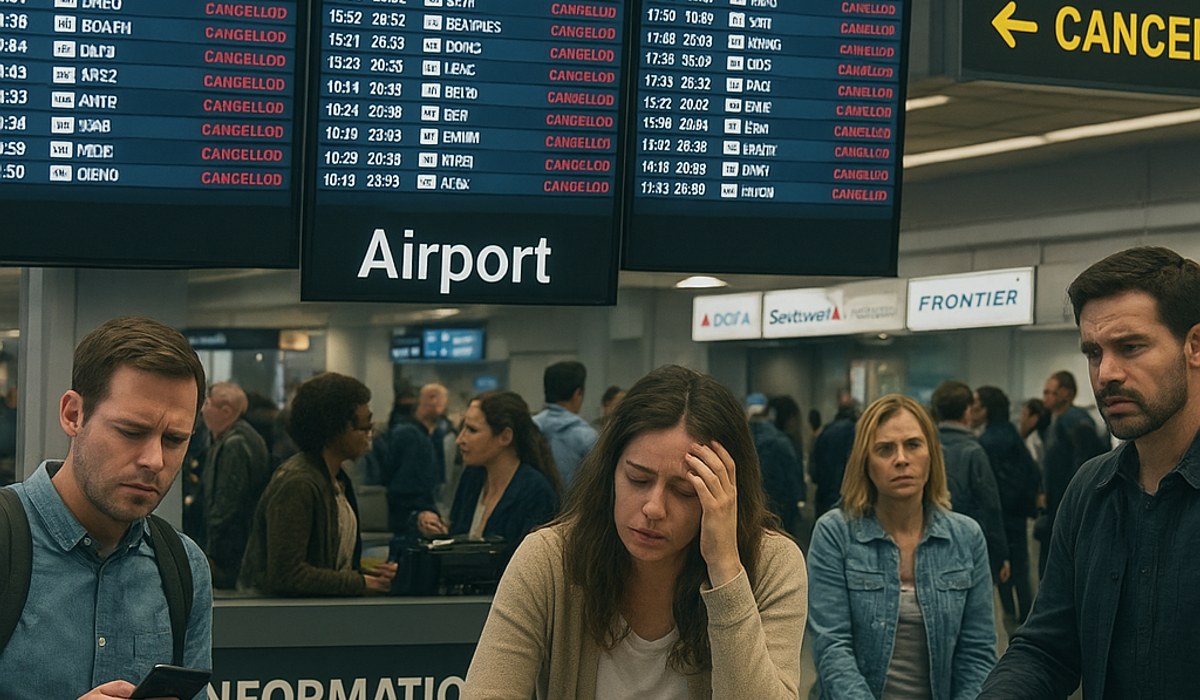
Image generated by AI
Quick Summary
- 123 flights cancelled and 360 flights delayed across US airports on March 30
- Five major airlines affected: Republic, Frontier, Alaska, Southwest, and Delta Airlines
- Hardest hit airports: LaGuardia (69 cancellations, 108 delays), Chicago O'Hare (5 cancellations, 90 delays), Fort Lauderdale (11 cancellations, 38 delays)
- Root causes: severe weather conditions, staffing shortages, geopolitical tensions affecting operations
- Critical impact: Thousands of passengers stranded; limited rebooking options across the network
Massive Travel Meltdown Sweeps Across America
The United States aviation system experienced one of the most significant operational disruptions in recent months as five major carriers simultaneously cancelled triple-digit flight counts and triggered widespread cascade delays. On a single March day, 123 departures were cancelled and 360 additional flights experienced delays, creating a perfect storm of passenger inconvenience across the nation's largest metropolitan airways.
The disruption rippled through the entire U.S. aviation infrastructure, from New York's LaGuardia to California's San Francisco operations, demonstrating how quickly modern airline systems can become overwhelmed when multiple stressors—weather, staffing constraints, and external geopolitical pressures—converge simultaneously.
LaGuardia Airport: The Epicenter of Chaos
New York's LaGuardia Airport bore the most severe impact of the day's disruptions, with 69 flights cancelled and 108 additional flights delayed. This represented the single-largest concentration of operational failures across any individual American airport during the event.
Why LaGuardia Was Hit Hardest
LaGuardia's dominant position as the primary gateway for the New York City metropolitan area meant that every operational disruption cascaded across millions of passenger journeys. Aircraft couldn't complete designed rotations, crews exceeded duty time regulations and required rest periods, and incoming flights arriving late prevented scheduled departures.
The airport's restricted geography and limited expansion capability mean that operational recovery typically takes significantly longer than at airports with greater built-in slack capacity. Once delays accumulated beyond a certain threshold, the only viable recovery strategy involved wholesale scheduling abandonment for evening operations.
Which Airlines Were Most Affected
Republic, Frontier, and Southwest Airlines dominated the LaGuardia cancellation list, suggesting that these carriers' operational models and fleet positions made them particularly vulnerable to the day's specific disruption triggers.
Passengers attempting to reach New York City destinations faced extraordinarily limited alternative options, as most rebooking attempts were redirected to flights already operating at or above 100% capacity due to other airlines' cancellations.
Chicago O'Hare: Midwest's Major Hub Overwhelmed
Chicago O'Hare International Airport, the western United States' largest airline hub connecting transcontinental and international traffic, reported 5 cancellations but a staggering 90 delays. This delay-to-cancellation ratio suggests that operational challenges accumulated throughout the day, cascading across multiple departure time windows.
The Hub Effect at O'Hare
O'Hare's position as a major connecting point for passengers traveling to and from the West, South, and East coasts meant that even small delays created massive downstream effects. A 15-minute departure delay from Denver to Chicago might cause passengers to miss connecting flights to Boston or Atlanta, triggering secondary cancellations across multiple carriers.
Republic and Southwest Airlines experienced the most significant operational challenges at O'Hare, according to operational reports. Both carriers depend heavily on connecting traffic and tight turnaround times, making them particularly vulnerable to initial delay accumulation.
Cascading Network Effects
With 90 delayed flights at America's fourth-largest airport by passenger volume, the disruptions extended far beyond the Midwest. Passengers scheduled to connect through Chicago to destinations nationwide faced cascading delays, with some missing original itineraries entirely.
Fort Lauderdale's Leisure Travel Disruptions
Fort Lauderdale-Hollywood International Airport, serving Florida's robust spring break and leisure travel market, experienced 11 flight cancellations and 38 delays. Southwest and Alaska Airlines bore the brunt of disruptions at this critical Florida gateway.
The timing proved especially problematic because Fort Lauderdale primarily serves leisure and vacation travel, where strict itinerary commitments prevail. Business travelers typically possess more flexibility, but leisure passengers with pre-booked hotel stays, cruise embarkations, and vacation plans faced genuine financial stakes when flights were delayed or cancelled.
Boston Logan's International Gateway Challenges
Boston Logan International Airport, a major gateway for transatlantic European connectivity, documented 10 cancellations and 26 delays. Delta and Republic Airlines accounted for most disruptions at this strategic New England hub.
The cancellation of Boston–Europe flights held particular significance because these routes operate with lower frequency than domestic travel, meaning limited alternative flight options existed for passengers rebooking on delayed or cancelled services. International travelers requiring specific departure times faced potential visa expiration and business meeting disruptions.
Charlotte Douglas: Southeast Hub Struggles
Charlotte Douglas International Airport, the southeastern United States' largest hub serving American Airlines' network, experienced 7 cancellations and 31 delays. Delta and Republic Airlines supplements contributed to disruptions alongside American Airlines operations.
Charlotte's position as a major connection point for traffic between Northeast and Florida/Caribbean destinations meant that disruptions had outsized effects. The concentration of delays in late-afternoon and evening hours created particular challenges for international connecting passengers.
Additional Urban Centers Affected
Philadelphia International Airport (PHL)
Philadelphia reported 5 cancellations and 22 delays, with Delta Airlines particularly impacted. As a major international hub, Philadelphia's disruptions extended to transatlantic operations and connections beyond North America.
Raleigh-Durham International Airport (RDU)
The Research Triangle hub documented 7 cancellations and 9 delays, primarily from Southwest Airlines with Alaska Airlines contributing several disruptions. Business travelers heading to and from the technology corridor faced scheduling complications.
Nashville International Airport (BNA)
Nashville's disruptions—4 cancellations and 22 delays, predominantly Southwest—impacted leisure travelers heading to the city's music attractions and convention traffic.
New Orleans Louis Armstrong International (MSY)
New Orleans documented 2 cancellations and 11 delays, with Southwest and Alaska Airlines accounting for most issues. Cruise-port-dependent passengers heading to embarkation points faced particular challenges.
Charleston International Airport (CHS)
Charleston reported 3 cancellations and 3 delays, with Southwest and Frontier Airlines contributing disruptions to this emerging Southeast market.
What Caused This Massive Disruption Event?
Severe Weather Conditions
Thunderstorms and high-wind conditions affected multiple regions simultaneously, creating airspace closures and delaying ground operations. LaGuardia, Boston, and Fort Lauderdale specifically experienced weather-related capacity reductions, creating cascading effects across the entire eastern seaboard.
Weather impacts aviation in multiple ways beyond simple flight cancellations. Storms reduce airport capacity by forcing reduced runway usage, delay ground servicing and aircraft turnarounds, and create flight planning complexity as aircraft must route around weather systems. All of these effects compound when multiple airports experience weather simultaneously.
Staffing Shortages Across Multiple Carriers
Southwest, Republic, and Delta Airlines all documented crew availability constraints. Staffing shortages compound weather disruptions because airlines lose flexibility to reassign personnel or accelerate recovery from initial delays.
Modern airline staffing operates with minimal buffer capacity. When pilots exceed duty-time regulations or flight attendants complete their scheduled flights, no immediate replacement crew exists. Aircraft sit idle, missing subsequent scheduled departures and creating cascading delays.
Geopolitical Tensions and Supply Chain Impacts
Rising fuel prices, supply chain constraints, and broader geopolitical instability created operational pressure across the industry. These factors increased airline operational costs and complexity, reducing their ability to absorb and recover from initial disruptions.
Some aircraft remained grounded awaiting parts or maintenance due to supply chain constraints, reducing available fleet capacity precisely when disruptions demanded maximum operational flexibility.
The Complete Disruption Picture
| Airport | Cancellations | Delays | Primary Airlines |
|---|---|---|---|
| LaGuardia (LGA) | 69 | 108 | Republic, Frontier, Southwest |
| Chicago O'Hare (ORD) | 5 | 90 | Republic, Southwest |
| Fort Lauderdale (FLL) | 11 | 38 | Southwest, Alaska |
| Boston Logan (BOS) | 10 | 26 | Delta, Republic |
| Charlotte Douglas (CLT) | 7 | 31 | American, Delta, Republic |
| Philadelphia (PHL) | 5 | 22 | Delta |
| Nashville (BNA) | 4 | 22 | Southwest |
| Raleigh-Durham (RDU) | 7 | 9 | Southwest, Alaska |
| New Orleans (MSY) | 2 | 11 | Southwest, Alaska |
| Charleston (CHS) | 3 | 3 | Southwest, Frontier |
| TOTALS | 123 | 360 | Five major carriers |
Impact on Thousands of American Passengers
The Rebooking Crisis
When 123 flights are cancelled simultaneously, available seat capacity on alternative services evaporates instantly. Passengers attempting rebooking encounters faced offers for flights departing days later, missing essential connections or forcing overnight airport stays.
The sheer volume of disappointed passengers overwhelmed airline customer service capacity. Phone wait times exceeded three hours, and chat-based support systems became effectively non-functional due to queue depth.
Missed Connections and Stranded Passengers
International passengers connecting through disrupted hubs like Boston and Philadelphia faced particular challenges. Missing onward international flights often cannot be easily rebooked, potentially causing visa expiration, business meeting cancellations, or multi-thousand-dollar losses on prepaid vacation commitments.
Cruise passengers scheduled to embark in ports like New Orleans faced the most difficult circumstances—if flights to embarkation were cancelled, complete vacation loss occurred without meaningful alternatives.
Limited Alternative Options
With multiple airlines affected simultaneously across east-west and north-south corridors, alternative routing options became nearly non-existent. A passenger stranded in Chicago with a missed connection to Boston couldn't simply book a different airline—those services were equally disrupted.
Practical Damage Control: What Passengers Could Do
Monitor Actively and Continuously
Passengers who checked flight status multiple times throughout the day gained crucial minutes to contact airlines before phone systems became overwhelmed. Frequent status checks allowed early identification of cancellations, enabling faster rebooking attempts.
Contact Airline Immediately Upon Cancellation
Airlines typically waive rebooking penalties during major disruption events, but seat availability depletes rapidly. Passengers who contacted carriers within 30 minutes of cancellation notification had substantially better rebooking outcomes than those waiting several hours.
Explore Alternative Airports
New York area passengers with LaGuardia cancellations could potentially access JFK or Newark with ground transportation. Los Angeles passengers facing LAX disruptions might consider Long Beach or Burbank. Though inconvenient, alternative airports sometimes provided available capacity.
Documentation and Future Compensation
Detailed record-keeping of all disruption-related expenses—meals, hotels, ground transportation, missed meetings—enabled passengers to pursue reimbursement claims with carriers. Many airlines process expense reimbursements during major disruption events, particularly when passenger compensation obligations arise.
Prepare for Extended Waits
Passengers who brought entertainment, food, and water for potentially extended airport stays experienced far less frustration than unprepared travelers. The expectation of significant delays improves psychological coping compared to unexpected situations.
FAQ: Travelers' Questions About This Disruption Event
Q: If my flight was delayed but not cancelled, am I entitled to compensation?
A: Compensation requirements vary by circumstances. Weather-related delays typically don't trigger compensation obligations, but operational failures sometimes do. Document your situation and contact your airline.
Q: How should I plan travel over the coming days given this disruption?
A: Continue monitoring these airlines' operational status, but avoid assuming future disruptions. Book flights with significant buffer time if connections are required, and purchase flexible change policies until operations normalize.
Q: Could this disruption happen again?
A: These combined factors—severe weather, staffing constraints, and geopolitical supply chain impacts—appear to be ongoing systemic challenges. Airlines will likely experience periodic disruption events throughout 2026.
Q: What's my best strategy for resilient travel booking right now?
A: Book non-stop flights when possible, avoid tight connections, select airlines with strong operational history, purchase airline status or premium travel insurance, and always build buffer time into crucial connecting flights.
The Broader Implications
This single-day disruption event encapsulates the vulnerability of modern American aviation infrastructure. When weather, staffing, and supply chain pressures align against the system, dramatic operational failures occur affecting hundreds of thousands of passengers.
Airlines operating with minimal slack capacity and tight crew scheduling cannot absorb major disruptions without cascading cancellations. Until substantial structural changes occur—either through expanded staffing, increased aircraft redundancy, or improved supply chain resilience—similar events will recur periodically.
For travelers, the lesson is clear: build flexibility into itineraries, expect disruptions as normal operating reality rather than exceptional events, and maintain realistic expectations about airline service reliability during challenging operational periods.
Keywords: US flight cancellations, LaGuardia Chicago O'Hare disruptions, Southwest Delta Republic Airlines, airline delays March 2026, American airline news
Disclaimer
This article is for informational and educational purposes only. It does not constitute legal, financial, or professional advice. While we strive to provide accurate and up-to-date information, travel policies, regulations, and conditions change rapidly. Always verify information with official sources before making travel decisions. Nomad Lawyer makes no representations about the accuracy, reliability, completeness, or suitability of the information provided. Readers should consult qualified professionals for advice specific to their circumstances. The views expressed in this article are those of the author and do not necessarily reflect the views of Nomad Lawyer.
Raushan Kumar
Founder & Lead Developer
Full-stack developer with 11+ years of experience and a passionate traveller. Raushan built Nomad Lawyer from the ground up with a vision to create the best travel and law experience on the web.
Learn more about our team →