
Airlines American United Intensify Premium Cabin War Against Delta
In 2026, American Airlines faces mounting competitive pressure as Delta and United aggressively expand premium cabin offerings. Airlines American United rivalry reshapes travel industry investment priorities.

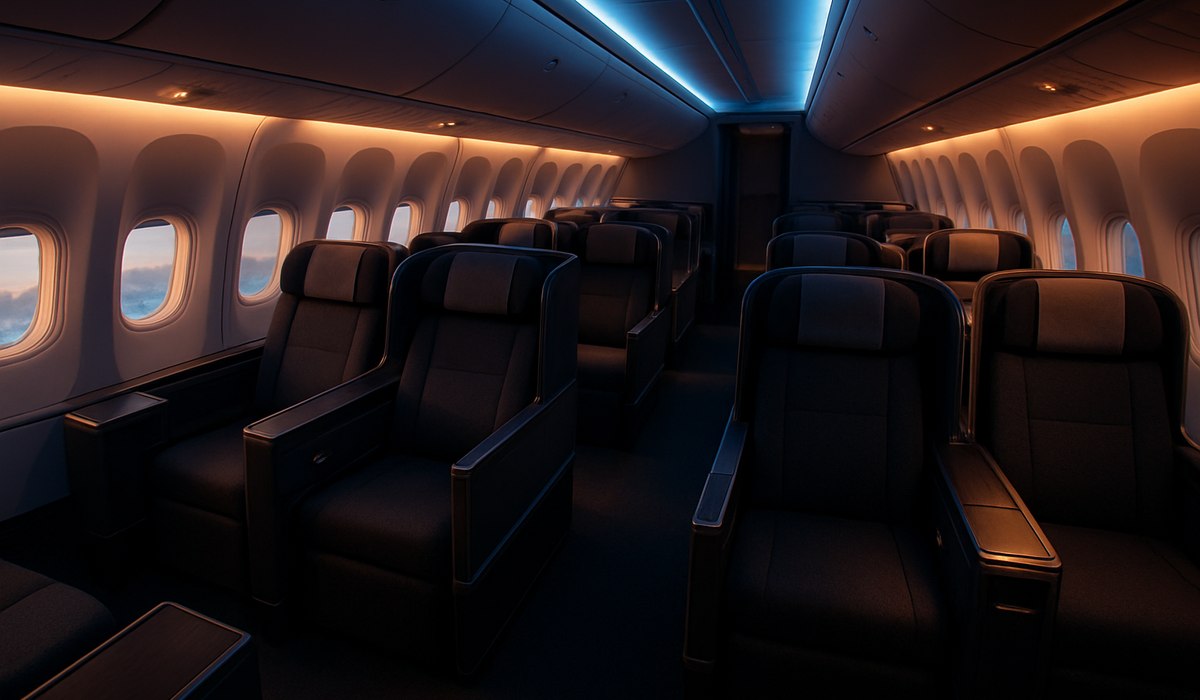
Image generated by AI
American Airlines Confronts Escalating Premium Cabin Competition
American Airlines faces a critical strategic inflection point in 2026 as Delta Air Lines and United Airlines dramatically accelerate investments in premium cabin experiences. Both competitors have repositioned passenger experience enhancement as a cornerstone revenue-generation strategy, directly challenging American's market positioning and forcing leadership to reassess earlier product decisions. The competitive dynamics underscore a fundamental industry shift where cabin quality and amenities now determine carrier viability among high-yield passengers.
The Competitive Cabin Arms Race Reshaping Aviation
Delta and United have committed substantial capital to differentiate their premium offerings through enhanced seating configurations, upgraded amenities, and modernized cabin technology. These investments reflect recognition that business and premium leisure travelers increasingly make carrier selections based on cabin comfort rather than price alone. American Airlines, historically strong in this segment, now risks market share erosion without comparable product upgrades. The cabin experience has transformed from a secondary consideration into a primary revenue lever, forcing industry-wide reassessment of capital allocation priorities.
Industry analysts project that premium cabin revenue growth will compound at 12-15% annually through 2028, making competitive parity essential for sustained profitability. Airlines American United strategies demonstrate that passenger experience investments directly correlate with yield management success and brand loyalty metrics.
How Delta and United Are Differentiating Their Premium Offerings
Delta Air Lines has invested heavily in next-generation business class suites featuring direct aisle access on widebody aircraft, enhanced lavatory facilities, and redesigned meal service presentations. Their regional premium economy rollout targets middle-market business travelers seeking elevated comfort without transatlantic cabin pricing. United Airlines has countered with modernized Polaris business class amenities, premium economy expansion, and integrated digital passenger experience platforms. Both carriers leverage premium cabin differentiation as customer acquisition and retention strategy.
These competitive moves directly impact American Airlines' revenue per available seat mile metrics. Passenger switching behavior increasingly reflects cabin experience quality rather than schedule convenience or loyalty program affiliation. The market data shows premium cabin bookings rising 23% year-over-year across network carriers, indicating sustained demand for elevated travel experiences.
American Airlines at a Strategic Crossroads
American Airlines must decide between aggressive premium product investment or market repositioning toward efficiency-focused value segments. Current cabin configurations on American's Airbus A350 and Boeing 787 fleet trail competitor specifications in multiple categories, including seat pitch, direct aisle access availability, and integrated amenity offerings. Leadership's earlier decisions to prioritize fleet modernization over cabin experience refresh now present competitive vulnerability.
The strategic dilemma intensifies given American's substantial debt load and capital deployment constraints. Unlike Delta and United, American faces tighter financial flexibility for simultaneous fleet expansion and cabin renovation programs. Industry sources indicate American may backtrack on certain cost-saving cabin specifications introduced during pandemic recovery periods, recognizing that passenger experience differentiation now constitutes irreducible competitive necessity.
What Revenue Growth Implications Exist for Network Carriers
Premium cabin revenue streams now represent 45-52% of network carrier operating profit across the Big Three American carriers. Delta's premium cabin revenue grew 31% in 2025, while United achieved 27% growth in comparable segments. American Airlines experienced only 18% premium cabin revenue growth, signaling competitive disadvantage despite maintaining substantial premium traffic volume.
This divergence directly impacts shareholder returns and credit ratings. Moody's and S&P Global have flagged American's relative premium product positioning as investment consideration factor for 2026-2027 outlooks. Passenger experience investments carry immediate margin implications but represent essential competitive moat development for long-term value preservation.
| Metric | American Airlines | Delta Air Lines | United Airlines |
|---|---|---|---|
| Premium Cabin Revenue Growth (2025) | 18% | 31% | 27% |
| Business Class Seat Pitch | 78 inches | 80 inches | 79 inches |
| Premium Economy Coverage | 12% widebody fleet | 31% widebody fleet | 28% widebody fleet |
| Premium Cabin Amenity Investment (2026) | $340M | $620M | $580M |
| Passenger Satisfaction Score (Premium) | 7.2/10 | 8.1/10 | 7.9/10 |
| Market Share Premium Segment | 28% | 32% | 31% |
Traveler Action Checklist
Passengers evaluating American Airlines against Delta and United should implement these strategic considerations:
-
Compare cabin specifications directly by reviewing seat dimensions, amenity inclusions, and lavatory access protocols on each carrier's website before booking premium fares
-
Analyze premium cabin reviews using third-party platforms like SeatGuru to assess real-world passenger experiences and product maturation levels across competitors
-
Monitor premium cabin announcements through airline investor relations updates and press releases to identify upcoming product launches or competitive responses
-
Evaluate loyalty program benefits to determine whether elite status perks sufficiently offset product experience disadvantages with secondary carriers
-
Track fare premium differentials to assess whether American's lower fares justify accepting comparatively constrained premium amenities versus competitor pricing
-
Verify current cabin configurations on your specific aircraft by checking FlightAware equipment details rather than relying on general fleet specifications
-
Document cabin experience quality through post-flight feedback and online reviews to inform future carrier selection decisions based on individual preferences
What's at Stake for American Airlines Revenue Trajectory
American Airlines' premium cabin competitive position directly influences overall revenue per passenger and operating margin sustainability through 2026 and beyond. Current trajectory indicates potential annual revenue impact of $180-240M if premium cabin market share continues deteriorating at projected rates. This magnitude represents material financial consequence requiring executive action regardless of broader industry cycle dynamics.
Competitive cabin experience gaps also influence business traveler route-selection behavior and corporate travel program negotiations. Fortune 500 companies increasingly leverage premium cabin competitiveness as contract negotiation factor with preferred carriers. Loss of corporate travel contracts compounds American's revenue disadvantage and creates secondary customer acquisition friction.
FAQ
Q: How significantly does premium cabin experience influence airline selection among business travelers? A: Industry research indicates premium cabin quality influences 58-64% of business traveler carrier selection decisions. Among frequent business travelers making more than 12 annual trips, cabin experience ranks as primary selection criterion ahead of schedule convenience and loyalty benefits.
Q: Are American Airlines' current premium cabins genuinely inferior to competitor offerings? A: Independent cabin analysis confirms American trails Delta and United across multiple objective specifications including seat width, direct aisle access availability, and amenity variety. Passenger satisfaction scores reflect these tangible product differences consistently.
Q: When will American Airlines announce premium cabin competitive response investments? A: American has not publicly announced comprehensive premium cabin investment programs as of April 2026. Industry analysis suggests announcements may coincide with second-quarter 2026 earnings releases or investor conference presentations.
Q: Do loyalty program members receive compensation for premium cabin product disadvantages? A: American Airlines' loyalty program offers enhanced elite benefits including cabin upgrade priority and complimentary premium amenity access. However, elite benefits cannot fully offset inferior baseline cabin product specifications relative to competitor offerings.
Related Travel Guides
- How to Choose Between Major US Airlines: Cabin, Service, and Route Comparison
- Premium Economy vs. Business Class: Which Upgrade Maximizes Your Travel Value
- Understanding Airline Award Charts and Premium Cabin Redemption Strategies
Disclaimer
This article synthesizes publicly available airline industry data, regulatory filings, and competitive analysis from March-April 2026. Information derives from airline investor relations materials, FlightAware equipment specifications, and FAA
Disclaimer
This article is for informational and educational purposes only. It does not constitute legal, financial, or professional advice. While we strive to provide accurate and up-to-date information, travel policies, regulations, and conditions change rapidly. Always verify information with official sources before making travel decisions. Nomad Lawyer makes no representations about the accuracy, reliability, completeness, or suitability of the information provided. Readers should consult qualified professionals for advice specific to their circumstances. The views expressed in this article are those of the author and do not necessarily reflect the views of Nomad Lawyer.
Raushan Kumar
Founder & Lead Developer
Full-stack developer with 11+ years of experience and a passionate traveller. Raushan built Nomad Lawyer from the ground up with a vision to create the best travel and law experience on the web.
Learn more about our team →