
Breaking Airline News: Terrifying Mid-Air Gear Failure Forces United Flight 1535 into Emergency Return, Sparking US Travel Chaos
Breaking airline news: A severe mechanical alert forces a United Airlines Boeing 737-900 to execute a high-stakes emergency return to Washington Dulles, triggering immediate airport disruptions and extreme domestic travel chaos.

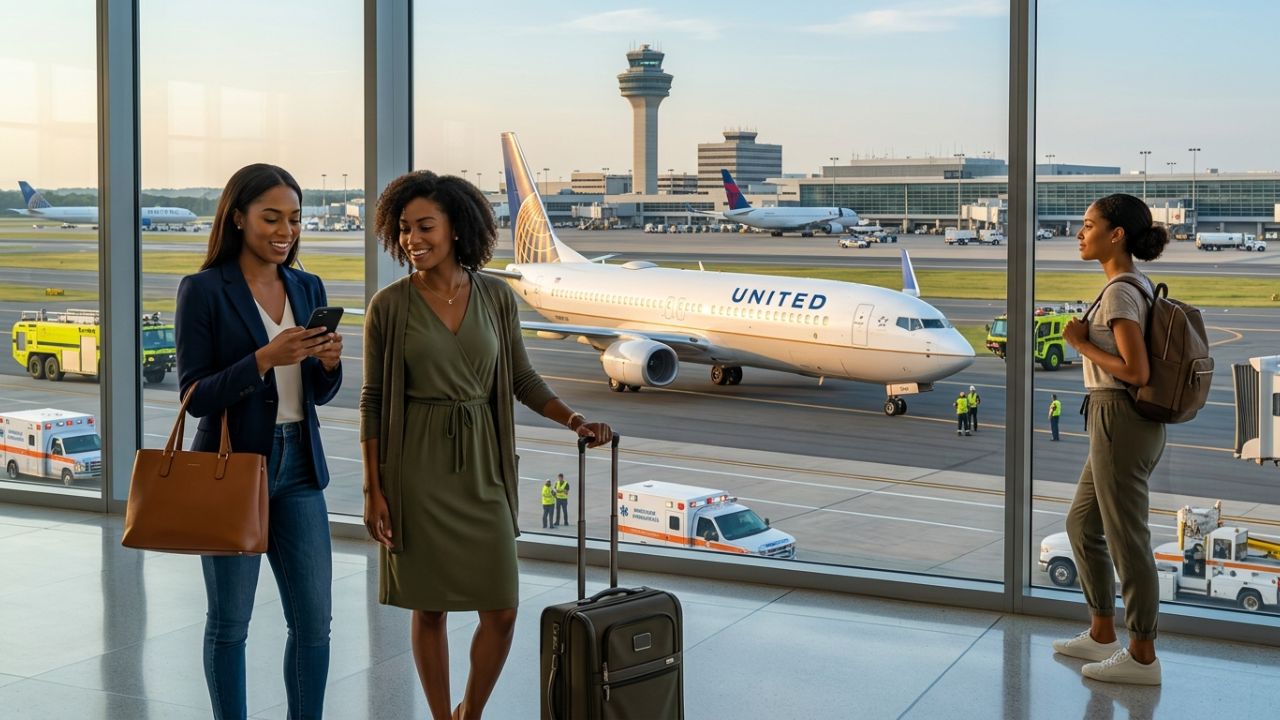
Image representing the terrifying operational collapse and massive travel chaos triggered at Washington Dulles after a United Airlines Boeing 737 was forced into an immediate emergency return due to a critical nose gear alert.
Breaking Airline News: Terrifying Mid-Air Gear Failure Forces United Flight 1535 into Emergency Return, Sparking US Travel Chaos
As paralyzing terminal bottlenecks and severe airspace congestion already test the absolute limits of the American aviation network, a terrifying mid-air mechanical emergency has just violently plunged a major domestic transit corridor into absolute travel chaos. On June 9, 2026, a high-density routine domestic flight connecting two of the nation's most critical mega-hubs was brutally interrupted when a United Airlines Boeing 737-900 suffered a highly alarming technical failure. Operating as Flight 1535 from Washington Dulles to Houston, the aircraft was forced to execute a high-stakes emergency return to Virginia following horrifying reports of a potential nose landing gear failure shortly after takeoff. While all passengers miraculously survived completely unharmed after an agonizing hour in the air, the sheer severity of the incident instantly triggered massive airport disruptions, unleashing cascading flight cancellations and paralyzing delays across the United network.
In a brutal demonstration of how terrifyingly fast a localized mechanical failure can violently shatter domestic scheduling, this emergency return represents far more than a successfully executed safety protocol. For the hundreds of stranded passengers relying on the vital Washington-Houston connection, the sudden mid-air reversal instantly triggered an agonizing domino effect. A single aircraft in distress violently metastasized across the network, destroying meticulously planned business and leisure itineraries, trapping highly vulnerable travelers within congested terminals, and forcing United Airlines to rapidly scramble to recover their paralyzed daily schedules. As emergency response teams locked down the Dulles tarmac in preparation for the potentially dangerous landing, the immediate reality for the surrounding passengers was a terrifying descent into massive rebooking queues and extreme regional travel chaos.
Expanded Overview: The Anatomy of an Operational Meltdown
The terrifying crisis currently overwhelming customer service desks brutally exposes the severe limitations of high-density airline scheduling when confronted with a sudden mechanical emergency. When travel chaos of this magnitude erupts, it is not simply an isolated tarmac event; it is a violent structural rupture that paralyzes the entire aviation ecosystem.
Section-Wise Breakdown: Grounding the Network
To fully comprehend the massive logistical devastation of this United Airlines meltdown, corporate travel planners and international tourists must rigorously review the verified disruption matrices detailing the absolute collapse across this critical US artery.
The Incident: Flight 1535 Mid-Air Reversal The terrifying reality of a potential landing gear failure is one of the most critical emergencies an airline crew can face. According to verified aviation authority reports, Flight 1535 departed Washington Dulles (IAD) at approximately 12:57 p.m. local time. Shortly after takeoff, the highly alarming nose gear issue was detected. Rather than risking a catastrophic touchdown in Texas, pilots executed an immediate operational abort, maintaining an agonizing holding pattern for over an hour before executing a high-risk, successful landing back at IAD at 2:05 p.m. local time.
| Category | Details |
|---|---|
| Airline | United Airlines |
| Flight Number | 1535 |
| Aircraft Type | Boeing 737-900 |
| Departure Airport | Washington Dulles International Airport (IAD) |
| Destination Airport | George Bush Intercontinental Airport (IAH) |
| Date of Incident | June 9, 2026 |
| Reported Issue | Nose landing gear concern |
| Duration Before Return | More than 1 hour |
| Landing Outcome | Safe landing |
| Passenger Injuries | None Reported |
| FAA Status | Investigation underway |
The Mechanical Threat: Nose Gear Vulnerability The decision to aggressively abort the flight was absolutely critical. In commercial aviation, the landing gear endures extreme structural stress. A failure here can instantly trigger a horrific runway disaster. By executing the emergency return, United Airlines effectively neutralized the threat, utilizing the advanced diagnostic tools of the Boeing 737-900 to prevent a mechanical anomaly from morphing into a fatal catastrophe.
| Function | Importance |
|---|---|
| Aircraft Support | Maintains stability on the ground |
| Takeoff Operations | Supports acceleration and rotation |
| Landing Operations | Absorbs impact during touchdown |
| Steering Capability | Enables directional control on taxiways |
| Braking Integration | Works alongside aircraft braking systems |
Washington to Houston: A Critical Artery Severed The significance of this disruption is heavily magnified by the specific route involved. The IAD-IAH corridor is an absolute lifeline for government, business, and international transfer travel. Disrupting this highly lucrative market guarantees massive financial and logistical fallout.
| Airport | Strategic Role |
|---|---|
| Washington Dulles (IAD) | International gateway for the U.S. capital region |
| Houston Intercontinental (IAH) | Major United Airlines hub |
| Passenger Mix | Business, government, leisure, international transfers |
| Economic Importance | Supports tourism and commerce between regions |
The Ripple Effect: Domestic Network Meltdown While passengers were aggressively evacuated into the Dulles terminal, the operational fallout was just beginning. Unexpected aircraft returns create a terrifying ripple effect. Passengers instantly missed connecting flights, hotel reservations were abandoned, and United's complex crew scheduling was thrown into absolute chaos, forcing rolling delays across the network.
| Area | Possible Effect |
|---|---|
| Connecting Flights | Missed onward journeys |
| Hotel Check-ins | Late arrivals |
| Business Travel | Meeting disruptions |
| Tourism Activities | Schedule changes |
| Airport Operations | Minor gate adjustments |
| Airline Resources | Aircraft and crew reassignment |
Passenger Impact: Trapped in the Terminal
For the passengers aboard Flight 1535, the psychological terror of a mid-air emergency return is profound. However, for the hundreds of highly vulnerable passengers trapped in the resulting gridlock at Washington Dulles, the immediate reality is a logistical nightmare. The massive scale of the sudden itinerary destruction guarantees that travelers missed vital onward international connections in Houston.
As rebooking queues violently swelled, seat availability on alternative United flights plummeted, leaving passengers utterly stranded. Beyond the psychological stress, travelers were forced to absorb unexpected hotel costs, exorbitant ground transportation fees, and massive dining expenses while waiting for the airline to restore normal flight schedules.
To survive these terrifying structural breakdowns, travelers must aggressively adopt defensive booking protocols.
| Recommendation | Benefit |
|---|---|
| Enable flight alerts | Real-time updates |
| Book flexible fares when possible | Easier itinerary changes |
| Allow longer connection windows | Reduced missed connections |
| Consider travel insurance | Financial protection |
| Carry essential items in cabin baggage | Better comfort during delays |
| Monitor airline apps | Faster access to rebooking options |
Industry Analysis: The Core of the Meltdown
From a strategic aviation perspective, this massive disruption exposes the terrifying reality that safety and operational efficiency are frequently at odds. The mandatory emergency returns required to prevent mechanical disasters are non-negotiable for passenger survival, yet they guarantee catastrophic airport disruptions.
This incident perfectly illustrates how vulnerable major hubs are to unexpected mechanical failures. Once a critical aircraft like a Boeing 737-900 falls out of position, crews are delayed, and the entire regional network collapses under the intense pressure of cascading flight cancellations. With the FAA investigation actively underway, the industry remains on high alert.
Conclusion: A Devastating Blow to Passenger Confidence
As the extremely critical American aviation network continues to face terrifying strain from unprecedented operational volatility, the uncontained travel chaos witnessed following United Flight 1535 is a harsh reminder of systemic fragility. Gateway hubs lose massive economic momentum when flight disruptions aggressively discourage visitor spending. Until airlines can engineer faster recovery protocols following mandatory emergency groundings, travelers must prepare for the horrifying reality that any mid-air mechanical incident can instantly trigger a massive, region-wide operational collapse.
Key Takeaways
- Massive Mid-Air Emergency: United Airlines Flight 1535 (a Boeing 737-900) executed an emergency return to Washington Dulles following a terrifying nose landing gear alert.
- Zero Casualties: All passengers successfully survived the June 9, 2026, incident completely unharmed after being airborne for over an hour.
- Systemic Airport Disruptions: The emergency violently disrupted the critical IAD-IAH corridor, unleashing massive travel chaos and missed connections.
- Critical Hubs Compromised: The disruption severely impacted international transfer flow through Houston Intercontinental (IAH).
- Cascading Network Failure: The mandatory safety lockdown resulted in immediate flight delays, horrific aircraft repositioning challenges, and active FAA investigations.
Related Travel Guides
Disclaimer
This article is for informational and educational purposes only. It does not constitute legal, financial, or professional advice. While we strive to provide accurate and up-to-date information, travel policies, regulations, and conditions change rapidly. Always verify information with official sources before making travel decisions. Nomad Lawyer makes no representations about the accuracy, reliability, completeness, or suitability of the information provided. Readers should consult qualified professionals for advice specific to their circumstances. The views expressed in this article are those of the author and do not necessarily reflect the views of Nomad Lawyer.
Kunal K Choudhary
Co-Founder & Contributor
A passionate traveller and tech enthusiast. Kunal contributes to the vision and growth of Nomad Lawyer, bringing fresh perspectives and driving the community forward.
Learn more about our team →