
United Airlines CEO Scott Kirby Spotted Flying American Airlines to Dallas; Unprecedented Drama Erupts Over Corporate Loyalty and Fierce Industry Rivalry Amid Chicago Market War
In a move that has sent shockwaves through the aviation industry, United Airlines CEO Scott Kirby was seen aboard a direct competitor's flight, sparking intense debate over airline loyalty and executive exit packages.

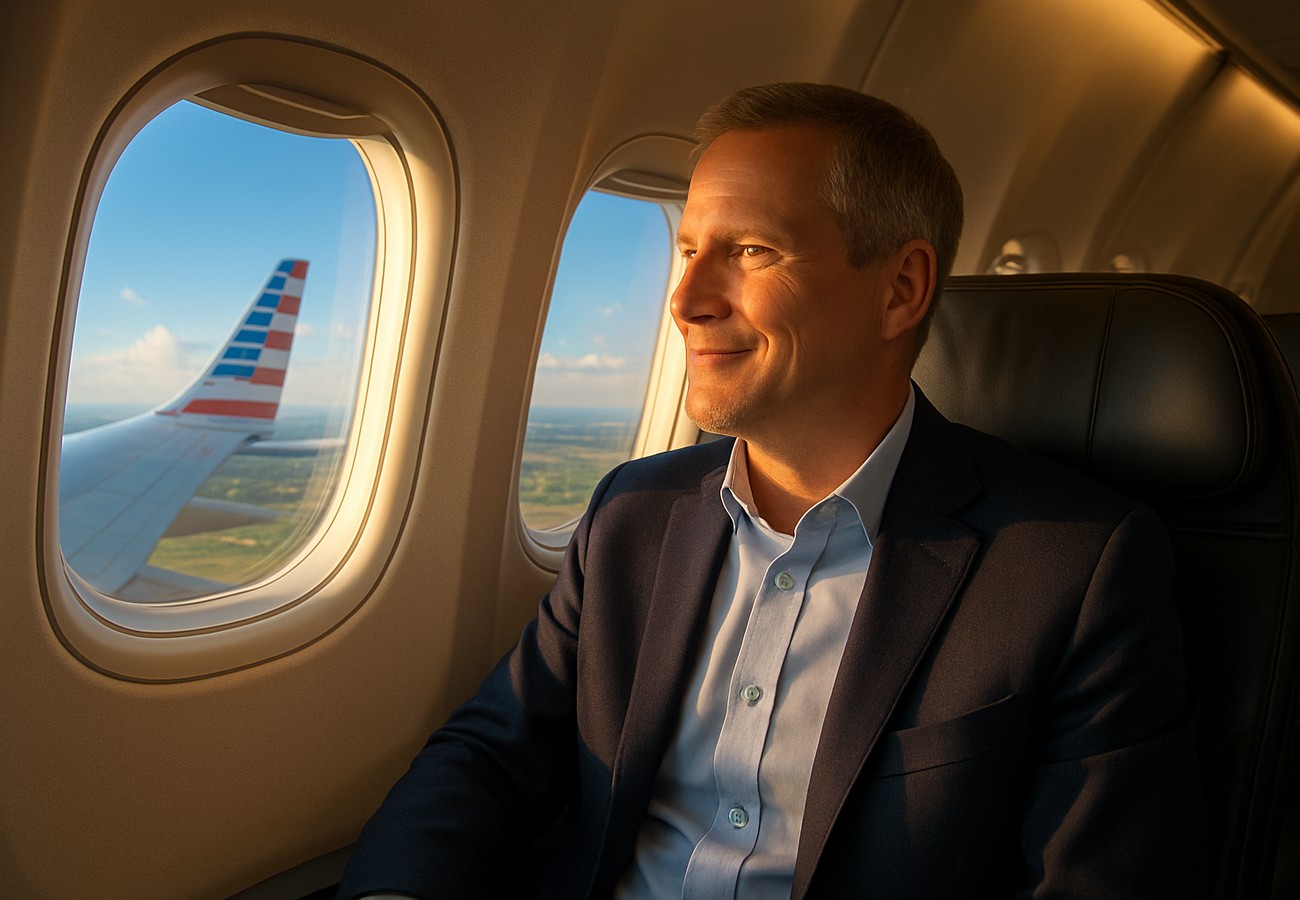
Corporate loyalty under the microscope: United CEO Scott Kirby's flight on American Airlines raises eyebrows.
United Airlines CEO Scott Kirby Sparks Industry Firestorm After Being Spotted Aboard Rival American Airlines Flight to Dallas
In a development that has left the global aviation community reeling from a mixture of irony and intrigue, United Airlines CEO Scott Kirby was recently identified as a passenger on an American Airlines flight destined for Dallas. The sight of the man who leads the world’s largest airline by fleet size—a carrier with over 1,000 active aircraft—choosing to occupy a seat on his primary competitor's metal has ignited a firestorm of discussion regarding corporate optics, personal travel privileges, and the thin line between professional rivalry and personal benefit. This unprecedented event, documented by crew members and discussed across social media, comes at a time when airline news is dominated by the cutthroat competition for market share in key hubs like Chicago.
The incident, while seemingly personal in nature, has highlighted a "loophole" in the traditional narrative of airline loyalty. For many in the industry, the image of a CEO utilizing a rival's services while simultaneously leading an aggressive campaign to "de-hub" that same rival in cities like Chicago is nothing short of extraordinary. As the news spreads, it serves as a stark reminder of the complex, behind-the-scenes dynamics that govern the lives of aviation’s most powerful figures and the travel chaos that can arise when corporate benefits clash with public perception.
Expanded Overview: The Legacy of a Multi-Million Dollar Exit Package
The root of this unusual scenario lies not in a lack of faith in United’s product, but in a decades-old corporate agreement. Scott Kirby, before ascending to the CEO chair at United, served as the President of American Airlines. His departure from the carrier in 2016 was a landmark event in the industry, resulting in an exit package that is now the subject of intense scrutiny. Among the various compensation tiers, Kirby was granted lifetime travel privileges with American Airlines.
These benefits are comprehensive, offering Kirby and his immediate family unlimited personal travel in any class of service across American's entire global network. Furthermore, the package includes access to the prestigious Admirals Club lounges, providing a level of comfort that most frequent flyers only dream of. However, the catch is that these privileges are strictly limited to non-work-related flights. It was this specific clause that led Kirby to book a personal ticket to Dallas, inadvertently triggering a PR spectacle that has become the top story in aviation updates.
Section-Wise Breakdown: A Rivalry Reimagined
The Social Media Leak and the Dallas Rotation
The drama began when flight attendants on the American Airlines flight to Dallas recognized the high-profile passenger. Far from a surreptitious journey, Kirby was reportedly "pleasant and professional," even going so far as to share a selfie with the crew. While the staff’s reaction was positive, the broader industry’s response was one of bewilderment. Why would the CEO of a carrier that prides itself on "Connecting People" and "Uniting the World" find it more convenient or beneficial to fly with the competition? The answer lies in the financial logic of the "free" ticket, even if the reputational cost is significantly higher.
The Chicago "Market War": A Background of Hostility
To understand why this incident "raised eyebrows," one must look at the current state of the relationship between United and American. Under Kirby’s leadership, United has been engaged in a relentless effort to undermine American’s dominance in Chicago (ORD). United has successfully lobbied for gate reallocations and has been accused of attempting to "de-hub" American from the city to solidify its own stronghold. For Kirby to then use American’s services to visit a city like Dallas—American’s own corporate home—adds a layer of strategic irony that has not been lost on industry analysts.
The Merger Mirage: Dismissed Talks and Persistent Rumors
The optics are further complicated by persistent, though officially denied, rumors regarding potential consolidation. Kirby has previously touched upon the theoretical possibilities of larger mergers within the U.S. domestic market. While American Airlines has flatly dismissed any talks of acquisition or merger with United, the sight of the United CEO in an American seat keeps the "merger mirage" alive in the minds of speculators, even if the actual flight was just a personal visit home.
Flight Details and Executive Privilege Breakdown
The incident occurred on a standard rotation from a major hub to Dallas/Fort Worth (DFW). While the specific flight number was not publicized by the airline, the details of the privileges involved are well-documented within corporate filings.
Executive Travel Privilege Profile: Scott Kirby (via American Airlines 2016 Exit Agreement)
- Travel Class: Unlimited in any cabin (including First/Business Class).
- Scope: Worldwide personal travel for self and immediate family.
- Lounge Access: Unlimited Admirals Club membership.
- Restrictions: Strictly prohibited for use on official United Airlines business.
Summary Table: Executive vs. Consumer Loyalty
| Feature | Scott Kirby's American Privilege | Standard United Frequent Flyer | Standard American Frequent Flyer |
|---|---|---|---|
| Cost of Ticket | $0 (LIFETIME) | Varies (Miles/Cash) | Varies (Miles/Cash) |
| Cabin Class | Highest Available | Upgrade Based on Status | Upgrade Based on Status |
| Lounge Access | Included | Requires Status/Payment | Requires Status/Payment |
| Family Inclusion | Yes (Immediate) | No (Requires separate status) | No (Requires separate status) |
Passenger Impact: The Optics of Loyalty
For the average traveler, the sight of a CEO flying a rival airline can be confusing. Many passengers spend years cultivating loyalty to a single carrier to earn even basic perks like a free checked bag or a better seat. To see the man at the top bypassing his own airline’s ecosystem to save on a personal fare can feel like a betrayal of the "loyalty" marketing that airlines spend billions on.
Furthermore, the airport disruptions and flight cancellations that often plague the industry have made travelers more sensitive to the perceived "elitism" of executive packages. While a regular passenger might face travel chaos and lost connections, the CEO remains shielded by a lifetime of guaranteed first-class seats, regardless of which airline is actually winning the market war.
Industry Analysis: The Sustainability of Executive Ecosystems
Aviation analysts are now questioning whether these types of legacy exit packages are sustainable or even appropriate in a modern, highly competitive environment. Unlike global alliances like Star Alliance or Oneworld, where cross-airline benefits are part of a structured partnership, Kirby's American Airlines privilege is an independent, contractual obligation.
"It creates a bizarre incentive structure," says one senior aviation consultant. "You have a CEO who is incentivized to ensure the rival he left remains operational enough to honor his free flights, even as he works to take their market share." While this hasn't directly affected United's operational performance, it raises questions about the "transparency" of corporate decision-making and whether personal ties between rivals could subtly influence broader network strategies.
Conclusion: A Reminder of Aviation’s Inner Circle
The "drama" of Scott Kirby flying American Airlines is a fascinating case study in the complexities of the high-level corporate world. While United and American will continue to battle for dominance in the skies, the personal lives of their leaders remain intertwined with the histories of the companies they once served. For travelers, this incident serves as a reminder that behind the fierce public competition lies a small, interconnected world of power and privilege. As the rivalry between United and American intensifies in the coming years, the industry will be watching closely to see if Scott Kirby’s next personal trip remains a "pleasant" experience or a PR liability.
Key Takeaways
- United CEO Scott Kirby was spotted on an American Airlines flight to Dallas, triggering a debate on corporate loyalty.
- Lifetime Privileges: Kirby retains unlimited free personal travel on American as part of his 2016 exit package.
- Market War: The incident occurs amidst a fierce competition in Chicago, where United is actively trying to reduce American's footprint.
- Personal vs. Professional: The travel benefits only apply to non-work-related flights, explaining the choice to fly a competitor.
- Social Media Buzz: Flight attendants shared selfies and positive feedback about Kirby's conduct on the flight.
- Industry Insight: The scenario highlights the often-unseen personal ties that exist between leaders of rival global carriers.
/article-footer-standard
Related Travel Guides:
Disclaimer
This article is for informational and educational purposes only. It does not constitute legal, financial, or professional advice. While we strive to provide accurate and up-to-date information, travel policies, regulations, and conditions change rapidly. Always verify information with official sources before making travel decisions. Nomad Lawyer makes no representations about the accuracy, reliability, completeness, or suitability of the information provided. Readers should consult qualified professionals for advice specific to their circumstances. The views expressed in this article are those of the author and do not necessarily reflect the views of Nomad Lawyer.
Kunal K Choudhary
Co-Founder & Contributor
A passionate traveller and tech enthusiast. Kunal contributes to the vision and growth of Nomad Lawyer, bringing fresh perspectives and driving the community forward.
Learn more about our team →