
United Airlines Flight UA2124 Diverts Mid-Route: Boeing 737 Returns to Chicago After 3-Hour Delay on Busy NYC Run
United Airlines Flight UA2124 unexpectedly diverted and returned to Chicago O'Hare on June 3, 2026, leaving passengers stranded with three-hour delays on the busy Chicago-New York route.

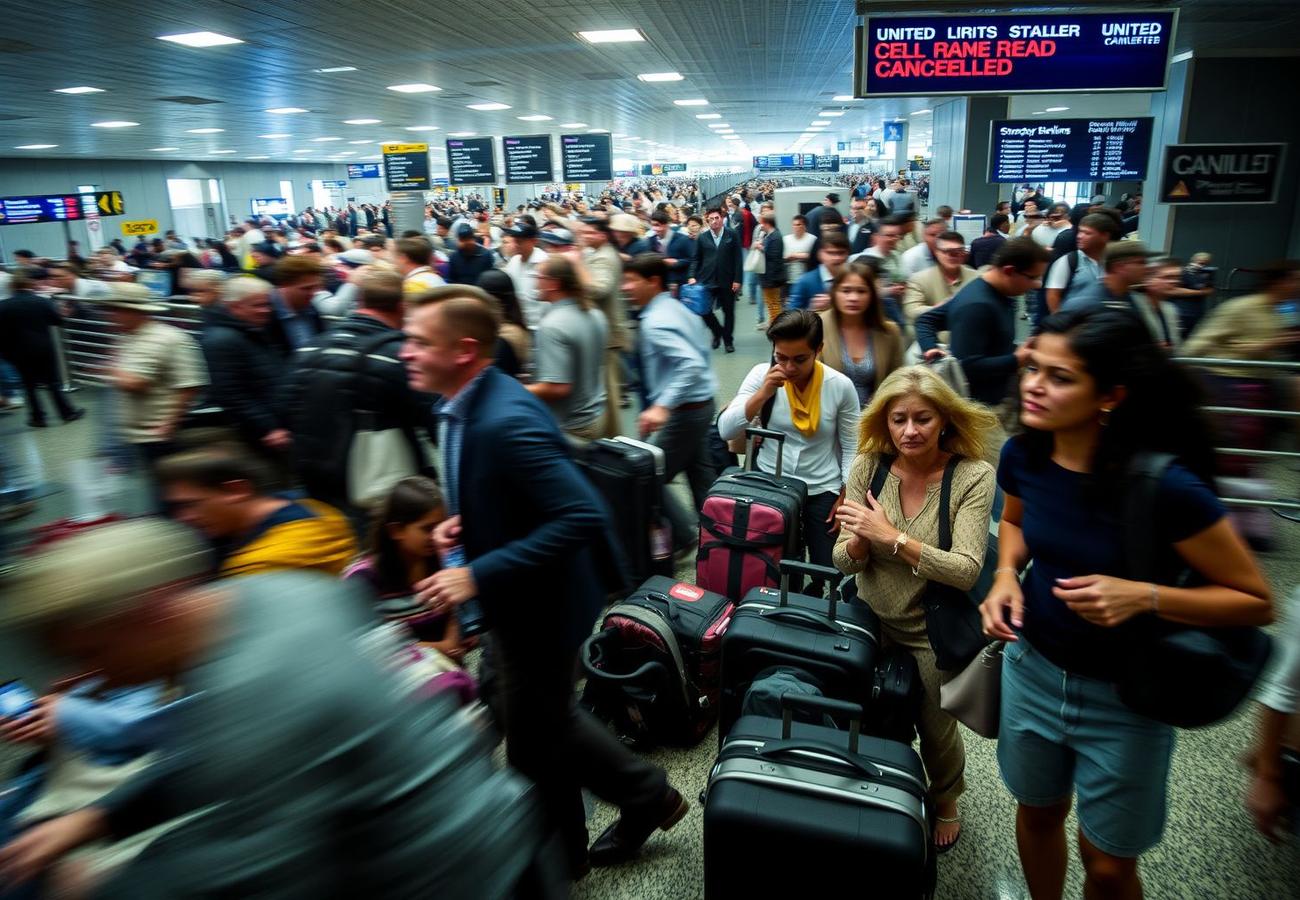
Image generated by AI
The Unexpected Turn Mid-Flight
United Airlines Flight UA2124 took an unexpected detour on June 3, 2026, that left passengers scrambling for answers. The Boeing 737-800 (registration N76529) was supposed to be a routine evening run from Chicago O'Hare International Airport to New York LaGuardia Airport—one of America's busiest domestic routes, moving thousands of travelers daily. Instead, the aircraft diverted and returned to its origin, creating a cascading nightmare of delays, missed connections, and operational chaos across both major hubs.
What started as a standard domestic flight became a textbook example of how quickly airline operations can spiral when something goes wrong at 35,000 feet.
Why Did UA2124 Turn Around?
Here's where the story gets murky. United Airlines has not publicly confirmed the specific reason behind the diversion, which is typical protocol when safety concerns are involved. Flight tracking records show the aircraft departed Chicago at approximately 7:14 PM CDT—already more than three hours behind its originally scheduled 4:00 PM departure—before making the decision to return rather than press on to LaGuardia.
The airline's choice to divert back to Chicago O'Hare makes operational sense. As one of United's largest hub airports, Chicago has the resources, maintenance facilities, engineering support, and passenger service infrastructure to handle unexpected aircraft issues. It's a precautionary approach: get the plane back to home base, have maintenance crews inspect it, and figure out what's wrong before risking another 800-mile journey.
Reddit: "Never a good sign when a plane turns around mid-route. United had to have spotted something serious on their systems." — r/aviation
Flight Tracking Reveals the Full Picture
Public flight tracking data from Flightradar24 told the story that United's press office wouldn't. The Boeing 737-800 departed Chicago at 7:14 PM CDT, climbed to altitude, and then executed a return heading. When it finally touched down at LaGuardia Airport, it arrived at approximately 10:26 PM EDT—making it a three-hour-plus delay for everyone onboard.
The timeline reads like this: scheduled 4:00 PM departure → actual 7:14 PM departure → diversion and return → eventual arrival 10:26 PM. For a flight that normally takes just over two hours, passengers endured a five-and-a-half-hour ordeal.
The Cascading Impact on Operations
Flight diversions aren't isolated incidents. When a single aircraft gets yanked out of service, it creates a domino effect across an entire network. Gate assignments get reshuffled, crew members hit their flight-hour limitations, connecting passengers miss their onward flights, and the airline scrambles to find mechanical solutions while managing customer expectations.
For the passengers stranded on UA2124, the disruption meant considerably more than sitting in a middle seat for an extra few hours. It meant missed business meetings in New York, connections to other cities delayed or cancelled, hotel rooms that needed rebooking, and the stress that comes with travel uncertainty when you're already in the air with no clear destination.
Airlines maintain rigorous contingency protocols for exactly these situations. Safety regulations mandate that operational and technical concerns take absolute priority over schedule adherence. When maintenance crews flag something—whether it's an engine sensor reading, hydraulic system warning, or structural concern—the decision to divert is made in seconds, not debated.
What We Actually Know (And Don't Know)
As of the report date, United Airlines had not disclosed the root cause of the diversion. This silence is standard operating procedure during aviation incidents. The airline reported the diversion; FAA investigators likely reviewed it; but public disclosure waits for internal findings and potential safety board involvement.
Passengers seeking real-time updates during such disruptions can check United's official flight status page for schedule changes and recovery information, though airlines are often playing catch-up with transparent communication.
The aviation industry places safety infinitely above on-time performance. A three-hour delay beats a catastrophic outcome every time—and experienced travelers understand this trade-off, even when they're stuck in a gate area with cold coffee and mounting frustration.
Why This Matters for You
If you're flying the Chicago-New York corridor, understand that disruptions like UA2124 happen more often than airlines publicize. These two cities account for some of America's highest flight volumes, which means both greater frequency and greater potential for cascading delays. Single-point failures ripple through the entire network in minutes.
Book connections conservatively on busy routes. Assume at least a 90-minute buffer if you're making another flight. Monitor your flight status obsessively—don't wait for an airline notification. And if you find yourself on a diverted flight, the delay likely means serious rather than trivial.
The Boeing 737-800 is one of aviation's most reliable workhorses. But even reliable aircraft have days when something just isn't right, and pilots and crews do exactly what they should: they get passengers down safely, even if it means turning around mid-journey.
The skies are safer when airlines prioritize precaution over punctuality—even if it wrecks your Tuesday.
Related Travel Guides
- United Airlines Emergency Evacuation Marred by Unruly Passengers Who Defied Crew Instructions and Damaged Escape Slide
- Southwest Airlines Holds Firm on 2026 Profit Outlook Amid Fuel Surge
- Travelers Stranded at Toronto Pearson International Airport as Air Canada, Air India Face Flight Cancellations and Delays
Disclaimer
This article is for informational and educational purposes only. It does not constitute legal, financial, or professional advice. While we strive to provide accurate and up-to-date information, travel policies, regulations, and conditions change rapidly. Always verify information with official sources before making travel decisions. Nomad Lawyer makes no representations about the accuracy, reliability, completeness, or suitability of the information provided. Readers should consult qualified professionals for advice specific to their circumstances. The views expressed in this article are those of the author and do not necessarily reflect the views of Nomad Lawyer.
Kunal K Choudhary
Co-Founder & Contributor
A passionate traveller and tech enthusiast. Kunal contributes to the vision and growth of Nomad Lawyer, bringing fresh perspectives and driving the community forward.
Learn more about our team →