
Southwest Airlines Holds Firm on 2026 Profit Outlook Amid Fuel Surge
Southwest Airlines holds steady on profit guidance despite soaring fuel costs in 2026, diverging from United and Alaska's more cautious approach. Industry split widens as carriers adopt contrasting strategies.

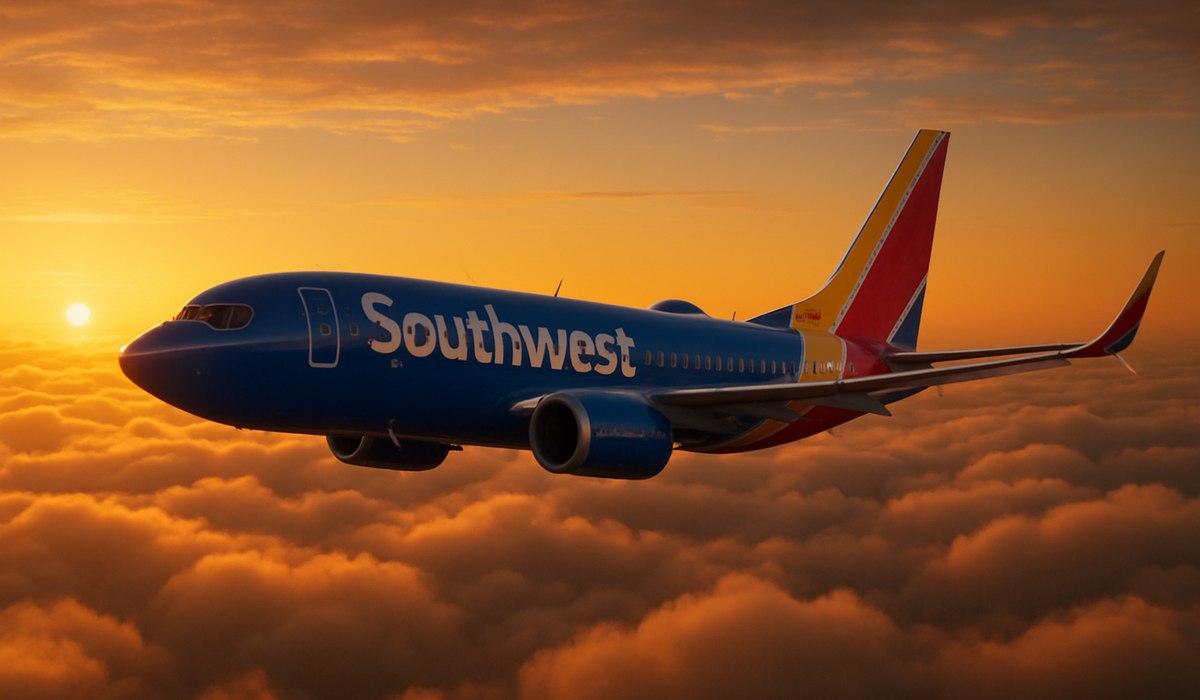
Image generated by AI
Southwest Airlines Holds Steady on Profit Outlook Despite Economic Headwinds
Southwest Airlines has publicly refused to revise its 2026 profit forecasts despite unprecedented pressure from soaring fuel costs. The Dallas-based carrier maintains confidence in its annual earnings guidance, framing the decision as operationally sound rather than optimistic. Southwest's leadership stated the move would "not be productive" given current market volatility. This stance places Southwest in sharp contrast with competitors like United Airlines and Alaska Air Group, who have already trimmed or withdrawn their financial projections for the year.
The airline industry is experiencing a critical inflection point. While fuel represents a substantial operating expense—typically 20–30% of airline budgets—carriers are responding with vastly different strategies. Southwest's decision signals underlying strength in its cost structure, fleet efficiency, or booking trajectory. Conversely, United and Alaska's pullback suggests more conservative internal forecasts for demand or higher exposure to volatile fuel hedging positions.
Southwest's Steadfast Stance on Earnings Guidance
Southwest Airlines' refusal to adjust profit outlooks reflects management confidence in operational resilience. The carrier operates one of the industry's most homogeneous fleets—primarily Boeing 737 aircraft—allowing for streamlined maintenance and fuel optimization. Lower unit costs and efficient turnaround procedures give Southwest advantages competitors lack.
The company's domestic-focused network, concentrated on leisure and business routes across North America, provides relative insulation from volatile international fuel surcharges. Southwest also benefits from early hedging decisions made months prior, locking in fuel prices before the recent spike. Management has emphasized that near-term guidance adjustments based on commodity volatility would undermine investor confidence and market positioning.
Additionally, Southwest's operational discipline and high-frequency, point-to-point service model demand less fuel per available seat mile than hub-and-spoke competitors. This efficiency advantage compounds during fuel price surges, allowing the carrier to absorb costs without proportionally impacting margins.
How Major Airlines Are Responding Differently to Fuel Pressures
The airline industry's bifurcated response to fuel costs reveals strategic divergence. Some carriers maintain optimistic guidance while others adopt precautionary stances. This divergence affects investor perception, traveler confidence, and route capacity planning across the sector.
Delta Air Lines, like Southwest, has chosen to maintain existing guidance despite fuel headwinds. Both carriers cite operational efficiency and existing hedging strategies as confidence anchors. Their decision suggests internal metrics—booking patterns, yield management, and load factors—remain supportive of annual targets.
Smaller and regional carriers with higher fuel cost exposure are more vulnerable. Those lacking robust hedging programs or operating less efficient fleets face steeper margin compression. The industry's tiered response creates winners and losers: efficient operators gain competitive advantage while high-cost carriers struggle with profitability.
Fuel costs represent the most volatile component of airline expense structures. When crude oil prices spike, carriers face immediate pressure on monthly fuel bills. Strategic hedging—locking in future prices—provides stability but commits carriers to prices that may prove unfavorable. Southwest's refusal to revise guidance suggests management believes current hedges adequately protect 2026 earnings targets.
United and Alaska Take More Conservative Approach
United Airlines has revised its profit guidance downward, citing elevated fuel expectations and softening demand indicators. The Chicago-based carrier operates extensive international routes where fuel surcharges and currency fluctuations compound cost pressures. United's more conservative posture reflects exposure to premium-cabin yield volatility and business travel demand uncertainty.
Alaska Air Group, operating regionally across western and southwestern markets, pulled back or narrowed guidance ranges. The Seattle-based carrier faces seasonal fuel volatility amplified by Alaskan operations requiring specialized logistics. Alaska's decision to revise signals lower confidence in achieving original targets given current fuel price environments.
These carriers' moves likely reflect more conservative internal forecasting assumptions. When management revises guidance, it typically indicates confidence in new targets exceeds confidence in original projections. This suggests United and Alaska see downside risks—either higher fuel costs, lower demand, or margin compression—that warrant acknowledging investor risk.
The divergence matters for travelers booking flights. Conservative guidance from some carriers may precede capacity cuts or route adjustments. Conversely, carriers maintaining optimistic guidance may continue robust scheduling, offering more flight options and potentially competitive pricing as competition intensifies.
What This Means for Travelers and Investors
The airline guidance split creates distinct implications for business and leisure travelers. Carriers maintaining profit outlooks likely sustain current capacity levels and route networks. Those scaling back guidance may announce seasonal capacity reductions, route suspensions, or more aggressive dynamic pricing strategies.
For investors, the divergence signals performance variance ahead. Southwest and Delta's confidence suggests manageable fuel exposure through hedges or operational advantages. United and Alaska's caution suggests margin pressure, potential dividend cuts, or reduced capital expenditure on fleet modernization.
Travelers should monitor announcements from carriers on your preferred routes. Southwest's maintained guidance supports continued frequent scheduling on leisure-oriented destinations. However, consolidation among weaker carriers or route-specific cuts from those revising guidance could limit options on certain city pairs.
Booking timing becomes strategically important. Carriers with confidence in profitability maintain flexible inventory management and often offer competitive fares to maintain load factors. Carriers cautiously managing expectations may implement stricter seat controls and higher dynamic pricing, making advance bookings more expensive than spot purchases closer to departure.
Traveler Action Checklist
-
Check carrier guidance statements on your preferred airlines' investor relations websites to understand their 2026 outlook and confidence levels.
-
Monitor flight schedules using FlightAware for any announcements regarding route suspensions or capacity adjustments from your home airport.
-
Compare pricing across carriers before booking—carriers with maintained guidance may offer competitive fares, while those revising outlook may employ stricter pricing strategies.
-
Review fuel surcharge policies on international routes, as carriers revising guidance may increase or apply surcharges more aggressively.
-
Set up fare alerts on Southwest and Delta routes if preferring carriers with confident 2026 outlooks, potentially capturing better pricing as they compete for passengers.
-
Verify schedule reliability before committing to bookings with carriers revising guidance—reduced capacity may mean fewer backup flights if schedules slip.
-
Check the FAA website at www.faa.gov for any safety or operational notices affecting your carrier or airport.
-
Review passenger rights through the U.S. Department of Transportation to understand compensation entitlements if flights are cancelled or significantly delayed.
Key Data: 2026 Airline Guidance Response
| Airline | Guidance Status | Fuel Exposure | Fleet Focus | Primary Impact |
|---|---|---|---|---|
| Southwest Airlines | Maintained | Lower (domestic-focused) | Boeing 737 (homogeneous) | Operational efficiency advantage |
| Delta Air Lines | Maintained | Moderate (mixed network) | Modern Boeing/Airbus fleet | Hedging strength, scale advantages |
| United Airlines | Revised downward | Higher (extensive intl.) | Diverse fleet, premium routes | International fuel/currency volatility |
| Alaska Air Group | Revised/narrowed | High (regional dynamics) | Focused regional network | Seasonal fuel volatility exposure |
| Industry average | Mixed (50/50 split) | Volatile commodity risk | Fleet age variance | Margin compression likely Q3-Q4 2026 |
FAQ: Southwest Airlines Holds Outlook—Common Traveler Questions
Q: Will Southwest cut flights because of high fuel costs in 2026?
A: Unlikely in the near term. Southwest's maintained guidance suggests management expects sufficient revenue to cover elevated fuel costs without capacity reductions. However, monitor quarterly earnings calls for updates if fuel
Disclaimer
This article is for informational and educational purposes only. It does not constitute legal, financial, or professional advice. While we strive to provide accurate and up-to-date information, travel policies, regulations, and conditions change rapidly. Always verify information with official sources before making travel decisions. Nomad Lawyer makes no representations about the accuracy, reliability, completeness, or suitability of the information provided. Readers should consult qualified professionals for advice specific to their circumstances. The views expressed in this article are those of the author and do not necessarily reflect the views of Nomad Lawyer.
Kunal K Choudhary
Co-Founder & Contributor
A passionate traveller and tech enthusiast. Kunal contributes to the vision and growth of Nomad Lawyer, bringing fresh perspectives and driving the community forward.
Learn more about our team →