
The Death of 'Basic Economy' in the Corporate Sector: How United Airlines' Tiered Fares Shift Business Travel
As United Airlines radically fractures its long-haul Polaris cabin into three distinct pricing tiers, global corporate travel managers are violently scrambling to adjust their 2026 budgets.

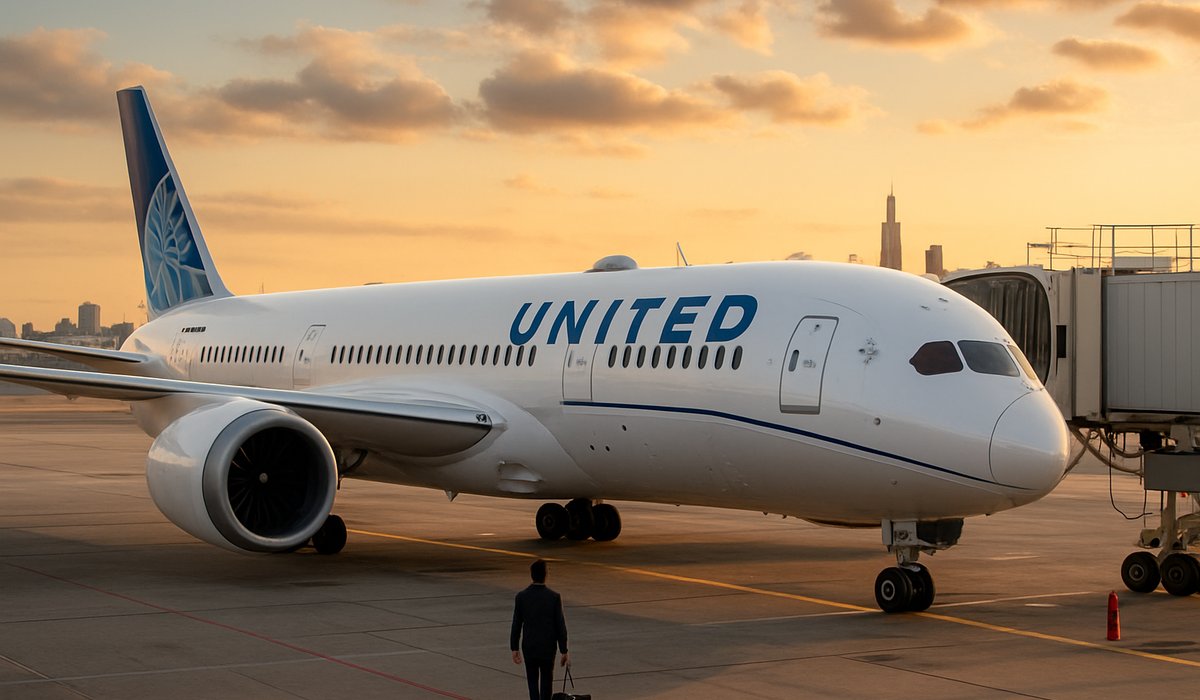
Image generated by AI
Re-Engineering the Corporate Expense Account
United Airlines’ massively disruptive decision to intentionally fracture its ultra-luxury Polaris and Premium Plus cabins into "Base, Standard, and Flexible" pricing tiers has triggered a violent shockwave directly through the core of the 2026 global corporate travel management sector. For decades, the logic of "Business Travel" was mathematically absolute: a company approved a single, astronomically expensive Business Class fare for its executives, completely knowing that the massive price inherently included absolute logistical flexibility, maximum baggage, and unrestricted premium lounge access. United’s unbundling strategy has brilliantly and violently destroyed that assumption.
The new reality is a logistical nightmare for corporate accountants and a highly tactical lever for elite travelers. Travel Management Companies (TMCs) are suddenly realizing that the "cheapest" business-class fare available on the portal—the new "Base" tier—physically strips out the very flexibility that a hyper-volatile corporate executive demands. If an executive requires a sudden itinerary change mid-project, a Base fare triggers massive, punitive financial penalties that entirely wipe out the initial corporate savings. The unbundling strictly forces companies to consciously choose between extreme fiscal discipline and the actual logistical sanity of their high-value employees.
The Trap of the 'Base Fare' Reality
The absolute genius of the unbundled airline model is that it psychologically weaponizes the basic consumer instinct to hunt for the lowest listed price.
When a corporate travel portal rigidly dictates that an employee must mathematically book the "Lowest Logical Fare" for a trans-Atlantic crossing, the system will automatically force the executive into the stripped-down Base Polaris ticket. In this brutal scenario, the executive still receives the legendary lie-flat bed, but the airline mercilessly strips away the pre-flight luxury. They cannot dynamically pick a preferred window seat, and more importantly, they are completely barred from accessing the highly coveted, quiet enclaves of the United Polaris Lounges, severely destroying their ability to execute critical remote work prior to boarding.
The Corporate Aviation Impact Matrix
| The New Booking Reality | The Corporate Financial Benefit | The Brutal Employee Consequence |
|---|---|---|
| Mandating 'Base Fare' Polaris | Massive, instant reduction in the annual corporate travel budget. | Destroys basic executive perks; zero seat choices, heavy penalty fees on changes. |
| Purchasing 'Flexible' Polaris | Absolute financial predictability with zero hidden change-fees. | Forces the company to absorb exponentially higher upfront airfare costs per massive trip. |
| Strict Lounge Exclusions | Saves the company the massive premium baked into standard fares. | Eliminates the executive's secure, pre-flight workflow environment. |
What Guests Get
- Redefining the 'Policy Override' — realizing that elite executives must now frequently negotiate explicitly with HR to secure approval for the "Standard" or "Flexible" fares rather than relying solely on the cabin class.
- The destruction of 'Silent Upgrades' — grasping that airlines mathematically restrict the ability to utilize frequent flier points or corporate upgrade certificates specifically against these heavily unbundled, bottom-tier premium fares.
- Micro-economic travel tactics — understanding that if a company forces an employee into a Base fare, the employee must aggressively utilize their own elite frequent-flier status (like 1K) to forcefully regain the lost seat-selection perks.
What This Means for Travelers
If you are a corporate traveler navigating these new tiers in 2026: You must become fiercely active in managing your company's digital booking portal (like Concur or Navan). Do not blindly accept the auto-generated itinerary. You must physically audit the exact Fare Class you are purchasing. If you know mathematically that your massive European deployment dates are highly fluid, you must legally justify to your management the absolute necessity of purchasing the "Flexible" Polaris tier. Falling into the Base fare trap guarantees absolute financial disaster when the client suddenly delays the London meeting by two days.
The Strategy of Status Matches: To completely insulate yourself from corporate austerity measures that force you into cheap Base fares, aggressively pursue "Status Matches." If you possess massive, top-tier elite status on Delta (like Diamond Medallion), leverage it instantly to acquire parallel status on United. Elite status specifically acts as an impenetrable shield against unbundling; an elite flier forced onto a stripped-down ticket can frequently legally override the restrictions, reclaiming their massive baggage allowances and critical lounge access through sheer loyalty mechanics.
FAQ: Corporate Strategy for Unbundled Business Fares
Why did United Airlines unbundle their best cabin? The strategy explicitly targets the massively lucrative "High-End Leisure" demographic. Wealthy tourists traveling on heavily locked-in vacation dates do not need ticket flexibility; this allows United to offer a "cheaper" business-class entry point to compete aggressively with global low-cost rivals.
Is it illegal for my company to force me into a Base fare? No. It is purely an internal corporate policy decision. Travel Management algorithms are deeply designed to enforce massive corporate savings by perpetually auto-selecting the absolute mathematically lowest price in the authorized cabin class.
Do these new rules apply to massive global corporate booking contracts? Frequently, yes. While massive legacy corporations (like global banks) possess highly customized, heavily negotiated backend contracts with airlines that bypass these rules, standard mid-tier corporations utilizing generic TMC portals are violently exposed to the standard public unbundling restrictions.
External Resources
- Global Business Travel Association (GBTA)
- United Corporate Travel Portal
- Air Travel Consumer Reports (DOT)
Related Travel Guides
Disclaimer
This article is for informational and educational purposes only. It does not constitute legal, financial, or professional advice. While we strive to provide accurate and up-to-date information, travel policies, regulations, and conditions change rapidly. Always verify information with official sources before making travel decisions. Nomad Lawyer makes no representations about the accuracy, reliability, completeness, or suitability of the information provided. Readers should consult qualified professionals for advice specific to their circumstances. The views expressed in this article are those of the author and do not necessarily reflect the views of Nomad Lawyer.
Raushan Kumar
Founder & Lead Developer
Full-stack developer with 11+ years of experience and a passionate traveller. Raushan built Nomad Lawyer from the ground up with a vision to create the best travel and law experience on the web.
Learn more about our team →