
United Airlines Tech Outage and Severe Weather Trigger Over 2,000 U.S. Flight Cancellations in July 2026
A critical United Airlines tech outage combined with East Coast storms led to thousands of flight cancellations and delays across major U.S. hubs on July 18 and 19, 2026.

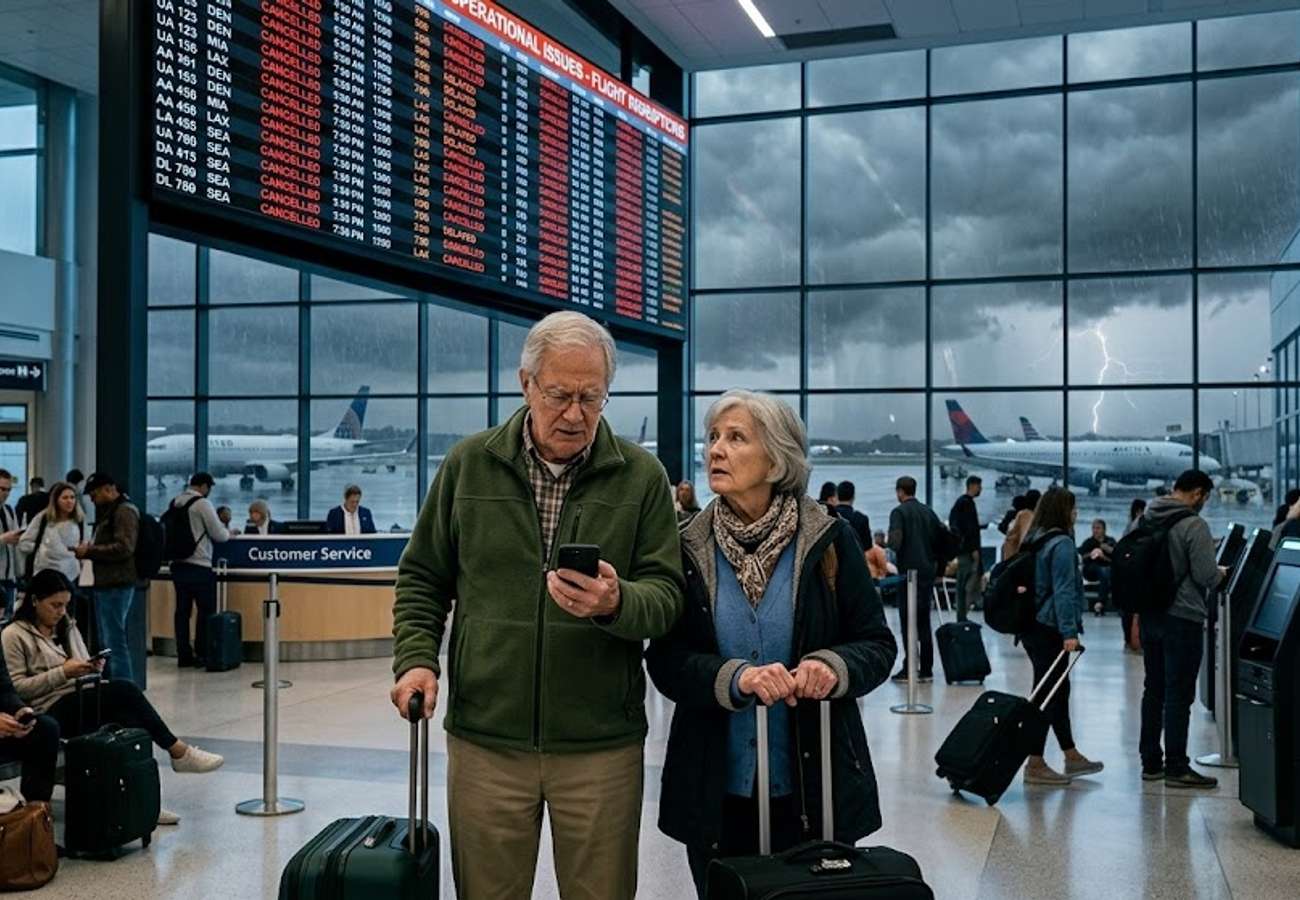
Image generated by AI
[City, Date] — A severe nationwide technology failure at United Airlines, compounded by volatile weather patterns on the East Coast, triggered widespread operational chaos on July 18, 2026, contributing to a total of 2,437 flight cancellations across the United States. The disruption paralyzed check-in processes and boarding procedures, leaving thousands of passengers stranded at terminals or stuck on aircraft.
The crisis began early Saturday morning, creating a bottleneck at major hubs where digital infrastructure failed, preventing the issuance of tickets and the processing of passenger manifests. While weather-related ground stops were a primary factor in the overall national disruption, the internal system failure at United Airlines significantly amplified the impact, leading to a surge in delays and a breakdown in passenger flow.
Systemic Failure Impacts Major U.S. Aviation Hubs
The technical glitch specifically targeted the carrier's reservation system, which is the backbone of passenger processing. Industry reports indicate that the outage effectively disabled self-service check-in kiosks and prevented gate agents from issuing the necessary documentation for flight crews.
According to operational data, the outage heavily impacted several key gateways, including San Francisco International Airport, Newark Liberty International Airport, and Washington Dulles International Airport. The timing of the failure coincided with severe thunderstorms in the New York metropolitan area, creating a "perfect storm" of operational hurdles that forced the airline to implement ground stops.
A spokesperson for the airline confirmed that the disruption affected both contact centers and check-in protocols. The outage began at approximately 6:00 A.M. CT and was reportedly resolved by 7:17 A.M. CT. Despite the relatively short window of the primary system failure, the resulting "ripple effect" caused delays that persisted well into the following day.
Statistical Analysis of Flight Disruptions on July 18
The scale of the disruption is evident when comparing United Airlines' performance against other major U.S. carriers during the peak of the crisis. On July 18, United suffered the highest percentage of delays among the top five airlines, with 39% of its total flight volume impacted.
| Rank | Airline | Delays |
|---|---|---|
| 1 | American Airlines | 1,280 |
| 2 | United Airlines | 1,261 |
| 3 | Southwest Airlines | 1,169 |
| 4 | Delta Air Lines | 951 |
| 5 | SkyWest | 586 |
In addition to the delays, United recorded 268 cancellations on Saturday, representing 8% of its total scheduled flight volume for the day.
Passenger Experience and International Complications
The technology outage extended beyond domestic borders, affecting international operations and causing frustration for travelers. Reports from Frankfurt indicated that aircraft were unable to depart because gate agents could not print the final mandatory paperwork required by captains for takeoff.
Within the U.S., passengers reported significant congestion at baggage drop locations. Social media and community forums were flooded with reports of travelers unable to check luggage, with many citing rumors that the entire system had crashed. Some passengers reported being held on the tarmac for extended periods due to the internal disruptions caused by the failing tech systems.
To mitigate the crisis, United Airlines implemented a flexible rebooking policy for passengers traveling through East Coast hubs. This policy, which remained in effect through July 19, covered several critical airports:
- Newark, NJ/New York, NY (EWR)
- New York, NY (LGA)
- Washington, DC (IAD & DCA)
- Boston, MA (BOS)
- Philadelphia, PA (PHL)
- Baltimore, MD (BWI)
- Hartford, CT (BDL)
- Providence, RI (PVD)
Prolonged Operational Recovery on July 19
The recovery process proved difficult as the airline entered Sunday, July 19. Despite the restoration of the reservation system, the backlog of displaced passengers and ongoing weather issues at Chicago O'Hare International Airport and Newark Liberty International Airport led to further cancellations.
By early Sunday morning, United had already recorded 102 cancellations and 82 delays. As the day progressed, these numbers climbed sharply, with the airline eventually hitting 133 cancellations and 1,001 delays for the 24-hour period.
The broader industry also felt the impact on Sunday, though United remained one of the most affected carriers. Comparison data for July 19 shows a wider spread of disruptions across the industry:
| Rank | Airline | Delays |
|---|---|---|
| 1 | Southwest Airlines | 1,738 |
| 2 | Delta Air Lines | 1,475 |
| 3 | American Airlines | 1,412 |
| 4 | United Airlines | 1,001 |
| 5 | SkyWest | 524 |
By Monday morning, the situation began to stabilize. Reports indicate that United's disruptions dropped significantly, with only seven cancellations and 90 delays recorded as the airline worked to normalize its schedule.
Why This Matters: The Fragility of Aviation Infrastructure
This incident underscores a critical vulnerability in modern aviation: the total dependence on centralized digital reservation systems. When a "single point of failure" occurs—such as the reservation system outage experienced by United—the physical movement of aircraft becomes secondary to the digital movement of data.
The fact that a 77-minute system outage (from 6:00 A.M. to 7:17 A.M. CT) could trigger thousands of cancellations over a 48-hour window demonstrates the lack of "buffer capacity" in current airline scheduling. When tech failures coincide with environmental factors like East Coast thunderstorms, the system lacks the elasticity to recover quickly.
Furthermore, the Frankfurt incident highlights how digital dependencies create international bottlenecks. The inability to print a physical piece of paper for a captain can ground a multi-million dollar aircraft, proving that the "paperless" transition in aviation is still tethered to legacy requirements. For the industry, this event serves as a warning that cybersecurity and system redundancy are no longer just IT concerns, but are central to operational viability and passenger safety.
United Airlines now faces the challenge of regaining passenger trust following a weekend of systemic instability.
Related Travel Guides
Disclaimer
This article is for informational and educational purposes only. It does not constitute legal, financial, or professional advice. While we strive to provide accurate and up-to-date information, travel policies, regulations, and conditions change rapidly. Always verify information with official sources before making travel decisions. Nomad Lawyer makes no representations about the accuracy, reliability, completeness, or suitability of the information provided. Readers should consult qualified professionals for advice specific to their circumstances. The views expressed in this article are those of the author and do not necessarily reflect the views of Nomad Lawyer.
Kunal K Choudhary
Co-Founder & Contributor
A passionate traveller and tech enthusiast. Kunal contributes to the vision and growth of Nomad Lawyer, bringing fresh perspectives and driving the community forward.
Learn more about our team →