
United Airlines Flight UA1513 Drone Incident at Newark Airport
FAA investigates a near-miss between United Airlines flight UA1513 and an unauthorized drone during landing at Newark Li

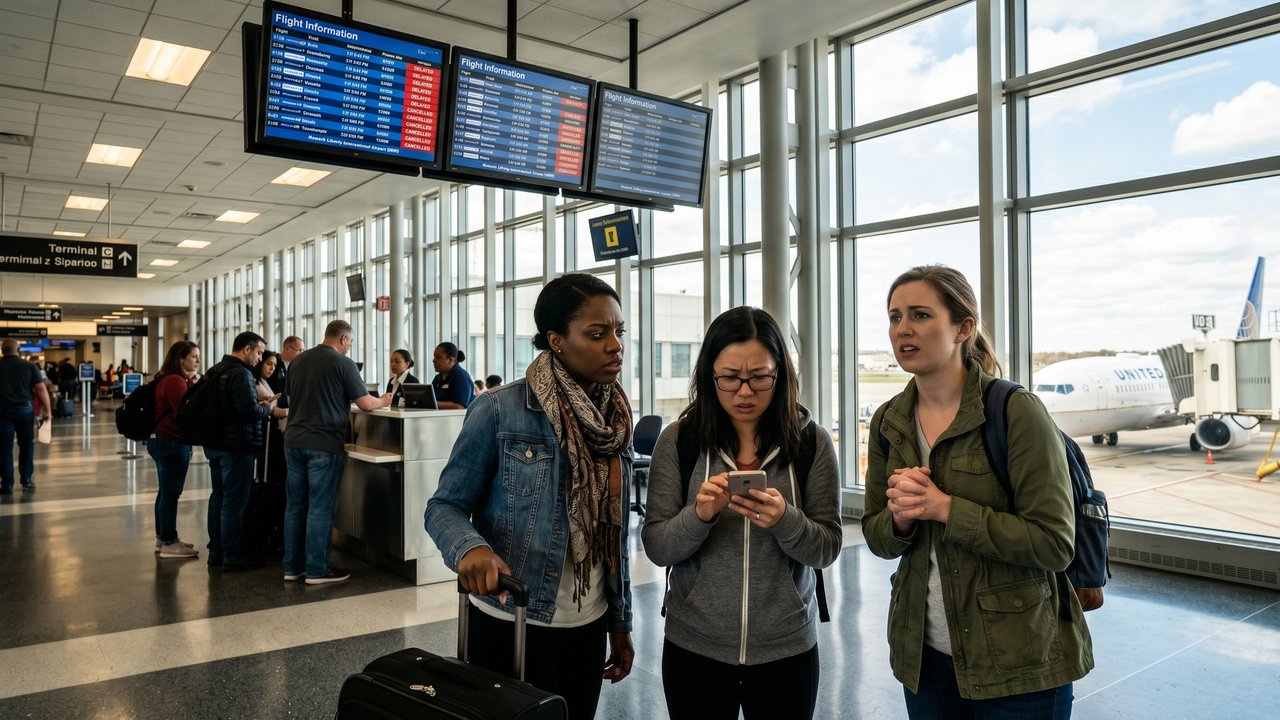
Image generated by AI
The Core Development
On June 27, United Airlines flight UA1513, traveling from Key West to Newark, encountered a circular drone during its descent. The aircraft, carrying 106 passengers and five crew members, maintained its approach and landed safely.
Federal aviation authorities are now investigating the breach of controlled airspace. The incident was compounded by a separate report from a United Express regional flight operated by GoJet Airlines, which spotted a drone at approximately 2,000 feet in the same vicinity.
Key Facts Breakdown
- Flight: UA1513 (Key West to Newark).
- Aircraft: Boeing 737-700 (Registration N54711).
- Total Occupants: 111 people.
- Drone Specifications: Estimated three feet in diameter.
- Proximity: The drone was flying roughly 100 feet below the aircraft at 17:20 local time.
- Secondary Incident: A GoJet Airlines flight also reported drone activity near the airport.
- Regulatory Response: The FAA is investigating violations of federal drone regulations.
Flight and Operational Data
| Detail | Specification |
|---|---|
| Airline | United Airlines |
| Flight Number | UA1513 |
| Aircraft Type | Boeing 737-700 |
| Route | Key West (EYW) $\rightarrow$ Newark (EWR) |
| Total on Board | 111 |
| Drone Separation | ~100 feet below aircraft |
| US Registered Drones | 1 Million+ |
| Projected TSA Volume | 18.7 Million (June 30 – July 6) |
Why This Matters
Industry observers note that drone incursions during the "final approach" phase are significantly more dangerous than mid-cruise encounters. At low altitudes, pilots have minimal room to maneuver without compromising aircraft stability.
Unlike biological bird strikes, drones consist of rigid composites and high-density lithium batteries. Ingestion into a turbine or a windshield strike can cause catastrophic structural failure or immediate loss of pilot visibility.
The timing of this event—immediately preceding the Independence Day travel rush—highlights a critical vulnerability in airport security. With TSA expecting to screen 18.7 million passengers in a single week, any drone-related ground stop or airspace restriction at a major hub like Newark could trigger a systemic ripple effect of delays and diversions across the national network.
Industry Outlook
Market trends suggest a shift toward aggressive investment in counter-drone technology. We expect to see:
- Enhanced Detection: Increased deployment of RF sensors and radar specifically tuned for small UAS (Unmanned Aircraft Systems).
- Stricter Enforcement: Higher civil penalties for operators violating LAANC (Low Altitude Authorization and Notification Capability) protocols.
- Geofencing Updates: More robust software locks preventing recreational drones from taking off within airport perimeter zones.
Related Travel Guides
Disclaimer
This article is for informational and educational purposes only. It does not constitute legal, financial, or professional advice. While we strive to provide accurate and up-to-date information, travel policies, regulations, and conditions change rapidly. Always verify information with official sources before making travel decisions. Nomad Lawyer makes no representations about the accuracy, reliability, completeness, or suitability of the information provided. Readers should consult qualified professionals for advice specific to their circumstances. The views expressed in this article are those of the author and do not necessarily reflect the views of Nomad Lawyer.
Kunal K Choudhary
Co-Founder & Contributor
A passionate traveller and tech enthusiast. Kunal contributes to the vision and growth of Nomad Lawyer, bringing fresh perspectives and driving the community forward.
Learn more about our team →