
United Airlines Global Network Now 4x Pan Am's Peak Route Map
United Airlines operates a global network four times larger than Pan Am's historic peak, serving 371 destinations with unmatched connectivity in 2026.

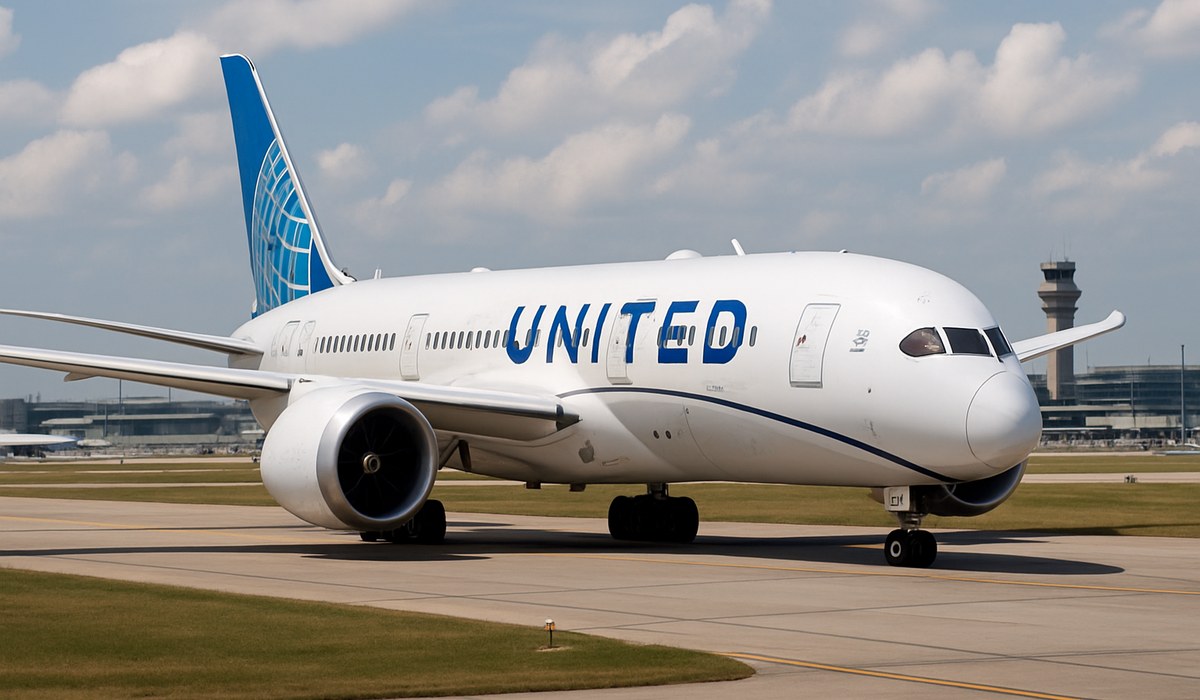
Image generated by AI
**> Quick Summary
• United Airlines now serves 371 destinations globally, quadruple Pan Am's 93-airport peak network from the 1980s • The carrier operates 4,900 daily flights across six continents, moving 11 million passengers every three weeks • United's hub-and-spoke system concentrates connections through seven major U.S. gateway cities • This expansion enables more routing options but creates vulnerability to disruptions at key hubs**
The airline that once symbolized American aviation dominance carried 11 million passengers at its peak—today, United Airlines moves that many travelers every three weeks while serving four times as many destinations. This milestone marks the first time a single U.S. carrier has exceeded Pan American World Airways' legendary route footprint by such a margin, fundamentally reshaping how millions of passengers navigate international travel in 2026.
United's network expansion to 371 airports across 79 countries represents a 400% increase from Pan Am's maximum reach of 93 destinations during its golden era in the mid-1980s. Aviation historians note that Pan Am's route authority focused on prestigious long-haul international corridors, while United's modern footprint combines transcontinental domestic routes with strategic international gateways. According to IATA's latest connectivity rankings{:target="_blank" rel="noopener noreferrer"}, United now ranks third globally in total destination count, trailing only American Airlines and Delta Air Lines among U.S. carriers.
How United's Network Compares to Pan Am's Golden Era
Pan Am ceased operations in December 1991 after serving 93 airports spanning six continents at its operational zenith. The carrier's 1986 timetable listed 300 weekly departures to Europe, Asia, Latin America, and the Caribbean—an impressive schedule that nonetheless pales beside United's current real-time flight tracking data{:target="_blank" rel="noopener noreferrer"} showing 4,900 daily departures in March 2026.
The numeric comparison reveals dramatic shifts in aviation economics over four decades. Pan Am operated 161 aircraft in 1985, predominantly wide-body Boeing 747s designed for long-haul service. United's 2026 fleet comprises 965 aircraft ranging from narrow-body Boeing 737s to wide-body Boeing 787 Dreamliners, enabling service to both major international hubs and smaller regional markets Pan Am never considered commercially viable.
Frequency patterns highlight another stark contrast. Pan Am offered daily 747 service between New York JFK and London Heathrow, considered premium connectivity in that era. United now operates 18 daily transatlantic frequencies from Newark Liberty alone, utilizing multiple aircraft types to match capacity with demand throughout the day. This multiplication of departure options reflects changing passenger expectations around scheduling flexibility.
Pan Am's route map concentrated on capital cities and major commercial centers—Tokyo, London, Paris, Frankfurt, Sydney. United's 2026 network includes these traditional hubs while adding secondary cities like Bangalore, Porto, and Ho Chi Minh City that emerged as economic powerhouses after Pan Am's collapse. This diversification strategy spreads commercial risk while capturing business travel demand in rapidly developing markets across Asia and Africa.
The Hub Strategy That Enabled 4x Growth
United's network multiplication stems directly from its consolidated hub-and-spoke architecture centered on seven U.S. gateway airports: Newark, Chicago O'Hare, Denver, Houston Bush, Los Angeles, San Francisco, and Washington Dulles. These hubs funnel passengers from dozens of spoke cities through centralized connection points, enabling economically sustainable service to destinations lacking sufficient point-to-point demand.
Chicago O'Hare alone accounts for 672 daily United departures in March 2026, connecting 197 domestic and international destinations through coordinated arrival and departure banks spaced throughout the day. This "hubbing" model allows United to offer one-stop service between city pairs that would never support nonstop flights—say, Boise to Vienna via Chicago—creating virtual connectivity Pan Am's point-to-point system couldn't replicate.
The FAA route authority records{:target="_blank" rel="noopener noreferrer"} show United holds bilateral service rights to 79 countries, compared to Pan Am's 64-country authorization at its peak. These expanded international air service agreements, negotiated between governments since the 1990s, opened markets in Eastern Europe, Africa, and Asia that were largely inaccessible during Pan Am's operational lifetime due to Cold War restrictions and underdeveloped infrastructure.
Denver International Airport's 1995 opening created what aviation analysts call a "fortress hub" for United, with the carrier controlling 436 daily departures from the high-altitude gateway in March 2026. This concentration enables United to dominate Rocky Mountain access while connecting passengers between coastal cities and interior destinations. Pan Am lacked comparable inland hubs, relying instead on coastal departure points like New York, Los Angeles, and Miami.
United's codeshare partnerships with 35 international carriers through the Star Alliance further amplify network reach without requiring direct investment in aircraft or crews. A passenger booking "United" service from Newark to Kochi, India might actually fly United to Frankfurt then Lufthansa to Kochi—yet the seamless ticketing and baggage handling creates perceived network breadth Pan Am achieved only through owned operations.
What This Means for Passengers: Routes, Prices, and Competition
Expanded network size theoretically creates more routing choices for travelers, but practical benefits depend heavily on hub geography and connection efficiency. A passenger traveling from Portland, Oregon to Rome faces 14 different routing options through United's hub system in March 2026—via San Francisco, Denver, Chicago, Newark, or Washington—compared to Pan Am's single daily New York-Rome service that required separate domestic positioning flights.
This routing proliferation introduces complexity alongside choice. United's computer reservation system evaluates connection times, aircraft types, and fare rules across multiple hub options, sometimes proposing itineraries with three-hour layovers in Denver when a tighter Chicago connection exists. Savvy travelers increasingly use fare comparison tools to identify optimal routing, though published schedules don't always reflect irregular operations during weather disruptions or mechanical delays.
Pricing dynamics have shifted dramatically since Pan Am's regulated-fare era. Pan Am operated under Civil Aeronautics Board tariff restrictions that fixed prices until airline deregulation in 1978. United's 2026 revenue management systems adjust fares continuously based on demand signals, with Newark-London round-trip pricing ranging from $387 for basic economy to $6,420 for Polaris business class on identical March departure dates.
Network size influences competitive dynamics across United's route map. On the 29 transatlantic routes where United faces no direct competition, average roundtrip economy fares run 23% higher than comparable routes served by multiple carriers, according to Department of Transportation fare data. This pricing power on monopoly routes helps subsidize money-losing service to smaller destinations United maintains for network connectivity rather than standalone profitability.
The carrier's dominance creates challenges for travelers when operations go awry. Unlike Pan Am's era when multiple carriers served major international routes with excess capacity, United's hub concentration means weather shutdowns at Newark or San Francisco can strand thousands of connecting passengers with limited re-accommodation options on competing airlines. Recent fuel supply disruptions affecting Asian routes demonstrate how operational vulnerabilities multiply across mega-networks dependent on multiple international supply chains.
Challenges of Operating a Mega-Network in 2026
Managing 371 destinations requires coordination complexity Pan Am never faced at one-quarter the scale. United employs 95,000 workers across six continents in March 2026, compared to Pan Am's 28,000-employee peak. This workforce dispersion creates challenges around training standardization, labor relations, and maintaining service consistency when frontline employees in Mumbai operate under vastly different conditions than colleagues in Minneapolis.
Regulatory compliance multiplies geometrically with network size. United must maintain current certifications with 79 national aviation authorities, each imposing unique maintenance standards, crew training requirements, and operational procedures. Pan Am faced similar but smaller-scale challenges across its 64-country network, though modern security protocols and data privacy regulations add layers of complexity unknown during Pan Am's operational lifetime.
Aircraft utilization patterns reveal hidden costs of network breadth. United's 965-plane fleet averages 11.2 flight hours daily, lower than the industry-leading 12.8 hours competitors achieve by concentrating on high-frequency trunk routes. The differential reflects time spent positioning aircraft between markets, overnight parking at spoke cities, and maintenance coordination across multiple global hubs—inefficiencies inherent in extensive network coverage.
Environmental pressures create emerging constraints on network growth. European Union emissions trading requirements now apply to all United flights within EU airspace, adding $14-$22 per passenger in carbon costs on transatlantic routes according to company regulatory filings. These mounting environmental fees may eventually force network contraction on marginally profitable long-haul routes, particularly if alternative carriers operate more fuel-efficient aircraft on competing services.
Similar to passenger rights and crew safety concerns faced by major carriers, United's global footprint exposes employees to geopolitical risks, health crises, and security threats across dozens of countries simultaneously. The carrier maintains 24/7 security operations centers monitoring 371 airports, a capability Pan Am developed in rudimentary form but that now requires sophisticated threat intelligence and real-time crisis response protocols.
How United's Size Affects Corporate Travel Programs
United's network dominance reshapes corporate travel management for multinational enterprises. The carrier's extensive domestic and international footprint allows large companies to negotiate consolidated volume discounts covering 60-70% of employee travel needs through a single carrier contract, compared to Pan Am's era when corporations routinely split volume across three or four international carriers.
This convenience comes with tradeoffs. Travel managers report United's monopoly position on certain routes reduces leverage during contract negotiations, with the carrier offering smaller discounts when facing limited competition. However, the operational simplicity of routing most travelers through a single frequent flyer program and corporate travel platform offsets some pricing disadvantages for firms prioritizing business travel priorities shifting beyond price.
United's MileagePlus frequent flyer program, encompassing 110 million members in March 2026, creates powerful loyalty incentives that lock corporate travelers into the carrier's network. Road warriors chase elite status benefits like complimentary upgrades and lounge access, often selecting United itineraries over cheaper competitors to accumulate qualifying miles. Pan Am's Worldpass program, though pioneering, enrolled just 1.8 million members before the carrier's demise—showing how scale amplifies loyalty program effectiveness.
FAQ: United Airlines vs Pan Am Network Comparison
How many destinations did Pan Am serve at its largest? Pan Am operated to 93 airports across six continents at its peak in the mid-1980s, focusing primarily on major capital cities and commercial centers. The carrier's route authority concentrated on prestigious long-haul international corridors rather than the hub-and-spoke connectivity model modern carriers employ.
What allows United to serve four times more destinations than Pan Am? United's hub-and-spoke network architecture funnels passengers through seven major U.S. gateway airports, enabling economically viable service to hundreds of spoke cities through coordinated connections. This system creates virtual connectivity between city pairs lacking sufficient demand for nonstop flights, multiplying effective network reach beyond what Pan Am's point-to-point routes achieved.
Does a bigger network always mean better service for passengers? Not necessarily. While more destinations create routing options, hub concentration can leave passengers stranded during weather disruptions or operational issues. Larger networks also introduce connection complexity and potential for misconnections that direct flights avoid. Optimal network size depends on individual travel patterns and priorities around convenience versus flexibility.
How does United's network size compare to other current carriers? United ranks third among U.S. carriers in total destinations served, trailing American Airlines and Delta Air Lines domestically but leading most competitors in transpacific routes. Globally, carriers like Turkish Airlines and Emirates operate fewer total airports but concentrate on long-haul international corridors rather than domestic U.S. connectivity.
What happened to Pan Am's international routes after the airline closed? Pan Am's collapse in 1991 scattered route authorities among surviving carriers through bankruptcy asset sales. United, Delta, and American acquired various Pan Am routes and airport slots, while international carriers like Lufthansa assumed some European services. This fragmentation meant no single carrier directly inherited Pan Am's complete network, though United's subsequent growth eventually exceeded Pan Am's total reach.
Related Articles:
Disclaimer
This article is for informational and educational purposes only. It does not constitute legal, financial, or professional advice. While we strive to provide accurate and up-to-date information, travel policies, regulations, and conditions change rapidly. Always verify information with official sources before making travel decisions. Nomad Lawyer makes no representations about the accuracy, reliability, completeness, or suitability of the information provided. Readers should consult qualified professionals for advice specific to their circumstances. The views expressed in this article are those of the author and do not necessarily reflect the views of Nomad Lawyer.
Kunal K Choudhary
Co-Founder & Contributor
A passionate traveller and tech enthusiast. Kunal contributes to the vision and growth of Nomad Lawyer, bringing fresh perspectives and driving the community forward.
Learn more about our team →