
United Airlines Flight UA2101 Diverts to Indianapolis Following Seattle Tarmac Delay
United Airlines Flight UA2101 from Seattle to Chicago diverted to Indianapolis International Airport after a tarmac delay pushed the flight into summer storms.

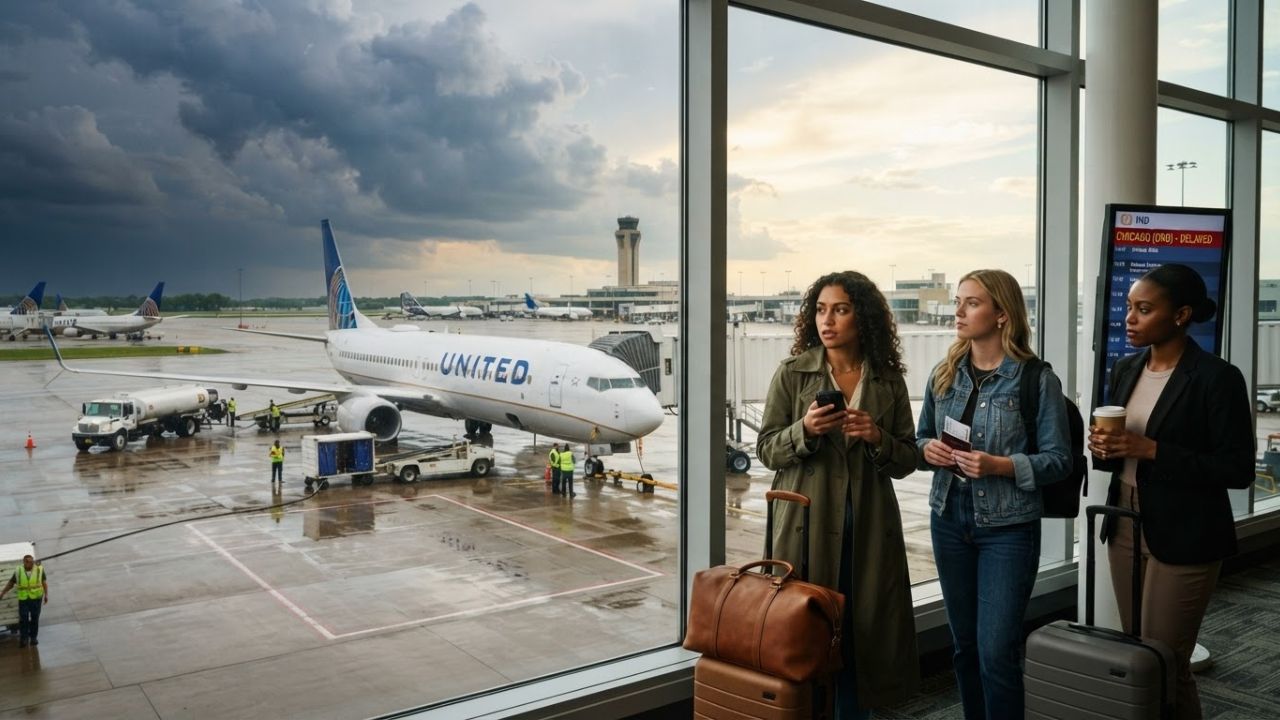
Image generated by AI
United Airlines Flight UA2101 from Seattle to Chicago Diverts to Indianapolis Following Tarmac Delay and Midwest Storms
United Airlines Flight UA2101, delayed on the ground in Seattle, diverted to Indianapolis International Airport after severe storms blocked arrivals into Chicago O'Hare. The Boeing 737-824 landed safely in Indiana to refuel before completing its journey on July 9, 2026.
The Disruption Details
Our analysis indicates that ground delays at departure airports can trigger complex routing challenges later in the flight. On July 9, 2026, United Airlines Flight UA2101 was scheduled to depart Seattle-Tacoma International Airport (SEA) at 1:55 PM local time, bound for Chicago O'Hare International Airport (ORD). However, technical spacing congestion in the Pacific Northwest airspace resulted in a rolling ground delay, postponing the actual pushback until 4:03 PM.
This initial delay shifted the transcontinental cruise into a highly volatile weather window. As the Boeing 737-824 aircraft (registration N37281) approached the Midwest, severe summer storms closed O'Hare's arrivals corridors. The flight entered holding patterns, burning through contingency fuel reserves. The captain initiated a tactical diversion to Indianapolis International Airport (IND), landing safely at the Indiana hub.
Flight & Airport Impact Breakdown
The combined ground delay and weather diversion disrupted passenger itineraries on this high-volume domestic corridor:
- Seattle to Chicago Corridor: The transcontinental route experienced a cumulative delay of over four hours due to ground congestion and weather.
- Chicago O'Hare Terminal Airspace: Closed arrival corridors forced multiple commercial flights into airborne holding patterns.
- Indianapolis Diversion Operations: Served as the refueling alternate, utilizing its runway capacity to handle the unexpected United Airlines mainline narrowbody.
- Tarmac Service and Turnaround: Ground crews refueled the aircraft quickly while dispatchers negotiated a fresh slot to minimize further delays.
Table: Flight UA2101 Operational Data
| Parameter | Details | Source / Verification |
|---|---|---|
| Flight Number | UA2101 / UAL2101 | Active domestic schedule |
| Aircraft Model | Boeing 737-824 (Boeing 737-800) | FAA Aircraft Registry |
| Scheduled Departure (STD) | 1:55 PM local Seattle time | Original flight plan |
| Actual Departure (ATD) | 4:03 PM local Seattle time | Ground radar tracking |
| Scheduled Arrival (STA) | 8:21 PM local Chicago time | Original arrival slot |
| Diversion Location | Indianapolis International Airport (IND) | Alternate landing site |
Passenger Rights & Advisory (Information Gain)
Passengers on delayed domestic flights are protected by US Department of Transportation (DOT) tarmac rules. If an aircraft experiences a ground delay at a US airport, the carrier must provide water, snacks, and access to working restrooms within two hours. If the ground delay reaches three hours, the airline must give passengers an opportunity to deplane safely, provided it does not compromise airport security.
Because the subsequent diversion was weather-related, it is legally classified as an uncontrollable event. This means passengers are not entitled to hotel vouchers or cash compensation. During temporary refueling stops where the flight is not cancelled, checked baggage remains in the aircraft's cargo hold and cannot be accessed. Once the aircraft is refueled and the weather clears at O'Hare, the flight proceeds with all passengers to the final destination.
Industry Analyst View
Initial departures delays can have cascading impacts on fleet routing by pushing flight arrival times into storm windows. If Flight UA2101 had departed Seattle on schedule, it would have arrived in Chicago before the thunderstorms reached peak intensity. Managing these shifting arrival windows requires constant recalculations by flight dispatchers and air traffic control.
Indianapolis represents an ideal diversion hub for Chicago-bound flights due to its proximity and extensive ground handling capabilities. Refueling the aircraft quickly allows carriers to minimize downstream impacts on crews' legal duty hours. This fast turnaround capability keeps the aircraft asset in motion and prevents flight cancellations that disrupt passenger connections.
Related Travel Guides
- American Airlines Flight AA2524 from Seattle to Chicago Diverts to Grand Rapids Amid Severe Midwest Thunderstorms
- United States International Air Travel Surges in Q1 2026 Driven by Global Flight Networks of Legacy Carriers
- American Airlines Adds Flights and Deploys Boeing 777-300ER to Rio de Janeiro for NFL Showdown in September 2026
Disclaimer
This article is for informational and educational purposes only. It does not constitute legal, financial, or professional advice. While we strive to provide accurate and up-to-date information, travel policies, regulations, and conditions change rapidly. Always verify information with official sources before making travel decisions. Nomad Lawyer makes no representations about the accuracy, reliability, completeness, or suitability of the information provided. Readers should consult qualified professionals for advice specific to their circumstances. The views expressed in this article are those of the author and do not necessarily reflect the views of Nomad Lawyer.
Kunal K Choudhary
Co-Founder & Contributor
A passionate traveller and tech enthusiast. Kunal contributes to the vision and growth of Nomad Lawyer, bringing fresh perspectives and driving the community forward.
Learn more about our team →