
Breaking Airline News: Severe Travel Chaos Averted as United Airlines Flight UA1805 Executes Terrifying Emergency Diversion to San Francisco Following Mid-Air Security Threat
Breaking airline news: Amidst a terrifying era of sudden operational emergencies, United Airlines flight UA1805 executes a massive mid-air diversion and fuel dump to combat a high-stakes cabin security threat.

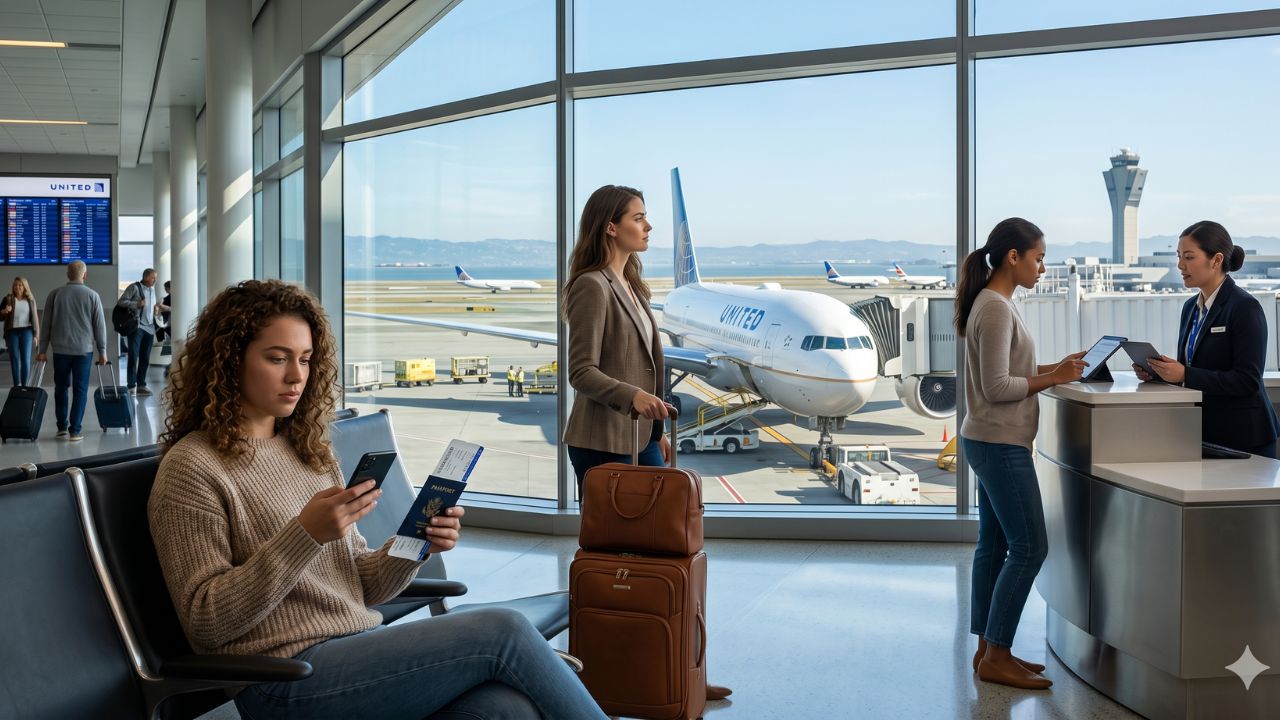
Image representing the intense strategic battle as global aviation leaders violently execute emergency diversions to manage high-stakes security threats and prevent catastrophic travel chaos.
Breaking Airline News: Severe Travel Chaos Averted as United Airlines Flight UA1805 Executes Terrifying Emergency Diversion to San Francisco Following Mid-Air Security Threat
As paralyzing airport disruptions, tightly constrained operational bandwidth, and sudden in-flight emergencies violently sweep through the North American aviation network, a premier global carrier was forced into a high-stakes survival scenario. In a terrifying incident that threatened to ignite massive travel chaos across the trans-Pacific corridor, United Airlines flight UA1805—a massive Boeing 777-200 operating heavily loaded from Denver International Airport to Honolulu Daniel K. Inouye International Airport—encountered a critical cabin security threat. Striking approximately 100 miles west of San Francisco over the open Pacific Ocean, the severe incident forced the flight crew to declare an immediate emergency, execute a massive mid-air fuel dump, and violently divert the wide-body aircraft to San Francisco International Airport to protect the 360 passengers trapped on board.
In a harrowing display of modern aviation strategy, what began as a routine, fully booked trans-Pacific service rapidly devolved into a severe logistical emergency. Operating within highly congested Californian airspace, the United Airlines crew identified a level one security situation—indicating a potentially disruptive passenger requiring immediate, aggressive management. Refusing to risk the safety of the aircraft over the vast Pacific Ocean, the pilots proactively terminated the Hawaiian route. This highly dramatic emergency diversion prevented a catastrophic escalation but instantly severed the travel lifelines for hundreds of passengers, violently plunging them into an inescapable web of rebooking delays and regional travel chaos.
Expanded Overview: The Massive Scale of the Emergency
The terrifying crisis currently gripping this specific flight route brutally exposes the highly fragile nature of long-haul, over-water air travel. When a massive wide-body aircraft experiences an aggressive internal disruption, the cascading effects on the aviation network are absolutely devastating. To ensure the absolute survival of all 360 passengers, the flight deck was forced to coordinate an intense, high-speed return protocol. Because the massive Boeing 777-200 was carrying a heavy long-haul fuel load intended for Honolulu, the pilots could not physically land the aircraft safely at San Francisco without risking a catastrophic structural failure. Consequently, the crew was forced to aggressively execute a controlled fuel dump, creating a massive logistical challenge for air traffic controllers attempting to keep the skies clear of the highly volatile aviation fuel.
Section-Wise Breakdown: The Operational Realignment
The Trans-Pacific Threat Identification
The incident aggressively centered around a sudden escalation in the cabin while the aircraft pushed out over the ocean. While approximately 100 miles from the California coast, the highly trained cabin crew identified a level one security threat. Communication with the flight deck instantly confirmed the presence of a passenger requiring intense operational attention. While the individual remained compliant and no immediate physical confrontation or restraint was necessary, the pilots aggressively prioritized safety, confirming the cockpit remained completely secure while initiating the emergency diversion protocols.
The Emergency Fuel Dump
To survive this high-stakes environment, the pilots had to aggressively manage the aircraft's physical weight. The crew coordinated directly with local controllers to violently release thousands of pounds of fuel in a safe airspace box pattern. Emitting broadcasts to nearby aircraft to prevent terrifying mid-air interference, the massive Boeing 777 executed the dump while aggressively descending from flight level 370 down to 270. This low continuous approach, guided by stepwise clearance, successfully achieved the required safe landing weight.
The San Francisco Intercept
Following the aggressive fuel dump, flight UA1805 was violently vectored back toward the mainland. Guided via the highly specific PIRATE THREE arrival procedure, the aircraft aggressively crossed the designated intercept point at precisely 10,000 feet. NorCal Approach provided absolute vectoring for the instrument landing system (ILS), meticulously guiding the heavy aircraft toward San Francisco International. The pilots seamlessly transitioned to San Francisco Tower for final clearance, executing a massive, precise emergency landing on runway 28 Left before aggressively exiting via taxiway Quebec to meet heavily armed authorities on the ground.
Flight Details & Aviation Defense Matrix
To fully comprehend the massive logistical and strategic fallout of this terrifying mid-air emergency, corporate travel managers must review the exact operational metrics driving the diversion. The following matrix provides a granular breakdown of the specific, officially verified flight data surrounding the United Airlines incident.
| Operational Metric | Confirmed Verification Data |
|---|---|
| Operating Carrier | United Airlines |
| Flight Number | UA1805 |
| Aircraft Type | Boeing 777-200 |
| Scheduled Origin | Denver International Airport |
| Scheduled Destination | Honolulu Daniel K. Inouye International Airport |
| Emergency Diversion Hub | San Francisco International Airport |
| Passenger Count | 360 |
| Security Threat Classification | Level One (Passenger compliant, no physical restraint) |
| Emergency Descent Profile | FL 370 to FL 270 (Controlled Fuel Dump) |
| Arrival Procedure | PIRATE THREE (Intercept at 10,000 feet) |
| Landing Runway | Runway 28 Left (Exit via Taxiway Quebec) |
Passenger Impact: Surviving the Terminal Nightmare
For the 360 passengers physically trapped inside the diverted Boeing 777, the human cost of this operational emergency is intensely terrifying. The brutal reality of enduring a sudden mid-air turnaround, coupled with the highly visible and alarming emergency fuel dump over the ocean, inflicts intense psychological stress. The sudden termination of the flight entirely destroyed meticulously planned Hawaiian vacations and crucial corporate travel itineraries. The disruption caused immediate friction upon landing, as passengers were violently injected into the already highly congested San Francisco transit network, facing severe rebooking queues and massive delays.
Survival Guide for Stranded Travelers
Travelers desperately navigating this sudden travel chaos must immediately execute the following survival protocols:
- Monitor Airline Communications: Upon surviving an emergency diversion, aggressively monitor the official United Airlines app to secure priority rebooking on the next available Honolulu flight before standard inventory vanishes.
- Understand Diversion Rights: Familiarize yourself with airline policies regarding mandatory hotel accommodations and meal vouchers when a flight is aggressively diverted due to security threats.
- Maintain Composure: During high-stress security incidents and emergency landings, strict adherence to cabin crew commands is the absolute ultimate defense mechanism to ensure personal survival.
Industry Analysis: The Fragility of Long-Haul Operations
From a strategic aviation perspective, the severe travel turmoil ignited by flight UA1805 highlights the terrifying vulnerability of the trans-Pacific commercial network. Industry analysts confirm that emergency diversions involving wide-body aircraft require massive, highly synchronized ground and air responses. The fact that NorCal Approach and San Francisco Tower had to aggressively clear airspace for a box pattern fuel dump proves that a single level one security threat can instantly ripple through the local network, heavily threatening the operational stability of a massive mega-hub like San Francisco. This incident proves that even highly optimized airline safety protocols can actively trigger severe regional delays and widespread logistical friction.
Conclusion: A Strategic Retreat to Ensure Aviation Survival
As the summer travel season continues its massive escalation, the terrifying diversion of flight UA1805 represents a massive warning to trans-Pacific travelers. The sheer operational intensity required to safely land the heavy Boeing 777-200 proves that long-haul flight schedules remain terrifyingly fragile when confronted with unpredictable cabin threats. Corporate travel buyers and everyday passengers attempting to navigate this highly unstable era of airport disruptions must maintain extreme flexibility. By acting aggressively to secure backup travel options and remaining highly vigilant, travelers can survive unprecedented mid-air emergencies and navigate the resulting travel chaos safely.
Key Takeaways
- Massive Emergency Diversion: United Airlines flight UA1805 violently diverted to San Francisco following a level one security threat located 100 miles over the Pacific Ocean.
- Trans-Pacific Disruption: The massive Boeing 777-200 was forced to abandon its scheduled route connecting Denver to Honolulu, heavily stranding 360 passengers.
- Intense Weight Management: To avoid a catastrophic landing structural failure, the pilots executed a massive, controlled fuel dump in a box pattern while descending from FL 370 to 270.
- Precision Intercept: Air traffic controllers aggressively guided the heavy aircraft via the PIRATE THREE arrival to a safe emergency landing on San Francisco’s runway 28 Left.
- Traveler Advisory: Passengers must aggressively utilize official airline digital channels for immediate rebooking following severe emergency diversions to completely bypass paralyzing terminal queues.
Related Travel Guides
Disclaimer
This article is for informational and educational purposes only. It does not constitute legal, financial, or professional advice. While we strive to provide accurate and up-to-date information, travel policies, regulations, and conditions change rapidly. Always verify information with official sources before making travel decisions. Nomad Lawyer makes no representations about the accuracy, reliability, completeness, or suitability of the information provided. Readers should consult qualified professionals for advice specific to their circumstances. The views expressed in this article are those of the author and do not necessarily reflect the views of Nomad Lawyer.
Kunal K Choudhary
Co-Founder & Contributor
A passionate traveller and tech enthusiast. Kunal contributes to the vision and growth of Nomad Lawyer, bringing fresh perspectives and driving the community forward.
Learn more about our team →