
United Airlines Flight UA1715 Denver to Newark Diverts to Bradley International Airport in 2026
United Airlines flight UA1715 from Denver to Newark diverted to Bradley International Airport due to operational congestion in the New York airspace.

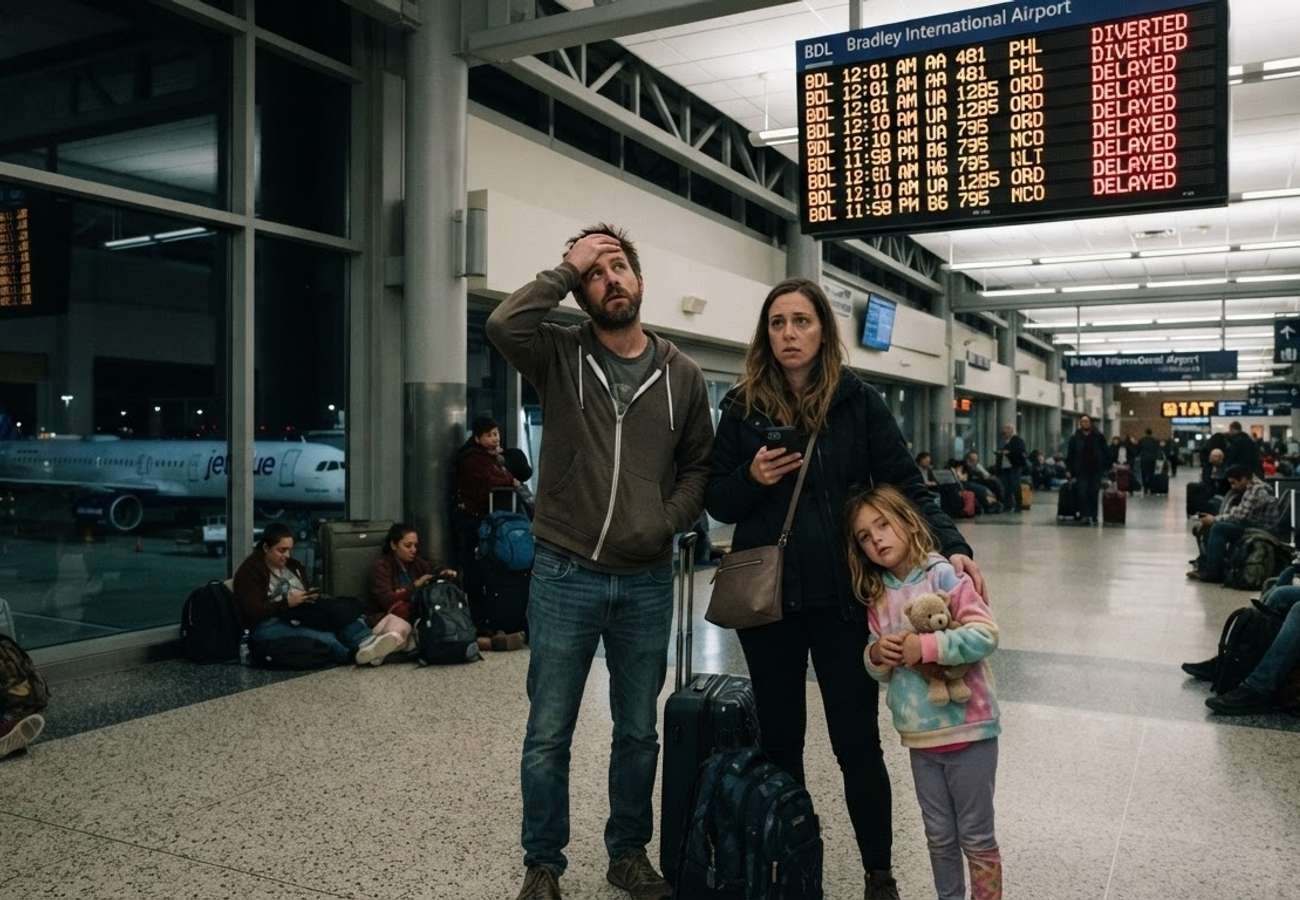
Image generated by AI
Operational challenges in the New York metropolitan airspace forced United Airlines flight UA1715 to divert to Connecticut, resulting in significant arrival delays for passengers traveling from Denver.
On July 5, 2026, United Airlines flight UA1715, operated by an Airbus A321neo (registration N54525), failed to complete its scheduled route from Denver International Airport (DEN) to Newark Liberty International Airport (EWR). Instead, the aircraft was redirected to Bradley International Airport (BDL) in Windsor Locks, Connecticut.
The diversion occurred after the aircraft encountered operational disruptions common to the high-density New York airspace. Rather than entering extended holding patterns—which can strain fuel reserves and crew duty limits—flight crews opted for the alternate landing site at Bradley.
Flight Timeline and Operational Data
The journey was marked by delays from the outset. The aircraft departed Denver significantly behind schedule, compounding the eventual disruption.
- Scheduled Departure (DEN): 3:35 PM MDT
- Actual Departure (DEN): 5:57 PM MDT (Delay: 2 hours, 22 minutes)
- Scheduled Arrival (EWR): 9:29 PM EDT
- Actual Arrival (BDL): 12:35 AM EDT, July 6 (Gate A15)
- Total Arrival Delay: Over 3 hours beyond the original EWR schedule.
Logistics of the Diversion
Industry observers note that the New York metropolitan area—comprising Newark, JFK, and LaGuardia—is one of the most congested aviation environments globally. When arrival slots are restricted or airspace becomes saturated, diversions to secondary hubs like Bradley International Airport are utilized to maintain safety.
The use of BDL allowed United Airlines to land the A321neo in a controlled environment, avoiding the risks associated with excessive circling in the Northeast corridor. However, this shift placed passengers outside the primary New York transit system, necessitating secondary ground transportation or rebooking to reach their final destinations in New Jersey or New York.
Technical Specifications and Route Impact
| Flight Detail | Specification |
|---|---|
| Flight Number | UA1715 (Callsign UAL1715) |
| Aircraft Type | Airbus A321neo |
| Registration | N54525 |
| Origin | Denver International Airport (DEN) |
| Intended Destination | Newark Liberty International Airport (EWR) |
| Diversion Point | Bradley International Airport (BDL) |
| Final Arrival Gate | Gate A15 (BDL) |
Why This Matters: Industry Implications
This incident underscores the fragility of the "hub-and-spoke" model when operating into saturated airspace. The diversion of UA1715 is not merely a passenger inconvenience but a symptom of systemic capacity limits in the Northeast corridor.
Our analysis indicates three primary implications:
- Network Ripple Effects: A diversion of a narrow-body aircraft like the A321neo disrupts aircraft rotation. This likely caused downstream delays for subsequent flights scheduled for that specific airframe.
- Fuel and Crew Management: The decision to divert rather than hold indicates a priority on safety and crew legal flying hours over destination punctuality.
- Strategic Reliance on Secondary Hubs: The role of Bradley International Airport as a "pressure valve" for Newark is critical. Without these secondary landing sites, the New York aviation grid would face total paralysis during peak congestion.
Forward Outlook
Market trends suggest that as traffic volume increases in 2026, airlines will increasingly rely on automated traffic management tools to reduce the frequency of such diversions. Passengers can expect more frequent "alternate airport" notifications during peak summer and winter travel windows in the Northeast.
Safe operations remain the priority over schedule adherence in high-congestion zones.
Related Travel Guides
Disclaimer
This article is for informational and educational purposes only. It does not constitute legal, financial, or professional advice. While we strive to provide accurate and up-to-date information, travel policies, regulations, and conditions change rapidly. Always verify information with official sources before making travel decisions. Nomad Lawyer makes no representations about the accuracy, reliability, completeness, or suitability of the information provided. Readers should consult qualified professionals for advice specific to their circumstances. The views expressed in this article are those of the author and do not necessarily reflect the views of Nomad Lawyer.
Raushan Kumar
Founder & Lead Developer
Full-stack developer with 11+ years of experience and a passionate traveller. Raushan built Nomad Lawyer from the ground up with a vision to create the best travel and law experience on the web.
Learn more about our team →