
United Airlines 737 Pilots Distracted During Denver Airport Deicing Truck Collision, NTSB Investigation Reveals
Breaking airline news and aviation industry updates for 2026.

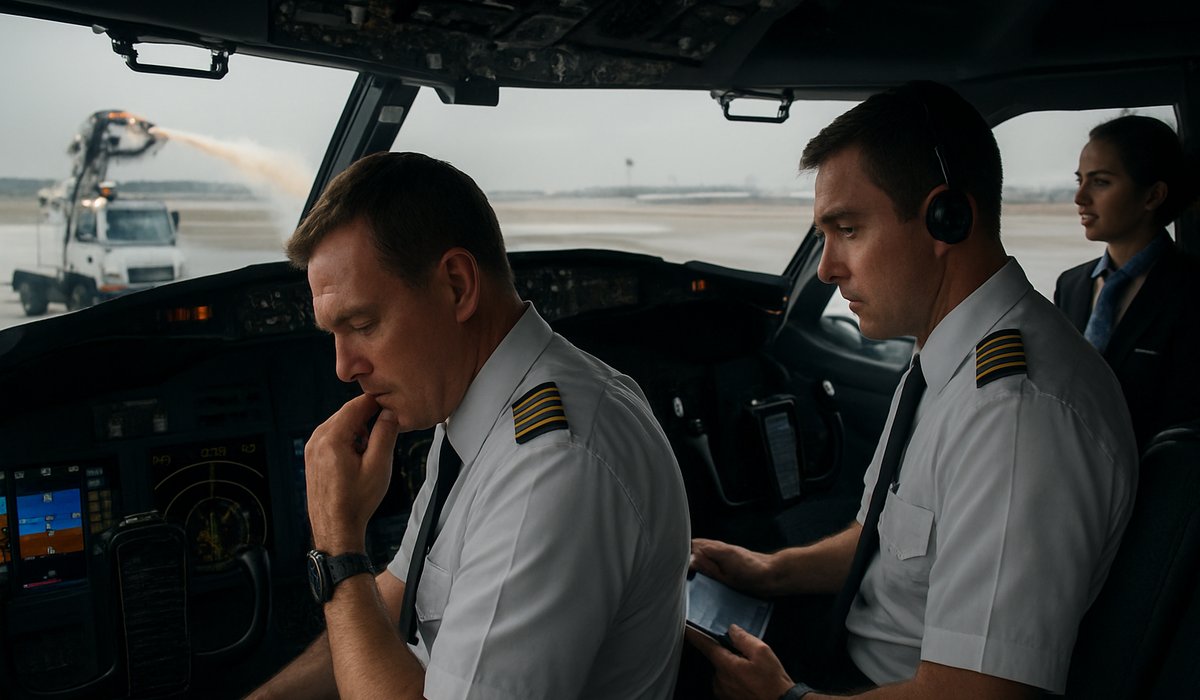
Image generated by AI
United Airlines 737 Pilots Distracted During Denver Airport Deicing Truck Collision, NTSB Investigation Reveals
Preliminary safety findings raise fresh questions about cockpit communication protocols and ground operations at major US aviation hub
Distraction in the Cockpit Preceded Ground Incident
A damning preliminary investigation by the National Transportation Safety Board has concluded that pilot distraction played a significant role in last month's runway incident at Denver International Airport, in which a United Airlines Boeing 737 struck two aircraft deicing vehicles. According to NTSB findings, the flight crew was engaged in conversation unrelated to flight operations at the critical moment when the aircraft began moving, and crucially, neither pilot possessed clear certainty regarding whether they had received proper ground movement authorization.
The collision represents a serious breach in standard operating procedures at one of the nation's busiest aviation hubs, raising urgent concerns about cockpit discipline and communication clarity between pilots and ground control.
Key Safety Findings Challenge Operational Standards
The NTSB's preliminary report paints a troubling picture of cockpit management during pre-departure operations. Rather than maintaining focused attention on critical ground movements and clearance confirmations, the pilots were distracted by non-essential conversation—a violation of established aviation safety protocols that mandate heightened awareness during all phases of ground operations.
Most alarmingly, neither pilot demonstrated confident understanding of their authorization status before initiating aircraft movement. This ambiguity represents a fundamental communication failure between flight deck and ground control, suggesting potential gaps in how clearance information is conveyed or acknowledged at major airports.
Broader Implications for Airport Safety
The incident highlights systemic vulnerabilities in ground operations at major US airports. Deicing operations, particularly during winter months at high-altitude facilities like Denver, demand precision coordination between multiple aircraft, ground vehicles, and air traffic control. Any lapse in attention or clarity of instruction exponentially increases collision risks.
United Airlines has not yet issued a comprehensive statement addressing the NTSB's findings or outlining corrective measures. The carrier faces mounting pressure to demonstrate enhanced training protocols and reinforced cockpit communication standards.
Industry-Wide Safety Questions Emerge
This accident will likely trigger renewed focus across the aviation sector on cockpit resource management, particularly during complex ground operations. Airlines and the Federal Aviation Administration may accelerate reviews of current communication procedures and distraction-mitigation protocols at congested airport environments.
The NTSB investigation continues, with a final report expected to provide comprehensive recommendations for preventing similar incidents.
FAQ: Understanding the Denver Airport Incident and Aviation Safety
What exactly happened in the United Airlines collision at Denver International Airport? A United Boeing 737 struck two deicing trucks during ground operations. The NTSB determined that pilot distraction and unclear ground clearance understanding contributed to the incident.
Why are cockpit distractions such a critical safety concern? Pilots must maintain constant situational awareness during all flight phases, especially ground operations. Non-essential conversation diverts attention from critical clearance confirmations and hazard detection.
How do pilots receive ground movement clearance? Air traffic control provides explicit verbal clearance before aircraft may move. Pilots must acknowledge this clearance clearly and confirm mutual understanding—a procedure that appears to have failed in this case.
What changes might result from this NTSB investigation? Airlines may implement stricter communication protocols, enhanced training on clearance confirmation, and revised procedures for ground operations at busy airports.
Is Denver International Airport uniquely vulnerable to these incidents? High-altitude airports with complex winter operations and heavy traffic create compounded risks. However, this incident suggests systemic issues applicable across major US aviation hubs.
Related Travel Guides
- Aviation Updates: Frontier Airlines and Barclays Fortify Loyalty Arsenal to Help Flyers Bypass Travel Chaos
- Sabah Confronts Global Aviation Headwinds: Major Flight Cuts and Airline Suspensions Hit Kota Kinabalu as State Deploys Radical Tourism Resilience Strategy
- Widespread European Aviation Chaos as 2,233 Flights Are Delayed and 56 Cancelled Across England, Germany, France, Spain, Netherlands and Russia — Ryanair, Lufthansa, KLM and Air France Passengers Stranded in May 2026
Disclaimer
This article is for informational and educational purposes only. It does not constitute legal, financial, or professional advice. While we strive to provide accurate and up-to-date information, travel policies, regulations, and conditions change rapidly. Always verify information with official sources before making travel decisions. Nomad Lawyer makes no representations about the accuracy, reliability, completeness, or suitability of the information provided. Readers should consult qualified professionals for advice specific to their circumstances. The views expressed in this article are those of the author and do not necessarily reflect the views of Nomad Lawyer.
Raushan Kumar
Founder & Lead Developer
Full-stack developer with 11+ years of experience and a passionate traveller. Raushan built Nomad Lawyer from the ground up with a vision to create the best travel and law experience on the web.
Learn more about our team →