
United Airlines Bluetooth Device Forces Dramatic Transatlantic Diversion
A United Airlines Boeing 767 heading to Mallorca executed an emergency turnback over the Atlantic after a passenger's mislabeled Bluetooth speaker triggered security protocols, forcing full TSA rescreening at Newark.

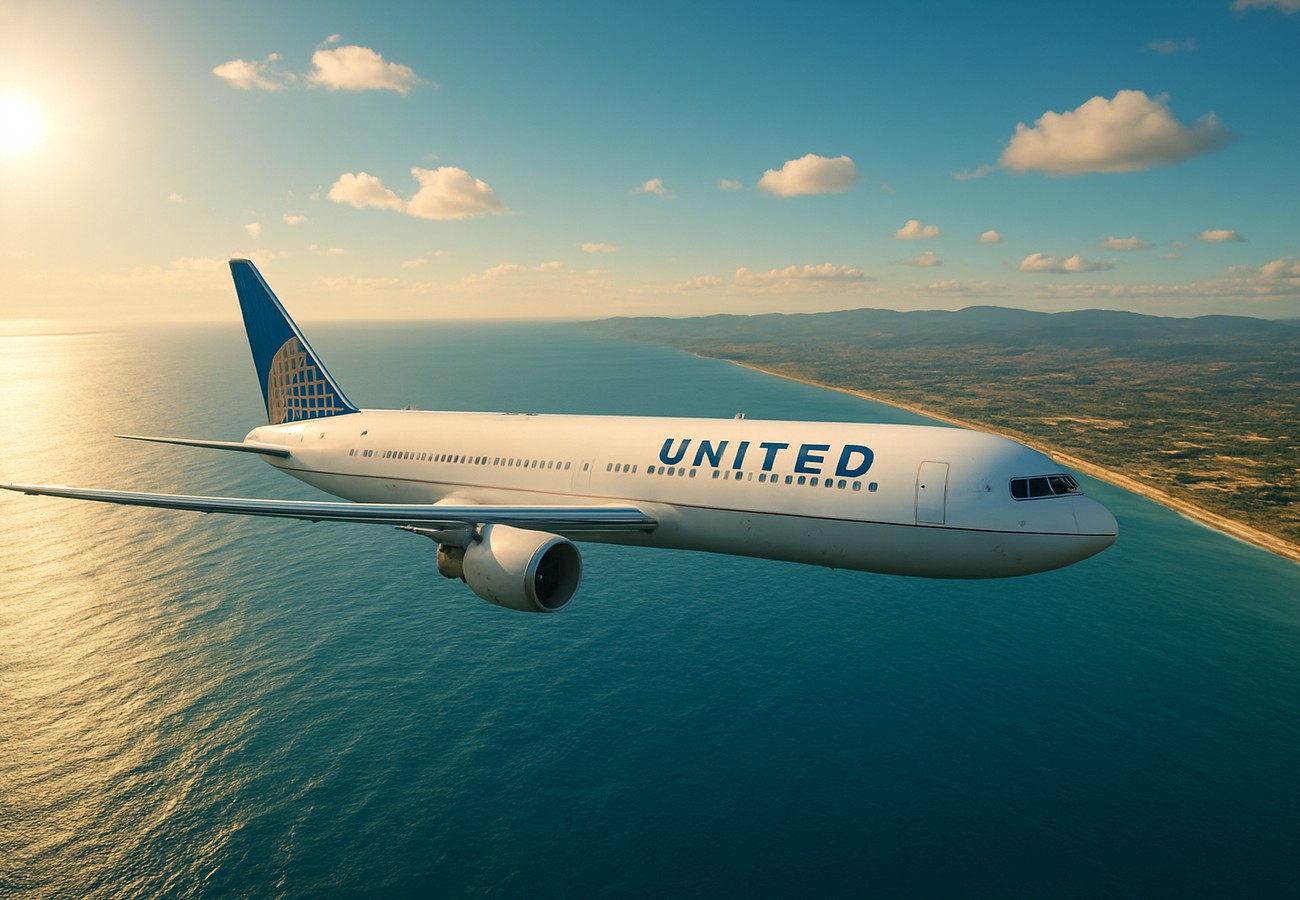
Image generated by AI
The Moment Everything Changed Mid-Atlantic
What started as a routine transatlantic flight from Newark Liberty International Airport (EWR) to Mallorca became a dramatic mid-ocean emergency on June 2, 2026. A United Airlines Boeing 767, already struggling with a nearly two-hour ground delay due to technical adjustments, was cruising toward European airspace when the crew received an alert that would change the entire mission.
A passenger's Bluetooth speaker, labeled with the name "BOMB" in its device settings, had triggered a sophisticated security assessment by the airline's operations team in Chicago. Within minutes, the decision was made: turn back across the Atlantic. The aircraft reversed course toward Newark with emergency responders standing by.
Reddit: "I can't imagine the panic on that flight. A simple Bluetooth name caused an international incident." — r/flying
Security Protocols Activated Without Delay
The pilots didn't make this critical decision alone. United Airlines' Chicago operations team coordinated directly with local law enforcement, ensuring every emergency protocol was ready for the aircraft's return. This wasn't a drill—it was textbook crisis management under real-world pressure.
Upon touchdown at Newark, passengers were deplaned using mobile airstairs and transported by bus to the main terminal. The scene was controlled but tense. Police conducted a thorough inspection of the device and confirmed it belonged to a teenage passenger. The intent behind the naming remained unclear, but the response was unambiguous: full TSA rescreening of every passenger before any possibility of rebooking.
The entire operation took hours. Passengers endured significant delays and the psychological weight of an emergency diversion, but the security protocols held firm. According to TSA guidelines on emergency procedures, rescreening is standard protocol whenever a credible security concern is raised aboard an aircraft.
The Cascade Effect: Operational and Passenger Impact
Emergency diversions ripple far beyond the immediate flight. Ground stops, TSA rescreenings, and aircraft reallocation disrupt entire networks of connections and airport logistics. For Newark, LAX, and other major hubs managing this incident, coordination between airline operations and airport authorities proved essential to minimizing downstream impacts.
Passengers faced delays of several hours. Some missed connecting flights. Others dealt with cascading schedule disruptions across their entire journeys. Yet the airline's commitment to safety remained uncompromised—no shortcuts, no exceptions.
For travelers on transatlantic routes, this incident underscores a hard truth: long-haul flights demand flexibility. Weather, mechanical issues, and now security alerts can force dramatic changes. Modern aviation safety protocols are designed to err on the side of caution, and for good reason.
What Every Traveler Needs to Know
This incident isn't a freak occurrence—it's a wake-up call about device awareness in the modern age.
Device Naming Matters. Your Bluetooth speaker, laptop hotspot, or phone's Wi-Fi network name is visible to crew members and security personnel. A device labeled innocuously can prevent unnecessary escalation. A device labeled as a threat—even as a joke—triggers the full emergency apparatus.
Prepare for the Unexpected. Understanding airport procedures, alternative landing sites, and emergency protocols reduces anxiety when flights divert. High-altitude destinations, long-haul routes, and heavily trafficked hubs require passengers to be mentally prepared for schedule disruption.
Coordination Saves Lives. The seamless interaction between United Airlines' operations center, pilots, local law enforcement, and TSA demonstrated how modern aviation safety works. When systems function properly, even alarming situations resolve with precision rather than panic.
Compliance Matters. When crew members issue instructions—especially during security concerns—compliance is non-negotiable. Passengers who follow directions smoothly enable faster resolution for everyone.
Reddit: "People don't realize how seriously airlines take these alerts. They have to assume worst-case until proven otherwise." — r/travel
The Broader Reality of Modern Air Travel
Aviation exists at the intersection of mechanical precision, technological complexity, and human vigilance. A single mislabeled device can trigger a chain of events involving multiple government agencies, international coordination, and thousands of people.
This doesn't mean air travel is unsafe. Quite the opposite: the system's responsiveness proves its resilience. Aviation remains one of the safest modes of transport globally, precisely because incidents like this one are handled with such seriousness and coordination.
Passengers are now active participants in safety systems. When you board a plane, you're not just trusting pilots and engineers—you're part of a human network where awareness and cooperation directly impact outcomes.
Airlines continue investing in newer, more connected aircraft. Security protocols evolve. Training intensifies. The industry's adaptability ensures that unexpected threats—no matter how improbable—are managed with precision.
For United Airlines, this incident reinforced operational excellence under pressure. For passengers, it's a reminder to be thoughtful about device settings, flexible with schedules, and cooperative with crew instructions.
Stay aware, stay compliant, and remember: modern air travel's safety record exists because the industry takes every alert seriously.
Related Travel Guides
Cargo Airlines Boeing 747: Why Operators Still Prefer Aging Freighters in 2026
Disclaimer
This article is for informational and educational purposes only. It does not constitute legal, financial, or professional advice. While we strive to provide accurate and up-to-date information, travel policies, regulations, and conditions change rapidly. Always verify information with official sources before making travel decisions. Nomad Lawyer makes no representations about the accuracy, reliability, completeness, or suitability of the information provided. Readers should consult qualified professionals for advice specific to their circumstances. The views expressed in this article are those of the author and do not necessarily reflect the views of Nomad Lawyer.
Preeti Gunjan
Contributor & Community Manager
A passionate traveller and community builder. Preeti helps grow the Nomad Lawyer community, fostering engagement and bringing the reader experience to life.
Learn more about our team →