
Malaysia's MyNIISe Revolution: New Biometric Immigration System Promises 4-5 Second Airport Clearance from September 2026
Malaysia launches MyNIISe immigration system in September 2026, cutting airport clearance to 4-5 seconds per passenger using facial recognition and QR codes.

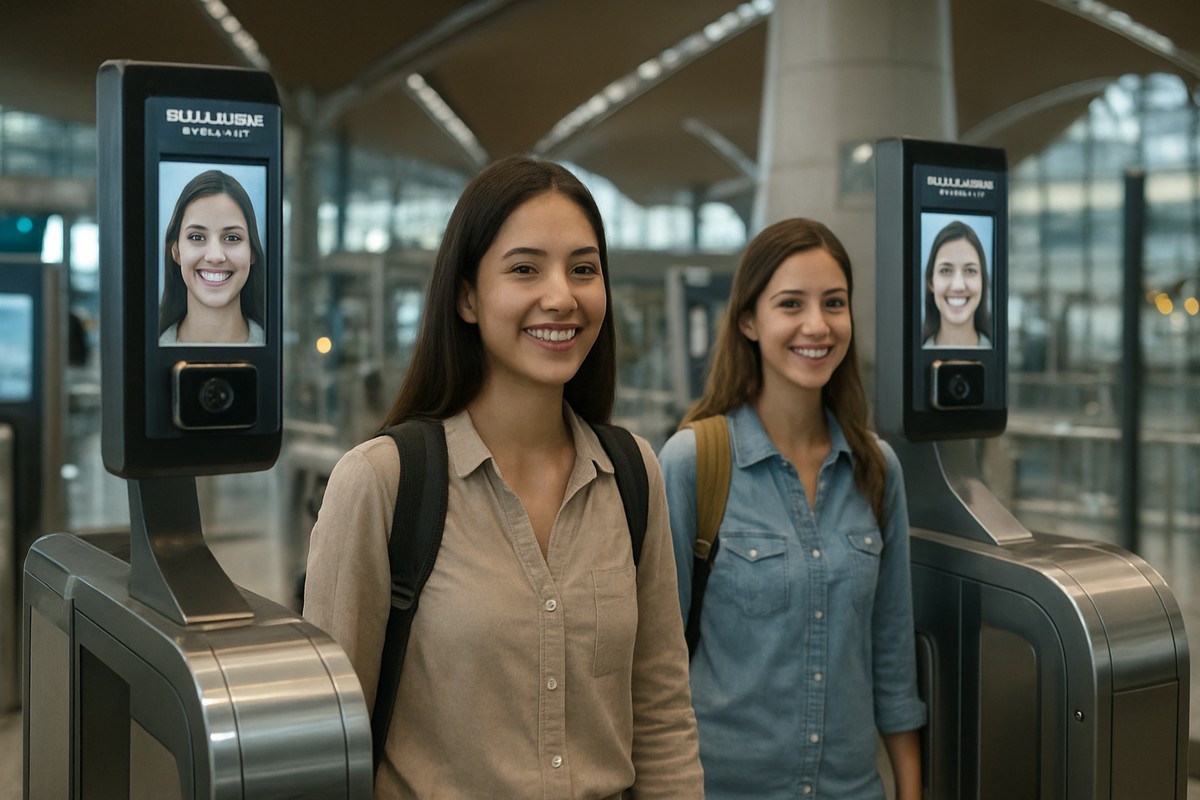
Image generated by AI
# Malaysia's MyNIISe Revolution: New Biometric Immigration System Promises 4-5 Second Airport Clearance from September 2026

## Historic $255 Million Investment Signals Region-Wide Transformation in Border Control Efficiency

Malaysia is poised to fundamentally reshape international travel standards this September with the nationwide rollout of MyNIISe, an unprecedented biometric immigration system designed to reduce airport clearance times to just four to five seconds per passenger. The ambitious initiative represents a dramatic departure from legacy infrastructure and signals Malaysia's commitment to establishing itself as the region's premier aviation and tourism hub.

## The MyNIISe Initiative: A Seismic Shift in Border Processing

Home Minister Saifuddin Nasution Ismail formally unveiled the comprehensive modernization plan following an official inspection at Kuala Lumpur International Airport (KLIA) on May 5, 2026. The MyNIISe (National Integrated Immigration System) represents nothing short of a complete reimagining of how international travelers interface with Malaysian border control—a transformation that industry analysts predict will reverberate across Southeast Asia and establish new global benchmarks for immigration efficiency.

The financial commitment underpinning this vision is staggering: approximately **1 billion Malaysian Ringgit (US$255 million)** has been allocated for full system deployment across all national entry points. Government economic strategists view this investment not as expenditure, but as critical infrastructure necessary to maintain Malaysia's competitive advantage in global tourism and business travel sectors.

"This represents a pivotal moment for our nation," Saifuddin emphasized during the inspection, highlighting how operational friction at borders directly correlates with repeat visitor rates and foreign exchange earnings.

## The MyIMMs Legacy: Two Decades of Dated Infrastructure

For the past 20 years, the Malaysian Immigration System (MyIMMs) has managed all border security and passenger processing operations. While the system served its purpose, technical auditors and travel industry observers have long criticized its antiquated architecture as fundamentally misaligned with 21st-century travel volumes and expectations.

The MyIMMs framework required a sequential, multi-step verification process:
1. Passenger passport scanning
2. Fingerprint biometric verification
3. Facial recognition scanning
4. Manual clearance authorization

This cumbersome protocol created notorious bottlenecks, particularly during peak travel windows—a source of international frustration and a drag on Malaysia's tourism brand perception.

## MyNIISe Technology: Facial Recognition Meets Dynamic QR Codes

The MyNIISe architecture represents a quantum leap in operational design. Rather than sequential processing, the new system enables **simultaneous, parallel verification** using three integrated data streams:

- **Facial Recognition Technology**: Real-time biometric matching against national and international databases
- **Dynamic QR Codes**: Travel documents pre-loaded onto mobile devices, scanned electronically at gates
- **Traditional Passport Integration**: Legacy document compatibility for continuity

By processing these multiple data points simultaneously through centralized servers rather than sequentially through physical checkpoint stations, the system achieves the remarkable four to five-second clearance window per passenger.

### Key Technological Advantages:

| Feature | MyIMMs (Legacy) | MyNIISe (New) |
|---------|-----------------|---------------|
| **Processing Model** | Sequential | Parallel/Simultaneous |
| **Average Clearance Time** | 30-45 seconds | 4-5 seconds |
| **Physical Agent Interaction** | Required | Minimized |
| **Document Format** | Passport only | Passport + Digital QR |
| **Biometric Methods** | Fingerprint + Facial | Facial + Dynamic QR |
| **Contactless Capability** | No | Yes |

## Border Security Enhancement: 200 New Personnel by Year-End 2026

Parallel to technological upgrades, Malaysia is executing an ambitious human capital expansion. The Malaysian Border Guards (MBG) are being integrated into the broader Border Control and Protection Agency (AKPS), with an aggressive recruitment target: **200 highly trained personnel by December 2026**.

### MBG-AKPS Expansion Timeline:

- **Phase 1 (Completed)**: 50 personnel successfully recruited and inducted
- **Phase 2 (Current)**: Additional 150 personnel recruitment underway
- **Primary Deployment Hubs**: Kuala Lumpur International Airport and Port Klang
- **Phase 3 (2027+)**: Potential integration of military veterans into border security force

The Home Ministry's phased recruitment approach demonstrates operational prudence—each intake will be rigorously evaluated for performance metrics before expansion protocols are widened. If 2027 recruitment targets include military veterans, Malaysia will establish what security experts regard as a "highly formidable defensive posture" by combining cutting-edge technology with seasoned tactical expertise.

## Global Tourism Impact: The Domino Effect Begins

Industry economists project transformative impacts across multiple sectors:

### Tourism Sector Implications:
- **Perception Enhancement**: Elimination of exhaustive waiting periods positions Malaysia as forward-thinking, welcoming destination
- **Passenger Volume Growth**: International delegates and vacationers anticipated to surge once full operationalization occurs
- **Repeat Visit Incentives**: Streamlined entry experience directly correlates with higher return-visit rates
- **Foreign Exchange Revenue**: Faster processing enables greater daily visitor throughput

### Aviation Sector Benefits:
- **Operational Cost Reduction**: Airlines eliminate expense of managing ground-side crowd congestion
- **Schedule Predictability**: Reduced clearance times enable more reliable turnaround scheduling
- **Passenger Satisfaction**: Border friction historically ranks among top sources of air travel complaints
- **Hub Competitiveness**: KLIA's competitive position strengthens versus regional alternatives (Singapore Changi, Bangkok Suvarnabhumi, Jakarta CGK)

### Public Health Considerations:
The contactless, digitized approach to biometric verification addresses hygiene standards prioritized by international health organizations—a particularly valued feature in the post-pandemic era of travel.

## Regional Domino Effect: Southeast Asian Modernization Cascade

Neighboring countries are monitoring Malaysia's MyNIISe deployment with acute strategic interest. Security analysts anticipate similar biometric immigration systems will be advanced across the broader Southeast Asian region—potentially including Thailand, Singapore, Indonesia, and Vietnam—as Malaysia's success becomes evident through operational metrics and tourism recovery statistics.

"The dual-pronged approach of implementing world-class technology alongside a highly disciplined security force is deeply admired by international observers," according to regional security strategists. If successful, MyNIISe could rewrite global standards for border control efficiency, attracting attention from developed nations seeking to modernize aging immigration infrastructure.

## Implementation Timeline and Operational Rollout

| Phase | Timeline | Scope | Primary Locations |
|-------|----------|-------|------------------|
| **Announcement & Planning** | May 2026 | System design finalization | KLIA Terminal |
| **Pilot Testing** | June-August 2026 | Limited passenger testing | Select entry gates |
| **Full National Rollout** | September 2026 | All airport terminals, seaports, land borders | KLIA, Port Klang, all designated entry points |
| **MBG Deployment** | Ongoing | 200 personnel integration | Key strategic hubs |
| **Veteran Integration** | 2027+ | Military veteran recruitment | TBD based on Phase 1-2 success |

## What Passengers Should Know: Preparation for September Transition

While MyNIISe promises dramatic efficiency gains, travelers should anticipate transition-period logistics:

- **Digital Document Requirements**: Pre-loading travel information onto mobile devices is highly recommended
- **QR Code Adoption**: Familiarity with dynamic QR scanning processes will expedite clearance
- **Biometric Enrollment**: Optional pre-enrollment in facial recognition database may accelerate processing
- **Peak Hour Volatility**: Initial rollout weeks may experience variable performance; plan accordingly
- **Legacy Passport Compatibility**: Traditional passports remain valid and integrated into system

## Economic Projections: Long-Term Competitiveness

Malaysian economic analysts project substantial medium-term returns on the $255 million MyNIISe investment:

- **Tourism Revenue Growth**: Conservative estimates suggest 15-25% increase in annual visitor throughput within 24 months of full operationalization
- **Business Travel Acceleration**: Elimination of border friction attracts corporate meetings, conferences, and business delegations
- **Aviation Hub Status**: KLIA's capacity to handle passenger volume surges without infrastructure constraints strengthens regional hub positioning
- **Technology Export Potential**: Demonstrated success of MyNIISe could create IP licensing opportunities with other nations seeking similar systems

## Conclusion: A Watershed Moment for Asian Aviation Infrastructure

Malaysia's MyNIISe initiative transcends routine immigration modernization—it represents a strategic inflection point in how Asia-Pacific aviation hubs address the collision between soaring travel demand and operational capacity constraints. By coupling biometric innovation with aggressive human capital expansion, Malaysia is constructing a border control model that balances technological sophistication with human oversight.

The September 2026 rollout will serve as a global case study. Success will validate the "simultaneous processing" paradigm and likely inspire comparable investments across developed and developing aviation markets alike. Failure or delays would dampen confidence in biometric-centric border management—raising questions about implementation timelines globally.

For travelers, the promise is straightforward: four to five seconds between arrival and immigration clearance represents the elimination of a historically frustrating touchpoint in international travel. For Malaysia's tourism and aviation sectors, MyNIISe represents competitive advantage crystallized into operational infrastructure.

The legacy of this initiative, stakeholders predict, will be remembered as the precise inflection point when Malaysia transitioned from a regionally competitive destination to a globally exemplary aviation and tourism hub.

## Key Takeaways

- **MyNIISe launch: September 2026** at all Malaysian entry points nationwide
- **Clearance target: 4-5 seconds per passenger** versus 30-45 seconds under legacy MyIMMs system
- **Investment: US$255 million (1 billion MYR)** allocated for full deployment
- **Technology stack**: Facial recognition, dynamic QR codes, integrated passport scanning processed in parallel
- **MBG expansion: 200 personnel target by year-end 2026** with strategic deployment at KLIA and Port Klang
- **2027 outlook**: Potential military veteran integration contingent on Phase 1-2 performance metrics
- **Regional implications**: Neighboring Southeast Asian nations anticipated to launch comparable biometric systems
- **Tourism impact**: Faster border clearance directly correlates with increased repeat visits and foreign exchange earnings
- **Contactless processing** addresses post-pandemic hygiene and public health priorities
- **Global competitive positioning**: Positions KLIA among world's most efficient international aviation hubs

---

## Related Travel Guides

* [Global Travel Price Surge: Fuel and Exchange Rates Impact 2026 Holidays](/global-travel-price-surge-airline-fuel-exchange-rates-2026)
* [Etihad Airways Boosts US Network with Chicago and Charlotte Flights](/etihad-airways-chicago-charlotte-flights-us-expansion-2026)
* [Airline Disruptions and Passenger Rights: What Travelers Must Know in 2026](/travel-disruptions-passenger-rights-guide-2026)
Disclaimer
This article is for informational and educational purposes only. It does not constitute legal, financial, or professional advice. While we strive to provide accurate and up-to-date information, travel policies, regulations, and conditions change rapidly. Always verify information with official sources before making travel decisions. Nomad Lawyer makes no representations about the accuracy, reliability, completeness, or suitability of the information provided. Readers should consult qualified professionals for advice specific to their circumstances. The views expressed in this article are those of the author and do not necessarily reflect the views of Nomad Lawyer.
Kunal K Choudhary
Co-Founder & Contributor
A passionate traveller and tech enthusiast. Kunal contributes to the vision and growth of Nomad Lawyer, bringing fresh perspectives and driving the community forward.
Learn more about our team →