
Ultra-Long-Haul Aviation Trends 2026: New York, London, and Tokyo Anchor 20-Hour Nonstop Flights
Airlines are leveraging record demand in New York, London, and Tokyo to test the commercial viability of 20-hour nonstop flights, balancing premium luxury against sustainability challenges.

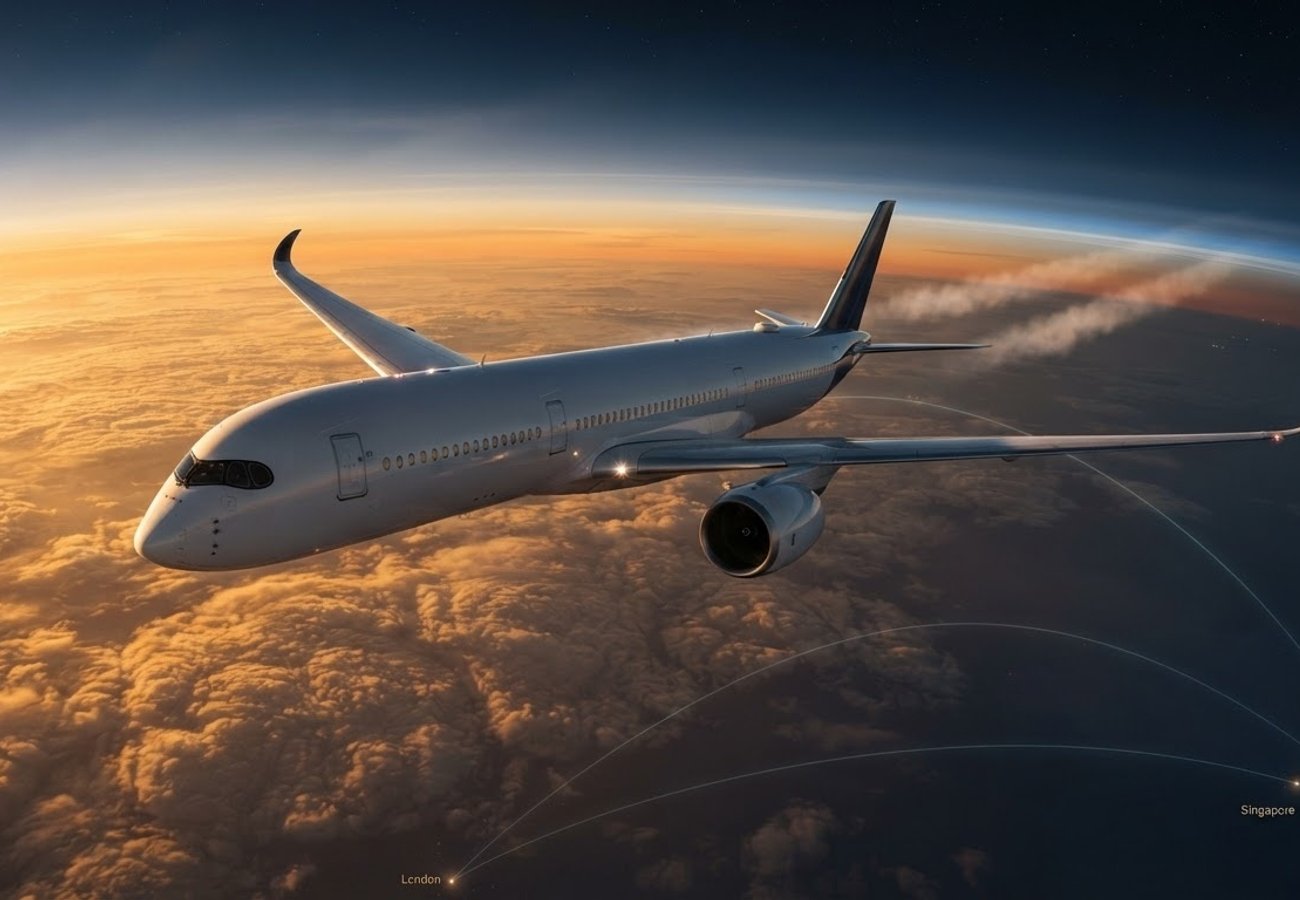
Image generated by AI
Record demand on New York, London, and Tokyo routes is pushing airlines toward flights exceeding 17 hours, despite rising operational costs and environmental scrutiny.
The global aviation map is being redrawn as the industry tests the limits of human endurance and aircraft engineering. New York, London, and Tokyo have emerged as the primary anchors for a new era of ultra-long-haul (ULH) travel. These cities are no longer just hubs; they are the experimental endpoints for flights that eliminate traditional stopovers in Singapore, Dubai, or Los Angeles.
The Shift Toward Nonstop Global Connectivity
Data from 2024 and 2025 confirms that international traffic is not only recovered but is setting new benchmarks. Premium cabins are outperforming the broader market, signaling a high willingness among affluent leisure and corporate travelers to pay a price premium for time saved.
The transatlantic corridor between New York and London remains one of the highest-yield routes globally. Simultaneously, Tokyo has solidified its position as the critical link between North America and Asia. For the modern traveler, the value proposition is simple: the elimination of connection risks and the reduction of total travel time, even if it means spending nearly a full day in a pressurized cabin.
Project Sunrise: The 20-Hour Frontier
The most ambitious leap in this sector is Qantas’s Project Sunrise. This initiative aims to connect Sydney nonstop with London and New York, with flight durations reaching approximately 20 hours. To make this feasible, the airline has commissioned a specialized fleet of Airbus A350-1000 ultra-long-range aircraft.
These aircraft are not standard wide-bodies. They feature:
- Reduced overall seat counts to lower weight.
- Expanded premium cabins for high-yield passengers.
- Dedicated onboard wellbeing zones designed to mitigate the physical strain of extreme flight durations.
While originally slated for earlier, commercial services for the Sydney–London and Sydney–New York nonstops are now targeted for 2027. This timeline reflects a strategic move to enter the market once supply chains stabilize and demand patterns for 20-hour sectors are fully understood.
The Human Cost: Fatigue and Cabin Innovation
The primary barrier to ULH adoption is not technical, but biological. Spending 17 to 20 hours in the air amplifies jet lag, deep vein thrombosis risks, and psychological fatigue. For the visitor, the real impact is the "recovery window"—the time required to become functional upon arrival.
To counter this, airlines are moving away from high-density seating in ULH configurations. We are seeing a shift toward:
- Increased Seat Pitch: More legroom in premium economy and business classes to reduce physical stiffness.
- Circadian Lighting: Advanced LED systems that mimic natural sunlight cycles to regulate melatonin production.
- Wellness Zones: Areas dedicated to light stretching and movement to prevent circulatory issues.
Despite these innovations, a significant portion of the market still prefers the "break" provided by Middle Eastern or East Asian hubs, suggesting that ULH will remain a complementary luxury service rather than a total replacement for connecting flights.
Sustainability and the Carbon Paradox
Ultra-long-haul flights present a paradox for the aviation industry. While the Airbus A350 and Boeing 787 families offer superior fuel efficiency over older models, the sheer distance of these routes requires massive fuel reserves. This increases the aircraft's take-off weight, which in turn increases emissions per flight.
Regional conservation bodies and aviation regulators are now aligning these routes with net-zero roadmaps. The viability of the New York–Tokyo–London triangle depends heavily on the scaling of Sustainable Aviation Fuel (SAF) and the implementation of carbon pricing. Without these, the environmental cost of skipping a stopover may become politically and financially untenable.
Visitor Insider Tips for Ultra-Long-Haul Travel
For those booking these extreme sectors, standard travel advice is insufficient. To survive a 17+ hour flight, consider these local and professional strategies:
- The Hydration Rule: Cabin humidity is notoriously low. Drink 250ml of water for every hour in the air, regardless of thirst.
- Strategic Fasting: Align your eating schedule with the destination's time zone the moment you board to accelerate circadian realignment.
- Movement Windows: Set a timer for every 3 hours to perform calf raises and shoulder rolls; the "wellbeing zones" on new A350s are essential for this.
- Off-Peak Booking: To avoid the highest premiums on these "prestige" routes, book during the shoulder seasons (May or October), when corporate demand dips but weather remains stable.
Tourism Outlook
The long-term trajectory for New York, London, and Tokyo is a diversified long-haul ecosystem. We expect a "two-tier" system to emerge: prestige nonstop services for the ultra-wealthy and corporate elite, and a robust network of efficient, sustainable connecting flights for the general public. As digital border controls and intermodal transport improve at these hubs, the friction of connecting will decrease, keeping the "hub-and-spoke" model relevant even in the age of the 20-hour flight.
The future of travel is no longer about how far we can fly, but how well we can recover once we land.
Related Travel Guides
Disclaimer
This article is for informational and educational purposes only. It does not constitute legal, financial, or professional advice. While we strive to provide accurate and up-to-date information, travel policies, regulations, and conditions change rapidly. Always verify information with official sources before making travel decisions. Nomad Lawyer makes no representations about the accuracy, reliability, completeness, or suitability of the information provided. Readers should consult qualified professionals for advice specific to their circumstances. The views expressed in this article are those of the author and do not necessarily reflect the views of Nomad Lawyer.
Raushan Kumar
Founder & Lead Developer
Full-stack developer with 11+ years of experience and a passionate traveller. Raushan built Nomad Lawyer from the ground up with a vision to create the best travel and law experience on the web.
Learn more about our team →