
UK Rail Disruption Alert 2026: West Midlands Freight Derailment Closes Wolverhampton–Shrewsbury Line
A major freight train derailment on the West Midlands rail corridor has forced the closure of the line between Wolverhampton and Shrewsbury, causing widespread passenger and cargo disruption.

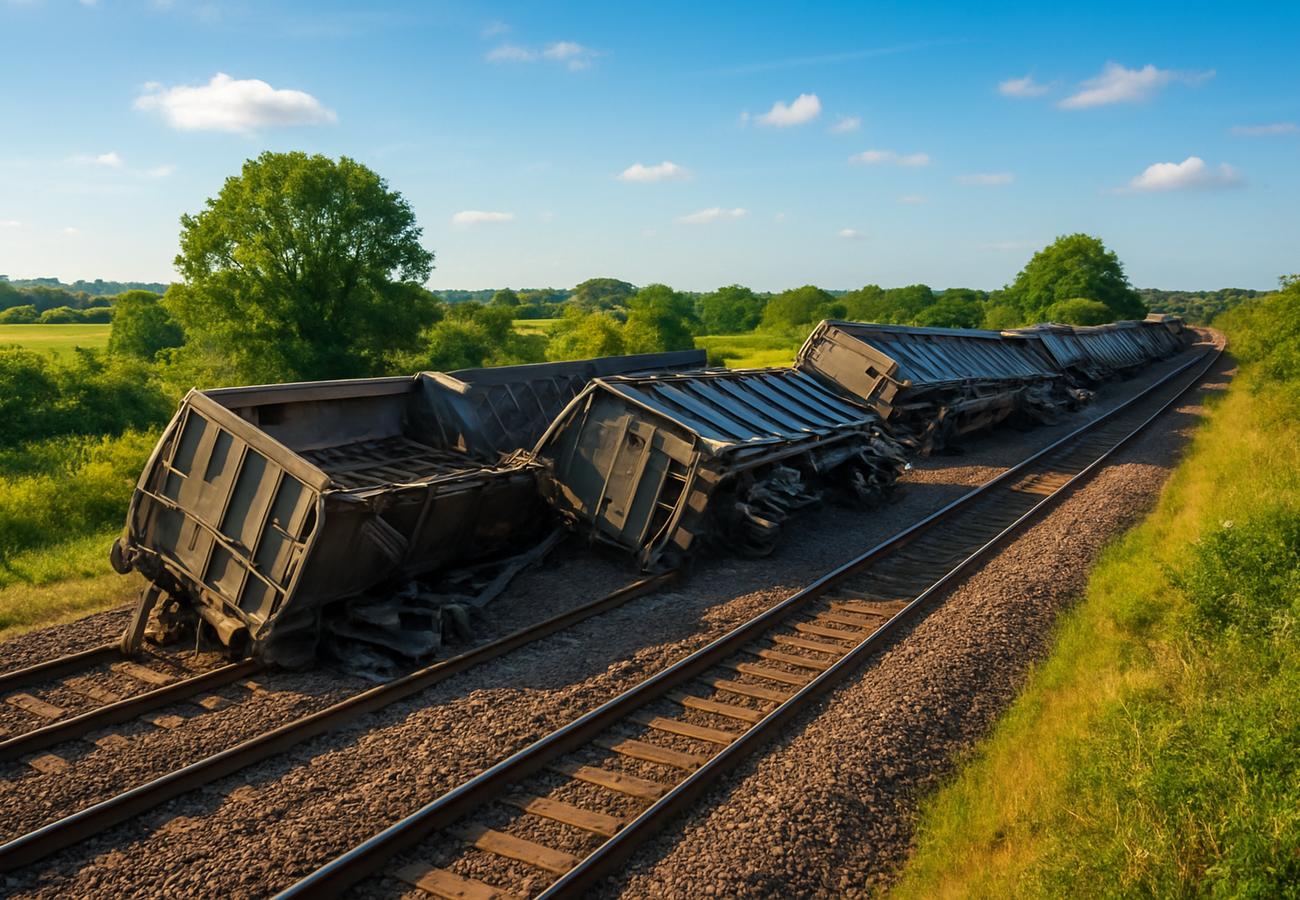
Image generated by AI
Quick Summary
- Incident Type: Major freight train derailment on the West Midlands rail corridor.
- Line Closure: Total suspension of services between Wolverhampton and Shrewsbury/Stafford.
- Incident Classification: Officially listed as a "Major Incident" by National Rail.
- Service Impact: Extensive cancellations, amended timetables, and emergency bus replacement services in operation.
- Safety Investigation: The Rail Accident Investigation Branch (RAIB) has launched an independent inquiry into the cause.
- Infrastructure Repair: Network Rail teams are conducting engineering assessments and repairing damaged track and signaling.
- Freight Disruption: Significant ripple effects on supply chains linking the West Midlands with northern and western destinations.
- Source: National Rail real-time status and RAIB notification as of May 7, 2026.
The United Kingdom’s rail network is currently experiencing significant operational turmoil following a major freight train derailment on the West Midlands rail corridor. Released on May 7, 2026, official status updates from National Rail have classified the event as a "major incident," forcing the complete closure of the line between Wolverhampton and Shrewsbury. The derailment has triggered extensive recovery operations by Network Rail, with all train services on the affected route suspended or replaced by emergency bus alternatives. As the Rail Accident Investigation Branch (RAIB) begins its statutory safety inquiry to identify the underlying causes, the ripple effects are propagating across the national timetable. The closure is impacting both high-frequency passenger travel and critical freight supply chains, highlighting the logistical challenges of restoring full service to one of the UK's most vital rail arteries.
UK Rail Disruption 2026: West Midlands Derailment Impact Summary
The following table summarizes the operational status and recovery roadmap for the affected West Midlands rail section.
| Category | Operational Status | Strategic Action |
|---|---|---|
| Incident Route | Wolverhampton to Shrewsbury | Line Closed (Both Directions) |
| Classification | Major Incident | RAIB Independent Investigation |
| Passenger Services | Suspended / Cancelled | Replacement Bus Service Implemented |
| Freight Movement | Rerouted / Delayed | Supply Chain Logistics Adjustment |
| Infrastructure | Track & Signaling Damage | Network Rail Recovery Operation |
| Recovery Timeline | TBC (Engineering Assessment) | Safety Testing Prior to Reopening |
| Travel Impact | Regional Ripple Effect | Timetable & Crew Roster Updates |
Major Incident: Freight Derailment Closes Wolverhampton–Shrewsbury Line
The derailment has effectively severed a primary artery in the UK rail network:
- Location Impact: The closure between Wolverhampton and Shrewsbury affects a critical corridor used for both local and long-distance movements.
- Network Integrity: Damage to the track bed and signaling infrastructure has made the section unsafe for any rail traffic.
- Service Prioritization: Freight trains are being held at preceding stations or rerouted, while passenger services are terminated early.
Service Status: Suspensions, Cancellations, and Replacement Bus Protocols
Airlines and train operating companies are adjusting to the major incident classification:
- Amended Timetables: Train operators across the West Midlands are issuing revised schedules to account for the blockage.
- Bus Replacements: Emergency road transport is being coordinated to shuttle passengers between Wolverhampton, Telford, and Shrewsbury.
- Real-Time Tracking: Travelers are urged to consult the National Rail service status platform for the most accurate departure and arrival times.
RAIB Investigation: Independent Safety Oversight and Cause Analysis
The Rail Accident Investigation Branch (RAIB) has taken jurisdiction over the incident site:
- Statutory Mandate: As a UK government agency, the RAIB investigates serious derailments to improve future safety without apportioning blame.
- Evidence Gathering: Investigators are analyzing black-box data, track conditions, and rolling stock maintenance records.
- Safety Recommendations: The inquiry will eventually produce safety recommendations to prevent similar infrastructure failures across the network.
Network Rail Recovery: Infrastructure Repairs and Engineering Assessments
Restoring the line involves a complex engineering process managed by Network Rail:
- Damage Assessment: Specialized teams are evaluating the extent of the impact on the rails, sleepers, and ballast.
- Repair Works: Heavy-duty cranes and engineering trains are required to remove the derailed wagons before track repairs can commence.
- Safety Testing: Once repairs are finished, the line must undergo rigorous safety testing and signaling checks before normal operations resume.
Freight Impact: Supply Chain Disruptions on the West Midlands Artery
The derailment has significant implications for the UK's logistics sector:
- Goods Movement: The West Midlands corridor is vital for moving goods between industrial hubs and northern ports.
- Logistical Delays: Rerouting freight trains adds significant time and cost to supply chains, impacting delivery schedules for retail and manufacturing.
- Rescheduling: Freight operators are working with Network Rail to identify alternative paths, though capacity is limited on adjacent lines.
Passenger Travel Ripple Effects: Timetable Adjustments and Crew Rostering
The closure's impact extends far beyond the physical site of the derailment:
- National Impact: Interconnected schedules mean that rolling stock and staff are out of position, causing knock-on delays across the UK.
- Crew Logistics: Staff rostering is being overhauled as crews are unable to complete their scheduled shifts on time.
- Commuter Stress: Peak-time travel for thousands of commuters in the West Midlands is being severely impacted by the reliance on road-based alternatives.
Alternative Arrangements: Navigating the Rail Corridor During Line Closure
Passengers are advised to plan for significantly longer journey times:
- Valid Tickets: Tickets for the affected route are generally being accepted on alternative rail routes and local bus services.
- Travel Planning: Use the National Rail journey planner to identify alternative connections via Stafford or Birmingham where possible.
- Accessibility: Passengers with reduced mobility are advised to contact their train operator to arrange assistance for the bus replacement services.
Conclusion: Restoring Reliability to the UK Rail Infrastructure
The May 7, 2026, rail alert confirms that the West Midlands derailment is a significant disruption requiring a multi-day recovery effort. By classifying the event as a "major incident," National Rail and Network Rail have signaled the complexity of the repairs needed on the Wolverhampton–Shrewsbury line. The involvement of the RAIB ensures that the incident will be investigated to the highest safety standards, while Network Rail’s engineering teams work under high-pressure conditions to restore the infrastructure. For travelers and freight customers, the focus remains on navigating the amended timetables and replacement services until full reliability can be restored to this vital section of the UK rail network.
FAQ: UK Rail Derailment May 2026
Which rail line is closed due to the derailment? The line between Wolverhampton and Shrewsbury is currently closed to all train services in both directions.
How can I travel between Wolverhampton and Shrewsbury? National Rail has implemented an emergency bus replacement service, though journey times will be significantly longer than by train.
What is the RAIB and why are they involved? The Rail Accident Investigation Branch (RAIB) is an independent UK government body that investigates serious rail incidents to improve future network safety.
Related UK Rail Safety Alerts
Disclaimer
This article is for informational and educational purposes only. It does not constitute legal, financial, or professional advice. While we strive to provide accurate and up-to-date information, travel policies, regulations, and conditions change rapidly. Always verify information with official sources before making travel decisions. Nomad Lawyer makes no representations about the accuracy, reliability, completeness, or suitability of the information provided. Readers should consult qualified professionals for advice specific to their circumstances. The views expressed in this article are those of the author and do not necessarily reflect the views of Nomad Lawyer.
Kunal K Choudhary
Co-Founder & Contributor
A passionate traveller and tech enthusiast. Kunal contributes to the vision and growth of Nomad Lawyer, bringing fresh perspectives and driving the community forward.
Learn more about our team →