
UK Health Warning: Why Sleeping Tablets During Long-Haul Flights Increase DVT and Respiratory Risks in 2026
UK travellers are warned against using sedative sleeping pills on flights due to increased risks of deep vein thrombosis (DVT) and respiratory depression in aircraft cabins.

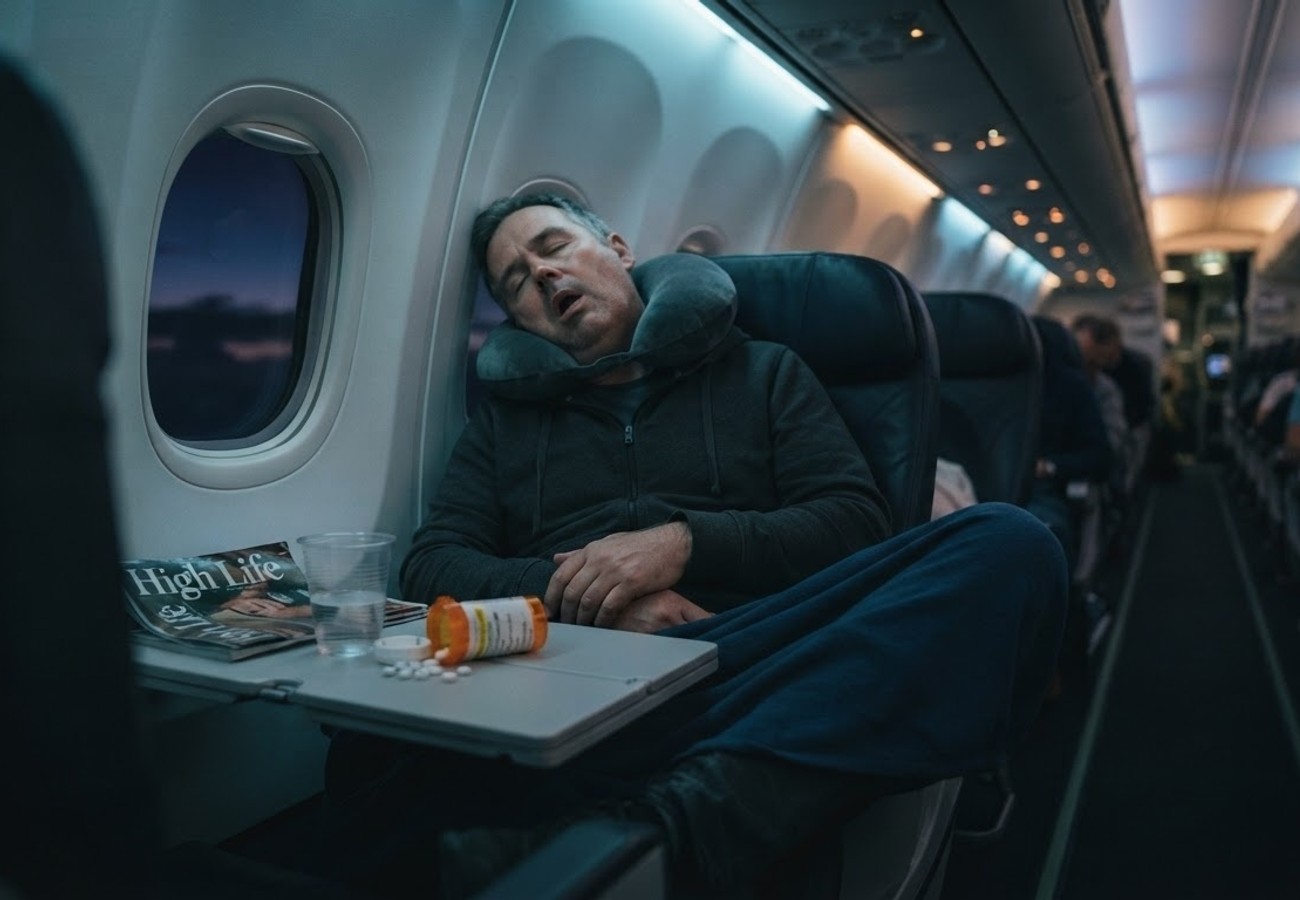
Image generated by AI
[London, August 31, 2026] — UK holidaymakers are being urged to avoid using sedative sleeping tablets before boarding flights, as medical experts warn these drugs can leave passengers vulnerable to severe health complications. With the final weeks of the summer travel season underway, pharmacists and health officials are highlighting a dangerous combination of prolonged immobility and reduced alertness associated with medication-induced sleep in aircraft cabins.
The warning centers on the physiological difference between natural sleep and chemically induced sedation. While many passengers use these aids to combat uncomfortable seating or overnight schedules, the resulting state of deep drowsiness can inhibit the natural movements necessary to maintain healthy circulation during long-duration flights.
Sedatives Impair Emergency Response and Awareness
The use of sleeping tablets often provides a perceived shortcut to arriving refreshed, but the reality is frequently different. According to UK NHS guidance, sedative medications can significantly diminish a passenger's coordination, concentration, and reaction time.
This lack of alertness becomes a critical safety concern in the event of an on-board emergency. While aviation incidents are rare, the ability to comprehend and execute cabin crew instructions rapidly is paramount. Passengers under the influence of strong sedatives may experience a delayed response to safety protocols, potentially compromising their own safety and that of others.
Immobilization and the Threat of Deep Vein Thrombosis
The most acute physical risk associated with flight sedatives is the increase in prolonged immobility. When a passenger is heavily sedated, they are less likely to shift positions or walk the cabin, which directly elevates the risk of Deep Vein Thrombosis (DVT).
DVT occurs when a blood clot forms in a deep vein, typically in the lower extremities. Because aircraft cabins restrict movement, the risk is already present; however, medication-induced sleep removes the instinctive urge to move.
To mitigate these risks, health officials recommend the following circulation-boosting actions:
- Regularly changing sitting positions to avoid pressure points.
- Walking through the cabin whenever safety conditions permit.
- Performing ankle rotations and flexing the feet to stimulate calf muscle activity.
Critical Risks on Flights Exceeding Four Hours
The danger of circulatory issues scales with the length of the journey. Medical guidelines indicate that flights lasting longer than four hours require heightened attention to blood flow. Passengers who remain motionless for several hours due to sedation are at a statistically higher risk of developing clots that could lead to a pulmonary embolism.
Industry observers note that those with a documented history of circulatory problems or previous DVT episodes must seek specialized medical consultation before using any sedatives for air travel.
Oxygen Levels and Respiratory Depression in Cabins
The environment inside a commercial aircraft is fundamentally different from sea level. Although cabins are pressurized, the effective oxygen pressure is lower than what is found on the ground.
This atmospheric change interacts dangerously with certain sedatives. NHS-linked clinical data suggests that some sleeping medications can cause mild respiratory depression. In a lower-oxygen environment, this effect can be amplified, leading to deeper drowsiness or breathing difficulties that would not occur in a ground-based setting. This makes "experimenting" with new medications immediately before a flight particularly hazardous.
The Fallacy of Using Sedatives for Jet Lag
Many travellers utilize sleeping pills to "force" their bodies into a new time zone, hoping to eliminate jet lag upon arrival. However, medical experts clarify that chemical sedation does not reset the body's internal circadian rhythm.
Jet lag is a biological misalignment between the internal clock and the destination's local time. Forcing sleep at an inappropriate hour can actually leave a traveller feeling more sluggish, confused, and fatigued upon landing. A more effective strategy involves gradual adjustment of sleep patterns and aligning rest with the destination's schedule before the flight even departs.
High-Risk Groups and Medication Interactions
The impact of sedatives is not uniform across all passengers. Certain demographics face heightened risks:
- Elderly Travellers: May experience more prolonged sedation and slower recovery times.
- Respiratory Patients: Those with existing lung or breathing conditions may suffer more from cabin-induced respiratory depression.
- Polypharmacy Users: Passengers already taking prescription medications may face dangerous drug interactions when adding over-the-counter or prescribed sleeping aids.
Medical professionals stress that while travel advice is important, passengers should never unilaterally stop or alter medication prescribed for a chronic condition without consulting their physician.
Non-Medicinal Strategies for In-Flight Rest
For those seeking better sleep without the risks of sedation, health experts suggest a combination of environmental controls and hydration:
- Light and Sound Blocking: Utilizing high-quality eye masks and noise-cancelling headphones to minimize cabin disruptions.
- Ergonomic Support: Using neck pillows and wearing loose, comfortable clothing to facilitate easier resting positions.
- Hydration Management: Drinking ample water and soft drinks while strictly limiting alcohol and caffeine, both of which can disrupt natural sleep cycles and exacerbate dehydration.
- Active Rest: Prioritizing periodic movement over the goal of sleeping for the entire duration of the journey.
The safest way to arrive energized is through natural sleep hygiene and active circulation, rather than chemical sedation.
Related Travel Guides
Disclaimer
This article is for informational and educational purposes only. It does not constitute legal, financial, or professional advice. While we strive to provide accurate and up-to-date information, travel policies, regulations, and conditions change rapidly. Always verify information with official sources before making travel decisions. Nomad Lawyer makes no representations about the accuracy, reliability, completeness, or suitability of the information provided. Readers should consult qualified professionals for advice specific to their circumstances. The views expressed in this article are those of the author and do not necessarily reflect the views of Nomad Lawyer.
Raushan Kumar
Founder & Lead Developer
Full-stack developer with 11+ years of experience and a passionate traveller. Raushan built Nomad Lawyer from the ground up with a vision to create the best travel and law experience on the web.
Learn more about our team →