
UK and China Travelers Fuel Australia’s Luxury Hotel Boom as Sydney Becomes a Premium Travel Powerhouse
UK and China Travelers Fuel Australia’s Luxury Hotel Boom as Sydney Becomes a Premium Travel Powerhouse

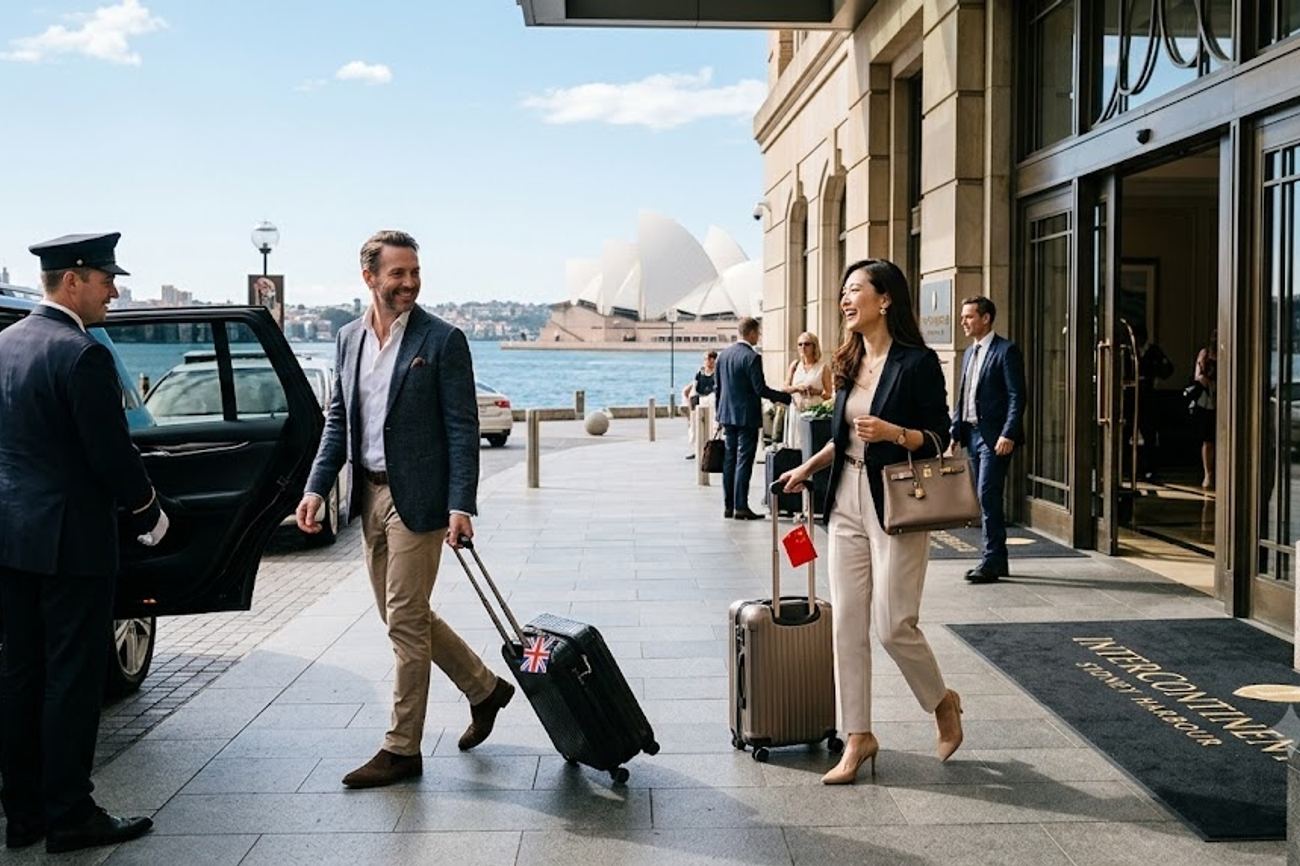
Image generated by AI
A 2.9 per cent compound annual growth rate in luxury hotel demand across Australia and New Zealand since 2019 signals a profound decoupling of the high-end hospitality sector from the broader travel market. While the general hotel industry grew by a modest 1.3 per cent during the same window, the premium segment expanded at more than double that pace, indicating that affluent travelers are not merely returning to pre-pandemic habits but are aggressively upgrading their spending patterns. This divergence suggests a structural shift in how global wealth is being deployed in the Asia-Pacific region, moving away from standard luxury toward hyper-personalized, experience-driven stays.
The Architecture of Australia's Premium Pivot
The surge in high-end hospitality is not an accidental byproduct of tourism recovery but a calculated response to changing consumer psychology. Since 2020, the region has integrated 20 new luxury properties totaling 3,517 rooms. In the Australian market specifically, luxury inventory accounted for roughly 33 per cent of all new hotel rooms delivered in that timeframe. This aggressive expansion is meeting a market where occupancy levels have remained remarkably resilient, hovering between 78 and 79 per cent despite the influx of new supply.
This growth is underpinned by a fundamental change in the "luxury" definition. The modern high-net-worth individual (HNWI) is moving beyond the desire for opulent linens and gold-plated fixtures. Instead, there is a documented pivot toward wellness integration, sustainable architecture, and deep cultural immersion. For the hospitality industry, this means the value proposition has shifted from the room itself to the curated experiences the hotel can facilitate—ranging from indigenous cultural tours to bespoke wellness retreats.
Sydney: The Epicenter of High-Yield Tourism
Within the national context, Sydney has established itself as the primary engine for luxury revenue. The city's performance metrics reveal a market with immense pricing power. Luxury hotels in Sydney are currently commanding an average daily rate (ADR) of approximately A$450. When paired with a robust occupancy rate of 85 per cent, this results in a Revenue Per Available Room (RevPAR) of A$384.
These figures are not merely reflections of demand but are bolstered by a strategic scarcity of supply. The barriers to entry for luxury developments—including exorbitant land costs in the CBD and rigorous construction standards—have created a bottleneck. This limited supply allows existing operators to maintain high pricing floors even as global economic volatility impacts other travel segments.
The following table outlines the current performance benchmarks for Sydney's luxury sector:
The surge in luxury hotel demand is closely tied to the recovery of high-yield international arrivals, particularly from the UK and China. According to Tourism Australia, these markets are driving a shift toward premium experiences and extended stays in major urban hubs.
| Metric | Value |
|---|---|
| Average Daily Rate (ADR) | A$450 |
| Occupancy Rate | 85% |
| Revenue Per Available Room (RevPAR) | A$384 |
| Luxury Share of New Rooms (National) | 33% |
Expert Analysis: The Geopolitical Wealth Transfer
The current trajectory of the Australian luxury market is being dictated by three specific geopolitical corridors: China, the United Kingdom, and the United States. These three markets collectively represent 41 per cent of Australia's total international visitor expenditure.
The data regarding Chinese spending is particularly telling. For the year ending March 2026, Chinese visitors are projected to generate A$13.7 billion in expenditure. When compared to the A$5.5 billion from the UK and A$4.6 billion from the US, it becomes clear that the Chinese market is the primary driver of volume and value. For travelers booking these routes, the direct consequence is a "luxury squeeze." As high-spending cohorts from these nations compete for a limited number of five-star rooms in Sydney, prices will likely continue to climb, pricing out the "aspirational" luxury traveler.
Furthermore, we are witnessing a generational handover of spending power. Generation Z is forecast to increase its per-person luxury spending by 28 per cent between 2024 and 2030. This is a critical inflection point for Tourism Australia and hotel operators. Gen Z does not value traditional markers of status; they value authenticity and sustainability. The pricing pressure this creates means hotels must invest in "invisible luxury"—high-tech, seamless service and ethical sourcing—rather than just aesthetic opulence.
The global context further validates this trend. The global luxury travel market is expected to balloon from US$190 billion in 2026 to US$417 billion by 2034. Australia is positioning itself to capture a significant slice of this US$227 billion increase by leveraging its natural assets—vineyards, reefs, and outback excursions—and bundling them with high-end urban stays. This strategy transforms the hotel from a place of sleep into a logistics hub for high-value experiences.
Key Takeaways
- Market Divergence: Luxury hotel demand (2.9% CAGR) is growing more than twice as fast as the general hotel market (1.3% CAGR) since 2019.
- Dominant Spending Blocks: China remains the top spender at A$13.7 billion (year ending March 2026), followed by the UK (A$5.5 billion) and the US (A$4.6 billion).
- Sydney's Pricing Power: High demand and limited supply have pushed Sydney's luxury ADR to A$450 with an 85% occupancy rate.
- Gen Z Influence: A projected 28% increase in per-person luxury spending by Gen Z (2024-2030) is forcing a shift toward wellness and sustainable travel.
- Inventory Growth: 3,517 luxury rooms were added across Australia and New Zealand since 2020, with luxury making up one-third of all new Australian hotel rooms.
FAQ: Australia Luxury Travel 2026
Why are luxury hotel prices increasing in Sydney? Prices are rising due to a combination of limited new supply and a surge in high-spending visitors from China, the UK, and the US. High occupancy rates (85%) allow hotels to maintain an average daily rate of A$450.
Sydney's capacity to absorb this growth is supported by streamlined passenger logistics at the city's primary gateway. Travelers arriving via Sydney Airport benefit from enhanced infrastructure designed to facilitate the seamless transition of luxury tourists into the city's high-end hotel district.
What are "Gen Z" luxury travelers looking for in Australia? Unlike previous generations, Gen Z prioritizes authentic local culture, sustainable practices, and wellness-oriented experiences over traditional opulence. They are expected to increase their luxury spending by 28% by 2030.
Which countries spend the most on Australian luxury tourism? China is the highest spender, contributing A$13.7 billion (ending March 2026). The United Kingdom and the United States follow, contributing A$5.5 billion and A$4.6 billion respectively.
Is the luxury hotel market growing faster than standard hotels? Yes. Since 2019, luxury demand has grown at a 2.9% compound annual growth rate, significantly outpacing the wider hotel market's growth of 1.3%.
The era of the generic five-star hotel is over; the future belongs to the curated, high-yield experience.
Related Travel Guides
- GRT Hotels Launches The Great Indian Tourism Quiz to Celebrate India’s Heritage, Culture and Travel Stories
- India Hospitality Sector Enters a Transformative Phase as HAI Conclave Reveals Future Strategies for Sustainable Tourism Growth by 2047
- Singapore Welcomes New Four Seasons Premier Suite Designed for Multigenerational Luxury Stays
Disclaimer
This article is for informational and educational purposes only. It does not constitute legal, financial, or professional advice. While we strive to provide accurate and up-to-date information, travel policies, regulations, and conditions change rapidly. Always verify information with official sources before making travel decisions. Nomad Lawyer makes no representations about the accuracy, reliability, completeness, or suitability of the information provided. Readers should consult qualified professionals for advice specific to their circumstances. The views expressed in this article are those of the author and do not necessarily reflect the views of Nomad Lawyer.
Kunal K Choudhary
Co-Founder & Contributor
A passionate traveller and tech enthusiast. Kunal contributes to the vision and growth of Nomad Lawyer, bringing fresh perspectives and driving the community forward.
Learn more about our team →