
UK Airport Chaos: 734 Flights Delayed, 21 Canceled Across Heathrow, Gatwick, Manchester
Massive disruptions hit UK's three busiest airports May 30, 2026. Heathrow, Gatwick, and Manchester airports experienced 734 delays and 21 cancellations affecting British Airways, Virgin Atlantic, easyJet, Ryanair and international routes.

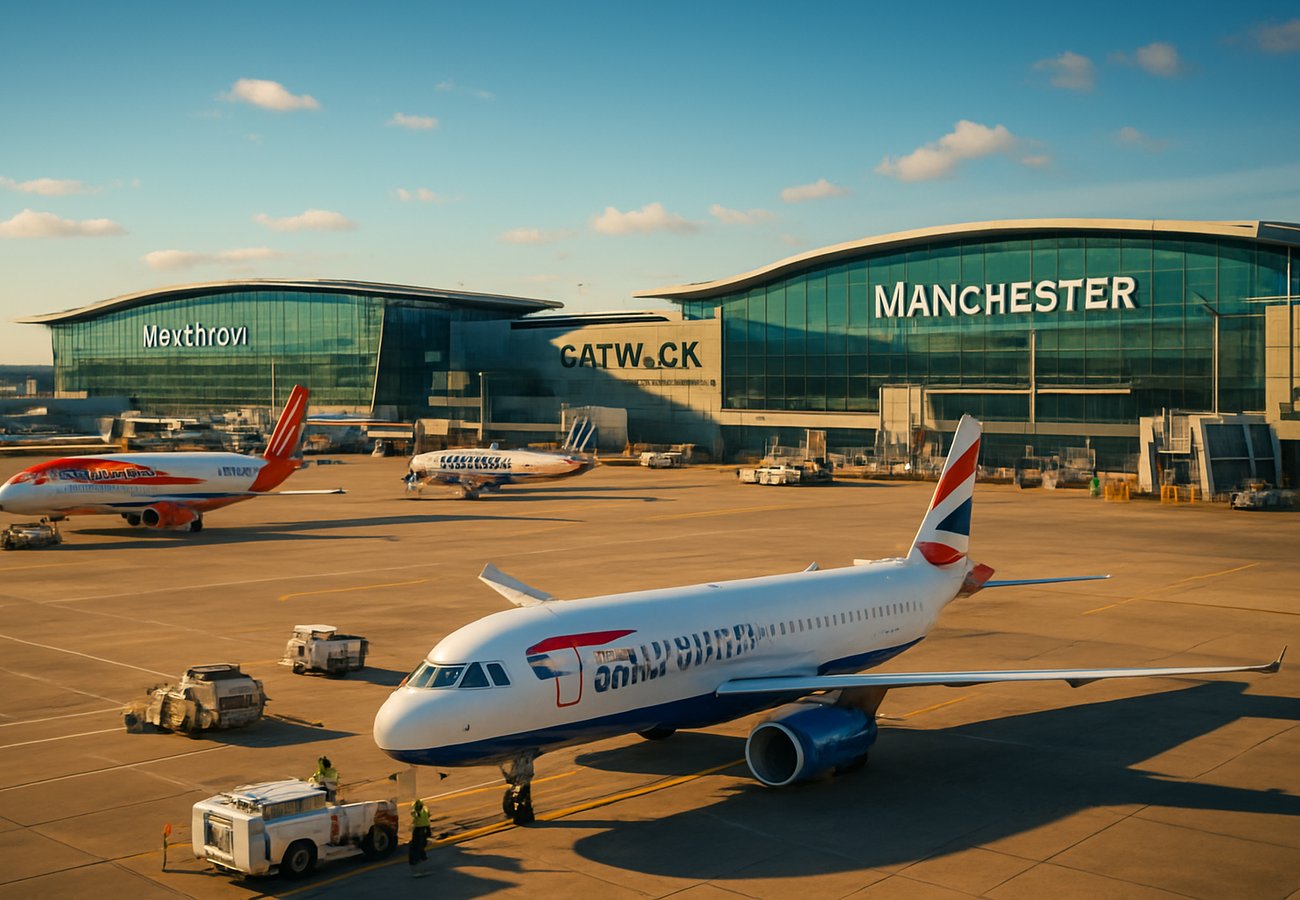
Image generated by AI
May 30, 2026 marked a day of chaos across the United Kingdom's aviation network. Thousands of travelers found themselves stranded, rerouted, or indefinitely delayed as three of Britain's most critical aviation hubs descended into operational gridlock.
The numbers tell the story: 734 total flight delays and 21 cancellations across London Heathrow, London Gatwick, and Manchester Airport. For passengers holding tickets with British Airways, Virgin Atlantic, easyJet, Ryanair, and dozens of other carriers, the day became a masterclass in airport frustration.
The Full Scale of Disruption
London Heathrow, the world's sixth-busiest international gateway, absorbed the most severe impact with 315 delays and 18 cancellations. The airport's status as a critical transatlantic and Asia-Europe hub meant that disruptions rippled far beyond departures to New York and Dubai—they cascaded across the entire global network.
London Gatwick recorded 226 delayed flights and one cancellation. Meanwhile, Manchester Airport reported 193 delays and two cancellations.
The geographic reach was staggering. Passengers scheduled for flights to New York, Dubai, Singapore, Amsterdam, Paris, and Frankfurt found themselves caught in a domino effect of schedule changes, gate reassignments, and uncertain departure times.
Why Major Airports Fail Under Pressure
Aviation operations at large hubs operate like a choreographed dance. Each aircraft performs multiple flights per day. A delay on the 7 a.m. departure doesn't just inconvenience that flight's passengers—it cascades through the entire day's schedule as aircraft arrive late to their next gates.
Factors contributing to such widespread disruptions typically include:
- Air traffic congestion from peak-hour operations
- Aircraft rotation bottlenecks (planes arriving late, preventing on-time departures)
- Staffing limitations across ground crews, flight crews, or air traffic control
- Weather-related incidents affecting visibility or runway usage
- Network-wide disruptions originating upstream at connecting airports
Reddit: "Spent 8 hours at Heathrow waiting for answers. No one from the airline was giving updates. Just watching the departure board flip between delayed and delayed." — r/travel
Your Legal Rights as a Disrupted Passenger
This is where law intersects with travel reality. The UK Civil Aviation Authority (CAA) maintains strict regulations protecting passenger rights during disruptions, codified under UK261 regulations.
Under these rules, you may be entitled to:
Care and Support — If your flight is delayed beyond 3 hours, the airline must provide meals, refreshments, hotel accommodation (if an overnight stay is necessary), and communication access. Check the UK Civil Aviation Authority's passenger rights guidance for full details.
Compensation Claims — Depending on the disruption's cause and duration, you may qualify for compensation up to £520 per passenger (roughly €600). However, compensation is not automatic—airlines can invoke "extraordinary circumstances" exemptions for weather or air traffic control strikes.
Reimbursement or Rerouting — Airlines must either refund your ticket or rebook you on the next available flight to your destination, at no additional cost.
The critical detail many travelers miss: you must retain all receipts for meals, accommodation, and communication expenses incurred during the disruption. The airline will not reimburse undocumented costs.
Gatwick and Manchester: Secondary Casualties
While Heathrow bore the brunt, Gatwick and Manchester's disruptions were no minor inconvenience. 226 delayed flights at Gatwick meant hundreds of passengers missed connecting services to mainland Europe. 193 delays at Manchester disrupted regional and international traffic from the UK's northern hub.
These secondary airports serve as crucial domestic and European distribution points. When they falter, the impact spreads through smaller regional airports and connecting services across the continent.
The Modern Aviation Interconnection Problem
Here's what few passengers understand: today's aviation network operates with razor-thin scheduling margins. Airlines deliberately book tight connections to maximize aircraft utilization and reduce operational costs. This efficiency model works flawlessly 99% of the time.
But when a single major airport experiences disruptions, the interconnected system becomes a liability rather than an asset. A delay at Heathrow immediately affects aircraft scheduled for departures to Paris, Amsterdam, and Frankfurt. Those delayed aircraft then cascade their own disruptions to subsequent flights.
The airline industry has invested heavily in operational technology and data systems to minimize these ripple effects, but human factors and infrastructure limitations remain stubbornly resistant to optimization.
Passenger Demand Continues Testing Airport Capacity
The disruptions occurred during a period of sustained high passenger demand. UK airports continue experiencing elevated traveler volumes, particularly during May—a traditional peak travel month combining spring holidays and early summer leisure travel.
The UK Civil Aviation Authority and the UK government's Air Passenger Travel Guide both emphasize that airports operating at or beyond capacity are more vulnerable to cascading failures. When one system fails—say, a ground service delay or air traffic congestion—the entire operation becomes susceptible to breakdown.
What to Do If You're Caught in Future Disruptions
Don't simply accept delays. Take action:
- Document everything — Photos of departure boards, timestamps, receipts for all expenses
- Contact your airline immediately — Request the airline's delay claim reference number
- Retain receipts for meals, accommodation, and calls — Ensure you can substantiate reimbursement claims
- Review your passenger rights — Check whether your flight qualifies for compensation under UK261
- Monitor airline communications — Airlines are obligated to provide updates; don't wait passively at the gate
The Human Cost Beyond Statistics
Behind the 734 delay figure are real people. Missed family reunions. Cancelled business meetings. Spoiled holidays. For passengers with connections, the impact often extended well beyond the initial delay—missed onward flights meant rebooking through multiple airports, sometimes requiring unplanned hotel stays.
The operational recovery at Heathrow, Gatwick, and Manchester occurred gradually throughout May 30th and into May 31st. Airline staff worked to restore normal scheduling, but the damage to passenger schedules had already been inflicted.
Industry Recovery and the Road Ahead
UK airport operators and airlines will be analyzing this disruption for weeks. The incident highlights the tension between operational efficiency (tight schedules, maximized capacity) and operational resilience (slack capacity that allows recovery from disruptions).
For passengers scheduled to travel through these airports in coming weeks, the advice remains consistent: arrive earlier than usual, check flight statuses before leaving home, and have contingency plans ready. The UK's aviation system is fundamentally sound, but disruption risk remains elevated during peak demand periods.
This disruption serves as a timely reminder: in modern air travel, chaos is just one delay away.
Related Travel Guides
Escaping the Crowds: 8 Completely Unspoiled Small Towns Hidden in California's Sierra Nevada
Emirates' Boeing 777X Promises New Cabin Innovations as Airline Transitions Away from A380 Giant
Disclaimer
This article is for informational and educational purposes only. It does not constitute legal, financial, or professional advice. While we strive to provide accurate and up-to-date information, travel policies, regulations, and conditions change rapidly. Always verify information with official sources before making travel decisions. Nomad Lawyer makes no representations about the accuracy, reliability, completeness, or suitability of the information provided. Readers should consult qualified professionals for advice specific to their circumstances. The views expressed in this article are those of the author and do not necessarily reflect the views of Nomad Lawyer.
Raushan Kumar
Founder & Lead Developer
Full-stack developer with 11+ years of experience and a passionate traveller. Raushan built Nomad Lawyer from the ground up with a vision to create the best travel and law experience on the web.
Learn more about our team →