
Travel Chaos Hits UAE: Dubai and Abu Dhabi Flights Grounded Amid Tensions
UAE airports face mass flight cancellations in March 2026 as regional tensions disrupt operations at DXB and AUH, stranding thousands of passengers across major routes.

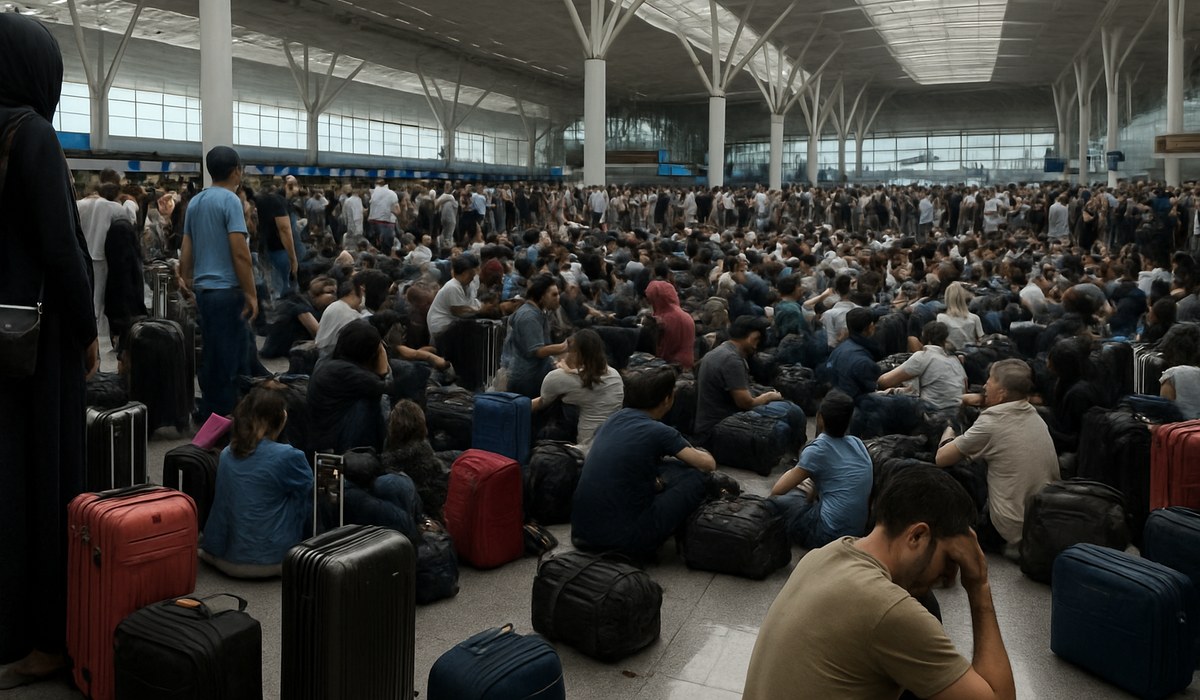
Image generated by AI
**> Quick Summary
• Dubai International (DXB) and Abu Dhabi International (AUH) airports have suspended or delayed hundreds of flights beginning March 29, 2026 • Regional security concerns have triggered airspace restrictions affecting Emirates, Etihad, flydubai, and Air Arabia operations • Passengers face rebooking challenges as carriers implement irregular operations protocols across Gulf aviation hubs • Alternative routing through European and Asian hubs provides limited relief for stranded travelers**
What's Happening at UAE Airports Right Now
The United Arab Emirates' aviation infrastructure—responsible for processing over 120 million passengers annually—has entered crisis mode. Dubai International and Abu Dhabi International, two of the world's busiest crossroads linking Europe, Asia, and Africa, began implementing widespread flight suspensions early Saturday morning local time. Security advisories issued to carriers operating in the Gulf region have forced airlines to ground aircraft, reroute scheduled services, and leave thousands of connecting passengers stranded in terminals.
According to FlightAware's live delay statistics, approximately 340 departures from DXB faced cancellations or delays exceeding three hours within the first twelve hours of disruptions. AUH reported similar patterns, with 180 affected flights primarily on long-haul routes to European capitals and Southeast Asian destinations. The disruptions mirror similar disruptions through Doha that unfolded earlier this month, establishing a pattern of volatility across Gulf aviation hubs.
Airport authorities have activated contingency protocols typically reserved for severe weather events, though the current crisis stems from airspace management decisions rather than meteorological factors. Terminal operators expanded rest areas and distributed meal vouchers while ground handlers scrambled to accommodate aircraft diversions from nearby airspace.
Real-time monitoring reveals that departure boards at both airports now display "Check with Airline" advisories for approximately one-third of scheduled Saturday operations. Passengers report confusion over rebooking procedures, with airline customer service queues stretching across terminal concourses. Social media channels overflow with traveler accounts of missed connections and cancelled business meetings across three continents.
Which Routes and Airlines Are Most Affected
Emirates, the Dubai-based carrier operating nearly 250 daily flights from its DXB hub, has suspended services on 47 routes as of Saturday afternoon Gulf Standard Time. The airline's flagship London Heathrow, Sydney, and Mumbai connections face the heaviest impact, with multiple daily frequencies cancelled through the weekend. Premium cabin passengers on canceled A380 services to Bangkok and Singapore now compete for limited Business Class inventory on rescheduled flights.
Etihad Airways has grounded 28 departures from its Abu Dhabi hub, prioritizing long-haul intercontinental routes over regional services. The carrier's morning bank of European departures—including services to Paris Charles de Gaulle, Frankfurt, and Rome Fiumicino—remained on the tarmac past scheduled departure windows. North American routes to New York JFK and Washington Dulles experienced delays exceeding five hours before eventual cancellations.
Low-cost carriers flydubai and Air Arabia, which collectively operate over 1,800 weekly frequencies across the Middle East, North Africa, and South Asia, have suspended approximately 60 regional services. Short-haul routes to Beirut, Cairo, Karachi, and Tehran face disproportionate disruption, affecting business travelers and migrant worker populations dependent on budget connectivity.
International carriers utilizing UAE airports as connection points have implemented proactive diversions. British Airways rerouted three London-Dubai-Australia services through Singapore, while Qantas adjusted its Kangaroo Route to bypass the Gulf entirely. According to FlightRadar24's regional traffic patterns, airspace north and east of the UAE shows reduced density, with aircraft maintaining wider separation buffers than normal operational parameters require.
Transit passengers holding tickets on affected services face compounded difficulties. A family traveling from Manchester to Colombo via Dubai discovered their connection had evaporated, with the next available Emirates flight departing 72 hours later. Similar scenarios unfold across departure gates, where gate agents process rebooking requests against severely constrained inventory.
Passenger Rights and Rebooking Options During Disruptions
Travelers caught in UAE airport chaos possess specific protections under international aviation agreements, though enforcement complexity increases when disruptions stem from extraordinary circumstances beyond carrier control. Under IATA guidelines for irregular operations, airlines must provide alternative transportation or full refunds when they cancel flights, regardless of causation.
Emirates and Etihad have waived rebooking fees for passengers holding tickets dated March 28-31, allowing one free schedule change within seven days of the original departure. However, fare differences apply when switching to higher booking classes—a significant cost for economy passengers seeking earlier departures on fully booked flights. Both carriers activated expanded call center staffing, though wait times reportedly exceed three hours during peak European morning hours.
Passengers departing from European Union member states or flying EU carriers benefit from EC 261/2004 compensation regulations. These rules mandate €600 compensation for cancelled long-haul flights unless airlines demonstrate extraordinary circumstances exemption. Legal experts debate whether regional security restrictions qualify as extraordinary, potentially exposing carriers to significant liability claims from thousands of affected EU-origin passengers.
Travel insurance policies covering trip disruption may reimburse accommodation and meal expenses during extended delays. Passengers should photograph receipts for hotel bookings, restaurant meals, and ground transportation. Most comprehensive travel insurance plans include coverage caps between $500-2,000 per person for delay-related expenses, though policy language varies significantly between providers.
Credit card travel protections offer an additional safety net. Premium cards from major issuers typically include trip delay reimbursement when delays exceed six or twelve hours, covering reasonable expenses until the passenger reaches their destination. Cardholders should contact their issuer's benefits administrator while still at the airport to initiate claims documentation.
Airlines cannot legally abandon passengers without providing reasonable care. Carriers must offer meal vouchers after delays exceeding three hours and hotel accommodation when overnight delays occur. Passengers should insist on written confirmation of rebooking arrangements and retain all boarding passes, baggage tags, and airline communications as documentation for potential compensation claims.
Alternative Routes and Hubs to Consider
Stranded passengers seeking workarounds face limited but viable alternatives. Turkish Airlines' Istanbul hub provides European-Asian connectivity without Gulf airspace dependency. The carrier operates over 350 destinations and maintains available inventory on routes bypassing affected regions. Saturday availability checks revealed seats to Bangkok, Kuala Lumpur, and Singapore via IST, though fares exceeded original UAE-connection tickets by 40-70%.
Qatar Airways continues operations from Doha's Hamad International Airport with selective schedule adjustments. The carrier's morning departures to London, Paris, and Asian gateways show green status on departure boards, offering rescue options for travelers willing to reposition to DOH via available short-haul connections. However, Doha's recent operational challenges mean passengers should verify flight status hourly.
Vietnam Airlines' expanding regional routes through Hanoi and Ho Chi Minh City offer Southeast Asia connectivity bypassing Middle Eastern hubs entirely. The carrier's partnerships with European airlines provide through-ticketing options, though journey times increase substantially when routing via Indochina.
European hub airports—particularly Frankfurt, Amsterdam, and London Heathrow—maintain robust Asian connectivity independent of Gulf carriers. Lufthansa, KLM, and British Airways operate direct services to major Asian business centers with seats available at premium pricing. Passengers should expect fare premiums of 50-100% compared to Gulf carrier baseline rates, reflecting supply-demand imbalances during crisis periods.
African travelers face particularly acute challenges. Emirates and Etihad dominate Europe-Africa connectivity through their Gulf hubs, with few direct alternatives available. Ethiopian Airlines via Addis Ababa represents the primary non-Gulf option, though capacity constraints limit availability. Passengers traveling to East African destinations should investigate Kenya Airways routings through Nairobi, which remain operationally unaffected.
The disruptions contribute to broader March 2026 travel disruption trends affecting global mobility patterns. Industry analysts note increasing volatility across traditional aviation corridors, recommending travelers build schedule flexibility into international itineraries and maintain comprehensive trip protection coverage.
FAQ: UAE Flight Disruptions
How long will flight cancellations continue at Dubai and Abu Dhabi airports?
Airlines have not announced specific resumption timelines. Current notices indicate irregular operations through at least March 31, with daily schedule assessments based on evolving regional conditions. Passengers holding tickets for travel within the next 72 hours should contact carriers directly before proceeding to airports.
Can I get a full refund if my UAE flight was cancelled?
Yes. International aviation rules require airlines to offer refunds when they cancel flights, regardless of whether disruptions qualify as extraordinary circumstances. Passengers may choose between refunds or rebooking without fees, though availability on alternative flights remains severely constrained.
What expenses will airlines cover during extended delays?
Carriers must provide meals after three-hour delays and hotel accommodation when overnight delays occur. Keep all receipts—most airlines reimburse reasonable expenses even when delays stem from factors beyond their control. Submit claims through airline customer service within 30 days of disruption.
Should I travel to Dubai or Abu Dhabi for a flight departing tomorrow?
Check your flight status multiple times before departing for the airport. Airlines continue updating schedules hourly as conditions evolve. If your flight shows confirmed status within six hours of departure, proceed to the airport with extra time for potential processing delays.
Are connecting flights through UAE airports safe to book right now?
Exercise extreme caution. Current conditions create high cancellation risk for connections through DXB and AUH. Consider alternative routing through European or Asian hubs, or delay non-essential travel until operational stability returns to Gulf aviation infrastructure.
Related Articles:
Disclaimer
This article is for informational and educational purposes only. It does not constitute legal, financial, or professional advice. While we strive to provide accurate and up-to-date information, travel policies, regulations, and conditions change rapidly. Always verify information with official sources before making travel decisions. Nomad Lawyer makes no representations about the accuracy, reliability, completeness, or suitability of the information provided. Readers should consult qualified professionals for advice specific to their circumstances. The views expressed in this article are those of the author and do not necessarily reflect the views of Nomad Lawyer.
Raushan Kumar
Founder & Lead Developer
Full-stack developer with 11+ years of experience and a passionate traveller. Raushan built Nomad Lawyer from the ground up with a vision to create the best travel and law experience on the web.
Learn more about our team →