
UAE Fast-Track Visit Visas for AI, Events, Entertainment & Cruises: Dubai Processing Under 48 Hours
The UAE's Federal Authority for Identity introduces specialized fast-track visit visas for AI projects, entertainment, events, and cruise tourism, with Dubai processing times dropping below 48 hours via AI-powered platforms.

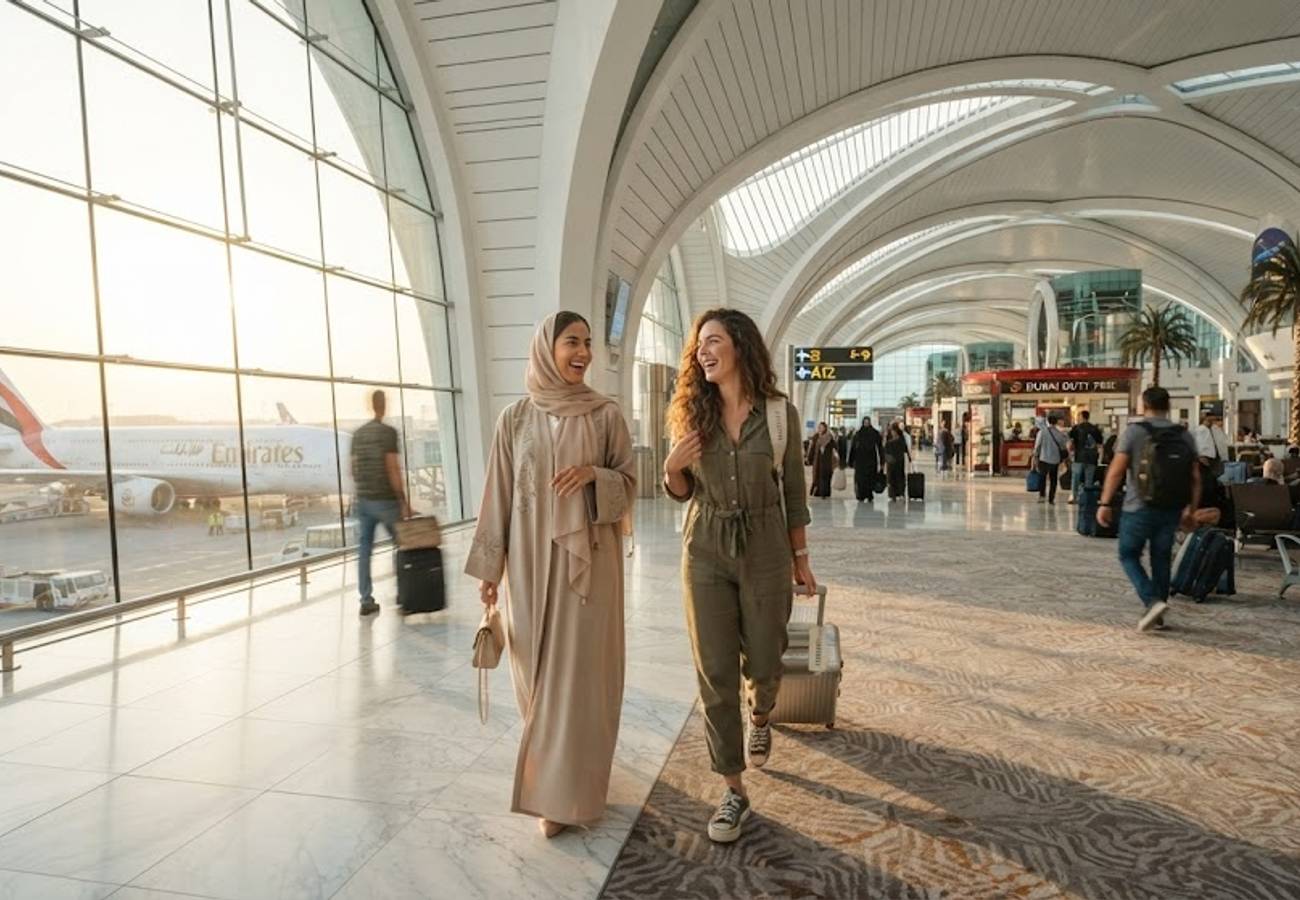
Image generated by AI
The UAE Just Made Getting Into the Country Dramatically Easier—Here's What Changed
The United Arab Emirates Federal Authority for Identity, Citizenship, Customs and Port Security (ICP) just fundamentally reshaped how international travelers enter the country. No longer are visitors locked into generic visa categories. The new system creates purpose-built fast-track pathways for four critical tourism and business segments—and the results are stunning.
Processing times in Dubai have plummeted below 48 hours. That's not a marketing claim. That's the daily reality of AI-powered visa approval systems now live across the emirate.
Four New Specialized Visa Corridors Are Transforming Entry
The ICP didn't introduce one new visa category. They introduced four, each designed around how modern travelers actually move internationally.
AI and technology professionals now have a dedicated entry channel. The UAE has invested heavily in artificial intelligence development, hosting international conferences, research partnerships, and innovation projects that pull global tech talent constantly. Instead of squeezing these professionals into standard business visa templates, authorities created a corridor that understands their actual travel patterns.
Entertainment sector workers have their own pathway. Performers, production crews, technical staff, and touring companies moving through the UAE's extensive event calendar no longer face generic screening.
Event participants and organizers get specialized processing. Given that Dubai and Abu Dhabi host dozens of international exhibitions, conferences, and competitions annually, this matters enormously.
Cruise passengers received their own dedicated entry stream. The UAE operates major cruise ports in Dubai and Abu Dhabi connecting to global itineraries. Simplifying passenger boarding and disembarkation directly supports logistics efficiency.
Reddit: "As someone who attends tech conferences in Dubai regularly, this visa pathway cuts my pre-trip stress by about 60%. No more explaining my visit to a generic business category officer." — r/digitalnomad
How AI-Powered Processing Cut Approval Times in Half
This isn't the ICP simply promising faster approvals. They're delivering measurable results through automation.
Digital visa platforms now handle the repetitive, data-verification work that traditionally consumed hours. AI systems cross-reference documentation, validate travel patterns, and flag incomplete submissions before human officers even review files. In Dubai, this has produced documented sub-48-hour processing times for tourist visas.
The technology works because tourism visa approvals typically follow predictable patterns. AI systems excel at pattern recognition. When millions of applications share similar structures, machine learning can make confident decisions on straightforward cases within minutes.
What's remarkable isn't that technology accelerated processing. It's that the ICP actually deployed it at scale instead of announcing it as a future initiative.
Multi-Emirate Tourism Itineraries Just Became Easier to Execute
Here's where the policy gets strategically brilliant.
Travelers entering the UAE increasingly visit multiple emirates during single trips. Someone attending a technology conference in Dubai wants to explore Abu Dhabi's cultural museums, visit Sharjah's heritage sites, and potentially spend days in Ras Al Khaimah's beach and mountain resorts.
Historically, visa processing delays created friction before travel even began. Now, faster approvals compress the administrative timeline, allowing travelers to finalize multi-emirate itineraries with greater flexibility.
The UAE's modern transport infrastructure—connecting airports, highway networks, and passenger services across emirates—means that once entry clears, travelers can move seamlessly between destinations. Removing visa delays from that equation supports higher-value, longer-duration trips.
Event and Entertainment Tourism Are Scaling Differently Now
The dedicated event visa pathway reflects a genuine shift in how the UAE approaches visitor acquisition.
Rather than waiting for leisure tourists, authorities are actively designing entry systems around event calendars. When Dubai announces a major international conference or Abu Dhabi schedules a cultural festival, the visa apparatus now aligns with those dates automatically.
Event participants historically faced processing uncertainty. They couldn't finalize attendance commitments until visa approvals arrived. Faster, dedicated processing removes that barrier. Conference organizers can promise attendees streamlined entry. Performers can confirm tour schedules. Exhibitors can commit to participation without visa delays jeopardizing logistics.
This creates a compounding effect: events become easier to attend, participation grows, visitor spending increases, and the economic argument for future events strengthens.
Cruise Tourism Gets Its Own Entry Architecture
Cruise passengers represent a unique travel category: they arrive and depart on precise schedules. A delayed passenger visa creates cascading logistics problems for cruise operators and shore excursion suppliers.
The dedicated cruise passenger pathway acknowledges this reality. Passengers boarding in Dubai or Abu Dhabi need processing certainty, not administrative friction. By creating a specialized channel, the ICP signals that cruise tourism isn't treated as standard leisure travel—it's treated as scheduled, high-value tourism requiring different operational treatment.
As cruise operators expand Gulf itineraries, simplified passenger entry supports their scheduling confidence.
What This Means for Travelers Planning 2026 Trips
The practical impact is immediate.
If you're traveling to the UAE for an artificial intelligence conference, technology project, entertainment performance, major event, or cruise departure, your visa pathway is now explicitly designed for your travel type. Processing should complete within days, often within 48 hours in Dubai.
If your trip spans multiple emirates, faster visa approval means less administrative overhead before you start moving between destinations.
The UAE's broader tourism strategy increasingly emphasizes technology-enabled travel. This visa initiative represents that philosophy made operational. It's not futuristic positioning—it's implemented infrastructure creating measurable convenience today.
The Broader Pattern: Tourism Policy Follows Market Demand
The UAE's latest visa moves reflect a larger travel sector transformation. Destinations no longer design immigration around generic visitor categories. They design immigration around how travelers actually move.
AI professionals travel differently than leisure tourists. Event participants have different timing constraints than families on holiday. Cruise passengers operate on completely different schedules than business travelers. Rather than forcing all visitors through identical processes, sophisticated destinations now create specialized corridors matching travel patterns.
The UAE isn't inventing this approach—they're executing it with more technological sophistication and transparency than most countries. That matters.
Faster processing, clearer pathways, and technology-enabled approvals represent the future of international travel. The UAE is demonstrating what that future actually looks like operationally.
The destinations that understand how modern travelers move will capture them; the rest will be left explaining why their processes still haven't caught up.
Related Travel Guides
Disclaimer
This article is for informational and educational purposes only. It does not constitute legal, financial, or professional advice. While we strive to provide accurate and up-to-date information, travel policies, regulations, and conditions change rapidly. Always verify information with official sources before making travel decisions. Nomad Lawyer makes no representations about the accuracy, reliability, completeness, or suitability of the information provided. Readers should consult qualified professionals for advice specific to their circumstances. The views expressed in this article are those of the author and do not necessarily reflect the views of Nomad Lawyer.
Preeti Gunjan
Contributor & Community Manager
A passionate traveller and community builder. Preeti helps grow the Nomad Lawyer community, fostering engagement and bringing the reader experience to life.
Learn more about our team →